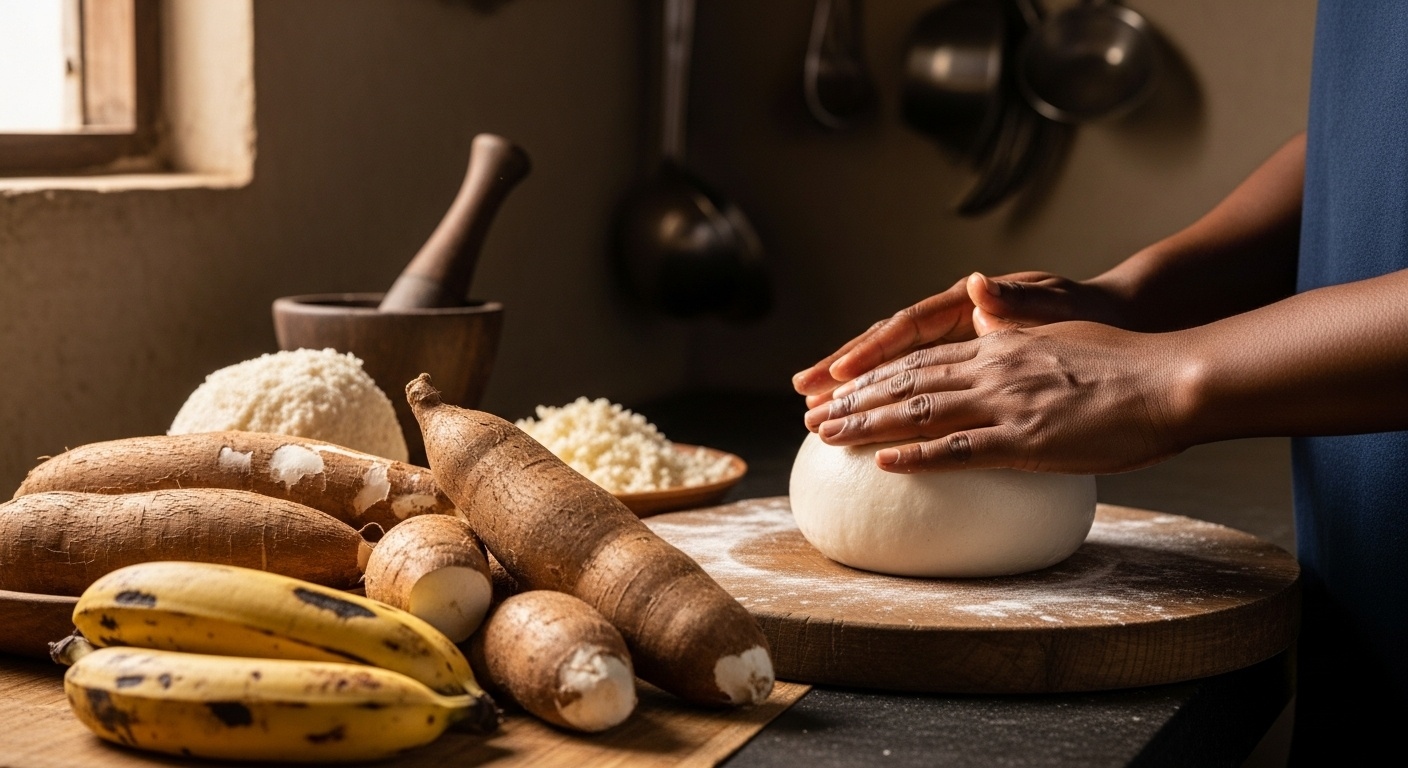
A Timeless African Staple That Blends Tradition, Texture, and Taste
Fufu is more than just a dish—it’s a cultural experience, a culinary tradition, and a symbol of community across much of West and Central Africa. Known for its smooth, stretchy texture and its role as a companion to rich, flavorful soups and stews, fufu has traveled across continents, evolving while still holding tightly to its roots. Whether served in a bustling Ghanaian home, a Nigerian celebration, or a diaspora kitchen abroad, fufu remains a powerful expression of heritage and identity.
A: Fufu is usually made from cassava, yams, plantains, cocoyam, or flours made from those starchy ingredients.
A: No. Recipes vary by country and region, with different starches, textures, and preparation methods.
A: Fufu has a mild, neutral taste, which makes it ideal for soaking up bold soups and stews.
A: The starches are boiled until soft, then pounded in a mortar until smooth, stretchy, and cohesive.
A: Yes. Many home cooks use a food processor, stand mixer, or instant fufu flour for convenience.
A: Fufu is commonly served with soups and stews such as egusi, okra soup, peanut stew, or palm nut soup.
A: Traditionally, small portions are often swallowed with soup, though eating habits can vary from person to person.
A: Many versions are naturally gluten-free, especially those made from cassava, yam, or plantain without wheat additives.
A: A smooth, soft, slightly stretchy texture is what makes fufu enjoyable and easy to pair with soup.
A: It is a modern shortcut that offers convenience, though many people still prefer the texture of traditional hand-pounded fufu.
The Origins of Fufu: A Story Rooted in West Africa
Fufu’s origins trace back centuries to West Africa, where indigenous communities developed techniques for processing starchy crops into versatile staples. The word “fufu” is believed to come from the Twi language of Ghana, meaning “to mash or mix,” a direct reference to the traditional preparation method. Early forms of fufu were made from yams, plantains, or cassava—ingredients that thrived in the tropical climate and became dietary cornerstones.
As trade routes expanded and migration increased, fufu spread across neighboring regions, including Nigeria, Côte d’Ivoire, Cameroon, and beyond. Each culture embraced the dish, adapting it to local ingredients and preferences. Today, fufu is not a single recipe but a category of foods united by a shared texture and purpose.
What Exactly Is Fufu?
At its core, fufu is a dough-like food made by boiling starchy vegetables and pounding or mixing them until smooth and elastic. The final texture is soft, slightly stretchy, and cohesive—perfect for scooping up soups and stews. Unlike bread or rice, fufu is not typically chewed in large bites. Instead, small portions are pinched off, shaped into balls, and dipped into accompanying dishes.
Fufu itself is usually mild in flavor, acting as a neutral base that highlights the bold, spicy, and savory flavors of the soups it accompanies. Popular pairings include egusi soup, groundnut stew, okra soup, and palm nut soup, each adding depth and richness to the experience.
Traditional Preparation: The Art of Pounding
One of the most iconic aspects of fufu is its preparation. Traditionally, boiled cassava, yams, or plantains are placed into a large wooden mortar and pounded with a heavy pestle. This process requires rhythm, strength, and coordination—often performed by two people working in sync.
The pounding process transforms the fibrous ingredients into a smooth, lump-free dough. It also incorporates air, giving fufu its characteristic elasticity. In many communities, this preparation method is not just about food—it’s a social activity that brings people together, often accompanied by conversation, laughter, and shared effort.
While modern kitchens may use blenders, mixers, or instant fufu flour, the traditional method remains deeply respected and celebrated.
Types of Fufu Around the World
Fufu varies widely depending on the region, ingredients, and cultural traditions. Each variation offers a slightly different taste, texture, and appearance.
In Ghana, fufu is commonly made from cassava and unripe plantains, resulting in a slightly tangy and stretchy consistency. It is often served with light soup or palm nut soup.
In Nigeria, several variations exist. Pounded yam is a popular alternative, known for its smooth texture and mild flavor. Cassava-based fufu, sometimes called “akpu,” is also widely enjoyed, especially in the eastern regions.
In Central Africa, including countries like Cameroon and the Democratic Republic of Congo, fufu may be made from cassava flour and water, creating a softer, more pliable version.
Even outside Africa, fufu has cousins. In the Caribbean, dishes like mofongo or cou-cou share similarities in preparation and concept, reflecting the historical movement of people and culinary traditions across the Atlantic.
How to Make Fufu at Home
While traditional pounding is a beautiful process, making fufu at home can be simplified without sacrificing authenticity. Below is a classic cassava and plantain fufu recipe that captures the essence of the dish.
Cassava and Plantain Fufu Recipe
Begin by peeling and cutting fresh cassava and unripe plantains into chunks. Remove any fibrous cores from the cassava, as these can affect the texture.
Place the pieces into a pot of water and boil until they are soft and easily pierced with a fork. This usually takes about 20 to 30 minutes.
Once cooked, transfer the ingredients into a large bowl or food processor. Mash or blend them while still warm, gradually adding small amounts of water as needed. The goal is to achieve a smooth, stretchy consistency without lumps.
If using a food processor, pulse and mix until the texture becomes cohesive and elastic. You may need to stop and scrape down the sides to ensure even blending.
Once the desired consistency is reached, shape the fufu into smooth balls using your hands or a spoon. Serve immediately alongside your favorite soup or stew.
Instant Fufu: A Modern Convenience
For those seeking convenience, instant fufu flour offers a quick alternative. Made from processed cassava, yam, or plantain, these flours require only hot water and stirring to achieve a similar texture.
To prepare, bring water to a boil and gradually add the flour while stirring continuously. Within minutes, the mixture thickens into a smooth dough. While purists may prefer traditional methods, instant fufu has made the dish more accessible to people around the world.
The Role of Fufu in Culture and Community
Fufu is deeply embedded in social and cultural practices. It is often served during family gatherings, celebrations, and communal meals. Sharing fufu from a common bowl fosters a sense of unity and connection.
Eating fufu also involves a unique etiquette. Traditionally, it is eaten with the hands—specifically the right hand. Small portions are pinched off, dipped into soup, and swallowed without chewing excessively. This method enhances the texture and allows the flavors of the soup to take center stage.
In many households, preparing fufu is a collaborative effort, reinforcing bonds between family members and passing down culinary knowledge through generations.
Nutritional Value of Fufu
Fufu is primarily a source of carbohydrates, providing energy and satiety. Depending on the ingredients used, it may also contain fiber, vitamins, and minerals. Cassava, for example, is rich in vitamin C, while plantains offer potassium and dietary fiber.
Because fufu itself is mild, its nutritional profile is often complemented by the soups it accompanies, which may include proteins like fish, meat, or legumes, as well as vegetables and spices.
For those with dietary restrictions, fufu can be adapted. Gluten-free by nature, it is suitable for many diets, and variations can be made using alternative ingredients like sweet potatoes or even semolina.
Fufu in the Global Culinary Scene
As African cuisine gains global recognition, fufu has become increasingly popular in international restaurants and home kitchens. Food enthusiasts are discovering its unique texture and the interactive experience it offers.
In cities around the world, African restaurants proudly serve fufu alongside traditional soups, introducing new audiences to its rich heritage. Social media and food blogs have also played a role in showcasing the dish, inspiring people to try making it at home.
Fufu’s adaptability and cultural significance make it a standout in the global food landscape. It is not just a dish—it’s an invitation to explore a vibrant culinary tradition.
Tips for Perfect Fufu
Achieving the perfect fufu texture requires attention to detail. The key is to ensure that the ingredients are fully cooked and free of lumps before mashing. Consistency is crucial—too thick, and it becomes dense; too soft, and it loses its structure.
Using warm ingredients helps maintain elasticity, while gradual mixing ensures a smooth finish. If the fufu becomes too sticky, a small amount of water can help adjust the texture.
Practice and patience are essential. Like many traditional dishes, mastering fufu takes time, but the results are deeply rewarding.
Why Fufu Continues to Thrive
Fufu endures because it is both simple and profound. Its ingredients are humble, yet its preparation and consumption carry layers of meaning. It adapts to modern lifestyles while preserving its cultural roots, making it a bridge between past and present.
For many, fufu is a taste of home. For others, it is a new and exciting culinary discovery. In either case, it offers something rare in today’s fast-paced world—a moment to slow down, connect, and savor.
Final Thoughts
Understanding what fufu is goes beyond ingredients and recipes. It is about appreciating a tradition that has nourished generations and continues to bring people together. From its origins in West Africa to its growing presence worldwide, fufu remains a powerful symbol of culture, community, and culinary artistry.
Whether you try making it yourself or enjoy it at a restaurant, fufu invites you to experience food in a more tactile, communal, and meaningful way. It is a dish that tells a story—one that is still being written with every meal shared.