

Welcome to Fermentation and Pickling, where time becomes your secret ingredient and ordinary produce turns into flavor fireworks. This corner of Recipe Streets is all about the delicious magic of microbes, salt, and acidity—transforming crisp cucumbers into tangy pickles, cabbage into bold, bubbly kraut, and chilies into sauces that practically hum with heat. Here you’ll find articles that make the science feel simple and the results feel thrilling: quick refrigerator pickles for instant crunch, slow ferments for deep complexity, and clever brines that rescue “almost-too-ripe” veggies from the compost bin. We’ll explore classic traditions and modern twists—spice-forward kimchi vibes, citrusy preserved notes, and pantry staples that elevate everything from sandwiches to grain bowls. Whether you’re chasing that perfect snap, building gut-friendly jars, or just want your fridge to look like a jewel-toned lab, you’re in the right place. Grab a clean jar, trust the process, and let flavor evolve.
A: Refrigerator pickles or quick-pickled onions—fast, forgiving, and delicious.
A: Old produce, too little salt, warm temps, or no tannins—use fresher veg and keep jars cold after curing.
A: Helpful, not required—just keep veggies submerged and “burp” jars if pressure builds.
A: Not always—active fermentation often looks cloudy; focus on smell, taste, and surface growth.
A: Salt is safety + texture; reduce carefully and use a scale for consistent ratios.
A: Taste daily after the first couple days—stop when tang and texture feel perfect to you.
A: It may be kahm yeast—skim it, improve submersion, and ferment cooler.
A: Yes for quick-pickling and flavoring, but refresh with vinegar/salt as needed for strength.
A: Use weights, a cabbage leaf “cap,” or a small jar inside a larger jar to press veggies down.
A: If you see fuzzy mold, slime, or smell something truly rotten—discard and start fresh.
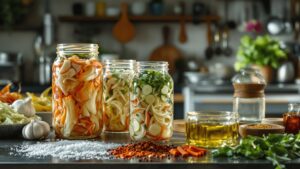
Fermentation vs Pickling: What’s the Difference?
They both bring tang, but fermentation and pickling aren’t the same. Learn how each method works, how flavors differ, and which one fits your cooking—plus an easy quick-pickle idea you’ll use nonstop.
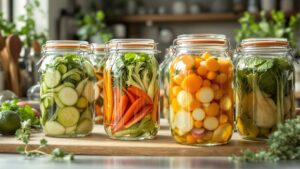
Fermentation Safety: How to Avoid Common Mistakes
Bubbling? Normal. Fuzzy mold? Not so much. Learn fermentation safety basics—salt, submersion, temperature, and clean tools—so your pickles and kraut turn out tangy, crisp, and confident every time.