

Breads and Doughs is where flour turns into magic and your kitchen starts smelling like a bakery you never want to leave. This hub is dedicated to the cozy craft of mixing, kneading, resting, stretching, folding—and finally pulling something golden from the oven (or skillet) that feels wildly satisfying. Here you’ll explore everything from quick flatbreads and pillowy rolls to rustic loaves, pizza crusts, focaccia, biscuits, and pastry-style doughs that flake and shatter in the best way. We’ll break down the essentials—yeast vs. sourdough, hydration, gluten development, proofing, shaping, and baking—so you can go from “I’m not a bread person” to “I made this” with confidence. Expect techniques, troubleshooting, and delicious variations that fit real schedules, whether you want a fast weeknight dough or a slow-fermented weekend project. If you love that first warm slice with butter, the crackle of a crust, and the joy of dough under your hands, you’re in the right place. Let’s rise to it.
A: Check yeast freshness, water temperature, and give it more time in a warmer spot.
A: It may be underproofed, underhydrated, or the dough wasn’t developed enough—extend proofing or add folds.
A: Look for deep browning and use a thermometer; the center should be hot and set.
A: No-knead artisan loaf, focaccia, or simple dinner rolls.
A: Use a Dutch oven or add steam early, then bake until deeply browned.
A: Yes—start with partial swaps and increase water slightly for best texture.
A: High hydration, warm dough, or early mixing—use folds, rest time, and lightly wet hands.
A: Keep at room temp in paper or a bread box; freeze slices for long storage.
A: Warm in the oven briefly; for slices, toast brings back crispness.
A: Absolutely—cold proof overnight for better flavor and easier scheduling.
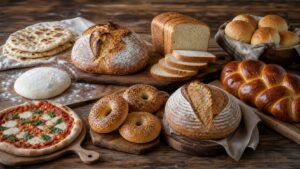
Best Bread Recipes for Every Skill Level
Find the best bread recipes for your current skill level, from easy flatbreads and no-knead loaves to rolls, pizza dough, sourdough, bagels, and enriched breads.
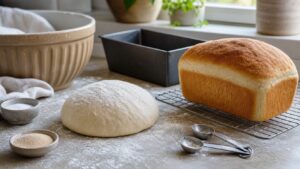
How to Make Bread From Scratch: A Beginner’s Guide
Learn how to make bread from scratch with beginner-friendly guidance on ingredients, mixing, kneading, rising, shaping, baking, and troubleshooting.
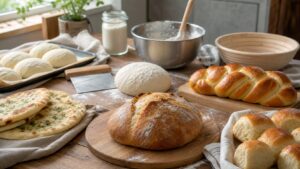
The Ultimate Guide to Homemade Bread and Dough Recipes
Make homemade bread and dough more confidently with a practical guide to yeast, flour, kneading, proofing, shaping, baking, and choosing the right recipe.