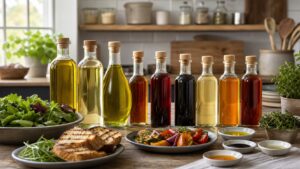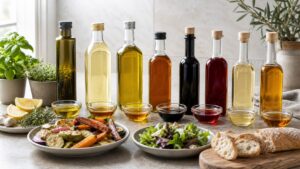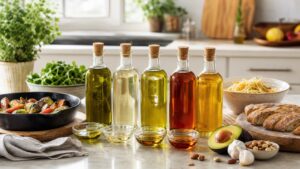
Few ingredients work harder—or more quietly—than oils and vinegars. They’re the foundation of flavor, the secret behind silky sauces, crisp sears, bright salads, and that final drizzle that makes a dish feel finished. Oils and Vinegars on Recipe Streets explores the fats and acids that shape how food tastes, feels, and cooks. From fruity olive oils and nutty seed oils to sharp wine vinegars, mellow rice vinegar, and slow-aged balsamics, this collection breaks down when to cook, when to finish, and how to balance richness with brightness. You’ll learn why smoke point matters, how freshness changes flavor, and how the right splash of acid can wake up even the simplest recipe. Whether you’re building a smarter pantry, mastering dressings and marinades, or learning how chefs layer fat and acid for depth, these articles help you cook with intention. Small pours, big impact—this is where everyday cooking becomes confident cooking.
A: One neutral oil and one flavorful finishing oil cover most needs.
A: Usually at the end to preserve brightness.
A: Yes—rancid oil smells stale or bitter.
A: Use younger balsamic for heat; save aged for finishing.
A: Add fat, sweetness, or dilution.
A: Use quickly and refrigerate to avoid spoilage.
A: Extra-virgin olive oil or mild nut oils.
A: Often—adjust quantity and flavor style.
A: Taste constantly and adjust in small steps.
A: Finish with good oil and a touch of acid.