
Where Food Is More Than a Meal
Ethiopian food culture is not simply about sustenance—it is a deeply rooted expression of identity, hospitality, spirituality, and connection. Across the highlands and valleys of Ethiopia, meals are shared experiences, and food is often eaten communally, symbolizing unity and trust. At the heart of this culinary tradition lies not only bold, layered flavors but also centuries-old rituals, including the world-renowned Ethiopian coffee ceremony. From the tangy, spongy base of injera to the aromatic complexity of spiced stews known as wats, Ethiopian cuisine is a celebration of both simplicity and sophistication. The coffee ceremony, meanwhile, transforms a daily beverage into a meditative and social experience, blending tradition, patience, and artistry.
A: Injera is the signature bread and serves as the base of many traditional meals.
A: Traditional injera is most often made from teff, a small ancient grain native to Ethiopia.
A: Berbere is a bold Ethiopian spice blend made with chili peppers and a mix of aromatic spices.
A: Not always. Some dishes are fiery, while others are mild, earthy, and more aromatic than hot.
A: Religious fasting traditions encouraged the development of flavorful plant-based recipes over many generations.
A: It is a traditional Ethiopian ritual where green coffee beans are roasted, ground, brewed, and served in multiple rounds.
A: A jebena is the traditional clay coffee pot used to brew Ethiopian coffee during the ceremony.
A: Three rounds are commonly served, often called abol, tona, and baraka.
A: It is commonly eaten by hand, using pieces of injera to scoop up stews and sides.
A: Its blend of communal dining, ancient grain traditions, bold spices, and the deeply meaningful coffee ceremony makes it unforgettable.
The Foundations of Ethiopian Cuisine
Ethiopian cuisine is built on a foundation of grains, legumes, and spices, shaped by geography, religion, and history. The country’s fertile highlands provide ideal conditions for growing teff, a tiny but powerful grain that forms the backbone of many meals.
Teff is used to create injera, a sourdough flatbread with a distinctive tang and porous texture. This bread is not just a side—it is the plate, utensil, and centerpiece all in one. Food is placed directly on top of injera, and diners tear off pieces to scoop up stews and vegetables.
Meals are often plant-based, influenced by fasting traditions in the Ethiopian Orthodox Church, which encourages abstaining from animal products on certain days. This has led to an incredibly rich variety of vegetarian dishes that are both hearty and flavorful.
Injera: The Soul of the Ethiopian Table
The batter is poured onto a large, flat clay or metal griddle called a mitad, where it cooks quickly into a soft, spongy layer filled with tiny air pockets. These pockets are perfect for soaking up rich sauces.
Its slightly sour taste balances the bold spices of Ethiopian dishes, creating harmony in every bite. Because it serves as both plate and utensil, injera also reinforces the communal nature of dining, encouraging shared experiences and interaction.
The World of Wats: Rich, Spiced Stews
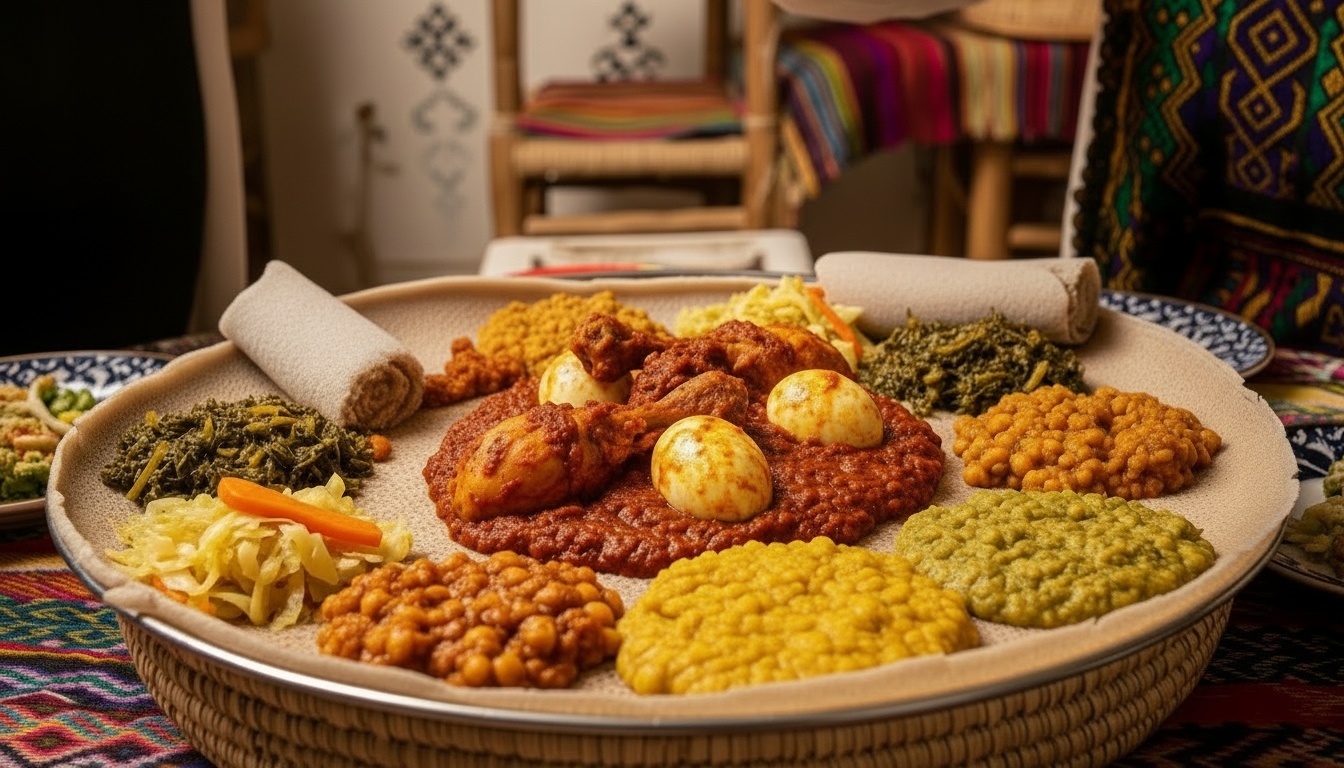
One of the most famous is doro wat, a rich chicken stew simmered with onions, garlic, ginger, and berbere spice, often finished with hard-boiled eggs. Misir wat, made from red lentils, offers a vegetarian alternative that is equally satisfying. Shiro wat, a silky stew made from ground chickpeas or broad beans, is a staple comfort food.
Berbere, a complex spice blend featuring chili peppers, garlic, fenugreek, and warming spices, is the backbone of many wats. Another key seasoning, niter kibbeh, is a clarified butter infused with herbs and spices, adding depth and aroma.
A Culture of Sharing: Eating Together
Ethiopian dining is inherently communal. Meals are typically served on a large shared platter, with injera lining the base and various dishes arranged on top. Family and friends gather around, eating with their hands from the same plate.
A cherished tradition within this setting is gursha—the act of feeding another person by hand. Offering a bite of food to someone else is a gesture of respect, affection, and friendship. It transforms eating into an act of care and connection.
This shared approach to food reflects broader cultural values, emphasizing community over individuality and reinforcing social bonds.
Vegetarian Traditions and Religious Influence
Religion plays a significant role in shaping Ethiopian food culture. The Ethiopian Orthodox Church prescribes numerous fasting days throughout the year, during which followers abstain from meat and dairy.
As a result, Ethiopian cuisine boasts a wide array of vegan and vegetarian dishes that are both nourishing and flavorful. Lentils, chickpeas, split peas, and vegetables are transformed into vibrant stews and sides, often seasoned with the same bold spices used in meat dishes.
This tradition has made Ethiopian food particularly appealing to modern plant-based eaters, long before veganism became a global trend.
The Ethiopian Coffee Ceremony: A Ritual of Time and Presence
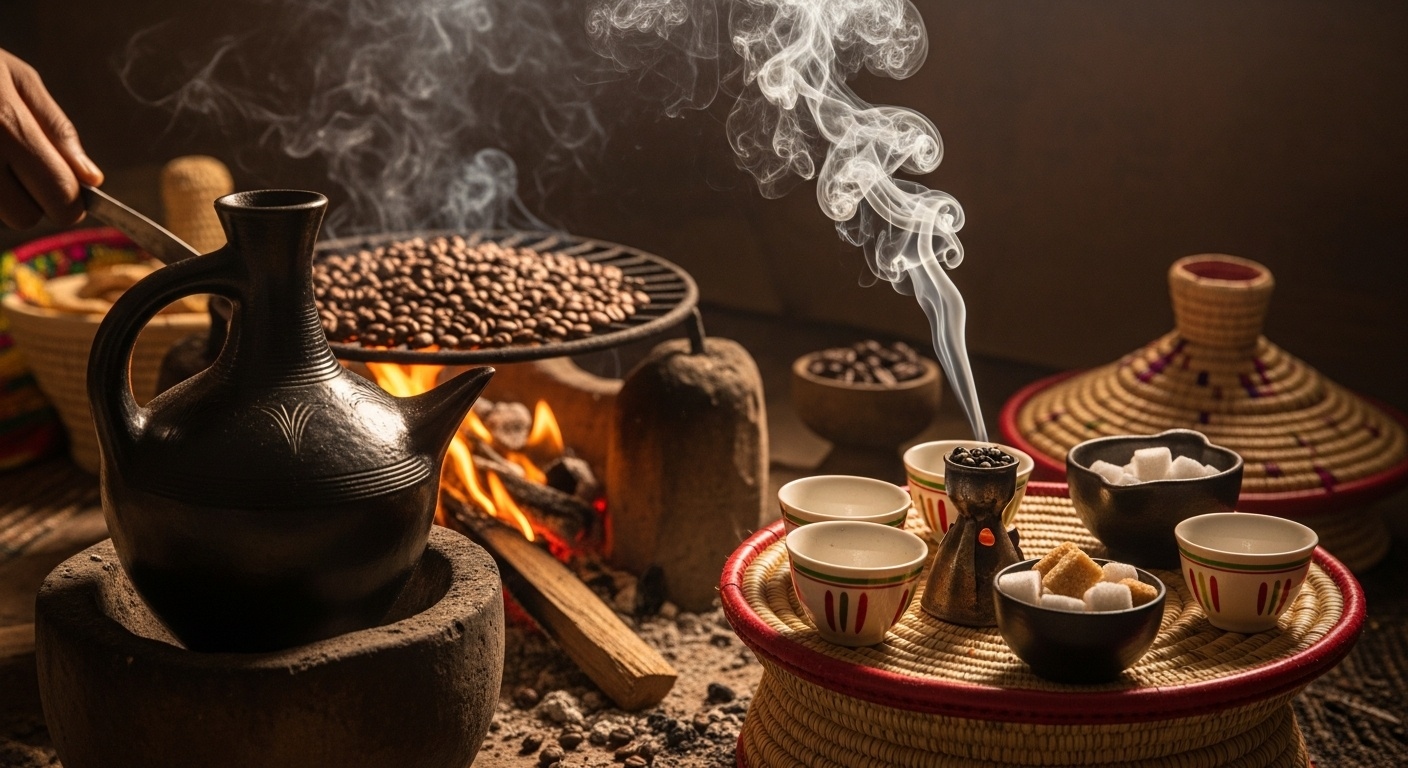
The ceremony is typically performed by a woman of the household and can take up to an hour. It begins with the washing of green coffee beans, followed by roasting them over an open flame. The aroma fills the room, signaling the start of a shared experience.
The roasted beans are then ground and brewed in a clay pot called a jebena. The coffee is poured into small cups in three rounds, each with its own significance—abol (first round), tona (second), and baraka (third, meaning “blessing”).
Incense is often burned during the ceremony, adding to the sensory richness of the experience. The ritual is as much about connection and conversation as it is about coffee itself.
How to Make Injera at Home (Simple Recipe)
While traditional injera requires teff and time, a simplified version can be made at home with accessible ingredients.
Begin by mixing teff flour (or a blend of teff and all-purpose flour) with water and a pinch of salt. Allow the mixture to ferment in a warm place for two to three days until it develops a slightly sour aroma.
Heat a nonstick skillet or griddle over medium heat and pour a thin layer of batter in a circular motion. Cover and cook until bubbles form and the surface sets. Unlike pancakes, injera is only cooked on one side.
Remove and let cool. The result should be soft, spongy, and slightly tangy—perfect for pairing with stews.
A Simple Misir Wat Recipe
To create a comforting Ethiopian dish at home, misir wat is an excellent starting point.
Sauté finely chopped onions in oil until deeply caramelized, then add garlic, ginger, and berbere spice. Stir in red lentils and water, allowing the mixture to simmer until the lentils are tender and the stew thickens.
Season with salt and a touch of niter kibbeh if available. The result is a rich, flavorful dish that pairs beautifully with injera.
The Role of Spice: Berbere and Beyond
Spices are the soul of Ethiopian cooking, and berbere is its heartbeat. This complex blend varies by region and household, often passed down through generations.
In addition to berbere, spices like turmeric, cardamom, and cloves play important roles. Ethiopian cuisine achieves its depth not through heaviness but through careful layering of flavors.
This balance allows each dish to feel both bold and nuanced, creating a culinary experience that is unforgettable.
Coffee, Community, and Conversation
The Ethiopian coffee ceremony is more than a tradition—it is a daily ritual that fosters connection. Invitations to participate are considered gestures of friendship and respect.
During the ceremony, participants engage in conversation, storytelling, and reflection. The slow pace encourages mindfulness, offering a contrast to the fast-paced nature of modern life.
Each round of coffee carries symbolic meaning, reinforcing the importance of presence and shared experience.
Ethiopian Food in the Modern World
Today, Ethiopian cuisine is gaining global recognition for its unique flavors and communal style. Restaurants around the world introduce diners to injera, wats, and the coffee ceremony, often preserving traditional methods while adapting to new audiences.
In cities across the United States and beyond, Ethiopian restaurants have become cultural ambassadors, offering not just meals but immersive experiences.
A Living Tradition of Flavor and Connection
Ethiopian food culture is a vibrant tapestry woven from history, faith, agriculture, and community. From the tangy bite of injera to the slow ritual of the coffee ceremony, every element reflects a deep respect for tradition and togetherness.
In a world that often prioritizes speed and convenience, Ethiopian cuisine invites us to slow down, share, and savor—not just the food, but the people around us.


