Homemade Sauces Make Simple Food Feel Finished
Homemade sauces and condiments are some of the most useful tools in a home kitchen because they can turn plain ingredients into meals with direction. A bowl of rice, roasted vegetables, grilled chicken, fish, beans, eggs, noodles, or bread can become something memorable with the right sauce. The best part is that sauces do not have to be complicated. Once you understand acid, fat, salt, sweetness, heat, herbs, texture, and storage, you can make vinaigrettes, dressings, salsas, aioli, pesto, chutneys, glazes, pan sauces, and dips that fit your food instead of relying only on bottled backup.
A: A basic vinaigrette is the most flexible place to start.
A: Add salt, acid, herbs, spice, or a stronger aromatic.
A: Balance it with fat, sweetness, dairy, tahini, or more of the main ingredient.
A: It depends on ingredients, but fresh dairy, herbs, and garlic usually mean shorter storage.
A: Yes, mustard, mayo, hot sauce, soy sauce, and pickles can become excellent sauce foundations.
A: Use reduction, yogurt, mayo, tahini, blended beans, nuts, seeds, or less liquid.
A: Use water, citrus, vinegar, broth, or oil depending on the sauce.
A: Vinaigrette, tahini sauce, yogurt sauce, salsa, pesto, or herb sauce all work.
A: Oil and water-based ingredients separate naturally unless emulsified or shaken again.
A: It should add flavor, contrast, moisture, or texture to foods you already cook.
Start With Flavor Balance
Most good sauces and condiments are built on balance. Acid wakes food up, fat carries flavor and gives body, salt sharpens everything, sweetness rounds edges, heat adds energy, and aromatics create personality. A vinaigrette is not only oil and vinegar; it is a small negotiation between sharpness, richness, salt, mustard, herbs, and maybe honey. Salsa is not only chopped vegetables; it needs acid, salt, heat, freshness, and enough juiciness to carry across the food. Barbecue sauce needs sweetness, acidity, smoke, spice, and thickness. A good condiment has a job, and balance is what lets it do that job without taking over the plate.
The easiest way to improve a sauce is to taste it with the food it will accompany. A sauce that tastes intense from a spoon may be perfect on potatoes, rice, grilled meat, or bread. A dressing that tastes balanced alone may disappear once it hits sturdy greens or roasted vegetables. Taste, adjust, and taste again. Add acid if it feels dull, salt if flavors seem muted, fat if it feels harsh, sweetness if it is too sharp, and water or broth if it is too thick. Homemade sauces reward small corrections.
Think about contrast too. Rich food often wants acidity or herbs. Lean food may need fat or creaminess. Sweet food may need salt. Smoky food may need brightness. Spicy food may need cooling yogurt, mayo, avocado, or citrus. Once you understand the contrast your meal needs, the sauce becomes much easier to choose.
That tasting habit also keeps homemade condiments from becoming overly complicated. Instead of adding five more ingredients, pause and decide which single lever is missing. A dull herb sauce may need lemon, not more herbs. A barbecue-style glaze may need vinegar, not extra sugar. A yogurt sauce that seems thin in flavor may need salt and time for the garlic to bloom. The more specifically you diagnose the problem, the less likely you are to bury a clean sauce under clutter.
Know the Main Sauce and Condiment Families
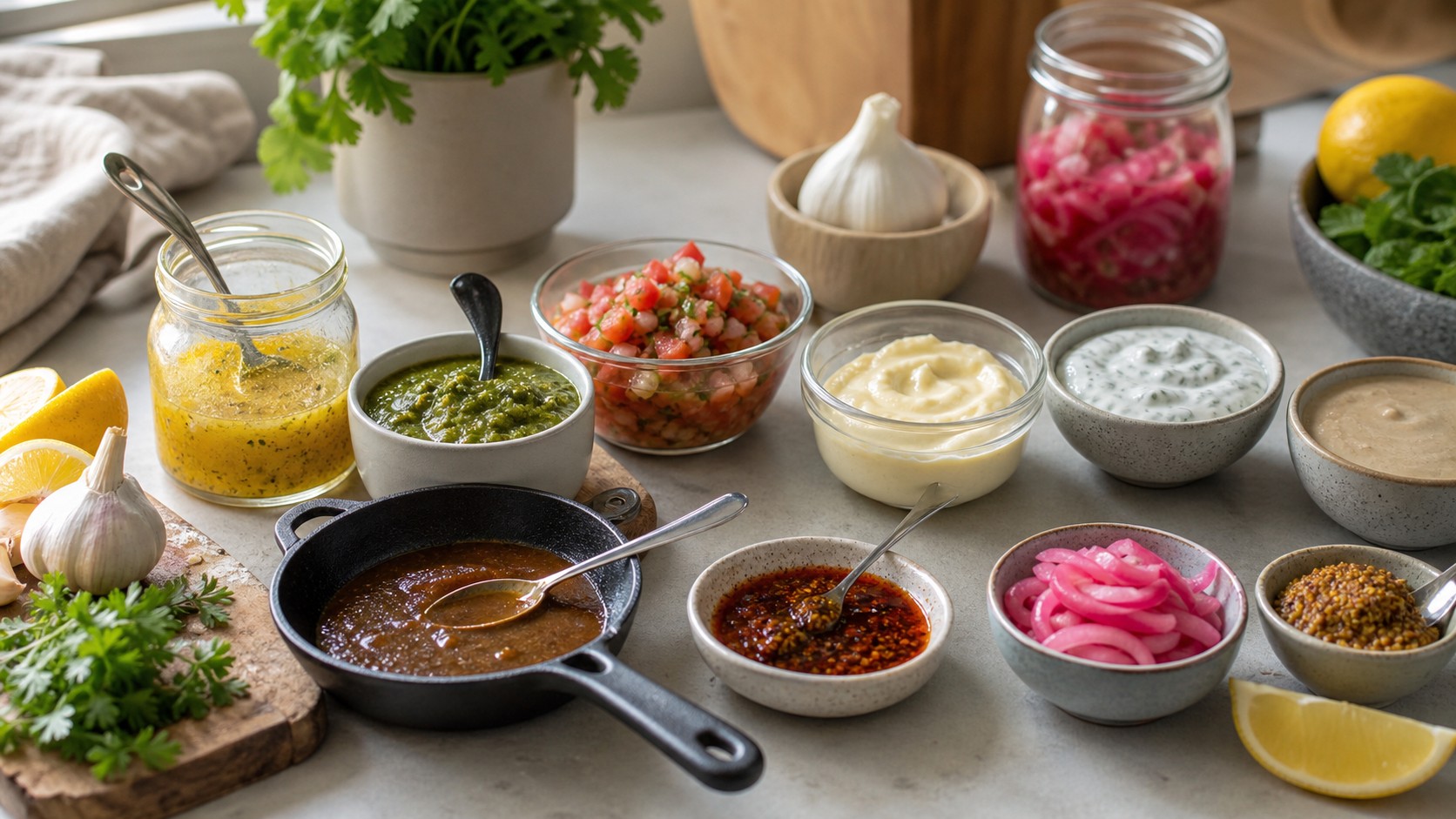
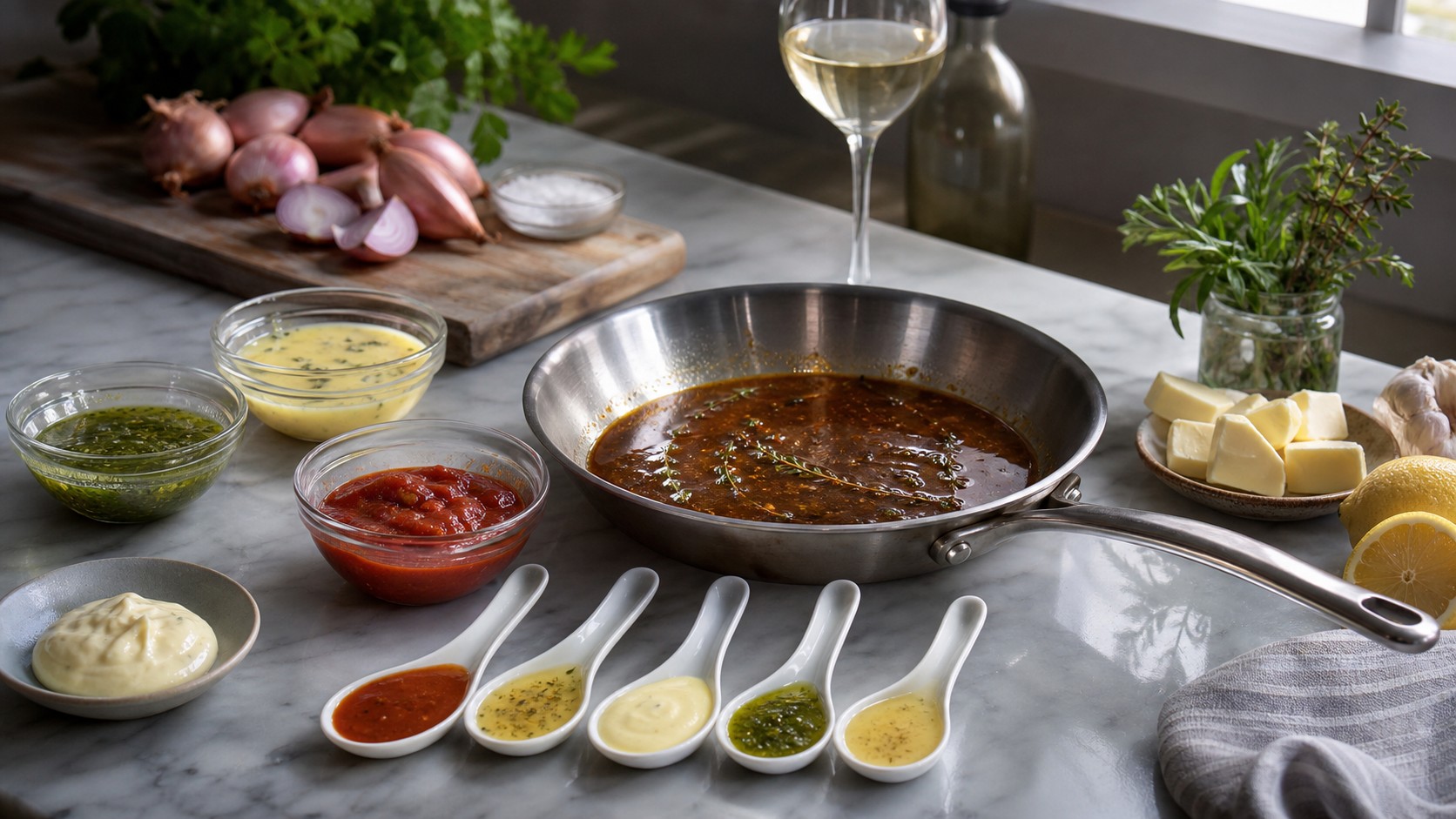
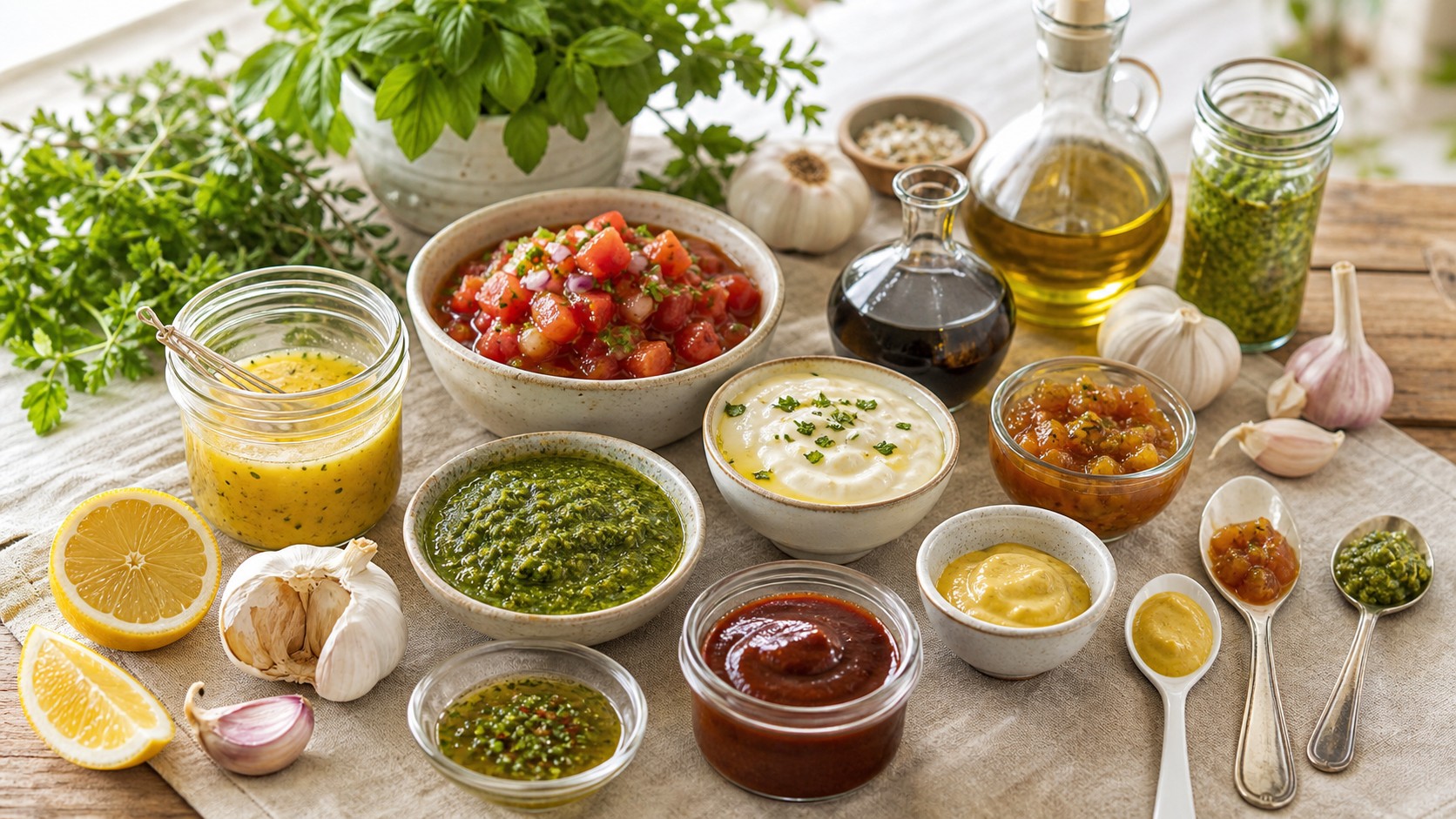
Vinaigrettes and dressings are the most flexible everyday sauces. They can dress salads, grain bowls, beans, roasted vegetables, chicken, fish, and sandwiches. Creamy sauces such as aioli, ranch-style dressings, yogurt sauces, tahini sauces, and mayo-based condiments add richness and cling. Herb sauces such as pesto, chimichurri, gremolata, salsa verde, and green chutney bring freshness and color. Tomato-based sauces, salsas, barbecue sauces, and relishes bring acidity, sweetness, heat, and body. Pan sauces capture browned flavor from cooked meat or vegetables and turn it into something spoonable.
Dips and spreads are condiments with substance. Hummus, bean dips, whipped feta, compound butter, tapenade, romesco, muhammara, and flavored cream cheese can become snacks, sandwich spreads, or meal anchors. Pickles, chutneys, mustards, hot sauces, and fermented condiments offer intensity in small amounts. You do not need to master all of them at once. A useful home sauce routine might begin with one vinaigrette, one creamy sauce, one herb sauce, one salsa or relish, and one make-ahead spread.
Knowing the families prevents the refrigerator from filling with random jars. If dinner tastes heavy, reach for an herb sauce or pickle. If lunch feels dry, use a creamy spread. If leftovers taste flat, add salsa, vinaigrette, or chutney. Sauce families are problem-solvers.
It also helps you plan across the week. A Sunday herb sauce can dress roasted potatoes one day, become a sandwich spread the next, and loosen into a vinaigrette with extra lemon and oil later in the week. A batch of quick pickled onions can support tacos, salads, burgers, and eggs. A creamy garlic sauce can become a dip for vegetables and then a drizzle for grain bowls. Homemade sauces are easiest to maintain when each one has more than one useful destination.
When you think in families, substitutions become less stressful. If you have no basil for pesto, a parsley-walnut sauce may still give you herbs, fat, and savoriness. If tomatoes are not good, a cucumber relish or corn salsa can still bring freshness and crunch. If mayonnaise feels too heavy, yogurt or tahini may fill the creamy role in a lighter way. The family tells you what the meal needs even when the exact recipe changes.
Build a Small Homemade Sauce System
A practical sauce system starts with pantry ingredients. Keep olive oil, a neutral oil, vinegar, citrus, mustard, mayonnaise, yogurt, tahini, soy sauce, honey, garlic, shallots, herbs, canned tomatoes, spices, and a few pickled or briny ingredients. With those, you can make lemon vinaigrette, mustard dressing, garlic yogurt sauce, tahini sauce, quick salsa, pesto-style herb sauce, spicy mayo, pan sauce, and simple glazes. The system does not need dozens of specialty bottles; it needs versatile ingredients that combine in different ways.
Use ratios as guides, not cages. A classic vinaigrette may start near three parts oil to one part vinegar, but some meals need more acid. A yogurt sauce may need lemon, salt, garlic, herbs, and a splash of water. A tahini sauce may seize at first, then loosen as more water is whisked in. Pesto can be basil and pine nuts, but it can also be parsley, arugula, walnuts, almonds, or sunflower seeds. Homemade sauces become easier when you learn what each ingredient does rather than memorizing only one version.
A useful system also includes a few simple preparation habits. Mince shallots finely so they soften in vinegar instead of tasting harsh. Crush garlic with salt when you want it to disappear into a sauce. Toast spices briefly before adding them to oil or yogurt. Rinse very salty capers or olives if they will be used generously. Let dressings sit for ten minutes when raw aromatics are involved, then taste again. These small steps make a homemade condiment feel intentional even when it takes only a few minutes.
Texture Matters as Much as Flavor
Texture determines how a sauce behaves. Thin sauces soak into grains, potatoes, bread, and beans. Thick sauces cling to sandwiches, burgers, roasted vegetables, and grilled proteins. Chunky condiments add contrast to soft foods. Smooth sauces feel polished and coat evenly. A salsa with too much liquid can make tacos soggy, while a sauce that is too thick may sit on top of a bowl without connecting the ingredients.
Adjust texture deliberately. Thin dressings with water, citrus, vinegar, broth, or oil depending on what the sauce needs. Thicken sauces with yogurt, mayo, tahini, blended beans, reduced liquid, nuts, seeds, or gentle simmering. Chop ingredients finely when the condiment needs to spread; leave them chunkier when you want bite. A sauce can have excellent flavor and still fail if the texture is wrong for the food.
This is especially important with make-ahead sauces. Some thicken in the refrigerator. Some separate. Some herbs darken. Some garlic gets stronger. Check texture again before serving and adjust with water, oil, lemon, or salt.
Texture should match how the sauce will be served. A spoon sauce for fish can be loose and glossy because it only needs to coat the surface. A sandwich condiment should be thicker so it does not run into the bread. A dip should hold its shape on a vegetable or chip. A dressing for shredded cabbage needs more force than a dressing for tender lettuce because the vegetables fight back. Thinking about the food’s shape, moisture, and serving temperature will tell you whether to whisk, blend, chop, strain, reduce, or simply leave the sauce rustic.
Use Sauces to Rescue Everyday Meals
Homemade sauces shine when the meal is simple. Roasted vegetables become lunch with tahini sauce. Rice and beans wake up with salsa verde. Chicken tastes new with chimichurri. Fish feels brighter with lemon herb sauce. Eggs become dinner with chili crisp mayo or tomato salsa. Grain bowls need dressing to connect the ingredients. Sandwiches need spreads that add moisture and flavor. Leftovers often need only one fresh sauce to feel intentional again.
Think of sauces as meal bridges. They connect dry to juicy, soft to crisp, rich to bright, mild to bold. A sauce can also let one set of ingredients serve different appetites. Rice, vegetables, and chicken can become Mediterranean with yogurt dill sauce, Mexican-inspired with salsa and lime, or savory and nutty with sesame soy dressing. The base stays practical while the sauce changes the mood.
This is why sauces are so valuable for cooks who repeat ingredients for budget, health, or schedule reasons. A tray of roasted vegetables can taste different with romesco, green tahini, balsamic vinaigrette, or spicy yogurt. A pot of beans can lean smoky, lemony, herbaceous, or creamy depending on the condiment. When the sauce changes, the meal feels less repetitive without requiring a completely new grocery list.
That flexibility is especially useful when cooking for a table with mixed preferences. Keep the base meal simple, then let sauces carry the variation. One person can add heat, another can add creaminess, and another can keep the meal bright and acidic. Homemade condiments make shared meals easier because they add choice without requiring separate dinners.
It can also reduce waste. A spoonful of sauce gives purpose to herbs, half a lemon, a little yogurt, or the last roasted pepper in the refrigerator. Instead of seeing odds and ends as scraps, you can turn them into the part of the meal that makes everything else taste planned.
Store Homemade Sauces Safely and Usefully
Storage depends on ingredients. Vinaigrettes often keep well for several days or longer depending on what is added. Creamy sauces with dairy, mayonnaise, fresh garlic, or herbs need shorter storage and refrigeration. Fresh salsas are best within a few days. Cooked sauces may last longer if cooled and stored properly. Always use clean jars, label when helpful, and discard sauces that smell off, mold, ferment unexpectedly, or change in a concerning way.
Make small batches at first. A cup of sauce can transform several meals without becoming a burden. Store sauces in containers that make them easy to use, not just easy to forget. A jar of vinaigrette near the front of the refrigerator is more likely to save lunch than a mystery tub in the back. Homemade condiments should make cooking easier, not add pressure to use things up.
Labeling is not fussy when it prevents waste. A strip of tape with the sauce name and date can save you from guessing whether a green sauce is from yesterday or last week. Keep strong-smelling sauces sealed tightly, especially garlic-heavy or fermented ones. Store oil-based sauces away from warm spots when possible, and stir or shake before judging them. The goal is not to turn the refrigerator into a filing cabinet; it is to make the sauce easy to trust when dinner is moving quickly.
Portion storage can help too. Divide a larger batch into two smaller jars if one will be used later in the week. Keep dipping sauces separate from raw foods and used spoons. If a sauce will travel for lunch, pack it in a tight container and dress the food when you eat. Practical storage keeps homemade condiments enjoyable instead of risky or messy.
Let Homemade Condiments Stay Practical
Not every condiment needs to be homemade. Mustard, soy sauce, hot sauce, fish sauce, pickles, ketchup, mayonnaise, and many vinegars are useful store-bought foundations. Homemade cooking often works best when you combine reliable purchased staples with fresh sauces you make yourself. Add herbs and lemon to mayo. Stir garlic and yogurt into a quick sauce. Add fruit and vinegar to a chutney. Use bottled mustard as the backbone of a dressing.
The point of homemade sauces and condiments is not purity. It is control, freshness, and flexibility. You can make the sauce sharper, creamier, hotter, brighter, thicker, lighter, sweeter, or more herbaceous because you know what the meal needs. That is what makes homemade sauces powerful: they let the cook finish the food with intention.
Start with the sauces that answer your real cooking patterns. If you eat bowls often, prioritize vinaigrettes, tahini sauces, and pickles. If you make sandwiches, focus on aioli, spreads, relishes, and flavored butter. If you cook proteins in a skillet, practice pan sauces. If you keep vegetables at the center of meals, learn herb sauces and bright dressings. Homemade condiments become a lasting habit when they serve the food already on your table.