The Best Bread Recipe Is the One That Meets You Where You Are
The best bread recipes for every skill level are not arranged by prestige. They are arranged by what they teach. A beginner bread should build confidence with simple mixing, forgiving shaping, and clear results. An intermediate bread should introduce better structure, timing, and flavor. An advanced bread can ask for more judgment, fermentation control, shaping skill, or heat management. When you choose recipes that match your current comfort level, bread baking becomes a steady progression instead of a stressful test.
A: Flatbread, focaccia, no-knead bread, sandwich bread, and rolls are strong choices.
A: Try pizza dough, whole wheat loaves, buns, pita, or English muffins.
A: Try it when you are comfortable reading dough and managing longer timelines.
A: No, the best bread is the one that fits the occasion and your skill level.
A: Repeat recipes, keep notes, and change one variable at a time.
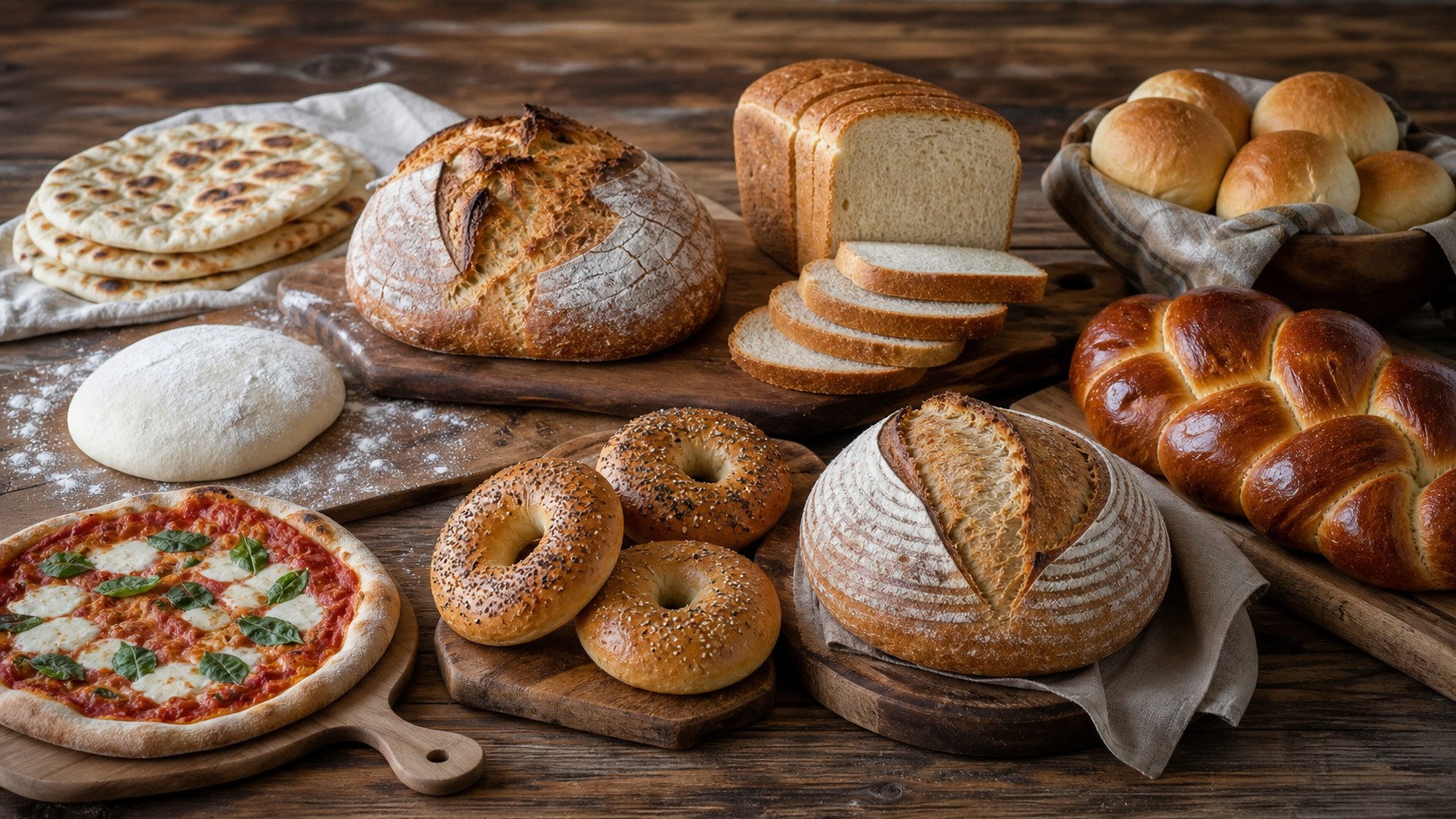
A: Rolls, sandwich loaves, braids, bagels, and rustic boules all teach shaping.
A: Focaccia, ciabatta, and high-hydration loaves are useful teachers.
A: Flatbread, pizza dough, quick rolls, or refrigerator doughs can fit better.
A: A scale improves consistency at every skill level.
A: Pick the bread that teaches the skill you want to practice next.
Beginner Breads Should Give Fast Confidence
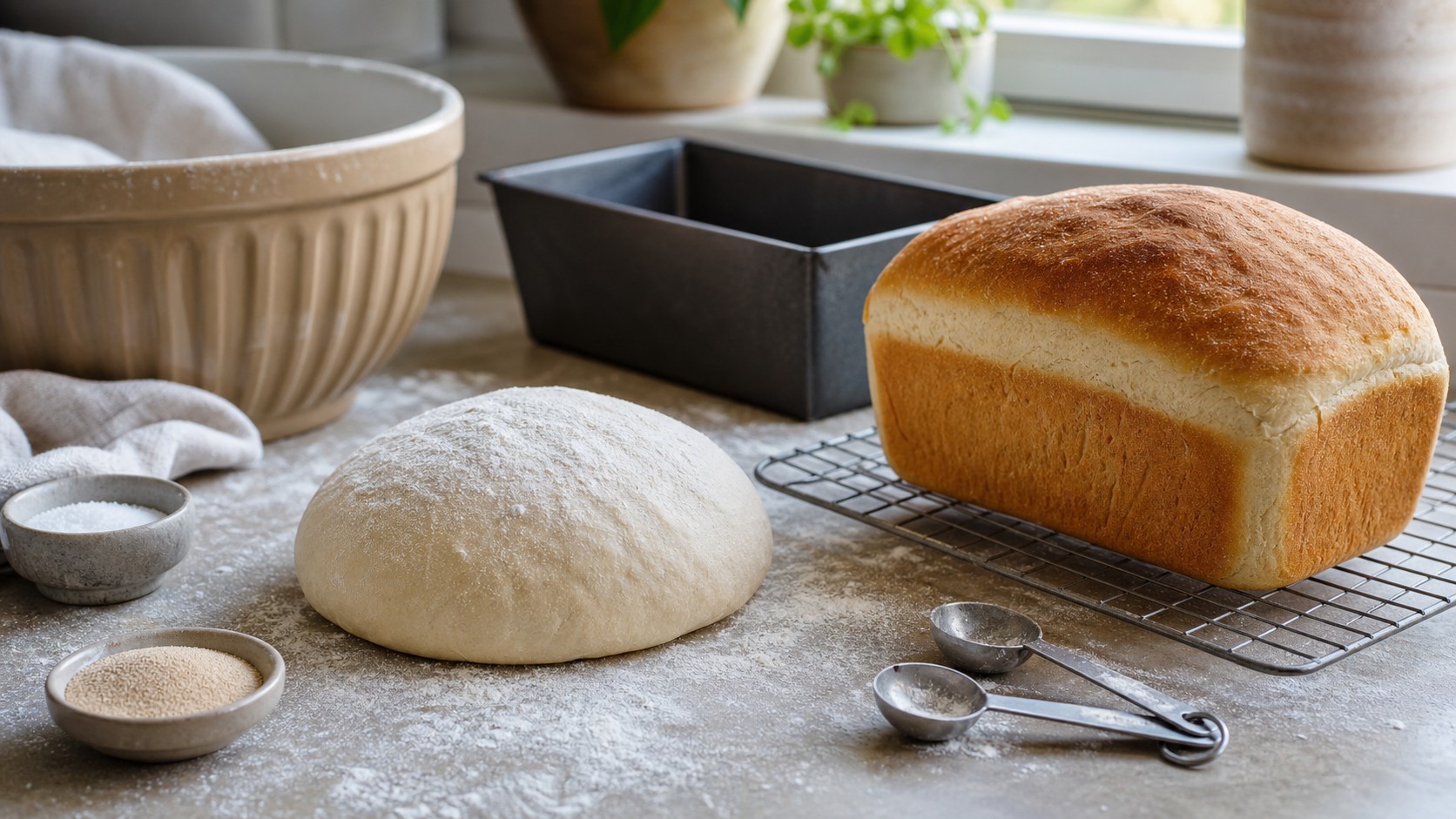
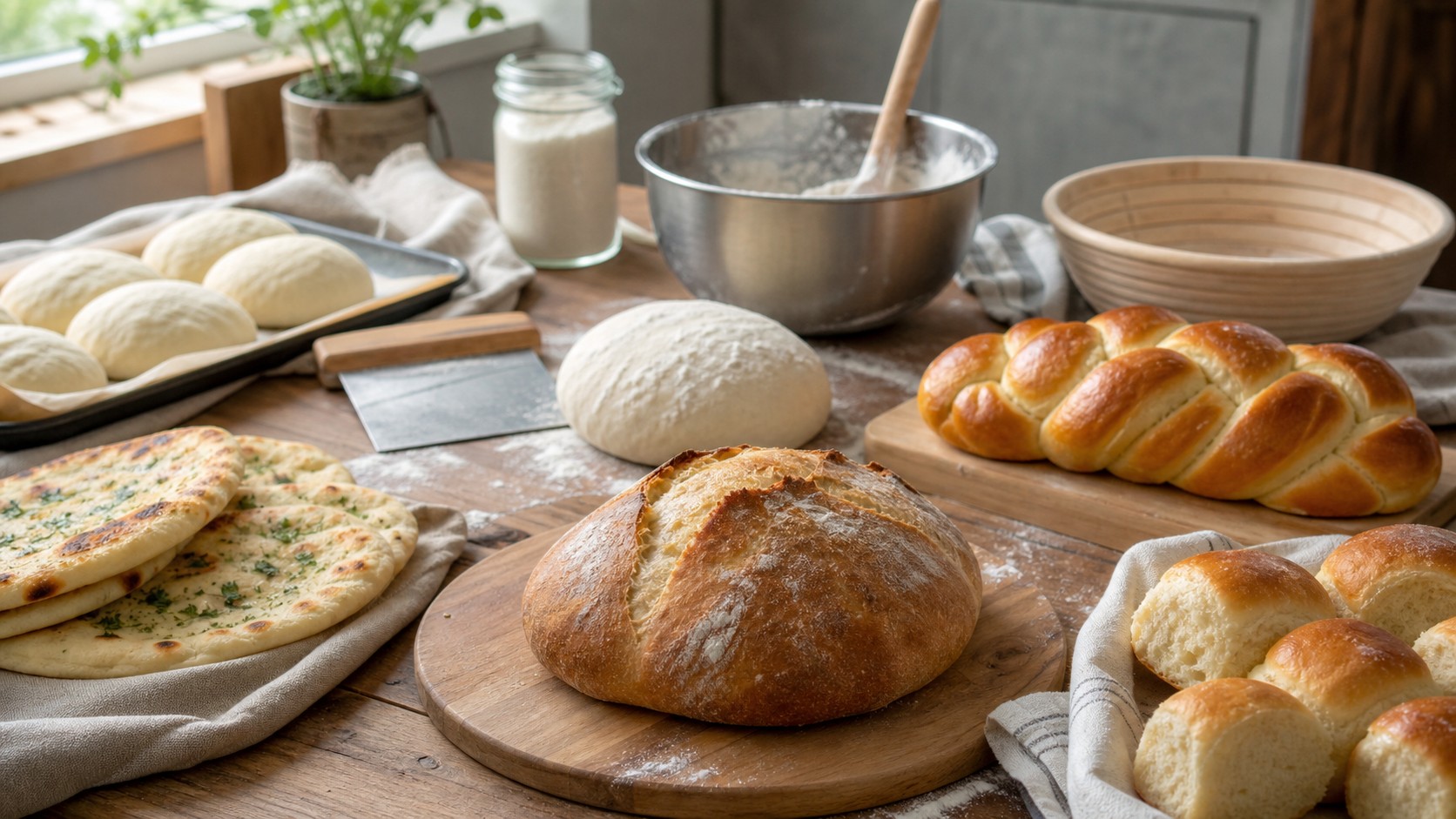
Beginner bread recipes should have a generous margin for error. Flatbreads, no-knead bread, focaccia, basic pizza dough, simple sandwich bread, and dinner rolls are all excellent starts. Flatbreads teach how flour and water become dough without requiring a dramatic rise. Focaccia teaches wet dough, oil, dimpling, and a satisfying bake. No-knead bread teaches fermentation and crust with very little handling. Sandwich bread teaches shaping inside the support of a pan. Rolls teach dividing and rounding in small pieces.
The best beginner recipes do not require perfect shaping or advanced timing. They show you what dough feels like, how yeast works, and how bread changes in the oven. They also reward you quickly enough to make a second attempt appealing. Confidence matters because bread skill is cumulative. A person who makes focaccia three times will understand dough better than someone who reads ten advanced recipes and never starts.
For a first month of bread baking, choose recipes that answer normal meals. Flatbread for wraps, pizza dough for dinner, sandwich bread for toast, rolls for soup, and focaccia for sharing will teach more than a showpiece loaf that feels too precious to repeat.
Advanced Beginner Recipes Add Structure
Once basic dough feels familiar, move into recipes that ask for a little more structure. Try a pan loaf with whole wheat, soft milk bread, cinnamon swirl bread, hamburger buns, pita, English muffins, breadsticks, or a simple braided loaf. These recipes introduce new ideas without overwhelming the baker. Whole wheat teaches hydration. Milk bread teaches softness. Buns teach even dividing. Pita teaches heat and puffing. English muffins teach griddle cooking. Braiding teaches dough strength and gentle handling.
This level is where many home bakers start to understand that bread is not one skill but many small ones. Measuring well, kneading enough, resting when dough resists, proofing by sight, shaping evenly, and baking to proper color all build on each other. Recipes at this stage should still be forgiving, but they begin to show how small choices affect the final loaf.
Intermediate Recipes Reward Timing and Feel
Intermediate bread recipes ask you to pay closer attention. Baguette-style loaves, ciabatta, better pizza dough, enriched rolls, challah-style braids, pretzels, bagels, and rustic boules all require more judgment. Wet doughs need folding rather than heavy flouring. Bagels and pretzels add boiling or alkaline baths. Braids need dough that is developed enough to stretch without tearing. Rustic loaves need shaping tension and good proofing. Pizza dough benefits from cold fermentation and careful stretching.
At this stage, the clock becomes less authoritative. A recipe may say one hour, but the dough may need more or less depending on temperature and yeast activity. The baker starts to watch dough volume, bubbles, smoothness, resistance, and aroma. That shift from obedience to observation is the heart of intermediate bread baking.
Intermediate recipes also reward planning. A dough mixed the day before can taste better. A preheated stone can improve pizza. A covered pot can help crust. A scale can make repeat results easier. The bread improves not because it becomes more complicated for its own sake, but because the baker begins controlling more variables.
Advanced Breads Require Patience and Precision
Advanced bread recipes include sourdough boules, high-hydration loaves, laminated doughs, panettone-style enriched breads, complex ryes, croissants, and long-fermented artisan loaves. These recipes ask for fermentation awareness, temperature control, strong shaping, and an understanding of how dough behaves over time. They can be deeply rewarding, but they are less forgiving of rushed decisions.
Sourdough introduces starter maintenance and fermentation timing. High-hydration doughs demand gentle handling and confidence with stickiness. Laminated dough requires cold butter, careful rolling, and patience. Rich holiday breads need gluten development despite sugar and fat. Rye breads require different expectations because rye does not behave like wheat. Advanced recipes are not better because they are harder; they are better for bakers who want to explore those specific challenges.
Choose Recipes by What You Want to Learn
A useful way to choose bread recipes is to ask what skill you want next. If shaping feels scary, make rolls. If sticky dough worries you, make focaccia several times. If timing is confusing, make the same sandwich loaf in different room temperatures and compare. If crust disappoints you, try a Dutch oven loaf. If flavor feels bland, try a longer rise or preferment. If pizza tears, practice resting and stretching dough. This approach keeps progress focused. Instead of jumping randomly from recipe to recipe, you let each bread teach one skill. Over time, those skills combine. The baker who understands rolls, focaccia, pizza, and pan loaves will approach sourdough with far more confidence than someone who skipped straight to the hardest recipe.
Match Bread to Your Real Schedule
Skill level is not the only factor. Time matters. A skilled baker may still choose flatbread on a busy night because dinner needs speed. A beginner may choose no-knead bread because the waiting does most of the work. Refrigerator doughs can help because they split the process across days. Enriched doughs may be better for a slow weekend morning. Bagels need a window for shaping, boiling, and baking. Sourdough needs attention across many hours.
The best bread recipe is the one that fits both your ability and your day. Bread baking becomes more enjoyable when you stop forcing every loaf to be a statement. Some breads are everyday tools. Some are weekend projects. Some are celebration bakes. All of them can be worthwhile.
Build a Personal Bread Ladder
A personal bread ladder might begin with flatbread, then focaccia, then sandwich bread, then pizza dough, then rolls, then a rustic loaf, then bagels, then sourdough. Another baker might start with no-knead bread, move to whole wheat pan loaves, then try enriched buns and challah-style braids. There is no single correct order. The best order is the one that keeps you baking.
Keep notes as you climb. Which doughs felt good? Which recipes fit your kitchen? Which breads disappeared fastest? Which ones felt like too much work for the payoff? Skill is not only technical; it is knowing what kinds of bread belong in your life.
Your ladder can also follow the meals you cook most. A soup household may move from rolls to focaccia to crusty loaves. A pizza household may practice dough balls, stretching, and hot surfaces. A breakfast household may care more about sandwich bread, English muffins, and cinnamon rolls. Skill grows faster when the practice has a place at the table.
Every Skill Level Has Bread Worth Baking
Beginner bread is not lesser bread. A warm flatbread, soft roll, pan loaf, or focaccia can be exactly what the table needs. Advanced bread is not automatically better if it does not fit the moment. The best bread recipes are the ones that teach, feed, and invite you back to the dough. Choose the recipe that gives you the right challenge for today. Bake it more than once. Notice what changes. That is how every skill level becomes the next one.
This mindset keeps bread baking generous instead of competitive. There is room for quick flatbread on a Tuesday and sourdough on a slow weekend. There is room for a slightly uneven braid, a pale first loaf, and a batch of rolls that teaches you something about proofing. Every bread that gets baked, shared, and understood a little better has done its job.
Use Repetition to Move Up a Level
The fastest way to improve at bread is to repeat a recipe until your hands recognize it. Bake the same focaccia three times and you will learn how wet dough changes as it rests. Make the same sandwich loaf twice and you will notice whether the second proof went farther than the first. Repeat pizza dough and you will understand when it needs rest before stretching. Repetition can sound boring, but in bread baking it is how intuition forms. The recipe stops being a set of instructions and becomes a conversation with the dough. When repeating a recipe, change only one variable at a time. Try bread flour instead of all-purpose, or use a longer refrigerator rise, or bake a little darker, but do not change everything at once. If the loaf improves, you know why. If it does not, you know what to adjust next. This is useful at every skill level, from first flatbread to advanced sourdough. Bread skill grows through small, visible lessons.
Let the Table Decide What Is Worth Learning
Skill progression should still serve the food you want to eat. If your family loves sandwiches, pan loaves and rolls may be more useful than perfect baguettes. If pizza night is sacred, dough stretching and high-heat baking are worth practicing. If soups are common, focaccia, crusty loaves, and soft rolls may bring the biggest payoff. If weekend baking is your pleasure, sourdough or enriched braids may be worth the longer timeline. The best recipe for your skill level is also the recipe that has somewhere to go after it leaves the oven.
This keeps bread baking grounded. It is easy to chase impressive loaves and forget that bread is food before it is a project. A simple bread baked often can matter more than an advanced bread baked once. Choose recipes that feed your actual life, and your skill will grow with a purpose.
That purpose can change over time. A new baker may want dependable toast, while a confident baker may want crust, open crumb, or long fermentation. Someone cooking for children may prioritize soft rolls; someone hosting dinners may want focaccia or a rustic loaf. The best skill-level path is personal because the bread has to fit the people who will eat it.
Once you see recipes this way, every loaf has a role. Beginner breads build rhythm, intermediate breads build judgment, and advanced breads build patience. None of those stages are wasted, because each one teaches a different kind of confidence at the counter.
If you are unsure where to begin, choose the recipe you can imagine baking twice. A repeatable recipe will teach more than an impressive one that exhausts you. Bread skill grows best when curiosity and appetite stay together, and when the finished bread has a clear place in your meals, whether that means toast, sandwiches, soup, pizza, or weekend sharing with people who will happily eat the results while they are still warm. That kind of bread gets baked again, and repetition is what turns a recipe into a dependable skill over time at home again.