Homemade Bread Starts With Understanding Dough
Homemade bread and dough recipes become much less intimidating when you understand what the dough is trying to do. Flour, water, yeast or starter, salt, time, and heat can become sandwich bread, pizza dough, rolls, flatbreads, focaccia, bagels, enriched braids, rustic loaves, and sweet buns. The recipes may look different, but the core questions are similar: how wet is the dough, how much gluten does it need, how long should it rise, how should it be shaped, and what kind of bake gives the right crust and crumb?
A: Focaccia, no-knead bread, flatbread, pizza dough, or simple rolls are friendly starts.
A: It may be high hydration, under-rested, or simply a dough that needs folds instead of more flour.
A: Look for puffiness, volume, softness, and a gentle response to touch.
A: Yes, many breads work with all-purpose flour, though bread flour helps chewy styles.
A: It may be under-proofed, under-kneaded, over-floured, or underbaked.
A: Yes, cooling helps the crumb set and prevents gumminess.
A: Salt improves flavor, structure, and fermentation control.
A: Yes, it uses time and hydration instead of intensive kneading.
A: It may need more rest before shaping or stretching.
A: Use high heat, steam, proper proofing, and enough baking time.
Know the Main Families of Bread and Dough
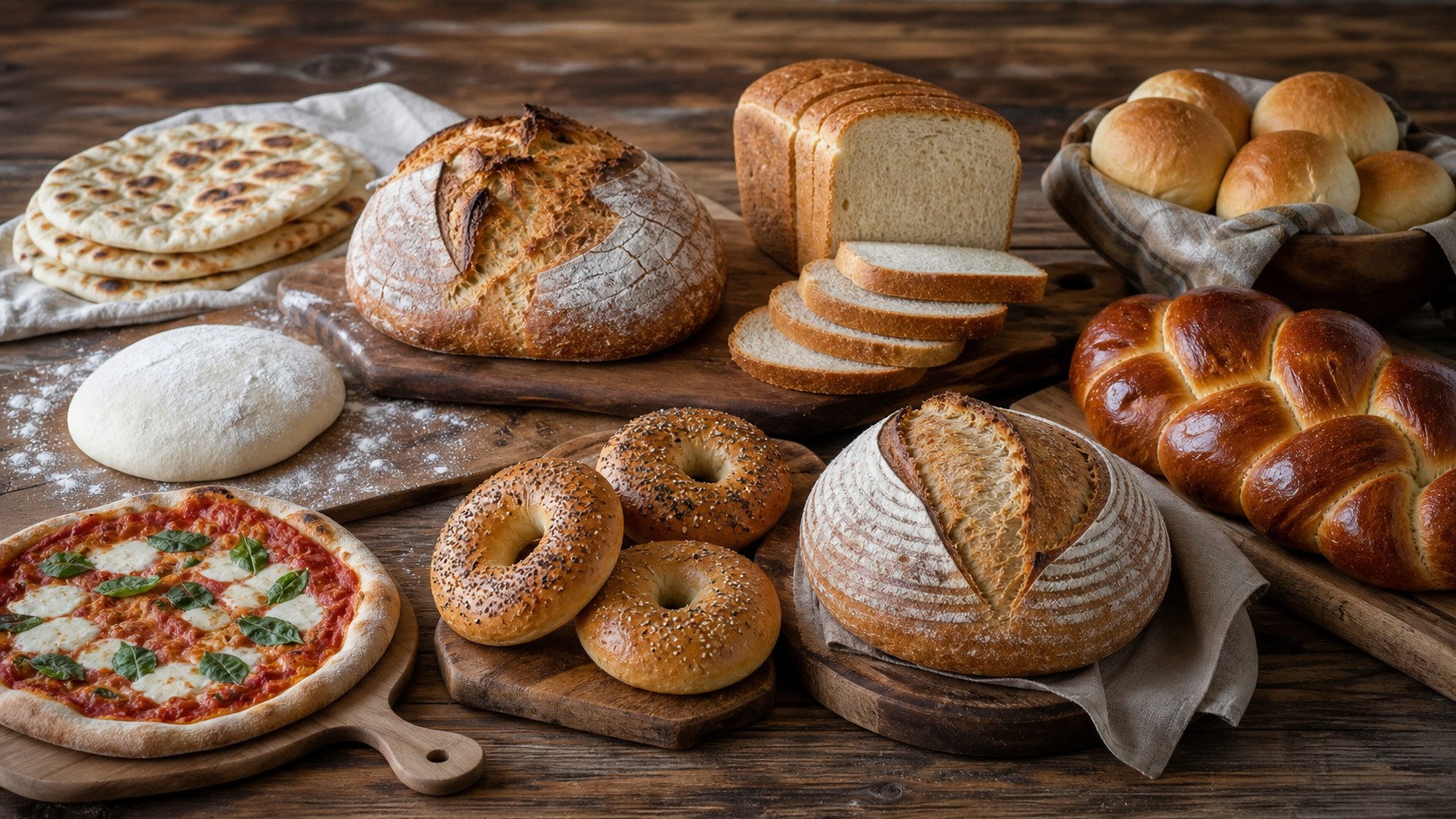
Bread recipes make more sense when you group them by dough family. Lean doughs use flour, water, yeast or starter, and salt, sometimes with a little oil. They create rustic loaves, baguette-style breads, pizza dough, focaccia, and many flatbreads. Enriched doughs include ingredients such as butter, milk, eggs, sugar, or oil, which make the bread softer and more tender. Sandwich bread, dinner rolls, cinnamon rolls, brioche-style loaves, and challah-like braids live in this world. Quick breads use baking powder or baking soda instead of yeast, so they behave more like muffins or cakes than traditional bread.
Understanding the family helps you set expectations. A lean dough may be sticky and need time to develop flavor. An enriched dough may rise more slowly because fat and sugar can soften gluten activity. A flatbread may not need a long proof. Pizza dough may improve with time in the refrigerator. A soft roll wants tenderness, while a rustic loaf wants structure and crust. The recipe is easier to follow when you know what kind of bread it is trying to become.
This also helps you choose recipes for your schedule. If you want bread tonight, flatbread, focaccia, pizza dough, or simple rolls may be better than a long-fermented loaf. If you want flavor and crust, a slower dough can be worth the wait. Homemade bread is partly a cooking project and partly a timing project.
Flour, Hydration, Yeast, and Salt Do the Big Work
Flour gives dough its structure. Bread flour has more protein and can create stronger gluten, which is helpful for chewy loaves, bagels, and pizza. All-purpose flour is flexible and works for many home breads. Whole wheat flour adds flavor and nutrition but absorbs more water and can make dough feel heavier. Rye brings deep flavor but behaves differently because it does not build gluten the same way wheat flour does. Hydration describes how much water is in the dough. A low-hydration dough may be firm and easier to shape. A high-hydration dough can be sticky but create a more open crumb and crisp crust. Beginners often panic when dough is sticky, but sticky is not always wrong. Wet doughs need different handling: folds, rests, oiled hands, or gentle shaping instead of lots of extra flour.
Yeast or starter provides fermentation, while salt controls flavor and structure. Too little salt makes bread taste flat. Too much yeast can make dough rise quickly but taste less developed. Time gives flavor. A refrigerator rise can make pizza dough, focaccia, and rustic loaves taste more complex without much extra labor.
Kneading, Folding, and Resting Build Structure
Kneading develops gluten by stretching and aligning proteins in the dough. Some recipes ask for traditional kneading on the counter, while others use a mixer. Wet doughs often use folds instead: stretch the dough gently, fold it over itself, and let time do part of the work. No-knead breads rely heavily on long fermentation, hydration, and folds or rests. These methods are not shortcuts in the lazy sense; they are different ways to build structure.
Resting is underrated. A dough that seems rough after mixing can become smoother after ten or twenty minutes because the flour hydrates. This is why many recipes include an autolyse or short rest before kneading. Resting also makes shaping easier. If dough resists rolling or stretching, give it time. Dough that springs back is often tense, not disobedient.
Learning to read dough by feel is more useful than obsessing over exact minutes. Smooth, elastic dough feels different from shaggy dough. Over-floured dough feels stiff. Properly proofed dough feels airy. These cues come with repetition, and every loaf teaches something.
Proofing Is About Readiness, Not Just the Clock
Proofing is where dough rises and fermentation creates gas, flavor, and texture. Many recipes give time ranges, but dough rises faster in a warm kitchen and slower in a cool one. Enriched doughs may take longer. Whole-grain doughs may feel different. The clock is useful, but the dough’s appearance matters more. Look for volume, softness, airiness, and how the dough responds to a gentle poke.
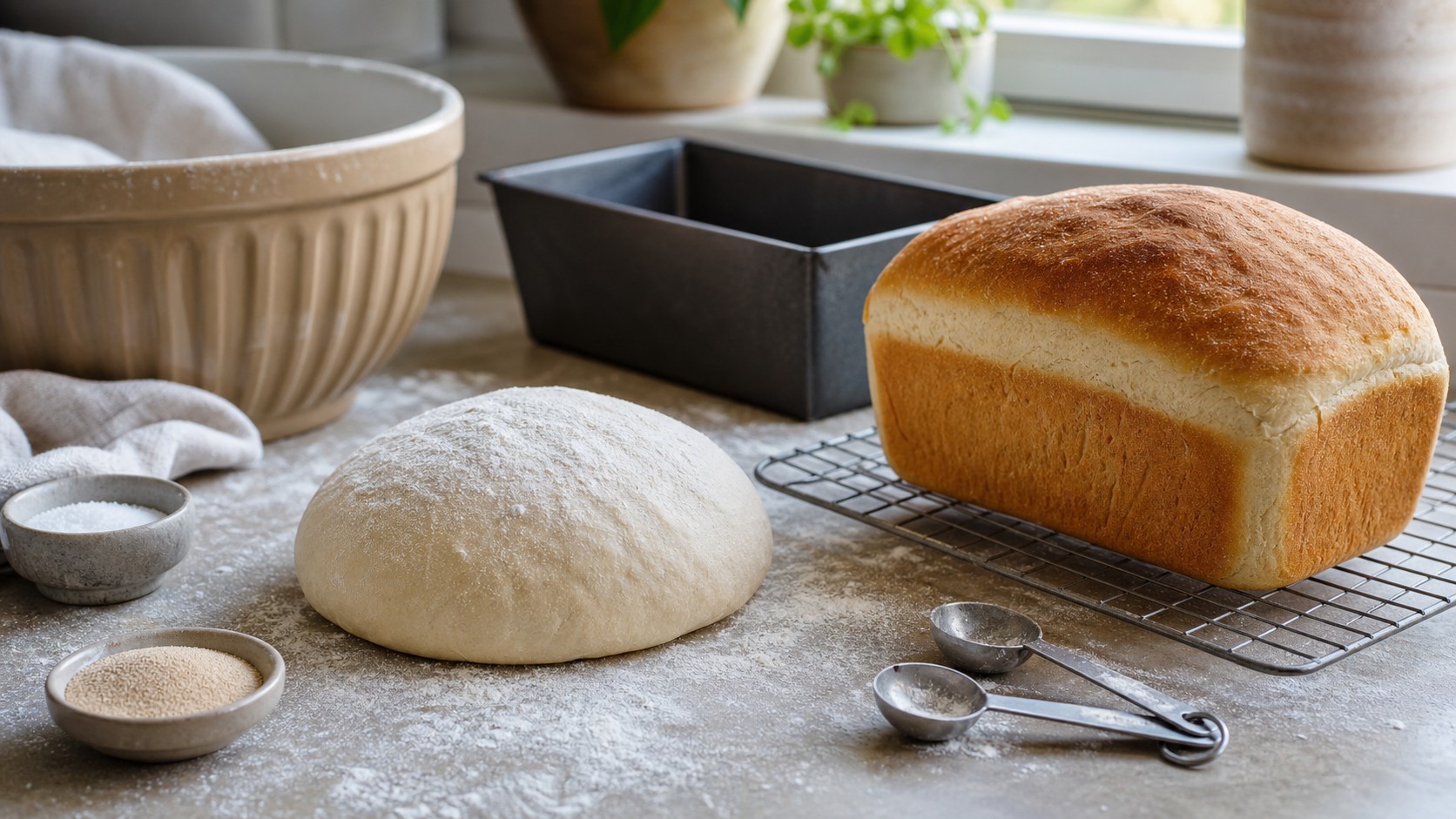
Under-proofed bread can be dense, tight, or prone to tearing. Over-proofed bread can collapse, spread, or bake up weak. The sweet spot depends on the recipe. A sandwich loaf usually needs to rise near the top of the pan. Rolls should look puffy. Pizza dough should feel relaxed enough to stretch. Focaccia should be airy and jiggly before baking. Rustic loaves need enough fermentation to open in the oven without exhausting themselves.
Shaping Gives Bread Its Final Direction
Shaping is not just cosmetic. It creates surface tension, organizes the dough, and affects how the bread rises in the oven. A boule, batard, sandwich loaf, roll, braid, pizza round, or flatbread each needs a different kind of shaping. Use light flour when needed, but avoid burying the dough. Too much flour on the surface can make seams harder to seal and bread drier.
For beginners, simple shapes are best. A pan loaf is forgiving because the pan supports the dough. Rolls are approachable because each piece is small. Focaccia is friendly because it is pressed into a pan rather than shaped tightly. Pizza dough teaches stretching and relaxation. Once those feel comfortable, free-form loaves, braids, and filled doughs become easier.
Good shaping also makes bread bake more evenly. Rolls of similar size finish together. A loaf with a sealed seam holds its form. A pizza dough stretched gently has fewer thin spots. The goal is not perfection; it is giving the dough enough structure to succeed.
Baking Turns Dough Into Bread
Heat finishes the work. Lean breads often benefit from a hot oven and steam, which helps crust expand before setting. Dutch ovens create a steamy environment for rustic loaves. Focaccia likes enough oil and heat to create a crisp bottom. Pizza needs high heat and a preheated stone, steel, or heavy pan if you want better crust. Enriched breads bake more gently because sugar and fat brown faster. Color is information. Pale bread may be underbaked or missing flavor. Deep golden bread often tastes better, especially with rolls, sandwich loaves, and enriched doughs. Internal temperature can help when you are unsure. Bread also needs cooling time. Cutting too early can make the crumb gummy because steam has not settled.
The pan or surface matters as much as the oven temperature. A loaf pan supports soft sandwich bread, a heavy baking sheet can crisp flatbreads, and a preheated Dutch oven helps rustic loaves rise before the crust sets. Good baking is not only heat; it is heat delivered in the right way for that dough.
Choose Recipes That Match Your Confidence
The best homemade bread recipe is the one that fits your current comfort level and schedule. A beginner might start with focaccia, no-knead bread, pizza dough, flatbread, or a simple sandwich loaf. A more confident baker might try bagels, ciabatta, enriched rolls, sourdough, or laminated-style doughs. Skill grows through repetition, not through choosing the hardest recipe first.
Keep notes. Write down the flour used, how long the dough rose, how warm the kitchen was, and what you would change next time. Bread baking is beautifully responsive to observation. Once you begin noticing dough instead of merely following instructions, homemade bread becomes less mysterious and much more rewarding.
Confidence also comes from choosing recipes with a clear use. Bread for sandwiches, pizza night, soup, breakfast toast, or a holiday table gives the bake a reason. When the bread has a job, the recipe feels less like a performance and more like cooking.
Plan Bread Around Time, Not Just Ingredients
Most homemade bread problems start with timing. Dough may need mixing, resting, kneading, a first rise, shaping, a second rise, baking, and cooling. Some recipes fit into an afternoon, while others are better spread across two days. Refrigerator rises are especially useful because they slow fermentation and let you bake when the schedule works. Pizza dough, focaccia, rustic loaves, and some enriched doughs can all benefit from this kind of planning.
Cooling time belongs in the schedule too. Fresh bread smells ready before it is structurally ready to slice. Cutting too soon can compress the crumb or make the loaf seem gummy. If dinner depends on the bread, bake earlier than you think. If breakfast depends on it, consider baking the night before. Homemade bread feels easier when the timeline is honest from the beginning.
Use One Dough in Several Ways
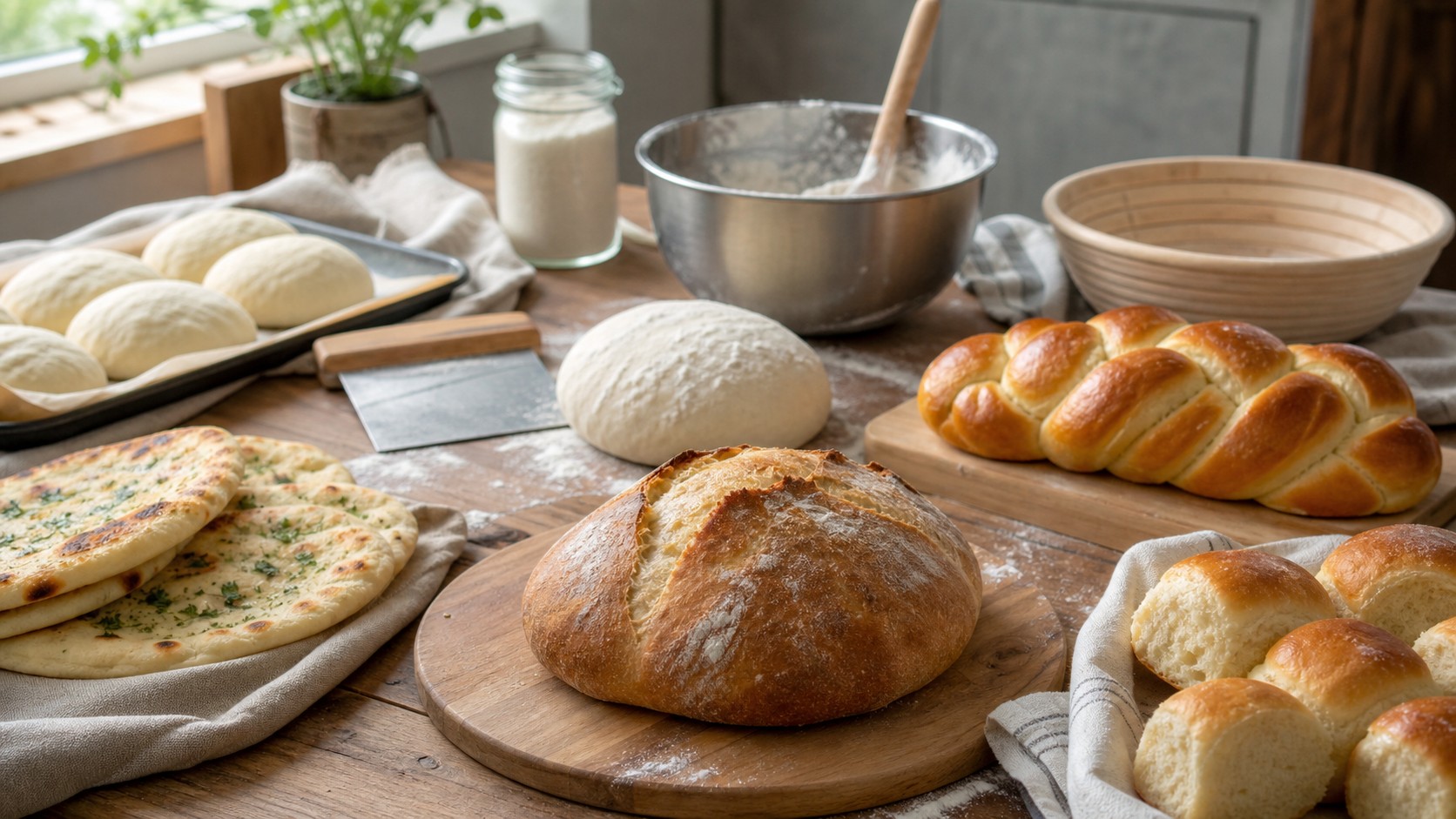
Many doughs are more flexible than they first appear. A basic lean dough can become pizza, focaccia, breadsticks, or a rustic loaf depending on hydration, shaping, and baking. A soft enriched dough can become rolls, sandwich bread, cinnamon bread, buns, or a simple braid. Learning one dough deeply can be more useful than collecting dozens of recipes that all feel unfamiliar. You begin to see how shaping and baking change the final bread.
This is a practical way to build confidence. Make a dough you like, then change its destination. Turn half into rolls and half into a loaf. Use pizza dough for flatbread. Bake focaccia one week and breadsticks the next. The more uses you find for one dough, the more homemade bread becomes part of normal cooking instead of a special event.
It also helps reduce the fear of dough. When you know a dough can become several things, a small shaping mistake feels less serious. Pizza dough that resists stretching can become focaccia. Rolls that are uneven can still become dinner. A loaf that rises faster than expected can be baked earlier. Flexibility is one of the quiet pleasures of homemade bread.
That flexibility is why bread and dough recipes belong together. They teach the same core ingredients through different shapes, textures, and meals. A baker who understands one dough can begin to understand many breads, because the changes become visible: more water, more fat, longer fermentation, tighter shaping, hotter baking, or gentler handling.
This is the point where homemade bread becomes creative instead of intimidating. You are no longer only asking whether the recipe worked. You are starting to understand why it worked and what else the dough might become, from a weeknight pizza to a soft breakfast loaf, a tray of rolls, or bread for the next soup night at home. That understanding makes future recipes easier to trust, adapt, and repeat with confidence, even when the dough feels slightly different from the last batch in your kitchen on another day of baking bread.