Perfect Grains and Legumes Are Mostly About Attention
Cooking grains and legumes perfectly every time is less about memorizing one universal rule and more about understanding texture, water, salt, heat, and timing. Rice does not behave like farro. Lentils do not behave like chickpeas. Beans need tenderness all the way through, while quinoa needs rinsing and a controlled simmer. The good news is that these foods are forgiving once you learn their habits. A few practical techniques can turn a pot of grains or legumes from bland filler into the foundation of genuinely satisfying meals.
A: Soaking can shorten cooking time and improve evenness, but many beans can cook without it.
A: Most lentils do not need soaking and cook relatively quickly.
A: They may be old, undercooked, cooked with too much acid too early, or simmered too briefly.
A: Yes, salted cooking water usually improves flavor.
A: Rinse when needed, use the right water amount, simmer gently, rest, and fluff.
A: Simmer it in plenty of salted water and drain when chewy-tender.
A: Use salt, aromatics, acid after cooking, herbs, spices, and olive oil.
A: Yes, freeze them in usable portions, ideally flat for faster thawing.
A: They may be the wrong variety for salad or cooked too long.
A: It means the texture fits the dish, from fluffy rice to creamy beans.
Start by Knowing the Category
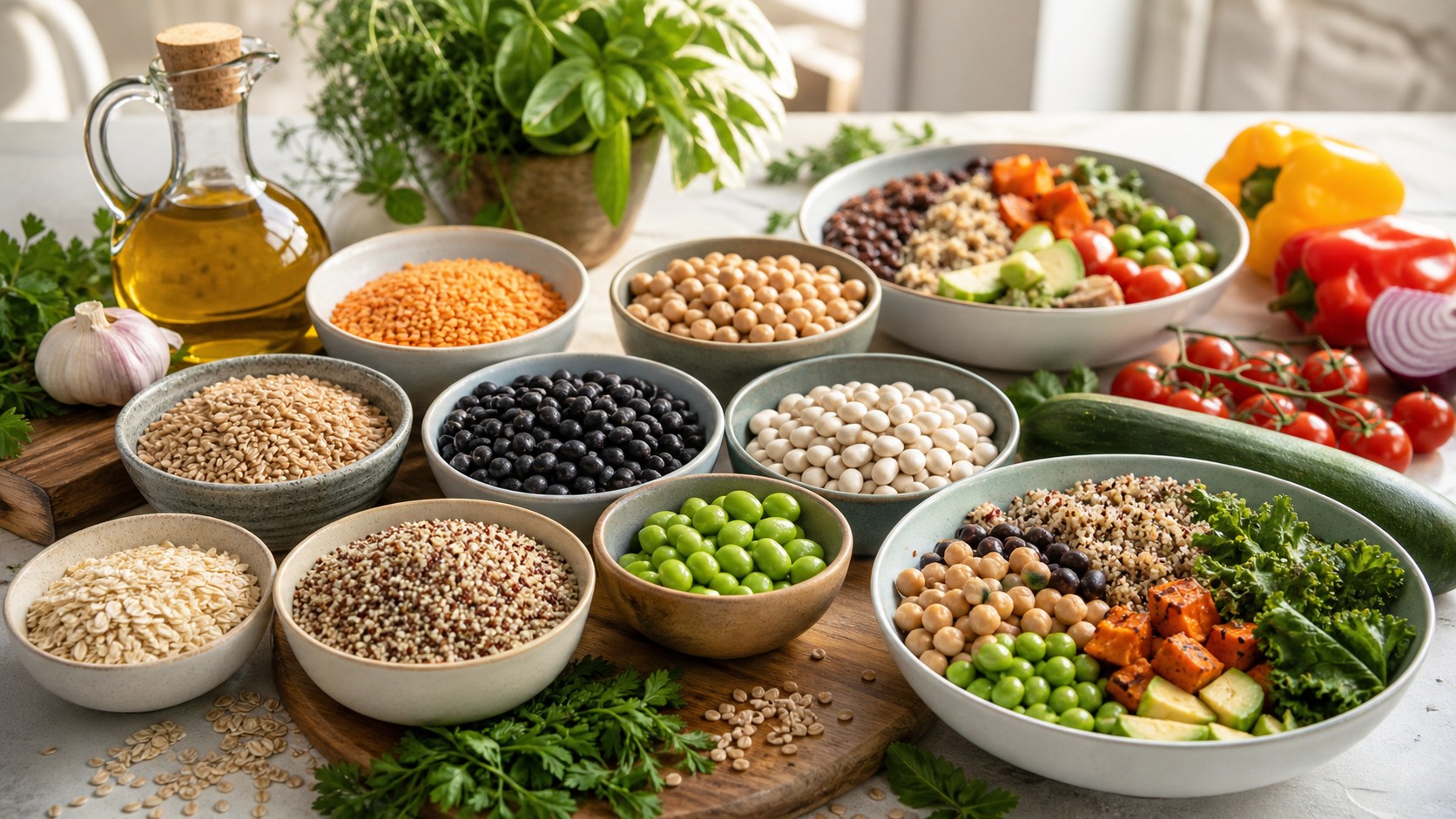
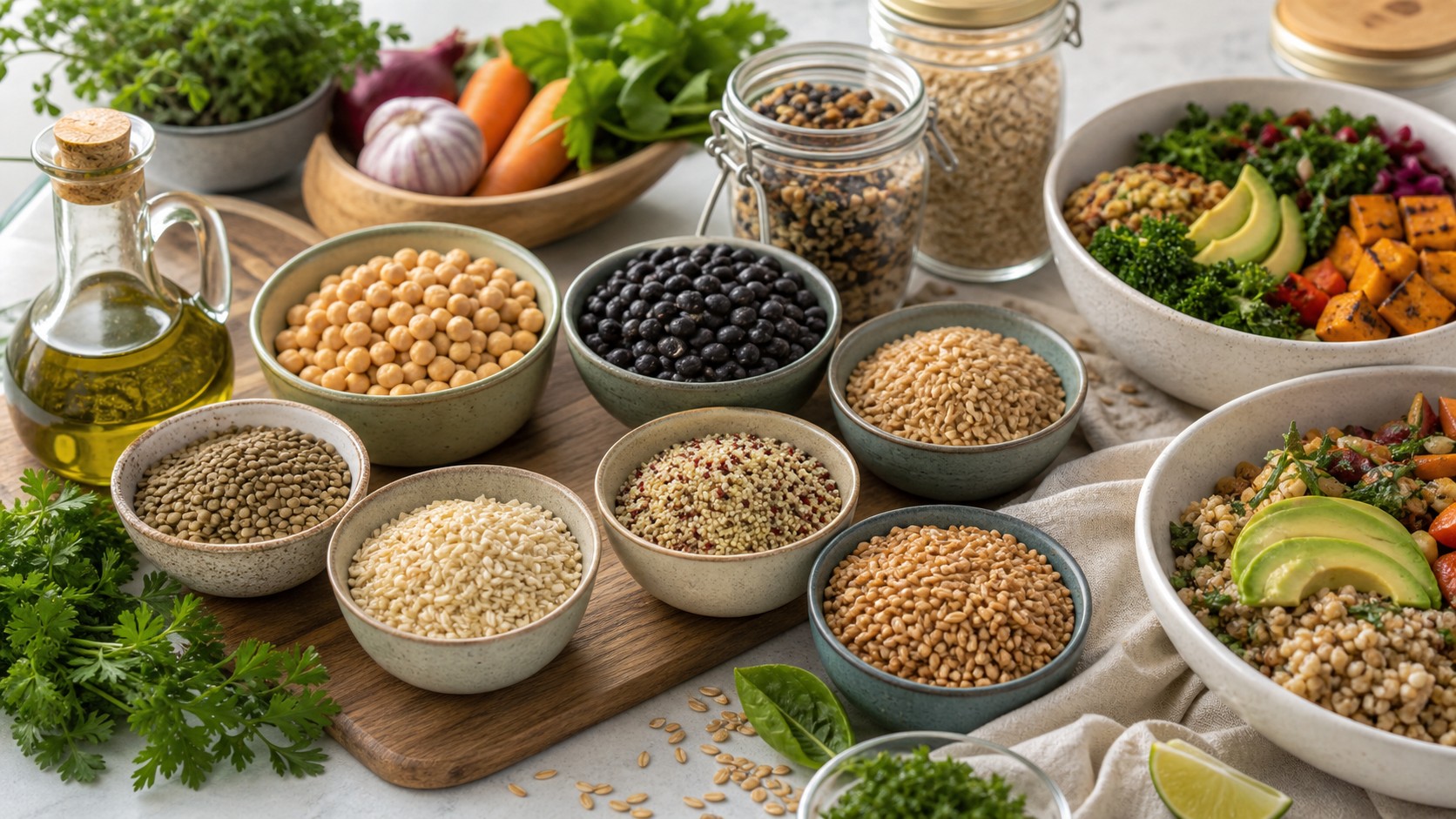
Grains and legumes are often grouped together because they are pantry staples, but they cook for different reasons. Grains are usually seeds or seed-like foods cooked until tender and fluffy, chewy, or creamy. Rice, oats, quinoa, farro, barley, bulgur, millet, and cornmeal all fall into this cooking world. Legumes are beans, lentils, peas, chickpeas, and related foods that need enough moisture and time to become tender. Some cook quickly, like red lentils. Others require patience, like chickpeas or large dried beans.
Perfect cooking starts with realistic expectations. Brown rice will take longer than white rice. Farro may stay pleasantly chewy even when done. Lentils can go from intact to collapsed depending on the variety. Dried beans may cook faster or slower depending on age, size, soaking, and water. The package directions are a starting point, not a promise.
Before cooking, decide what texture you want. Salad grains should stay separate. Soup barley can be softer. Lentils for salad should hold shape, while lentils for dal can melt. Beans for a salad should be tender but intact, while beans for a dip can be softer. Texture is the target, and timing is only the path toward it.
Rinse, Sort, and Soak With Purpose
Rinsing is useful for many grains and legumes. Rinse rice to remove excess surface starch when you want fluffy grains. Rinse quinoa to reduce bitterness. Rinse dried lentils and beans to remove dust and check for debris. Sorting dried beans is still worth doing because small stones or damaged beans can occasionally appear. These small steps take little time and prevent avoidable problems. Soaking depends on the legume and your schedule. Lentils usually do not need soaking. Split peas do not usually need it either. Chickpeas and many dried beans benefit from soaking because it can shorten cooking time and help them cook more evenly. Overnight soaking is easy, but quick soaking can work when you forgot. Cover beans with plenty of water, bring them to a boil briefly, turn off the heat, and let them sit before draining and cooking.
Soaking is not a moral requirement. If you cook dried beans without soaking, they will usually still cook; they may simply take longer. The important part is using enough water, keeping the simmer steady, and cooking until fully tender rather than stopping when the clock says they should be done.
Use the Right Water Strategy
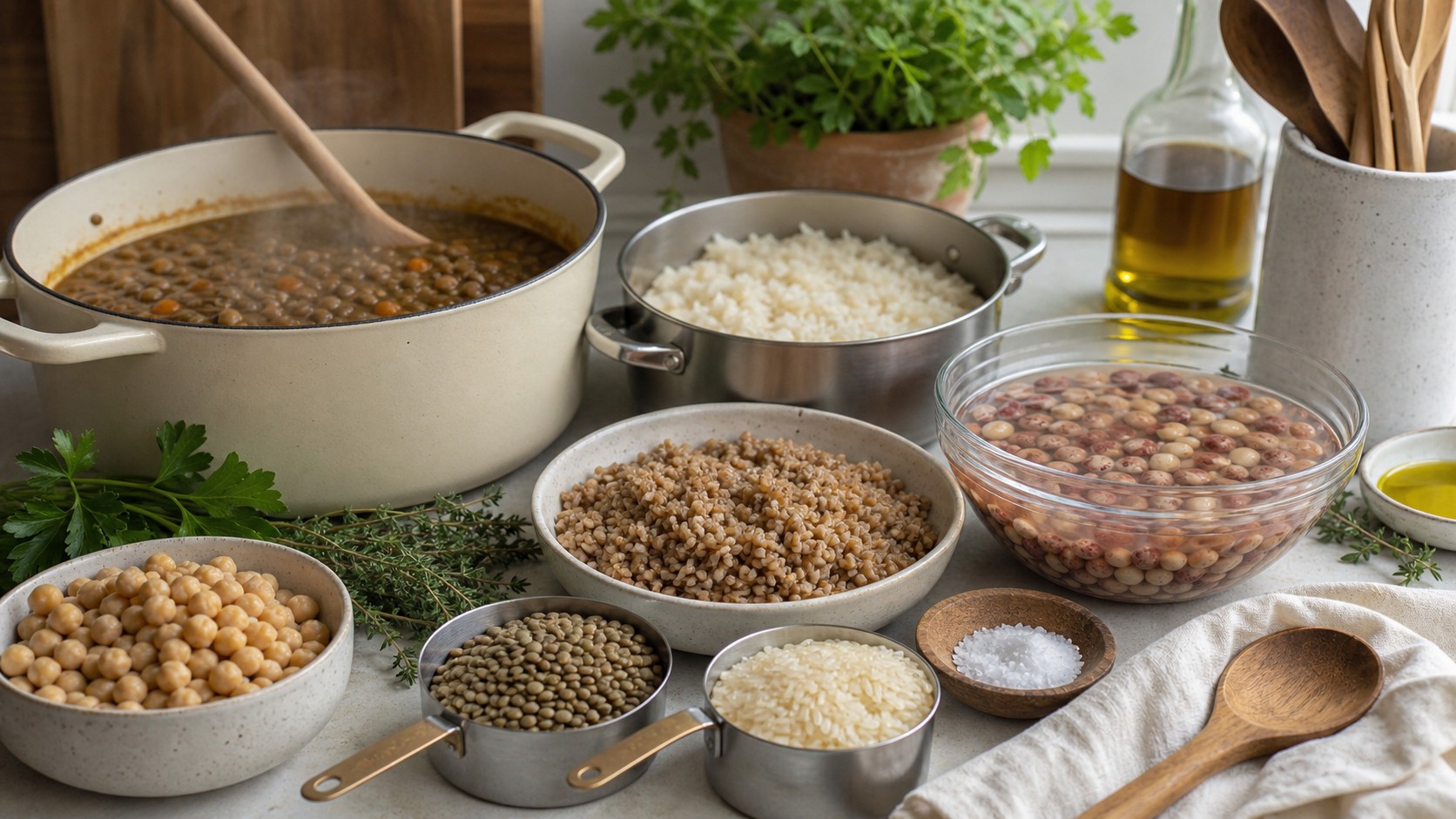
Some grains cook best by absorption, where a measured amount of liquid disappears into the grain. White rice, brown rice, quinoa, couscous, and oats often use this method. Other grains are easier cooked like pasta in plenty of water, then drained when tender. Farro, barley, wheat berries, and some wild rice blends can be more forgiving this way because you do not have to nail the exact water ratio.
Legumes need enough water to move freely. Beans should be covered by several inches of liquid because they expand and simmer for a long time. Lentils need less time but still need enough liquid to cook evenly. If the water level drops too low, add hot water. Cold water can slow cooking suddenly, while hot water keeps the pot moving.
Use broth when it makes sense, but water is fine when you plan to season boldly later. For beans, aromatics such as garlic, onion, bay leaf, dried chile, herbs, or a splash of olive oil can add depth. Acidic ingredients like tomatoes, vinegar, or lemon are often better added after legumes are tender because acidity can slow softening in some cases.
Salt and Heat Make a Big Difference
Salt is one of the biggest differences between dull grains and satisfying grains. Cooking grains in salted water gives flavor from the inside, especially for rice, pasta-like grains, oats, and farro. Beans have long been surrounded by conflicting advice about salt, but many cooks salt earlier now because it helps flavor and can improve texture when used reasonably. The bigger issue is not salt itself; it is stopping before the legume is tender. Heat should usually be steady rather than aggressive. A hard boil can break beans apart, make lentils collapse, or cause grains to cook unevenly. Bring the pot to a boil, then reduce to a simmer. Keep the lid on or off depending on the food and method. Rice usually needs a covered simmer and a rest. Pasta-style grains can simmer uncovered. Beans often cook partly covered so evaporation is controlled but the pot can be monitored.
Resting matters. Rice and quinoa benefit from sitting covered off heat so steam finishes the texture. Fluff with a fork after resting. Beans benefit from cooling in their cooking liquid if you have time, because they absorb flavor and stay moist. Grains and legumes improve when you stop treating the final second of cooking as the only important moment.
Cook Common Staples With Confidence
For rice, rinse if you want distinct grains, use the right amount of water, simmer gently, and rest before fluffing. For oats, choose the texture you want: creamy stovetop oats need stirring and enough liquid, while baked oats need time to set. For quinoa, rinse, simmer with measured liquid, rest, and fluff. For farro and barley, try the pasta method if ratios make you nervous; simmer in plenty of salted water and drain when chewy-tender.
For lentils, match the variety to the dish. Red lentils soften quickly and are perfect for soups, dals, and sauces. Brown and green lentils hold shape better for salads and bowls. French lentils stay firm and earthy. For dried beans, soak if helpful, simmer gently with aromatics, add salt, and cook until creamy inside. Test more than one bean from the pot because tenderness can vary.
Chickpeas need patience. They should be tender all the way through, not chalky in the center. If you want hummus, cook them softer than you would for salad. Black beans and pinto beans should be creamy but not shattered. White beans can be delicate, so keep the simmer gentle. Each staple has its own best texture, and learning that texture is the real skill.
Season After Cooking So the Food Feels Finished
Cooking properly is only half the work. Grains and legumes need finishing. Add olive oil, butter, herbs, lemon, vinegar, spices, garlic, salsa, yogurt sauce, tahini, pesto, cheese, or broth depending on the meal. Warm grains absorb dressing well, but delicate herbs may taste fresher when added later. Beans love acid after they are tender. Lentils can handle vinaigrette, mustard, herbs, and roasted vegetables. Rice can move toward almost any cuisine with the right sauce.
Do not wait until the plate is assembled to discover that the base is bland. Taste the grain or legume by itself. If it tastes flat, add salt or acid. If it tastes dry, add oil, sauce, cooking liquid, or broth. If it tastes heavy, add herbs, vinegar, lemon, pickles, or crunchy vegetables. Perfect cooking includes the moment when the food becomes delicious enough to stand on its own.
Store and Reheat Without Ruining Texture
Cool cooked grains and legumes promptly and store them in airtight containers. Grains can dry out in the refrigerator, so reheat them with a splash of water, broth, or sauce. Rice should be cooled and stored safely, then reheated thoroughly. Beans store best with some cooking liquid so they do not become pasty or dry. Lentils for salad can be drained, but lentils for soup can stay in broth.
Freeze in portions you will actually use. A huge frozen block of beans is less helpful than several small containers. Grains can be frozen flat in bags so they thaw quickly. Labeling matters because cooked grains and legumes can look surprisingly similar once frozen. Good storage protects the work you already did and makes future meals faster.
When reheating, add freshness back. Herbs, lemon, sauce, greens, or crisp vegetables can make yesterday’s grain or bean feel new. Texture can be restored with toasted seeds, nuts, or crunchy vegetables. Reheating should not mean accepting dull food.
Perfect Every Time Means Adjusting Every Time
Even experienced cooks adjust. Older beans take longer. A different pot changes evaporation. Altitude affects cooking. A simmer that is too low can drag out timing, while a boil that is too hard can damage texture. Instead of trusting the clock blindly, taste and look. Is the rice tender? Are the lentils holding the shape you want? Are the beans creamy inside? Does the grain need draining, resting, or more liquid?
That kind of attention is what makes grains and legumes reliable. Once you understand the cues, these foods become less mysterious and much more useful. Perfect does not mean identical every time. It means cooked to the texture and flavor your meal actually needs.
That is dependable cooking.
Keep notes when something changes dramatically. Bean age, pot size, soaking time, water hardness, and kitchen temperature can all influence results. A few notes turn frustration into a pattern you can recognize next time.
Match the Cooking Method to the Final Dish
The same grain or legume may need different treatment depending on where it is going. Lentils for salad should be cooked gently and drained before they collapse. Lentils for soup can be softer because they are part of the broth. Rice for a bowl should be fluffy enough to separate, while rice for porridge should be creamy. Beans for salad should hold their shape, while beans for dip can be cooked until very soft. Perfect cooking is always connected to the final dish.
This is why tasting matters more than timers. A package cannot know whether your chickpeas are headed for hummus or a chopped salad. It cannot know whether your barley needs to thicken soup or stay chewy in a grain bowl. Decide the destination first, then cook toward that texture. The food will feel more intentional because the technique matches the meal.
Use Mistakes as Texture Clues
Overcooked grains and legumes are not always ruined. Soft lentils can become soup, dal, or sauce. Broken beans can become refried beans, dip, or a thick stew. Mushy rice can become porridge or fried rice if cooled and handled well. Undercooked grains can often return to the pot with more liquid. Beans that are not tender need more time, not more frustration. A flexible cook can redirect imperfect texture into a different meal. Still, the goal is to learn from the mistake. If rice is often wet, reduce water or rest it longer. If beans stay hard, check age, simmer time, and acidic ingredients. If lentils collapse, use a firmer variety or check earlier. Cooking grains and legumes perfectly every time really means building a memory of what each food does under your conditions.