Grains and Legumes Are Everyday Healthy Eating Tools
Grains and legumes are some of the most useful foods in a healthy kitchen because they are affordable, filling, flexible, and easy to turn into real meals. Rice, oats, barley, farro, quinoa, bulgur, beans, lentils, chickpeas, peas, and soy foods can support breakfasts, lunches, dinners, soups, salads, bowls, wraps, and sides. The trick is learning how to cook them well, season them generously, and pair them with vegetables, protein, sauces, and healthy fats so they feel satisfying instead of plain.
A: Yes, they can provide fiber, energy, plant protein, minerals, and satisfying meal structure.
A: Rice, oats, quinoa, couscous, and bulgur are approachable starting points.
A: Lentils cook faster than most dried beans and do not usually need soaking.
A: Yes, they are practical and useful, especially when rinsed and seasoned well.
A: Use broth, herbs, acid, sauces, toasted seeds, vegetables, and spices.
A: Yes, especially with vegetables, sauce, and enough fat or protein for satisfaction.
A: Prep components separately and change sauces, vegetables, and formats.
A: Farro, quinoa, barley, bulgur, rice, and wheat berries hold well.
A: Increase portions gradually, rinse canned beans, cook dried beans fully, and drink water.
A: Rice and beans with vegetables, salsa, and avocado is simple, flexible, and filling.
Understand What Grains and Legumes Bring to the Plate
Whole grains and legumes are valuable because they offer more than one kind of support. Whole grains can bring complex carbohydrates, fiber, minerals, and satisfying texture. Legumes bring plant protein, fiber, minerals, and a creamy or hearty quality that helps meals last. Together, they can make meals feel grounded. A bowl of lentils and rice, a chickpea salad with farro, black beans with corn tortillas, oats with nuts, or barley soup can be simple and deeply sustaining.
Healthy eating often becomes easier when grains and legumes are treated as foundations rather than side notes. They stretch vegetables into meals, make leftovers more useful, and reduce the pressure to rely on expensive proteins every day. They also carry flavor well. Beans love spices, herbs, acid, and olive oil. Grains absorb broth, sauces, and dressings. When cooked and seasoned well, they are not filler. They are the structure of the meal.
Choose Grains by Texture and Use
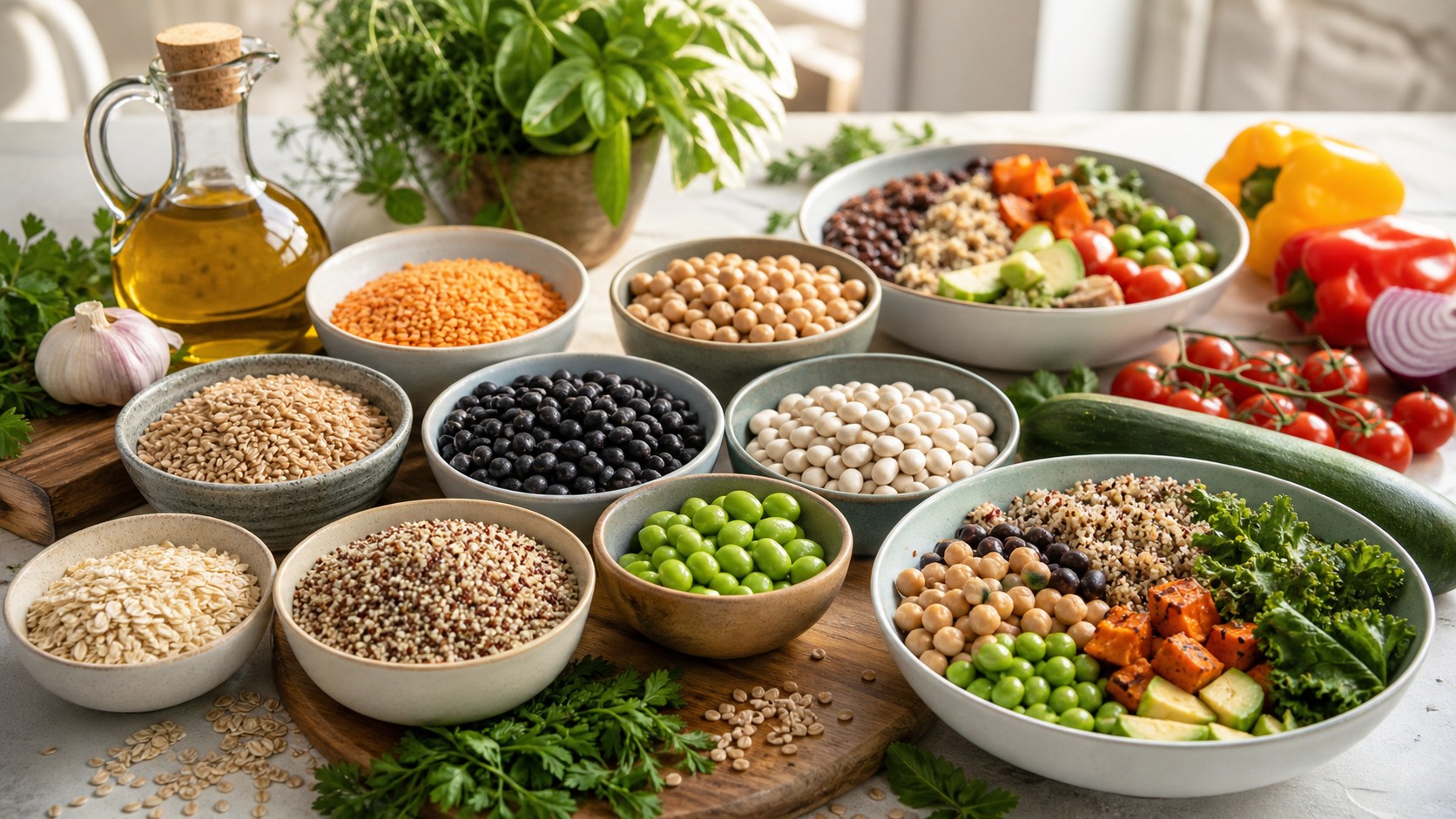
Different grains solve different problems. Brown rice is sturdy and familiar. White rice is quick and gentle. Quinoa cooks fast and works in bowls and salads. Farro is chewy and satisfying. Barley is excellent in soups. Bulgur is fast and useful for tabbouleh-style salads. Oats can be breakfast, baked goods, or savory bowls. Corn, tortillas, polenta, and grits bring comfort and flexibility. Whole-wheat pasta can make a meal more filling when paired with vegetables and beans.
Choose the grain based on the meal you want, not on a hierarchy of worthiness. A delicate curry may want white rice. A lunch salad may need farro. A quick breakfast may need oats. A soup may need barley. Healthy eating is not always about choosing the densest grain; it is about choosing the one that helps you eat a balanced meal you will enjoy.
Texture matters. If you dislike mushy grains, cook them with less water, drain them like pasta, or choose naturally chewy grains. If you need gentle food, choose softer rice, oats, or polenta. Personal preference is part of making healthy habits last.
Use Legumes for Protein, Fiber, and Comfort
Beans, lentils, chickpeas, split peas, black-eyed peas, edamame, tofu, and tempeh can make meals filling without feeling heavy. Lentils cook relatively quickly and work in soups, salads, bowls, and sauces. Chickpeas can be roasted, mashed, simmered, or tossed into salads. Black beans, pinto beans, kidney beans, and white beans each bring a different texture and flavor. Split peas make thick soups. Edamame adds quick protein to bowls and noodles.
Canned legumes are practical and worth keeping around. Rinse them when you want a cleaner taste, then season them with salt, acid, herbs, spices, or sauce. Dried beans can be more affordable and flavorful, but they require planning. Both forms have a place. A healthy kitchen should not depend on doing everything from scratch every time.
Cook Them So They Taste Good
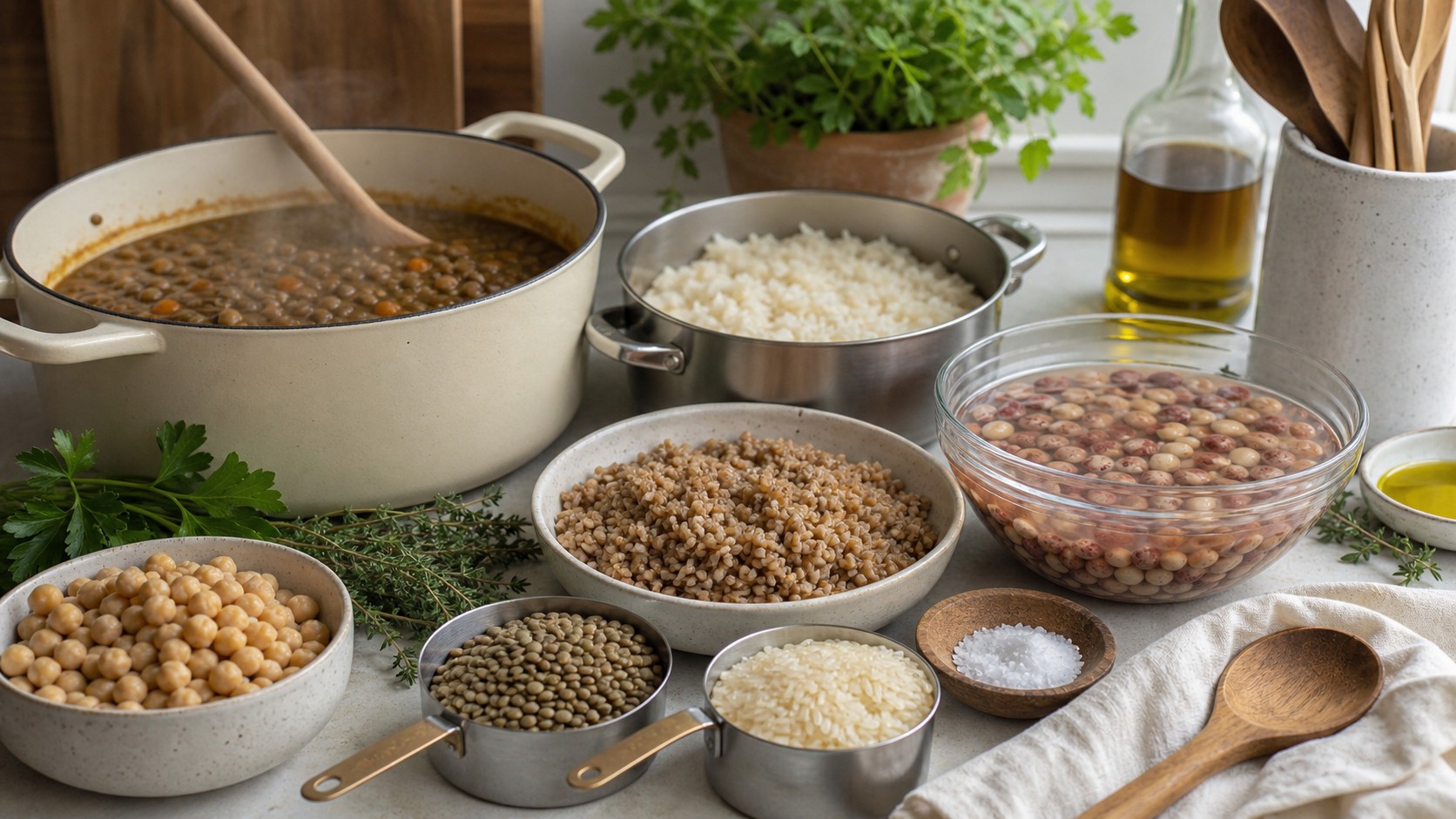
Many people think they dislike grains or legumes because they have mostly eaten underseasoned versions. Cook grains in salted water or broth when appropriate. Toast grains briefly before simmering if you want a nuttier flavor. Add bay leaves, garlic, onion, herbs, or spices to beans while cooking. Finish cooked legumes with olive oil, lemon, vinegar, herbs, or a flavorful sauce. Salt thoughtfully; bland beans rarely become exciting later without enough seasoning.
Do not overcook everything into the same texture. Lentils can be tender but not collapsed for salads. Beans can be creamy without falling apart. Farro and barley can stay chewy. Rice can be fluffy instead of wet. Cooking technique is what turns healthy staples into food people ask for again.
Batch cooking helps, but store components simply. Keep cooked grains and legumes separate from wet sauces unless the dish is meant to marinate. This gives you more options throughout the week.
Build Meals With Grains and Legumes
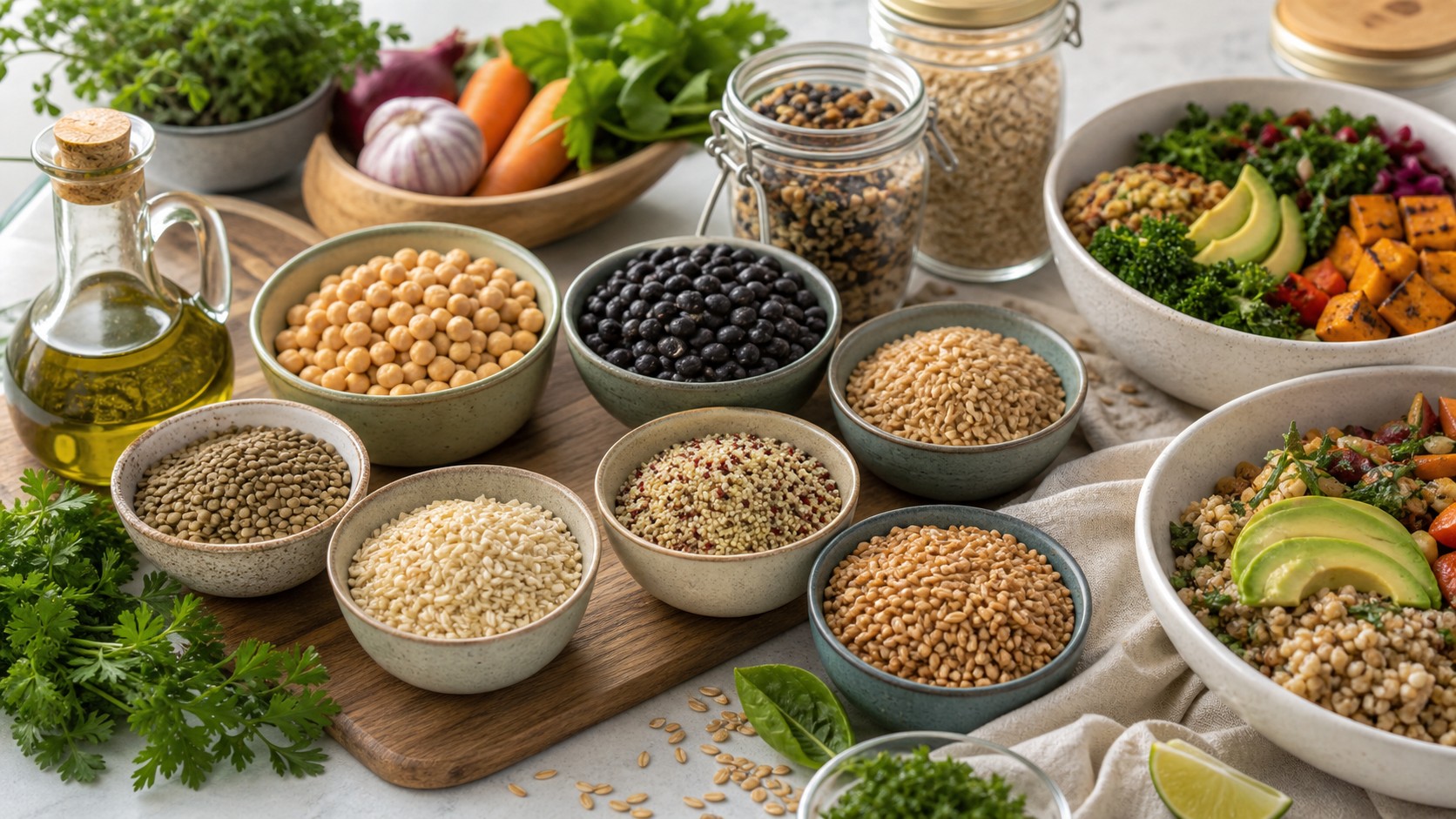
The easiest formula is grain plus legume plus vegetable plus sauce. Rice with black beans, peppers, salsa, and avocado. Farro with chickpeas, cucumber, tomatoes, herbs, and vinaigrette. Barley with white beans, greens, and broth. Quinoa with lentils, roasted carrots, yogurt sauce, and seeds. Oats with fruit, nuts, and yogurt. The formula can lean Mediterranean, Mexican-inspired, Indian-inspired, Middle Eastern, Southern, or cozy and simple depending on seasoning.
Grains and legumes also improve salads and soups. A green salad becomes lunch with chickpeas and bulgur. Vegetable soup becomes dinner with lentils or barley. Leftover roasted vegetables become a bowl with rice and beans. A wrap becomes more filling with hummus or spiced lentils. These staples make it easier to build meals from what you already have.
Handle Digestion and Variety Gently
If you are not used to eating many legumes or whole grains, increase them gradually. Fiber is beneficial, but sudden large changes can feel uncomfortable. Rinse canned beans, cook dried beans until fully tender, drink water, and start with smaller portions if needed. Lentils and split peas may feel easier for some people than larger beans. Everyone’s digestion is different.
Variety also matters. Rotate grains and legumes so meals do not become monotonous. Rice one week, farro the next, lentils for soup, chickpeas for salad, oats for breakfast, black beans for tacos, barley for stew. Variety brings different textures, flavors, and nutrients, and it keeps healthy eating from feeling like a repetitive assignment.
Gentle changes are easier to keep. Add beans to a soup you already like, mix farro into a familiar salad, or replace part of a meat filling with lentils before making a full switch. Healthy eating becomes less jarring when new staples join familiar meals instead of replacing everything at once.
Meal Prep Without Boredom
A good prep session might include one grain, one legume, one roasted vegetable, one raw vegetable, and one sauce. From there, you can build bowls, wraps, salads, soups, and sides. Brown rice, chickpeas, roasted sweet potatoes, cucumbers, and tahini sauce can become several different meals. Farro, white beans, greens, tomatoes, and pesto can do the same. Prep components, not identical containers, if boredom usually defeats your meal plan. Storage matters. Cool grains and legumes before refrigerating, use airtight containers, and label them if your refrigerator tends to become mysterious. Freeze extra beans or grains in usable portions. Future meals become easier when the freezer holds building blocks instead of large frozen blocks that require commitment.
Think about contrast when you prep. If the grain is soft, add crisp vegetables later. If the beans are creamy, keep something acidic nearby. If the sauce is rich, pair it with herbs or greens. Boredom often comes from repeating the same texture as much as the same flavor.
Make Grains and Legumes Flavorful Enough to Crave
Healthy eating lasts when the food tastes alive. Add acid, herbs, spices, toasted nuts, seeds, sauces, pickles, roasted vegetables, cheese, yogurt, tahini, salsa, pesto, curry, chili oil, or citrus. Beans and grains are generous canvases. They do not need to stay plain to be healthy. In fact, they usually become more nourishing in practice when they are seasoned well enough that people want to eat them.
The ultimate guide is really this: keep a few staples, cook them carefully, season them confidently, and build complete meals around them. Grains and legumes can be humble, but they are not small. They are the kind of everyday foods that make healthy eating affordable, flexible, and satisfying over the long run.
Flavor also helps reduce waste. A container of plain beans may sit untouched, but beans tossed with lemon, olive oil, parsley, and garlic can become lunch immediately. Cooked rice may be forgotten, but rice with salsa, eggs, or vegetables has a clear purpose. Seasoning gives leftovers a future.
Use Grains and Legumes Across the Whole Day
Grains and legumes are not only dinner foods. Oats, quinoa, rice, and corn can support breakfast. Beans can appear in breakfast tacos, savory bowls, or toast spreads. Lentils can become lunch salads, soups, or sauces. Chickpeas can turn into a snack, a wrap filling, or a dinner stew. Brown rice can become a bowl at lunch and a side at dinner. When these staples appear throughout the day, healthy eating feels more flexible and less dependent on one perfect meal.
This whole-day approach is especially useful for busy households. A pot of rice can support eggs in the morning, a bean bowl at lunch, and stir-fry at dinner. A batch of lentils can become soup, salad, and a pasta sauce. Cooked chickpeas can become hummus, roasted snacks, or curry. The same ingredient can move through different formats without tasting repetitive if the seasonings change.
Make Room for Convenience Without Losing Quality
Convenience can be part of a healthy grains-and-legumes routine. Microwave rice, canned beans, quick oats, frozen edamame, lentil pasta, pre-cooked grain pouches, and store-bought hummus can all help people eat better during real weeks. The quality comes from how you use them. Add vegetables, herbs, acid, sauce, and texture. Taste before serving. Combine convenience with freshness so the meal feels cared for.
There is no prize for making every bean from dried or every grain from scratch if that keeps the food from appearing on the table. Scratch cooking is wonderful when time allows. Shortcuts are useful when life is full. The healthiest kitchen is often the one with both: a pot of homemade beans in the freezer and a can of chickpeas ready for the night when the plan falls apart.
Convenience is especially powerful when it prevents skipped meals. A pouch of rice with canned black beans, salsa, avocado, and cabbage can be a real dinner. Quick oats with yogurt, fruit, and nuts can be a real breakfast. Hummus with vegetables and pita can be a real lunch. The food does not become less useful because one step was easy.
Use the saved time to add freshness. Slice a cucumber, squeeze a lemon, chop herbs, warm a tortilla, or toast seeds. One fresh detail can make convenient grains and legumes taste intentional.
That balance between convenience and care is the heart of using these staples well. A can of beans is fast, but olive oil, vinegar, salt, herbs, and chopped vegetables make it feel like food someone meant to serve. A cooked grain pouch is useful, but warming it and adding sauce makes it part of a meal.
When grains and legumes are easy to start and pleasant to finish, they stop feeling like health assignments. They become reliable kitchen material for meals that need to be affordable, flexible, and filling without losing comfort, flavor, or variety at the table every week, in every season.