Healthy Seafood Should Taste Abundant
Healthy seafood recipes are at their best when they feel bright, satisfying, and full of flavor instead of plain or dutiful. Fish and shellfish bring protein, minerals, and in some cases omega-3 fats, but nutrition alone is not enough to make a recipe repeatable. The meal needs vegetables, grains, legumes, herbs, citrus, sauce, and texture. A healthy seafood dinner should taste like something you are happy to cook again, not like a compromise made for the sake of being sensible.
A: A balanced meal with fish or shellfish, vegetables, grains or legumes, and a flavorful sauce is a strong choice.
A: Use citrus, herbs, garlic, spices, sauces, and texture instead of leaving it plain.
A: Yes, especially when paired with vegetables, grains, lentils, or greens.
A: Yes, tuna, salmon, sardines, and mackerel can support quick nutritious meals.
A: Salmon, shrimp, tuna, and sturdy fish stews can work when handled safely.
A: Avoid overcooking and use sauces, broth, parchment, or gentle heat.
A: Greens, cabbage, tomatoes, cucumbers, potatoes, peppers, green beans, and carrots all work.
A: Yes, when served with grains, legumes, potatoes, bread, avocado, or satisfying sauces.
A: Shrimp bowls, shrimp salad, shrimp tacos, and shrimp with vegetables and rice are practical.
A: Frequency depends on preference, budget, health needs, and guidance from a qualified professional.
Build Healthy Seafood Around Balance
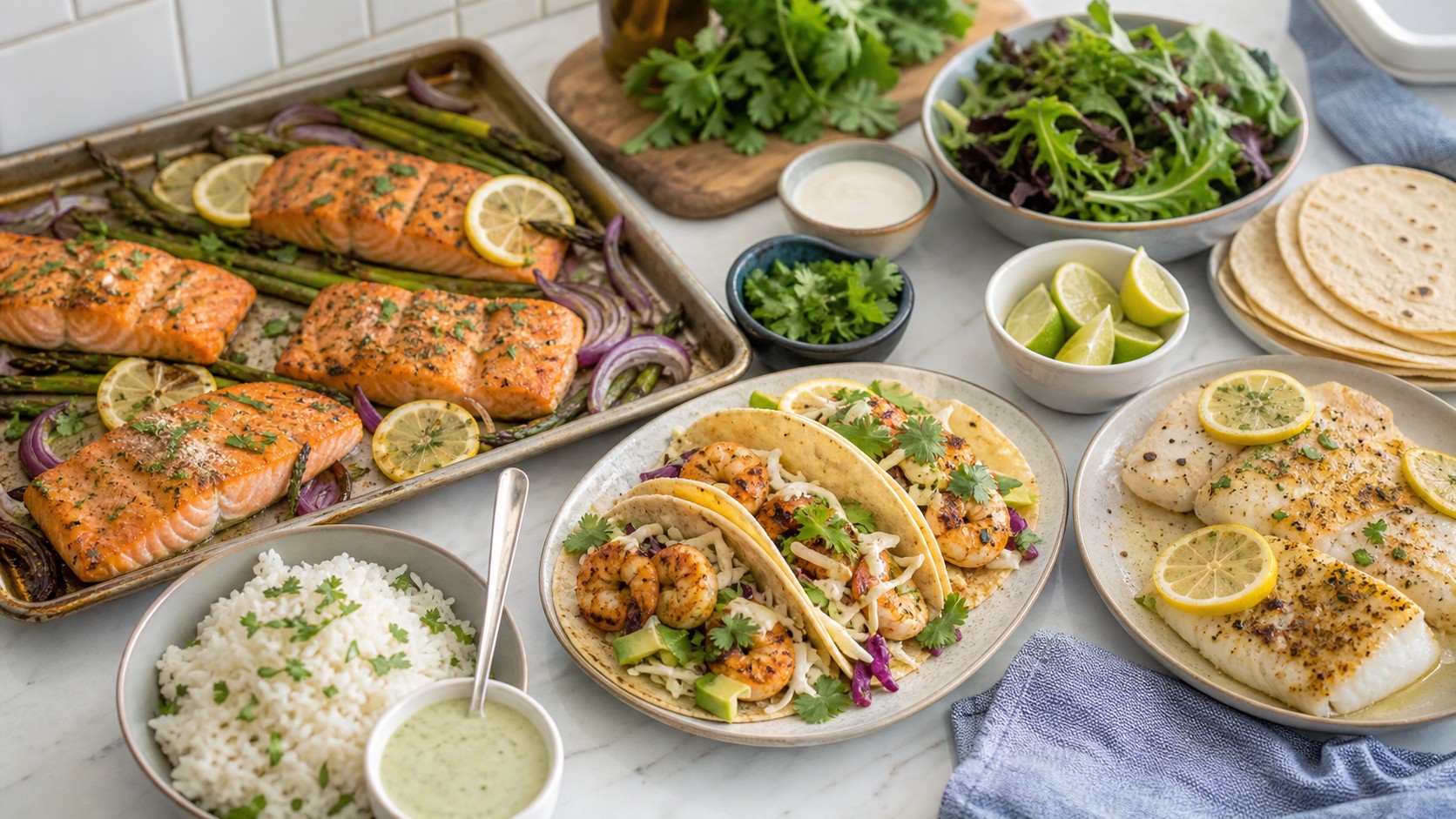
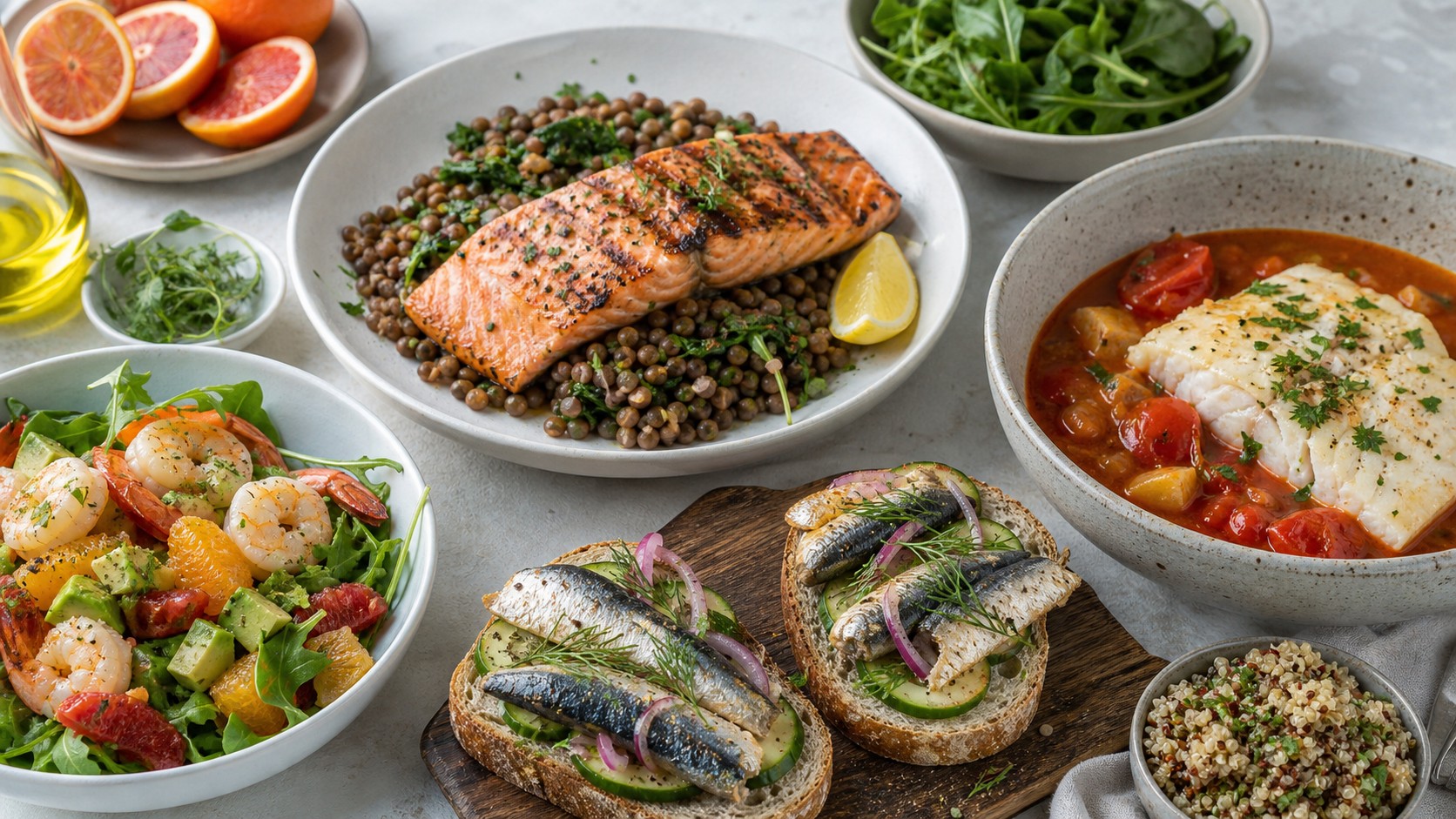
A strong healthy seafood meal has a clear anchor and enough support around it. Salmon with lentils and greens, shrimp with brown rice and vegetables, cod simmered in tomato broth, tuna with white beans and herbs, sardines on whole-grain toast, and scallops with farro salad all work because they are balanced. The seafood provides protein and flavor, while plants, grains, beans, and sauces make the plate feel complete.
Balance also prevents healthy seafood from becoming too lean. A bare fillet with steamed vegetables may be nutritious, but it may not satisfy. Add olive oil, avocado, yogurt sauce, tahini, nuts, potatoes, rice, beans, or bread when the meal needs more staying power. Healthy food is easier to repeat when it is pleasurable enough to satisfy real hunger.
Use Seafood Strengths Instead of Hiding Them
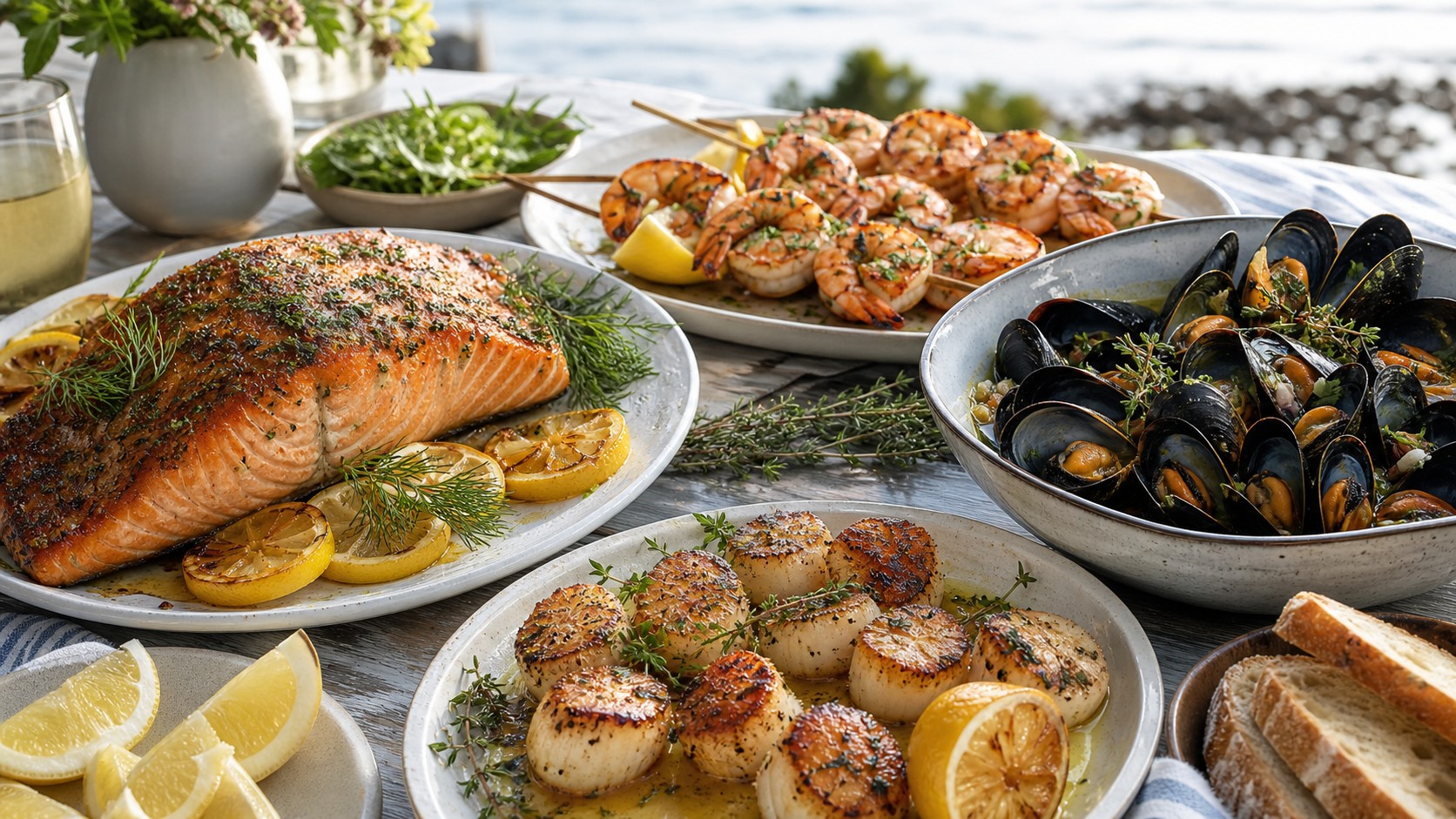
Different seafood brings different strengths. Salmon is rich and handles bold glazes, herbs, grains, and greens. Cod is mild and works well in broths, tomato sauces, and curries. Shrimp is fast, lean, and excellent with spice, citrus, rice, noodles, and salads. Tuna is hearty, whether fresh or canned. Sardines and mackerel bring strong flavor and healthy fats, especially on toast, in salads, or with acidic ingredients. Scallops feel delicate and need simple companions.
The healthiest recipe is not always the lightest one. It is the one that uses the seafood well. Rich fish may need citrus and bitter greens. Mild fish may need sauce and vegetables. Shellfish may need grains or bread to become a full meal. When the recipe respects the seafood’s character, the nutrition arrives with better flavor.
If someone in the household is cautious about seafood, start with milder options and familiar formats. Shrimp bowls, salmon tacos, tuna melts with a salad, or cod in tomato sauce can make healthy seafood feel approachable.
Flavor Comes From Acid, Herbs, and Texture
Healthy seafood needs brightness. Lemon, lime, vinegar, tomatoes, capers, pickles, yogurt, citrus segments, and fresh herbs can make fish taste cleaner and more vivid. Acid is especially important with richer fish like salmon and sardines, but it also helps mild fish avoid blandness. Herbs such as dill, parsley, cilantro, basil, mint, and chives add freshness without heaviness. Texture makes the meal satisfying. Add crunchy slaw to fish tacos, toasted seeds to salmon bowls, crisp bread beside stew, cucumbers in shrimp salad, or roasted chickpeas beside tuna. A healthy seafood recipe with contrast feels more complete than one soft element beside another soft element. Flavor and texture are what keep the recipe from tasting like a diet plate.
Think of acid, herbs, and crunch as the finishing tools that make healthy seafood feel alive. They can be added at the table, which means the cooking itself can stay simple. A baked fillet with lemon, herbs, and crisp vegetables often tastes fresher than a complicated recipe with too many heavy elements.
Healthy Seafood Recipe Ideas
For salmon, try roasted salmon with lentils, cucumber, and yogurt dill sauce; miso salmon rice bowls with edamame; salmon salad with potatoes and green beans; or salmon tacos with cabbage and avocado. For shrimp, try shrimp and quinoa salad, shrimp lettuce cups, garlic shrimp with vegetables, shrimp soba bowls, or shrimp over black beans and rice. For white fish, try cod in tomato fennel broth, fish stew with chickpeas, baked tilapia with salsa, or halibut with roasted vegetables.
Canned and smoked seafood can also be part of healthy eating. Tuna white bean salad, salmon patties with greens, sardine toast with lemon, smoked salmon cucumber plates, and mackerel grain bowls are quick and flavorful. These options are useful for lunches and nights when cooking fresh fish is not realistic.
Do not forget soups and stews. Seafood chowders can be made lighter with broth, vegetables, and potatoes. Tomato-based fish stews are naturally bright. Coconut seafood curries can be balanced with vegetables and rice. A bowl of seafood soup can feel comforting without becoming heavy.
Nutrition Works Best With Real Meals
Seafood is often praised for protein, omega-3 fats, iodine, selenium, vitamin D, and other nutrients, depending on the type. Those benefits matter, but they are easiest to enjoy when seafood appears in real meals. A salmon bowl with rice, vegetables, and sauce is more useful than a plain fillet you resent. Sardines on toast with lemon and herbs may be more repeatable than a supplement-like approach to food.
Think of healthy seafood as part of a pattern. Eating fish once does not transform a diet, and missing it for a week is not failure. A practical routine might include salmon one night, tuna at lunch, shrimp on a busy evening, and a white fish stew when the weather cools. Variety helps with nutrition and keeps the meals interesting.
Cook Gently to Protect Flavor and Texture
Healthy seafood can be ruined by overcooking. Dry fish and rubbery shrimp make people think they dislike seafood. Use gentle heat when needed, check early, and remember that seafood keeps cooking after it leaves the pan. Baking, steaming, poaching, simmering in sauce, and quick searing can all be healthy methods when used carefully.
Use enough fat to cook well. A little olive oil, butter, sesame oil, or avocado oil can improve texture and help seasonings bloom. Avoid the trap of making healthy seafood so fat-free that it sticks, dries, or tastes flat. The amount does not need to be large; it needs to be functional.
Gentle cooking also gives you more room to build a balanced plate. While fish bakes or simmers, you can dress greens, warm grains, slice citrus, or stir together a sauce. The seafood stays moist, and the meal around it becomes more complete.
Make Healthy Seafood Affordable and Practical
Healthy seafood does not have to mean expensive fillets every time. Frozen fish, frozen shrimp, canned tuna, canned salmon, sardines, mussels, and seasonal sales can all help. Pair seafood with affordable ingredients such as rice, lentils, beans, potatoes, cabbage, carrots, frozen vegetables, and whole-grain bread. These ingredients stretch the meal and add nutrition. Planning also reduces waste. Buy seafood when you know when you will cook it. Keep frozen options for backup. Use canned seafood for lunches and quick dinners. A healthy habit needs to fit the grocery budget and the week you are actually living.
Practical seafood also means using strong flavors from inexpensive ingredients. Lemon, mustard, vinegar, garlic, canned tomatoes, herbs, cabbage, and beans can make a modest amount of seafood feel like a full meal. The plate becomes flavorful because the supporting ingredients are doing real work.
Let Healthy Seafood Be Bold
The best healthy seafood recipes are colorful, seasoned, and satisfying. They use citrus, herbs, sauces, grains, vegetables, and texture to make fish and shellfish feel like complete meals. They do not rely on plainness as proof of health.
When healthy seafood tastes abundant, it becomes easier to cook often. That is the point: not one perfect meal, but a set of recipes that bring flavor and nutrition to the table again and again.
Boldness can be as simple as choosing one clear flavor family. Salmon with miso, rice, and cucumber is different from salmon with potatoes, dill, and yogurt. Shrimp with lime and cabbage feels different from shrimp with garlic, pasta, and greens. The nutrition may be similar, but the experience changes enough to keep the habit interesting.
Use Sauces That Support the Meal
Sauce is one of the easiest ways to make healthy seafood recipes more satisfying without making them heavy. A yogurt dill sauce can cool salmon and add creaminess. Salsa verde can brighten shrimp, cod, or tuna. Tahini lemon sauce can make grain bowls feel richer. Tomato broth can protect white fish from drying out. A small amount of pesto can carry vegetables, pasta, and fish at once. These sauces do not hide seafood; they connect it to the rest of the plate.
Healthy sauces also help with repetition. The same salmon can feel Mediterranean with yogurt and cucumber, Japanese-inspired with miso and rice, or picnic-like with mustard, potatoes, and greens. The same shrimp can become tacos with lime crema, salad with vinaigrette, or noodles with sesame ginger sauce. A sauce gives the recipe a direction, and direction keeps healthy food from tasting like ingredients lined up beside each other.
Plan Healthy Seafood Around the Whole Day
A healthy seafood meal should fit the day around it. After a light lunch, salmon with rice and vegetables may be more satisfying than a small salad. Before an active evening, shrimp with noodles or potatoes may be more useful than a very lean plate. For a hot day, tuna white bean salad or chilled shrimp bowls may feel better than stew. Healthy cooking becomes more practical when it responds to appetite, weather, schedule, and energy.
This is also where portions become personal. Some people feel best with a larger serving of vegetables and a moderate grain portion. Others need more rice, bread, beans, or potatoes to stay full. Seafood is only one part of the meal. The healthiest version is the one that leaves the person eating it satisfied, comfortable, and able to continue the day without feeling deprived or overloaded.
Thinking about the whole day also helps with variety. If breakfast and lunch were mostly grains, dinner might lean toward fish, vegetables, and beans. If the day was light, add potatoes, rice, bread, or pasta. Healthy seafood is easier to trust when it responds to hunger instead of following the same plate every time.
For lunches, the same idea applies in a smaller way. Tuna with white beans, shrimp with quinoa, salmon with potatoes, or sardines on toast can all be healthy, but each one supports a different kind of afternoon. Let the schedule help choose the recipe.
Healthy seafood is also easier when the meal has a clear finish. Add herbs at the end, squeeze citrus over the plate, spoon sauce where it will be tasted, and include something crisp. These last details make the food feel complete, which reduces the temptation to keep adding heavier extras just because the meal feels unfinished.
The better the finish, the more likely the recipe becomes part of a routine. A healthy seafood dish should leave you thinking about flavor first and nutrition as the welcome bonus. When the plate feels generous, bright, and complete, it becomes much easier to choose fish or shellfish again later in the week with genuine appetite, not obligation. That is what turns healthy seafood from a good idea into a repeatable meal. Flavor makes the habit stick when routine would otherwise get dull fast.