Seafood Feels Special When It Fits the Occasion
The best seafood recipes are not only about choosing salmon, shrimp, scallops, cod, crab, mussels, or tuna. They are about matching the seafood to the moment. A Tuesday dinner needs speed and forgiveness. A date-night meal can handle a little drama. A family gathering needs generous servings and sides that stretch. A holiday table may want something elegant but still manageable. Seafood can feel light, luxurious, casual, or deeply comforting depending on how it is cooked and served.
A: Roasted salmon, mussels, crab cakes, scallops, or shrimp cocktail can feel special without too many steps.
A: Sheet-pan salmon, shrimp tacos, baked cod, or garlic shrimp pasta are reliable choices.
A: Use acid, herbs, salt, garlic, spice, or a good sauce.
A: Fish tacos, salmon bowls, shrimp pasta, tuna melts, and crisp white fish are approachable.
A: Yes, when thawed safely, dried well, and seasoned properly.
A: Large salmon fillets, seafood stew, paella, shrimp platters, and crab cakes scale well.
A: Use gentle timing, visual cues, and a thermometer when needed.
A: Rice, potatoes, bread, salad, roasted vegetables, slaw, pasta, and grains all work.
A: Freshness, careful cooking, citrus, herbs, a good platter, and calm serving.
A: Ask about shellfish or fish allergies and comfort with stronger seafood flavors.
Choose Seafood by Timing and Confidence
Seafood cooks quickly, which is both its charm and its challenge. Shrimp can go from raw to perfect in minutes. Scallops need a hot pan and attention. Salmon is forgiving but still benefits from gentle timing. Cod, halibut, and tilapia can dry out if treated carelessly, while mussels and clams are simple once cleaned and sorted. The best recipe for an occasion is one you can execute confidently while everything else is happening around you.
For busy nights, choose seafood that tolerates straightforward cooking: sheet-pan salmon, shrimp tacos, baked cod, tuna melts, or fish foil packets. For guests, choose recipes that either cook fast at the end or can hold briefly without losing quality, such as seafood stew, roasted whole fillets, crab cakes, or chilled shrimp platters. Confidence matters more than impressiveness. A simple fish cooked well is better than an ambitious dish that keeps the cook anxious.
Weeknight Seafood Should Be Fast and Flexible
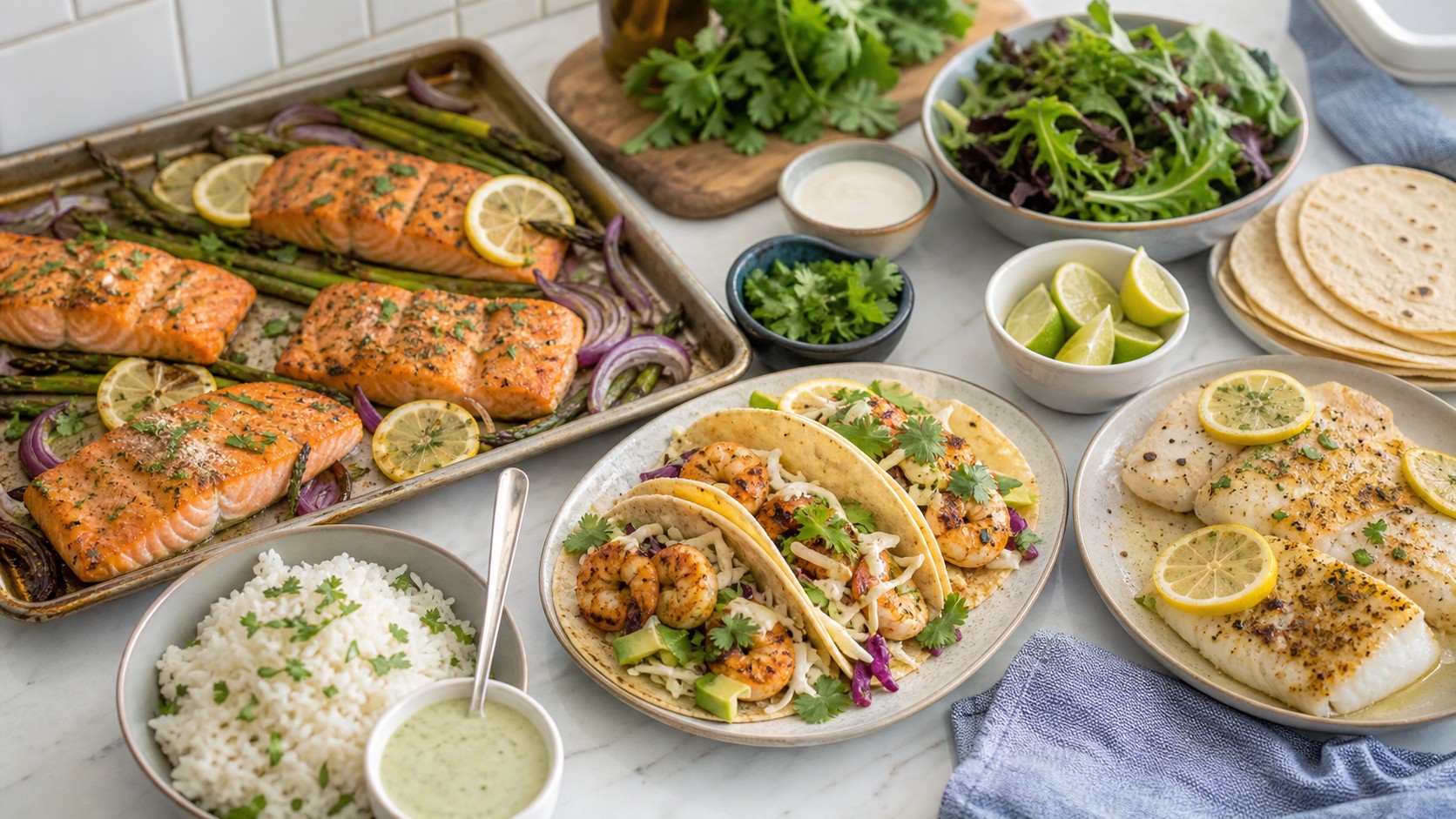
Weeknight seafood recipes need minimal prep and dependable sides. Salmon with roasted vegetables, shrimp stir-fry, cod with tomatoes and olives, fish tacos, tuna rice bowls, and garlic butter shrimp pasta all work because they deliver flavor quickly. Use sauces and seasonings that carry the meal without adding too many steps: lemon and herbs, pesto, salsa, curry paste, miso glaze, garlic butter, chili crisp, or yogurt sauce.
The side dish should be just as practical as the seafood. Rice, couscous, potatoes, salad, tortillas, crusty bread, or frozen vegetables can make seafood feel like dinner instead of a protein floating alone on a plate. Because seafood cooks quickly, start the side first. This one habit prevents the fish from waiting while the rice finishes.
Frozen seafood can help on weeknights if it is handled well. Thaw shrimp or fish safely, pat it dry, and season it boldly. Many disappointing seafood dinners are not caused by the fish itself but by excess moisture and timid seasoning.
Casual Seafood for Family Meals
Family seafood meals work best when they are interactive or familiar. Fish tacos let everyone build their own plate. Salmon bowls can be customized with rice, cucumber, avocado, carrots, and sauce. Shrimp pasta feels familiar even to people who are unsure about seafood. Fish sandwiches, tuna melts, crab cake sliders, and baked fish sticks can make seafood feel approachable rather than formal.
For children or hesitant eaters, texture and sauce matter. Mild white fish with a crisp coating may be easier than a strongly flavored fillet. Shrimp with a dipping sauce can feel less intimidating. Salmon with teriyaki, honey mustard, or a creamy dill sauce may be more welcome than plain fish. The goal is not to hide seafood. It is to introduce it in a format that gives people something familiar to hold onto.
Elegant Seafood for Guests
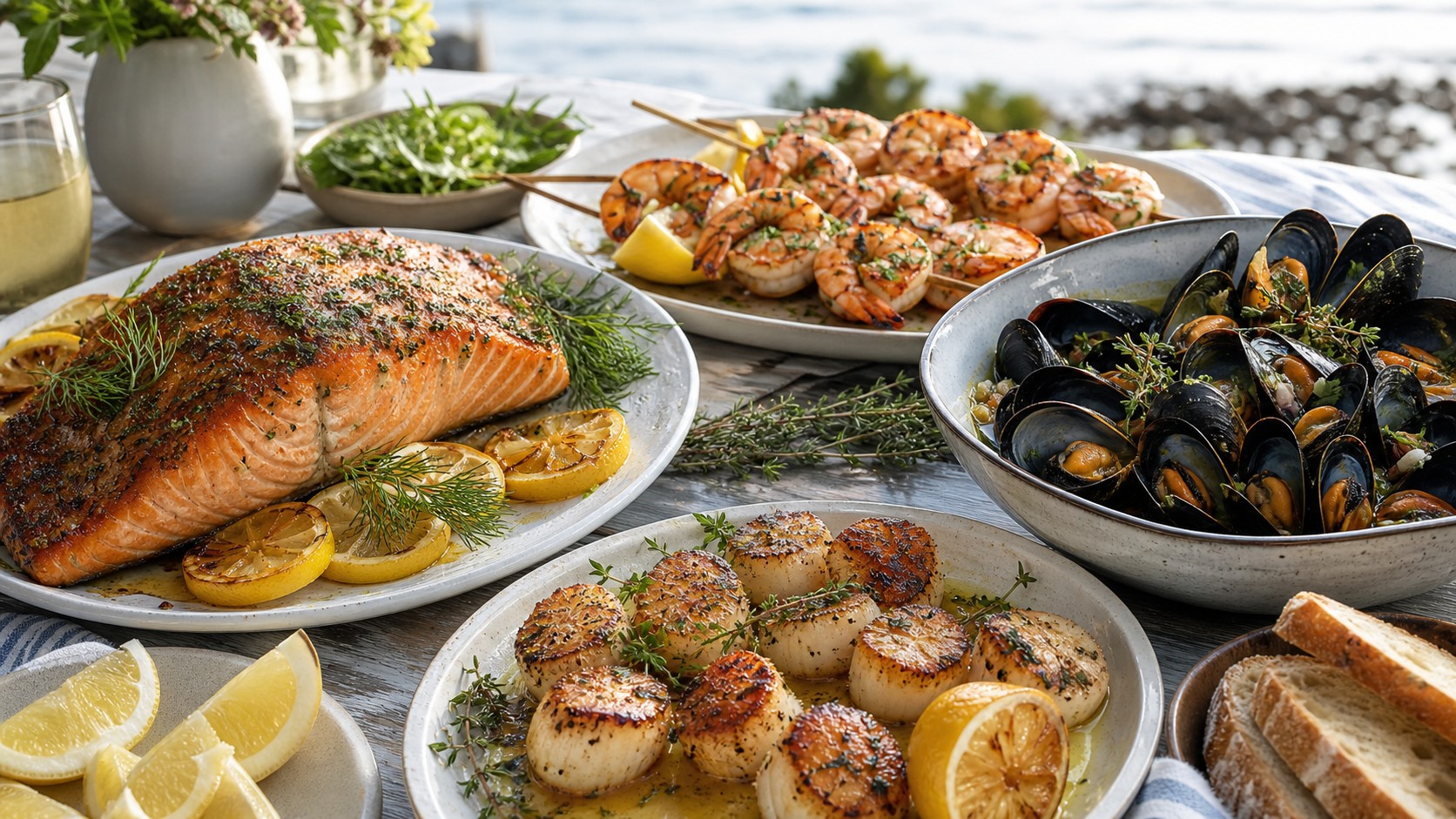
Seafood is excellent for guests because it can feel restaurant-worthy without requiring an all-day project. Seared scallops with citrus salad, roasted salmon with herb sauce, mussels in white wine broth, shrimp cocktail, crab cakes, seafood risotto, or lobster tails can all feel special. The trick is to choose one star and keep the rest of the menu supportive. Guests do not need five seafood dishes. They need one that feels cared for.
When hosting, avoid recipes that require perfect last-second timing unless you are comfortable with them. Scallops are beautiful but demand attention. Mussels cook quickly and should be served soon after opening. A roasted salmon side is often easier because it can be seasoned ahead and served with a sauce that was made earlier. Elegance can come from fresh herbs, lemon, a beautiful platter, and calm timing.
Shellfish can also bring a celebratory feeling. Shrimp platters, crab dips, oysters, clams, and lobster all signal occasion, but they require attention to freshness, storage, and guest preferences. Ask about allergies before building a seafood-heavy menu.
Seafood for Holidays and Celebrations
Holiday seafood should feel abundant but not fragile. A large baked salmon, seafood stew, paella, cioppino, crab cakes, shrimp and grits, or a chilled seafood platter can anchor a table. These dishes work because they scale more naturally than individual fillets. They also allow sides to carry part of the meal: bread, rice, salad, potatoes, roasted vegetables, or citrusy slaw. For celebrations, presentation matters. Serve seafood on a warm platter, scatter herbs, add lemon wedges, spoon sauce neatly, and bring bread or rice close enough to catch juices. These details make the meal feel generous. Seafood does not need heavy decoration; it needs freshness and a serving plan that respects how quickly it cools.
Celebration seafood also benefits from a clear serving order. Put cold starters out first, bring hot seafood out when people are ready to eat, and keep sauces and sides within reach. The more obvious the flow feels, the less the cook has to explain while the food is at its best.
Healthy Seafood Without Losing Flavor
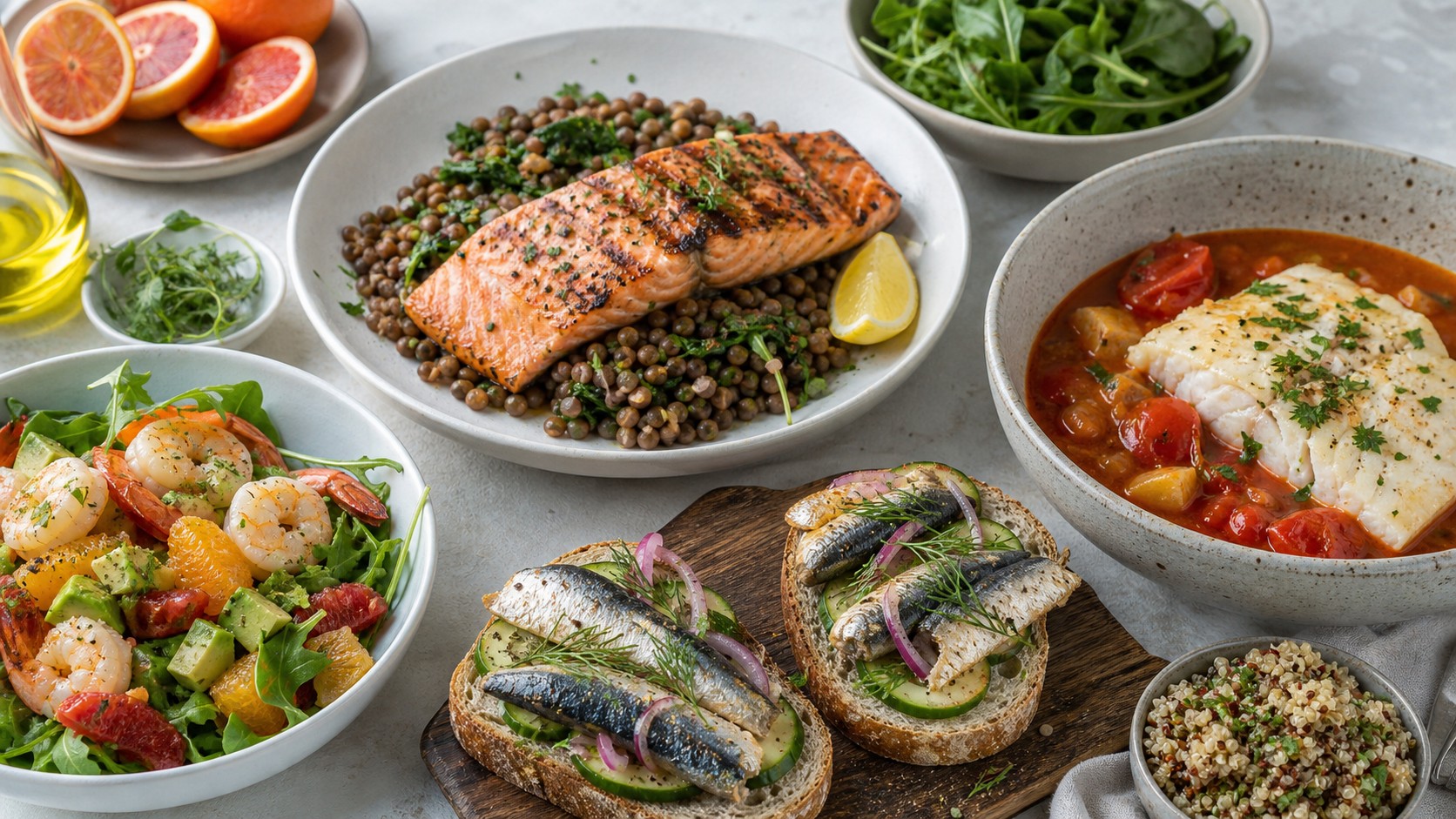
Seafood naturally fits many healthy meals because it is often protein-rich and cooks well with vegetables, grains, herbs, citrus, and olive oil. But healthy seafood should still taste satisfying. Try salmon with lentils and greens, shrimp with brown rice and vegetables, cod in tomato broth, tuna white bean salad, sardine toast, or fish tacos with cabbage and avocado. Flavor can come from acid, herbs, spice, and sauce rather than heavy breading or cream.
Do not confuse healthy with plain. Fish needs seasoning. Lemon, lime, vinegar, capers, olives, garlic, ginger, dill, parsley, cilantro, chili, mustard, miso, and sesame can all wake up seafood. A healthy seafood dinner should make you want another bite, not make you feel like you are behaving.
Portion and balance matter too. Pair seafood with carbohydrates and produce so the meal feels complete. A bare fillet and steamed vegetable may be light, but it may not satisfy. Add potatoes, rice, beans, bread, quinoa, or pasta when the meal needs more staying power.
Seafood Mistakes to Avoid
The most common seafood mistake is overcooking. Fish continues to cook after it leaves the heat, and shrimp become rubbery quickly. Use visual cues and, when needed, a thermometer. Another mistake is ignoring moisture. Pat seafood dry before searing, roasting, or grilling so it browns instead of steaming. Season close enough to cooking that the texture stays good, especially with delicate fish. Freshness is the other nonnegotiable. Seafood should smell clean, not harsh. Frozen seafood should be thawed safely and used promptly. Shellfish should be checked carefully. If mussels or clams do not close before cooking or do not open after cooking, discard them. Good seafood recipes begin before the pan is hot.
A quieter mistake is choosing a recipe that does not fit the occasion. Scallops may be wrong for a distracted crowd, and fried seafood may be wrong if it has to sit. Pick the recipe that matches your timing, tools, and confidence, and the meal will already be halfway calmer.
Build the Meal Around the Seafood’s Mood
Every seafood recipe has a mood. Shrimp tacos are lively and casual. Mussels with bread are communal. Seared scallops feel polished. Salmon bowls feel nourishing. Crab cakes feel celebratory. Tuna salad can be practical and bright. Choosing the mood first helps the rest of the meal fall into place. Pick sides, sauces, drinks, and serving style that support the feeling you want.
That is what makes seafood useful for every occasion. It can be quick enough for Wednesday, elegant enough for guests, light enough for summer, cozy enough for winter, and generous enough for a holiday table. When the recipe fits the moment, seafood does not feel intimidating. It feels like exactly the right thing to serve.
Mood also helps with restraint. If the seafood is rich, keep the sides brighter. If the seafood is delicate, avoid sauces that cover it completely. If the meal is casual, let people assemble plates. If the meal is formal, choose fewer components and make them cleaner. The mood becomes a practical guide.
Let Sides Carry the Occasion
Seafood often cooks quickly, so the sides do much of the work of making the meal feel casual, elegant, hearty, or celebratory. Rice and slaw can turn shrimp into a relaxed taco night. Potatoes and green beans can make salmon feel like a composed dinner. Bread and salad can make mussels feel generous without much extra cooking. Farro, citrus, and herbs can make scallops feel polished. Corn, tomatoes, and peppers can make a seafood meal feel summery and abundant.
Thinking this way makes seafood less intimidating. You do not need the seafood itself to do every job. The fish or shellfish can be simple when the sides establish the mood. This is especially helpful for hosting, where a beautiful salad, warm bread, roasted vegetables, or a bright sauce can make the whole table feel intentional while the seafood stays clean and fresh.
Use Seafood to Create Contrast
The best seafood recipes often work because of contrast. Crisp slaw beside tender fish. Bright lemon over rich salmon. Warm mussels with cool white wine or sparkling water. Sweet crab with sharp mustard. Briny clams with crusty bread. Spicy shrimp with creamy avocado. Contrast makes seafood feel more vivid and keeps the meal from becoming one-note.
This is useful for every occasion because contrast can be adjusted to the moment. A casual dinner might use crunchy cabbage and lime. A holiday meal might use citrus, herbs, and a silky sauce. A healthy lunch might use cucumber, beans, and vinaigrette. Once you understand the contrast you want, choosing the recipe becomes much easier.
Contrast can also make a small amount of seafood feel more generous. A modest serving of shrimp becomes a lively plate with rice, herbs, lime, and slaw. A piece of salmon feels fuller with lentils, greens, and yogurt sauce. The supporting elements stretch the experience without distracting from the seafood.
That is why seafood fits so many tables. It does not need to be the largest portion to feel memorable. It needs freshness, contrast, careful cooking, and the right companions. When those pieces are in place, the recipe can feel right for a weeknight, a celebration, or anything in between.
For the cook, that should feel freeing. You can choose seafood for speed, beauty, comfort, or freshness, then let the rest of the menu support that choice. A good seafood recipe does not stand alone; it belongs to the occasion around it, from a quiet lunch to a holiday table with guests, conversation, and a generous platter. That context is what makes it memorable long after the plates are cleared and the evening has settled.