Seafood Can Be a Weeknight Shortcut
Easy seafood recipes are perfect for busy weeknight dinners because fish and shellfish cook faster than most proteins. The challenge is not speed; it is organization. Seafood needs a side that is ready on time, seasoning that works quickly, and a method that does not punish a tired cook. When you choose the right recipe, a weeknight seafood dinner can feel fresh and satisfying without turning the evening into a project.
A: Shrimp, salmon, cod, tuna, and frozen fish portions are practical choices.
A: Start the side first and use quick sauces, sheet pans, skillets, or pantry seafood.
A: Yes, if it is thawed safely, dried well, and seasoned boldly.
A: Lemon butter, pesto, salsa, yogurt dill sauce, curry sauce, or tomato sauce can work.
A: Cook only until firm, pink, and opaque, then remove it from heat.
A: Rice, pasta, potatoes, slaw, salad, tortillas, bread, and frozen vegetables are easy.
A: Yes, use familiar formats like tacos, pasta, sandwiches, or bowls.
A: Tuna, salmon, sardines, and clams can become melts, pasta, salads, or bowls.
A: Usually no; quick seasoning and sauce are enough.
A: Sheet-pan baking or simmering fish in sauce is usually forgiving.
Choose Seafood That Matches Weeknight Energy
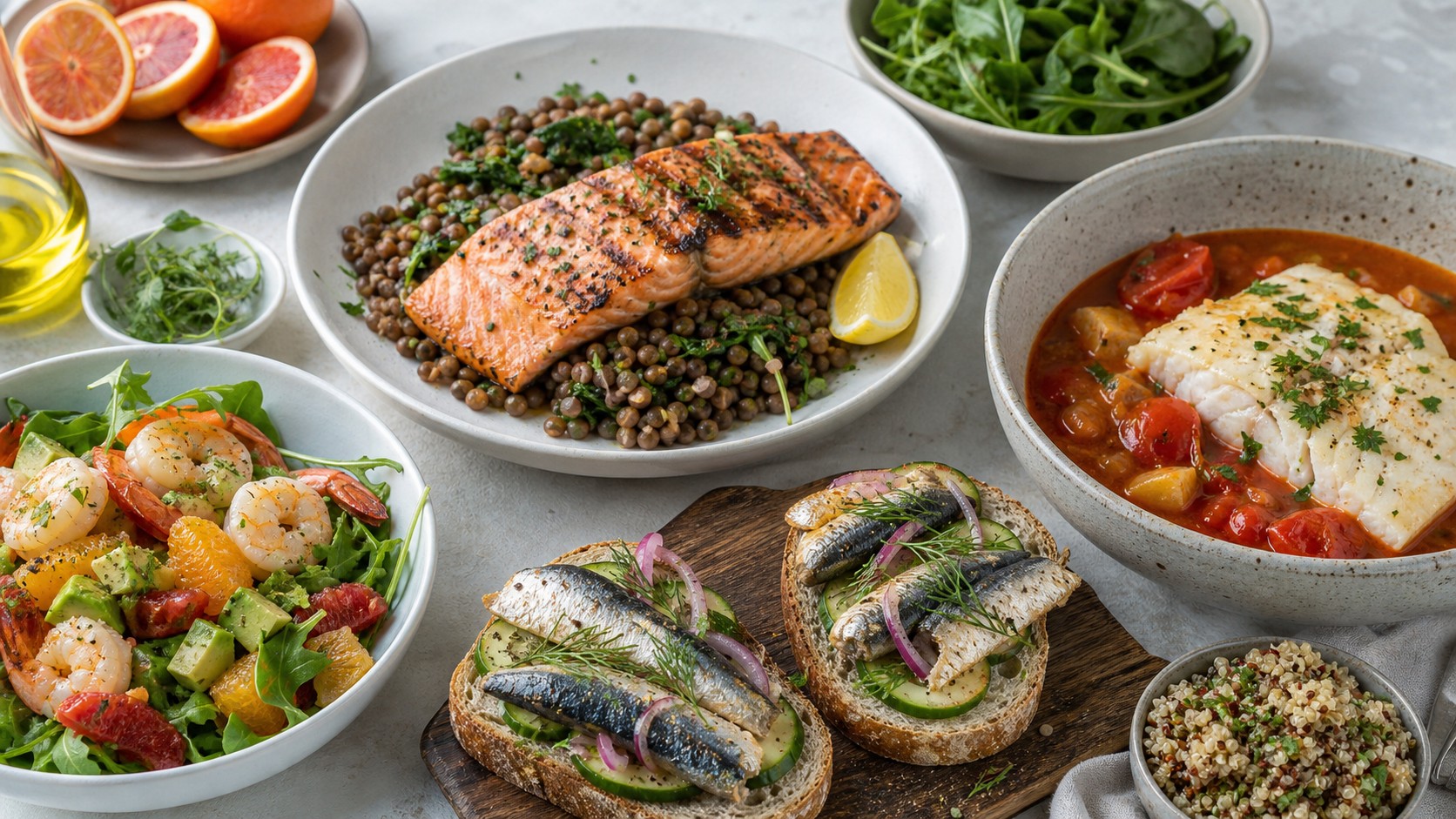
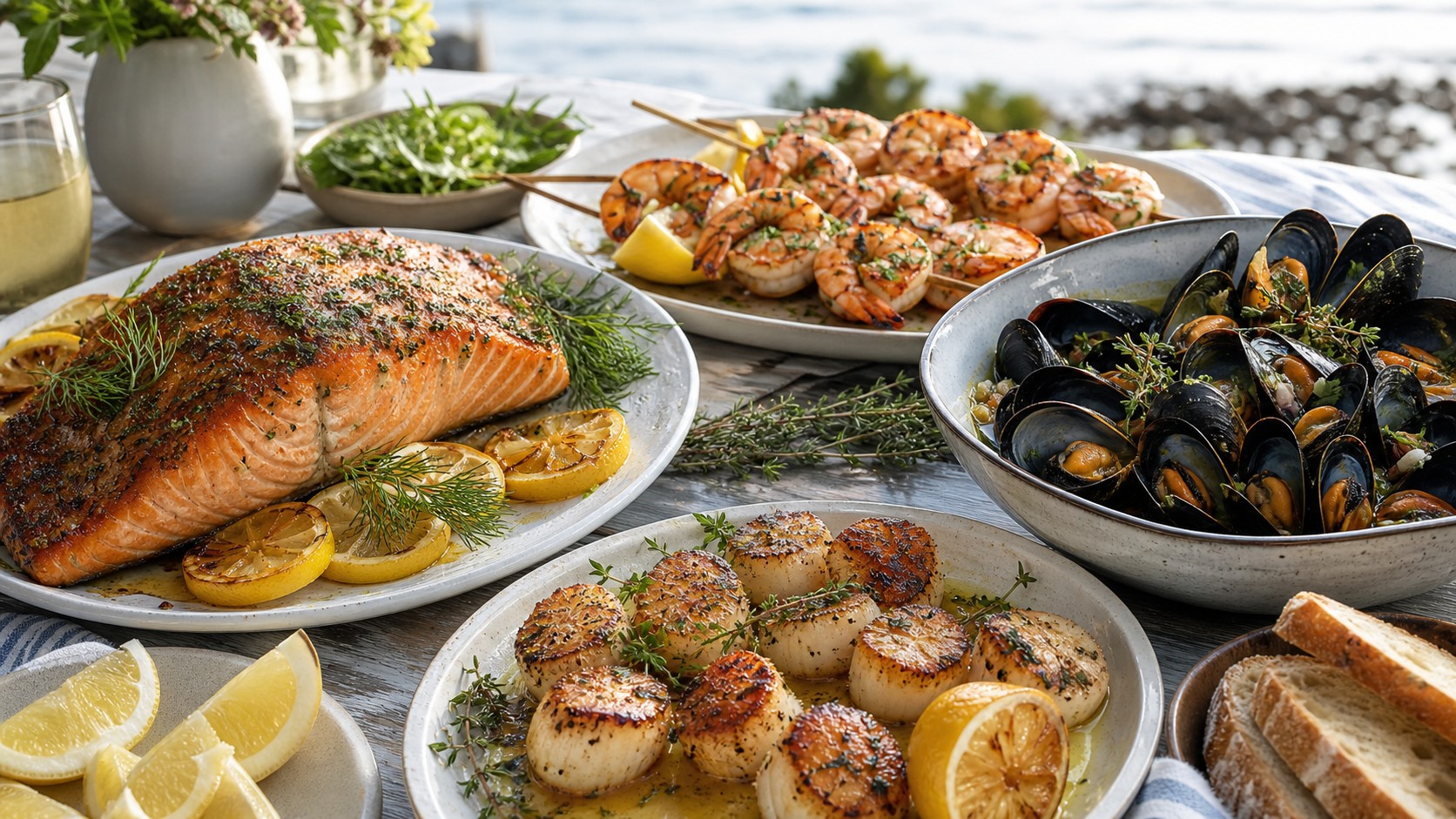
Weeknight seafood should be forgiving. Salmon fillets, shrimp, cod, tilapia, canned tuna, canned salmon, frozen fish portions, and scallops all have a place, but they do not ask for the same attention. Shrimp is fastest but can overcook quickly. Salmon gives a little more margin. Cod and other white fish need moisture or sauce. Canned seafood is already cooked, which makes it useful for bowls, melts, salads, and pasta.
Before choosing a recipe, look honestly at the evening. If the kitchen is calm, seared scallops or fish tacos may be fine. If everyone is tired, choose sheet-pan salmon, shrimp pasta, tuna rice bowls, or baked cod with jarred sauce. The best weeknight seafood recipe is the one that fits the energy in the room. It should make dinner easier, not prove anything.
Start the Side Before the Seafood
The most important weeknight seafood habit is starting the side first. Fish may cook in eight minutes, but rice, potatoes, roasted vegetables, pasta water, or salad prep can take longer. If the seafood finishes first, it sits and loses its best texture. Start rice, preheat the oven, boil pasta, warm tortillas, or chop salad before the fish hits the pan.
Fast sides make seafood feel complete. Couscous, microwave rice, bagged salad, tortillas, frozen vegetables, quick slaw, bread, or noodles can carry the meal. This is where shortcuts are helpful. A beautiful piece of fish with no side is not dinner for most households. A simple piece of fish with rice, greens, lemon, and sauce is.
If you are using frozen seafood, build thawing into the routine. Move it to the refrigerator the night before or thaw under cold running water when appropriate. Pat it dry before cooking. Dry seafood browns better, seasons better, and tastes less watery.
Use Bold Flavor That Works Fast
Seafood does not need long marinades to taste good. Lemon, lime, garlic, ginger, mustard, pesto, salsa, chili crisp, soy sauce, miso, curry paste, capers, olives, dill, parsley, cilantro, and butter all work quickly. The key is choosing one clear direction. Shrimp with garlic, lemon, and parsley feels different from shrimp with chili crisp and rice, even if the cooking method is similar.
Keep one or two sauces ready for seafood nights. Yogurt dill sauce, pesto, salsa verde, tartar sauce, lemon butter, tahini sauce, or spicy mayo can turn plain fish into a complete meal. Sauce is especially useful with mild white fish, which can taste flat if it is underseasoned. A good sauce also helps leftovers become lunch the next day.
Weeknight Methods That Save Dinner
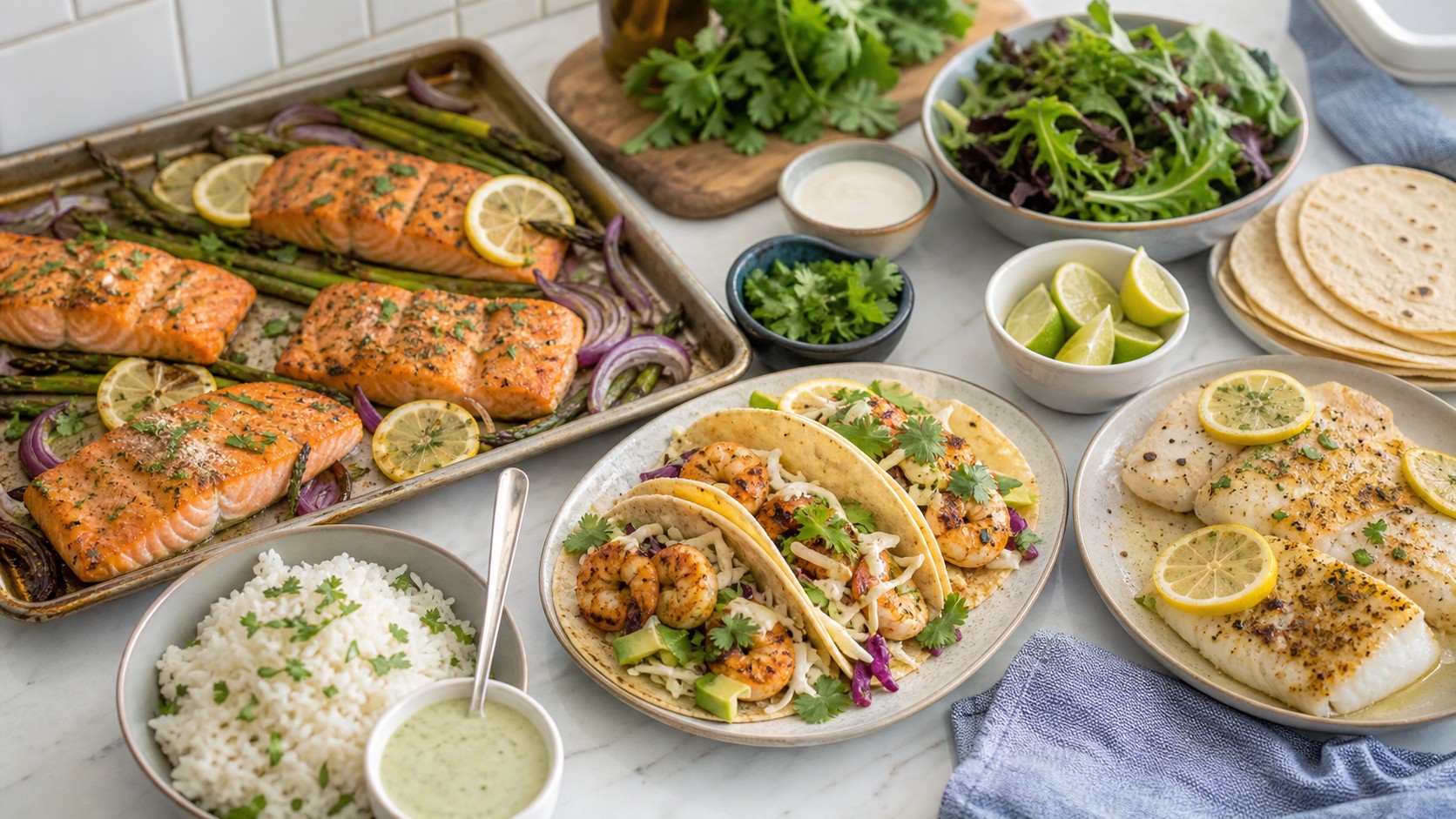
Sheet-pan seafood is one of the easiest methods. Roast vegetables first if they need more time, then add salmon, cod, or shrimp near the end. Baking in parchment or foil keeps fish moist and reduces cleanup. Skillet shrimp is fast enough for pasta, tacos, rice bowls, or salads. Broiled salmon gives quick color. Simmering white fish in tomato sauce, curry, or broth keeps it tender and forgiving.
Choose the method based on how much attention you can give. A skillet needs you nearby. A sheet pan gives more breathing room. A simmered sauce is forgiving if someone interrupts you. Weeknight cooking is not only about minutes; it is about how demanding those minutes are.
Do not overlook canned seafood. Tuna melts, salmon patties, sardine toast, tuna white bean salad, and salmon rice bowls can be excellent when there is no time to cook raw fish. Pantry seafood can keep dinner from becoming takeout.
Easy Seafood Dinner Ideas
For salmon, try sheet-pan salmon with green beans and potatoes, miso salmon bowls, salmon tacos with cabbage, or lemon dill salmon with couscous. For shrimp, try garlic shrimp pasta, shrimp fried rice, shrimp tacos, shrimp salad wraps, or coconut curry shrimp. For white fish, try cod with tomatoes and olives, fish sandwiches, fish taco bowls, parchment fish with vegetables, or baked tilapia with salsa. Each idea works because the seafood is only one part of the meal. The sauce and side do the rest. A weeknight dinner should not depend on complicated technique. It should depend on smart pairings: shrimp plus noodles, salmon plus rice, cod plus tomato sauce, tuna plus toast, fish plus tortillas.
To make these ideas even faster, keep the flavor direction clear before you start. Taco night needs tortillas, slaw, lime, and salsa. Pasta needs garlic, oil, lemon, and maybe greens. Bowls need rice, vegetables, and sauce. When the supporting pieces are obvious, the seafood can cook quickly at the end instead of carrying the whole decision.
Keep Seafood Safe and Pleasant
Seafood requires a little care. Keep it cold until cooking, thaw it safely, and use it promptly. Smell matters; it should be clean and mild, not harsh. Pat fish dry, season it, and avoid overcrowding the pan. If cooking shellfish, discard anything that seems questionable. Food safety is not meant to scare you away from seafood. It simply makes the habit dependable. Texture is the other part of pleasant seafood. Shrimp should be firm and just cooked. Fish should flake but still look moist. Salmon should not be cooked into chalk. If you are unsure, use a thermometer until your confidence grows. A few careful checks can protect dinner from the most common seafood mistake: leaving it on the heat too long.
Make Seafood Work for the Whole Table
Busy weeknights often include different appetites. Build seafood meals in formats that allow flexibility. Fish tacos let people add more slaw, sauce, or avocado. Rice bowls can hold salmon for one person and tofu or beans for another. Shrimp pasta can include extra vegetables. Tuna melts can be served with salad or fruit. Component meals reduce resistance because everyone can adjust the final plate.
This is especially useful for families that are still getting comfortable with seafood. Put the fish beside familiar foods: tortillas, rice, pasta, potatoes, bread, or a favorite sauce. Seafood becomes less intimidating when it arrives in a format people already trust.
Flexibility can also protect timing. If one person is late, the rice, slaw, sauce, and tortillas can wait while the shrimp cooks fresh. If someone wants less seafood, they can take more beans, greens, or noodles. A flexible table makes seafood feel easier for the cook and less pressured for everyone else.
The Best Weeknight Seafood Feels Light on Effort
An easy seafood dinner should leave the evening better than it found it. Start the side first, keep flavors bold, choose a forgiving method, and stop cooking before the seafood dries out. With those habits, seafood becomes one of the fastest ways to put a fresh dinner on the table. Weeknight seafood does not need to be fancy. It needs to be timely, seasoned, and served with enough support to feel like a real meal. When the plan is simple, fish and shellfish can become regular weeknight allies instead of occasional restaurant food.
The cleanup should feel light too. Sheet pans, parchment, foil packets, one skillet, or one pot of sauce can keep the kitchen from looking like a special project happened on a Tuesday. Seafood is easier to repeat when the dishes are as manageable as the cooking time.
Use the Freezer and Pantry Like Part of the Recipe
Busy weeknight seafood gets much easier when the freezer and pantry are doing some of the work. Frozen shrimp can become tacos, pasta, fried rice, curry, or salad in very little time. Frozen salmon or cod portions can be baked with sauce while rice cooks. Canned tuna, salmon, sardines, clams, and crab can become melts, chowders, patties, toast, salads, or pantry pasta. These options are not backup plans in a lesser sense. They are part of a practical seafood kitchen.
The key is treating these staples with the same care as fresh seafood. Thaw frozen seafood properly, dry it well, and season it. Drain canned seafood when needed, then add acid, herbs, mustard, olive oil, vegetables, or sauce so it tastes intentional. A tuna white bean salad with lemon and parsley feels very different from tuna dropped onto lettuce. A frozen cod fillet simmered in tomato sauce can taste like dinner, not compromise, when the pantry is used thoughtfully.
It helps to keep one complete seafood dinner in reserve. That might mean frozen shrimp, tortillas, cabbage, and salsa; cod portions, jarred tomato sauce, and rice; or canned salmon, potatoes, eggs, and greens for patties. A reserved combination removes the need to invent dinner when the day has already used up most of your attention.
Make the Meal Flexible for Real Weeknights
Real weeknights rarely unfold perfectly. Someone may be late, hungry early, avoiding spice, or unsure about fish. Flexible seafood meals absorb those complications. Put shrimp, rice, slaw, salsa, and tortillas on the table and people can build tacos or bowls. Serve salmon with potatoes, greens, and sauce, and each plate can lean lighter or heartier. Make fish sandwiches with salad on the side, and cautious eaters still have familiar bread and sauce to anchor the meal.
Flexibility also helps the cook. If the fish cooks faster than expected, it can rest briefly while people assemble plates. If the side takes longer, seafood can be added at the end instead of waiting around. The best easy seafood recipes understand that dinner is not only a set of ingredients. It is timing, appetite, cleanup, and the mood of the house at six-thirty.
Flexible meals also make leftovers easier. Extra shrimp can become lunch salad, salmon can become rice bowls, and white fish can become tacos the next day if it was not buried under a sauce that only works once. A good weeknight seafood plan thinks about tomorrow just enough to reduce waste.
This is where simple seasoning pays off. Lemon, herbs, garlic, salsa, and yogurt sauces can travel into leftovers more gracefully than heavy coatings. If you know the seafood may become lunch, keep part of it plainly seasoned and add the stronger sauce at the table. That small choice gives you more options the next day.
Weeknight seafood becomes much less intimidating when it is treated as a flexible building block. Cook the fish or shrimp well, surround it with practical sides, and let sauces decide the final personality of the meal. This approach also makes shopping easier because you can buy one seafood option and use it in several possible dinners, depending on what the evening becomes. That flexibility is what makes seafood feel realistic on a weeknight, especially when time, appetite, and energy all keep shifting. It gives dinner room to adapt without asking the cook to start over again.