Restaurant-Quality Sauce Is About Control
Restaurant-quality sauces at home are not only about expensive ingredients or complicated French names. They are about control: controlled heat, controlled reduction, controlled seasoning, controlled texture, and a final taste that makes the food feel complete. A good sauce should have a clear purpose on the plate. It may add gloss to seared chicken, brightness to fish, richness to vegetables, freshness to steak, or depth to pasta. When you learn how cooks build and finish sauces, home food starts tasting more deliberate.
A: Balance, texture, reduction, seasoning, and a clear purpose on the plate.
A: Deglaze browned bits with liquid, reduce, season, and finish with butter, herbs, or acid.
A: The fat and liquid separated, often from too much heat or adding fat too quickly.
A: Reduce it, emulsify it, add butter, cream, starch, or puree depending on the sauce.
A: It may need salt, acid, reduction, or fresher aromatics.
A: Strain when smoothness and polish matter, but rustic sauces can stay textured.
A: A simple lemon butter pan sauce teaches deglazing, reduction, and finishing.
A: They often emulsify sauce with fat and starchy pasta water.
A: Some can, but butter emulsions and pan sauces are often best fresh.
A: Place it where it improves the bite without drowning the food.
Think Like a Cook, Not a Recipe Collector
Restaurant sauces work because cooks understand what the plate needs. A lean piece of fish may need butter, citrus, and herbs. A rich short rib may need a reduced wine sauce with acidity. A vegetable dish may need a bright green sauce or nutty vinaigrette. Pasta may need starchy water and emulsified fat. A steak may need pepper, pan drippings, or herb butter. Instead of asking only what sauce sounds impressive, ask what the food lacks. Moisture, brightness, richness, salt, heat, aroma, or texture can all be supplied by sauce.
This mindset keeps sauces from becoming random. A restaurant-quality sauce should feel connected to the food. If the sauce is delicious but fights the dish, it is not doing its job. Taste the main ingredient, then taste the sauce with it. Adjust until they improve each other. That is the quiet habit behind polished cooking.
That matching process includes restraint. A restaurant-style sauce is not automatically richer, darker, or more dramatic. Sometimes it is a spoonful of bright tomato water, a clean herb oil, or a glossy pan reduction that barely covers the plate. The cook’s job is to decide whether the sauce should lead, support, or simply connect. When the sauce has a clear role, it feels polished even if the ingredients are familiar.
Master Reduction and Deglazing
Reduction is one of the most important restaurant sauce techniques. When liquid simmers, water evaporates and flavor concentrates. Stock, wine, vinegar, juice, tomato, cream, and pan juices can all be reduced. The trick is reducing enough to intensify flavor without making the sauce salty, sticky, or harsh. Use a wide pan for faster reduction and taste as you go. A sauce can move from thin to perfect to over-reduced quickly.
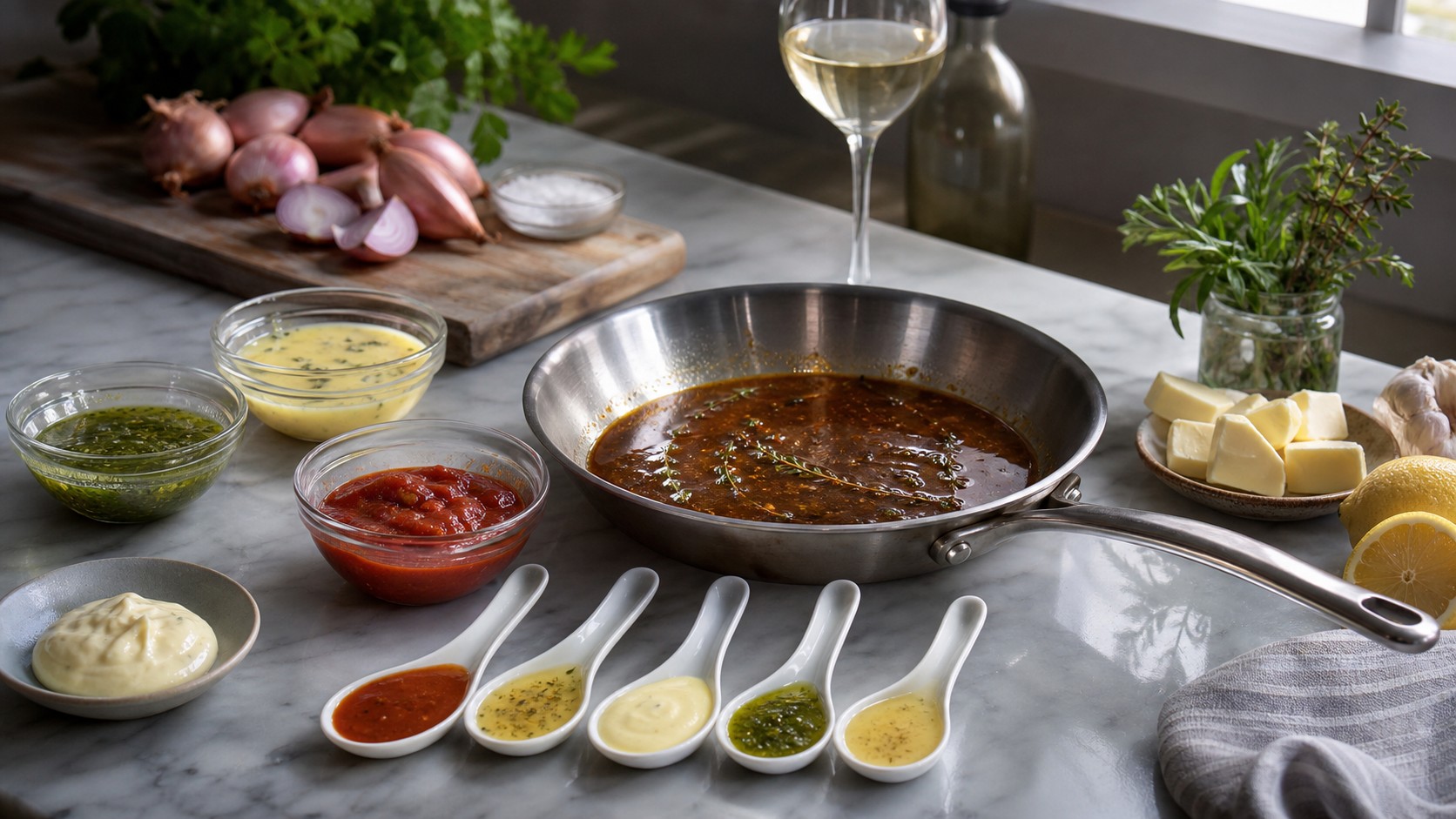
Deglazing turns browned bits into flavor. After searing meat, poultry, mushrooms, or vegetables, pour off excess fat if needed, add shallots or aromatics, then add wine, broth, water, vinegar, or another liquid. Scrape the pan to dissolve the browned bits. Reduce, season, and finish. This is the basis of many pan sauces. It tastes restaurant-like because it captures flavor that would otherwise stay stuck to the pan.
Finishing matters. Butter can add shine and body. Lemon can brighten. Herbs can make the sauce feel fresh. Mustard can add structure. Cream can soften edges. A pan sauce should usually be served soon after finishing, while it is glossy and alive.
Deglazing also depends on heat control. If the pan is extremely hot, wine or vinegar can reduce before it has pulled up the browned bits. If the pan is too cool, the sauce may taste watery and unfinished. Add liquid with confidence, scrape thoroughly, and let the sauce bubble until it coats the spoon lightly. That coating is often more important than a timer because every pan, burner, and liquid behaves differently.
Learn Emulsions for Gloss and Body
An emulsion brings ingredients together that do not naturally want to stay together, usually fat and water-based liquid. Vinaigrette is a loose emulsion. Mayonnaise and aioli are thicker emulsions. Butter sauces, hollandaise-style sauces, beurre blanc-style sauces, and pan sauces finished with butter all depend on emulsion control. The result is a sauce that coats food instead of separating into greasy puddles.
To make emulsions work, add fat gradually, whisk steadily, and manage temperature. If a sauce gets too hot, it can break. If fat is added too quickly, it may not incorporate. Mustard, egg yolk, garlic, honey, and some starches can help stabilize. Pasta water is a powerful emulsifier because starch helps fat and liquid cling to noodles. Many restaurant pasta sauces are built from sauce, fat, and starchy water moving together in the pan.
For warm sauces, gentle heat matters as much as whisking. Butter sauces can turn greasy if they boil hard after the butter is added. Cream sauces can reduce too far and become heavy. Cheese sauces can seize if the heat is too aggressive. Restaurant kitchens often look fast, but the control is precise. At home, lowering the heat for the final minute can be the difference between glossy and separated.
Season in Layers
Restaurant-quality sauce rarely gets all its seasoning at the end. Aromatics may be salted while cooking. Stock may already contain salt. Reductions concentrate salt. Butter may be salted or unsalted. Acid may be added early for reduction or late for brightness. Herbs may be cooked into the base or added fresh at the finish. Layering requires tasting repeatedly, because a sauce changes as it cooks.
Salt is not the only seasoning. Acid is often what makes a sauce taste professional. A few drops of lemon or vinegar can make a butter sauce feel lighter, a gravy taste cleaner, or a tomato sauce feel more vivid. Sweetness can round bitterness. Bitterness can add sophistication when controlled. Heat can wake up richness. A sauce should not taste like one note turned up loudly; it should taste complete.
Use finishing ingredients with care. A splash of lemon juice at the end tastes different from lemon that simmered for ten minutes. Fresh herbs added off heat stay greener and brighter. A few drops of good vinegar can wake up a sauce that already has enough salt. Pepper, chile, grated garlic, zest, and mustard all speak more clearly when they are not boiled into the background. Final seasoning is where a basic sauce starts to feel deliberate.
Layered seasoning also means knowing when to stop. A reduced sauce may taste slightly intense from the spoon because it will be eaten with unsauced food. A sauce for pasta may need to be gentler because it coats every bite. A sauce served on the side can be bolder because the diner controls the amount. Season for the way the sauce will be eaten, not only for how it tastes alone.
Texture Separates Good From Great
Texture is a major reason restaurant sauces feel polished. Some sauces should be strained for smoothness. Some should be blended until glossy. Some should remain rustic and chunky. Some should coat the back of a spoon. Some should be loose enough to pool gently under the food. A sauce that is too thin runs away; a sauce that is too thick feels heavy. Texture decides how the sauce sits on the plate and how it reaches each bite.
Use the right tool. A whisk builds emulsions. A blender makes herb oils, purees, and smooth sauces. A fine-mesh strainer removes shallot pieces, peppercorns, or herb stems when you want polish. A spoon test helps with thickness. Drag a finger across the back of a sauced spoon; if the line holds briefly, the sauce has body. Not every home sauce needs this level of finish, but it helps when you want restaurant quality.
Before serving, look at how the sauce moves. If it runs like water, it may need reduction, butter, cream, starch, or blending. If it sits heavily in a mound, it may need broth, pasta water, citrus, or oil. If it looks dull, a small amount of fat can restore shine. Texture is visible before it is tasted, which is why restaurant plates often seem appealing before the first bite.
Use Better Ingredients Where They Matter
Restaurant-quality sauce does not require luxury, but some ingredients matter more than others. Good stock creates better pan sauces and reductions. Fresh citrus brightens more cleanly than bottled juice. Good butter improves finishing. Fresh herbs matter in herb sauces. Vinegar quality is noticeable in vinaigrettes. Ripe tomatoes matter in fresh tomato sauces, while canned tomatoes can be better for cooked sauces out of season.
Spend attention before money. A modest sauce made with careful reduction, enough salt, fresh acid, and good texture will beat an expensive sauce made carelessly. Technique multiplies ingredient quality.
Freshness counts most in delicate sauces. Old spices can make a warm sauce taste dusty. Tired herbs can turn a green sauce muddy. Rancid nuts or stale oil can ruin pesto even when everything else is right. Taste the ingredients that carry the sauce before committing them. A sauce concentrates and displays its main flavors, so weak ingredients have fewer places to hide.
Stock deserves special attention because it often forms the background of restaurant-style sauces. Homemade stock is wonderful, but a good purchased broth can still work if it is not overly salty or harsh. Reduce a small amount and taste it before building an important sauce. If the base tastes thin, add aromatics, tomato paste, mushrooms, herbs, or roasted bones when available. If it tastes salty, reduce less and use unsalted finishing ingredients.
Plate Sauce With Intention
Restaurant sauce is not only made well; it is placed well. Some sauces belong under food, where they create a base. Some should be spooned over the top. Some should be dotted around the plate. Some should be served on the side so crisp food stays crisp. Thick sauces can be dragged or spooned; loose sauces should be pooled carefully. Herb oils and vinaigrettes can finish the plate without drowning it.
At home, plating can stay simple. Warm plates help hot sauces stay fluid. A spoonful under fish, a drizzle over vegetables, or a small bowl beside roasted potatoes can make the meal feel considered. The goal is not fussiness. It is making sure the sauce reaches the bites where it helps most.
Portion matters as much as placement. Too much sauce can make crisp food soggy, hide careful browning, or turn a balanced plate heavy. Too little can leave the diner chasing flavor. Start with less than you think, then add a small extra spoonful where it will be useful. A restaurant-quality plate often looks composed because the sauce is present in the right bites, not because every inch is covered.
Practice With Foundational Sauces
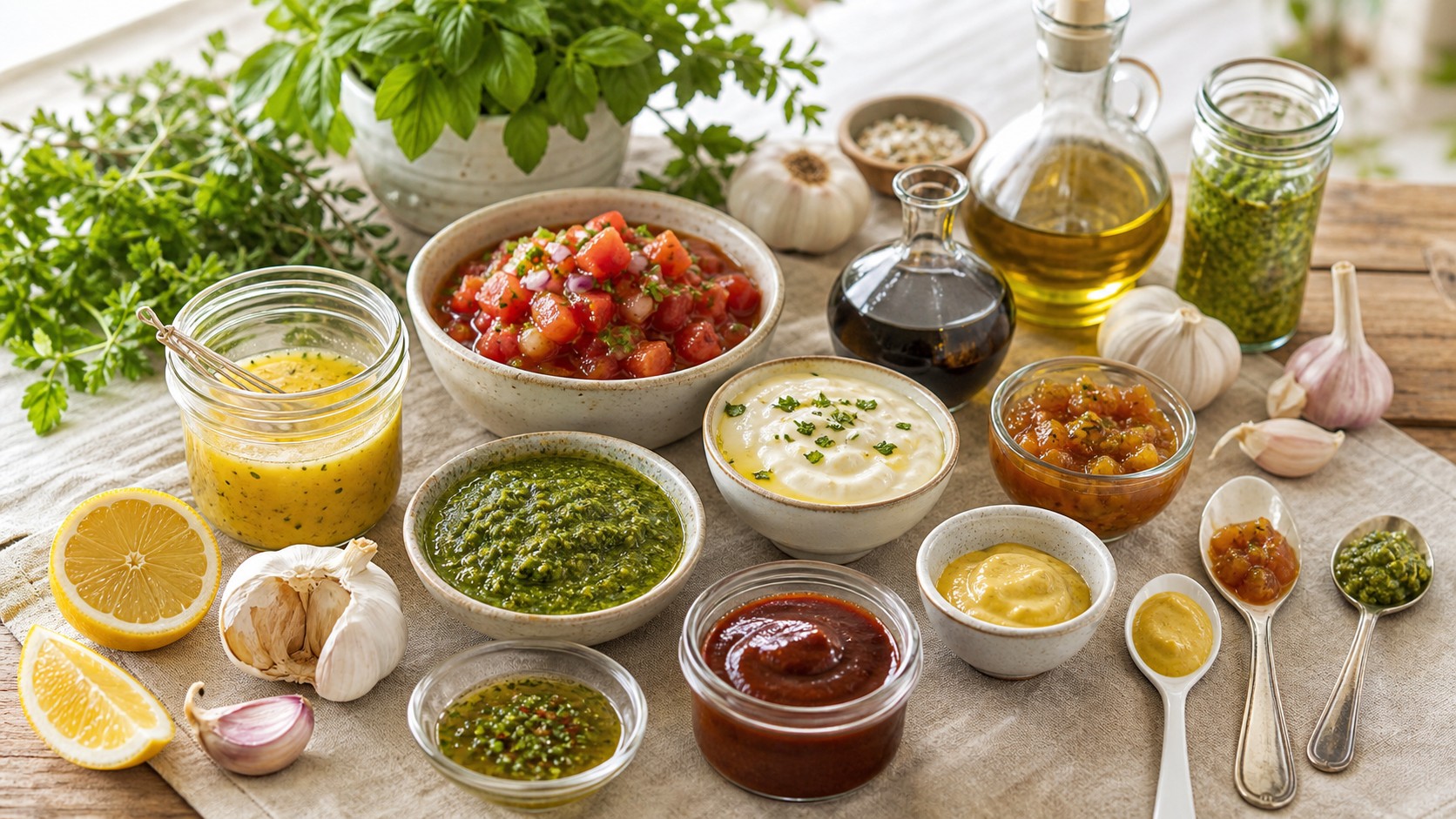
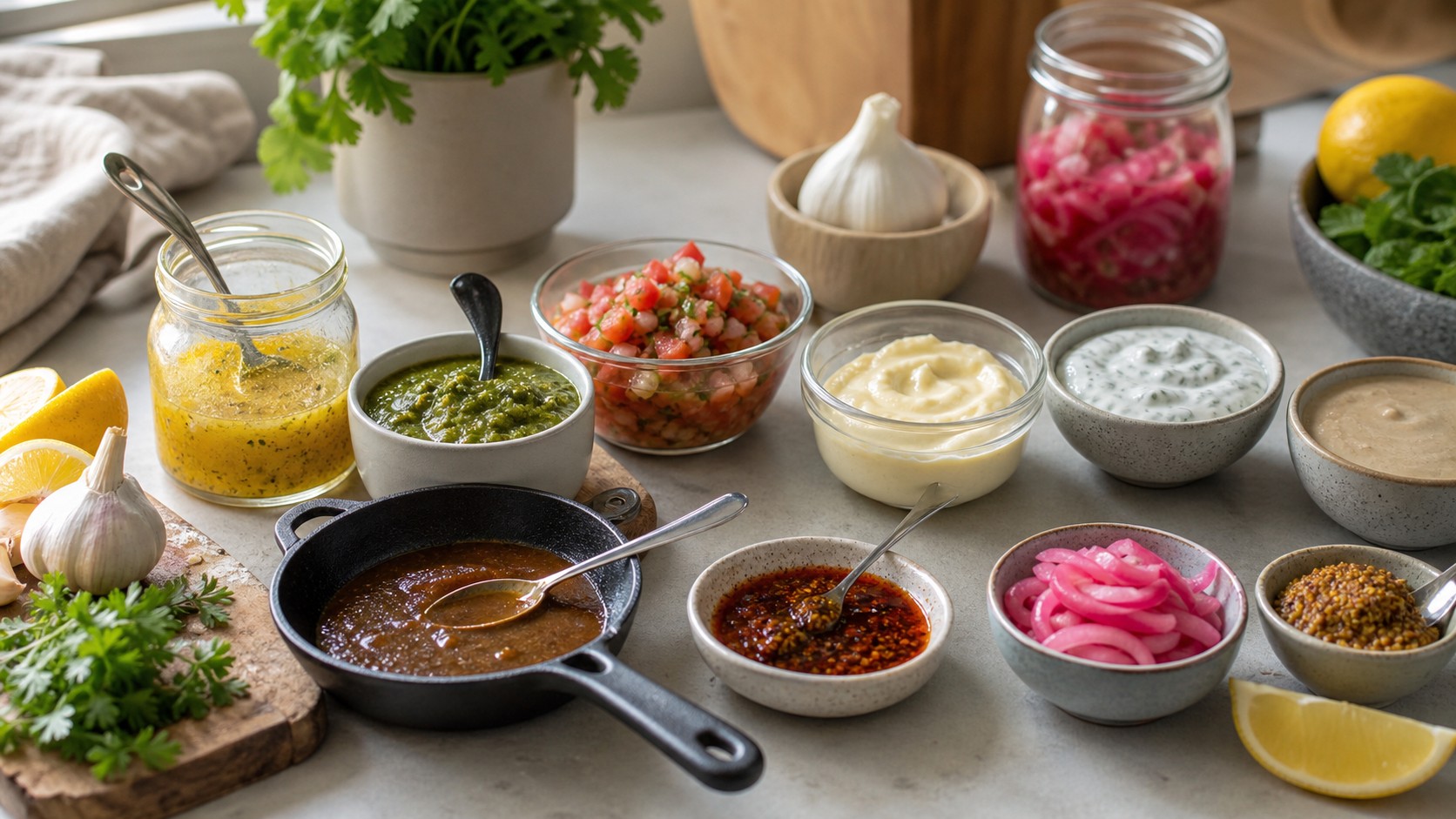
Start with a lemon butter pan sauce, a red wine reduction, a mustard cream sauce, a tomato pan sauce, a vinaigrette, a green herb sauce, and a simple aioli. These cover reduction, emulsion, acidity, herbs, and texture. Repeat them with different foods. Chicken pan sauce teaches deglazing. Pasta sauce teaches emulsifying with starchy water. Herb sauce teaches freshness. Vinaigrette teaches balance. Aioli teaches thickness and seasoning.
Restaurant-quality sauces become possible when you stop treating sauce as an afterthought. Build flavor, reduce carefully, season in layers, finish with acid or fat, and match texture to the dish. That is how home cooking starts to feel polished without becoming stiff.
Keep notes only where they help. If a mustard cream sauce worked beautifully with pork, write down the rough liquid amount and final acid. If a vinaigrette was too sharp for a particular salad, remember the greens rather than blaming the dressing entirely. Restaurant cooks repeat small lessons until they become instincts. Home cooks can build the same confidence by practicing a few useful sauces in meals they already enjoy.
Practice is most useful when it has a clear focus. One week, notice reductions. Another week, notice how much lemon changes butter sauce. Another time, compare a strained pan sauce with a rustic one. Small experiments build real control because they isolate what changed. After a few repetitions, a sauce stops feeling like a separate recipe and starts feeling like part of cooking.