Oils and Vinegars Shape Flavor Before Food Reaches the Plate
Cooking oils and vinegars are quiet pantry essentials that influence flavor, texture, aroma, browning, balance, and freshness. Oil carries heat, helps food brown, adds richness, and can finish a dish with aroma. Vinegar brings acidity, brightness, preservation, and contrast. Together they build vinaigrettes, marinades, pickles, sauces, roasted vegetables, sauteed greens, grilled foods, braises, and finishing touches. When you understand which oil or vinegar to use and why, everyday cooking becomes more precise and more flavorful.
A: Extra virgin olive oil and a neutral higher-heat oil cover many needs.
A: Red wine, apple cider, rice, balsamic, and sherry vinegar are flexible choices.
A: Yes, especially for high-heat cooking, but flavor and refinement matter too.
A: Yes, olive oil works for many everyday cooking tasks, though very high heat may need another oil.
A: Oil and vinegar naturally separate unless emulsified or shaken again.
A: Try vinegar, citrus, salt, or a finishing oil depending on what is missing.
A: It is an oil added at the end for aroma, richness, and flavor.
A: It can affect the surface, but too much acid for too long can damage texture.
A: It may smell stale, waxy, bitter, or unpleasant.
A: Buy them when they match foods you cook often enough to use while fresh.
Understand What Oil Does
Oil is not only a cooking medium. It transfers heat, prevents sticking, encourages browning, carries fat-soluble flavors, and changes mouthfeel. A little oil can make vegetables roast instead of dry out. Oil in a skillet helps spices bloom and aromatics soften. Oil in a dressing gives acid something to cling to. Finishing oil can make beans, soup, bread, pasta, or grilled vegetables feel richer and more aromatic.
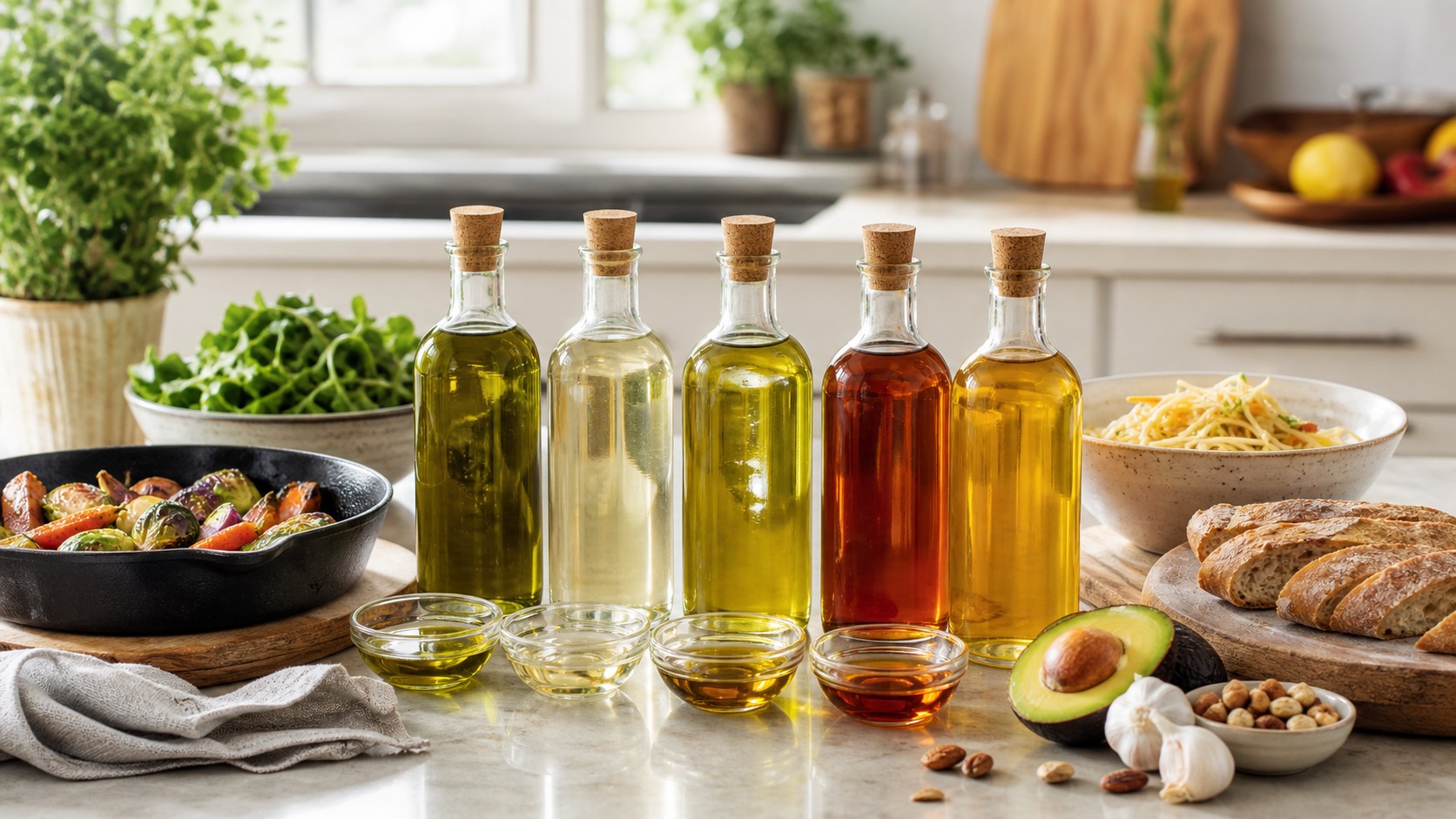
Different oils have different flavors and heat tolerances. Extra virgin olive oil tastes fruity, grassy, peppery, buttery, or mild depending on the bottle. Neutral oils such as canola, grapeseed, sunflower, safflower, or vegetable oil step back when you do not want oil flavor. Avocado oil is often chosen for higher-heat cooking and mild flavor. Sesame oil is powerful and usually used as a finishing or flavor oil, especially toasted sesame oil. Coconut oil brings distinct flavor and richness. Nut oils can be beautiful in dressings but are often delicate.
Smoke point matters, but it is not the only factor. Use refined higher-heat oils for searing, frying, or very hot roasting when needed. Use flavorful oils when their taste improves the food. Avoid heating delicate finishing oils aggressively. A practical kitchen usually needs one everyday olive oil, one neutral higher-heat oil, and one or two flavor oils.
Oil can also correct texture at the end of cooking. Beans that taste chalky may need olive oil as much as they need salt. Roasted vegetables that look dry can often be rescued with a small drizzle while they are still warm. A soup that tastes lean may feel fuller with finishing oil instead of cream. Add oil gradually, toss or stir well, and stop when the food looks glossy and tastes rounded rather than greasy.
Oil choice also affects how confident you feel at the stove. When you know which bottle is for browning and which bottle is for finishing, you stop hesitating over every pan. That clarity makes simple cooking faster, cleaner, and easier to repeat.
Understand What Vinegar Does
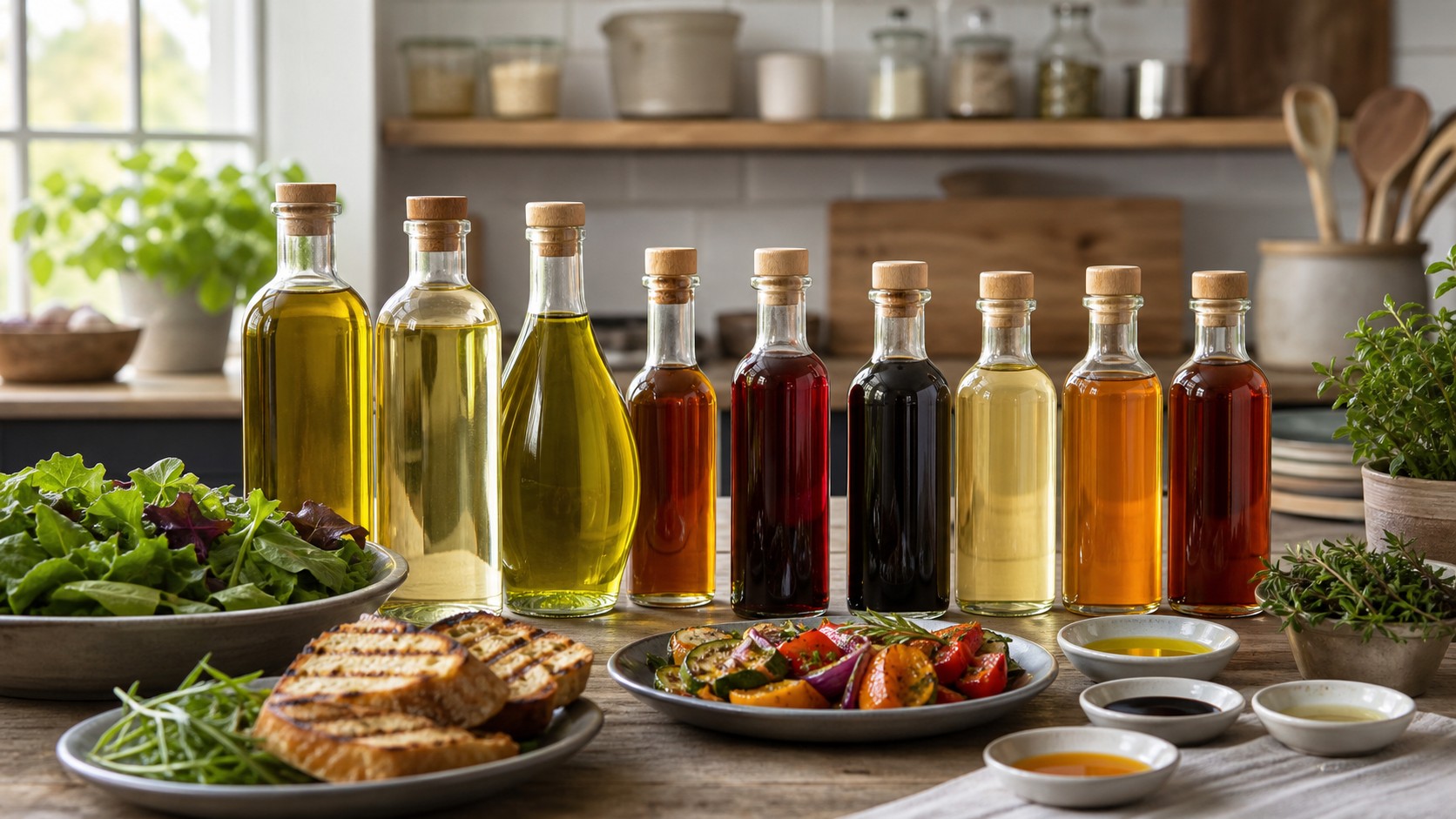
Vinegar adds acid, and acid makes food taste brighter. It can cut richness, wake up beans, balance sweetness, sharpen dressings, tenderize lightly in marinades, and preserve quick pickles. Red wine vinegar tastes bold and savory. White wine vinegar is lighter. Apple cider vinegar is fruity and tangy. Rice vinegar is gentle and slightly sweet. Balsamic vinegar is dark, sweet, and concentrated. Sherry vinegar is nutty and complex. Distilled white vinegar is sharp and useful for pickling and cleaning flavors in some recipes.
Vinegar should be chosen by flavor, not only by acidity. A tomato salad may love red wine vinegar. Slaw may want apple cider vinegar. Sushi-style rice or cucumber salad may want rice vinegar. Roasted strawberries or aged cheese may welcome balsamic. Beans and lentils may become more vivid with sherry vinegar. When a dish tastes flat but already has enough salt, vinegar or citrus is often the missing piece.
Different vinegars bring different kinds of brightness. Rice vinegar gives a soft lift to cucumbers, noodles, and dipping sauces. Red wine vinegar has a savory edge that suits beans, tomatoes, and grilled foods. Apple cider vinegar carries fruitiness that works with cabbage, pork, squash, and slaws. Sherry vinegar tastes nutty and deep, while balsamic adds sweetness and darkness. Choosing vinegar by personality instead of acidity alone makes the final dish feel more considered.
Build Better Dressings and Vinaigrettes
Oil and vinegar meet most often in dressing. A basic vinaigrette begins with oil, vinegar, salt, and perhaps mustard, honey, shallot, garlic, herbs, or pepper. The oil gives body; the vinegar gives brightness; salt makes both taste like food. A common starting ratio is three parts oil to one part vinegar, but the best ratio depends on the greens or ingredients. Bitter greens may need more fat. Grain salads may need more acid and salt. Delicate lettuce may need a gentler dressing.
Emulsification helps dressing cling. Mustard, honey, mayo, tahini, yogurt, or vigorous shaking can help oil and vinegar stay together long enough to coat food. Even if a vinaigrette separates later, it can be shaken again. Taste the dressing on a leaf, bean, grain, or vegetable from the dish. A dressing that tastes too sharp alone may be perfect once spread across a bowl.
Texture matters here too. A broken vinaigrette can still taste good on rustic vegetables, but a lightly emulsified dressing clings more evenly to tender leaves. For grain bowls and bean salads, a slightly stronger dressing is often better because the ingredients absorb and soften it. For delicate greens, a lighter hand keeps the salad lively. Dress the food, wait a moment, and taste again before deciding whether the dressing needs more oil, acid, salt, or sweetness.
Use the bowl to your advantage. Toss sturdy ingredients with dressing while they are warm so they absorb flavor. Dress tender greens right before serving so they stay crisp. Add crunchy toppings after dressing so they do not soften too early. Oil and vinegar are simple, but the order of mixing changes how the finished dish eats.
Use Oils and Vinegars in Marinades and Cooking
Marinades often include oil, acid, salt, aromatics, and seasonings. Oil carries flavor and helps coat the food. Vinegar adds brightness and can slightly affect texture, but too much acid for too long can make delicate proteins mushy or dry on the surface. Use stronger vinegar marinades for sturdy foods and shorter times for fish or tender cuts. Vegetables, beans, and grains can also marinate beautifully after cooking.
In cooking, oil choice affects browning and flavor. Use neutral oil when searing at higher heat or when the food’s flavor should lead. Use olive oil for sauteing, roasting, sauces, and Mediterranean-style dishes when its flavor belongs. Use toasted sesame oil at the end of noodles, rice, vegetables, or soups rather than as the main frying oil. Add vinegar to pan sauces, braises, soups, and beans near the end when brightness is needed. A splash can change the whole dish.
Timing changes the personality of vinegar. Vinegar simmered in a braise becomes rounder and more integrated, while vinegar added at the end stays sharper and more aromatic. The same is true of flavored oils: chile oil added early may lose some fragrance, while chile oil spooned over the finished dish stays vivid. Use early additions for depth and late additions for clarity. That timing gives you two very different tools from the same bottle.
Use Finishing Oils and Vinegars With Care
Finishing is where oils and vinegars can feel special. A drizzle of good olive oil over soup, beans, burrata, tomatoes, grilled bread, or roasted vegetables adds aroma and gloss. A few drops of balsamic, sherry vinegar, or rice vinegar can sharpen a dish right before serving. Finishing is not about using a lot; it is about placing intensity where it will be noticed.
Keep finishing oils and vinegars away from harsh heat and bright light when possible. Their flavors are more delicate than their bottles suggest. Taste them occasionally. Oils can go rancid, especially nut and seed oils. Vinegars last longer but can lose vibrancy or develop sediment. Storage is part of flavor.
Finishing is also about restraint. A peppery olive oil can make tomato salad taste vivid, but too much will cover the tomatoes. A few drops of aged balsamic can flatter strawberries or roasted squash, while a heavy pour can make the plate sticky and sweet. Specialty oils and vinegars should act like punctuation. They should make the dish clearer, not louder.
Try finishing in layers rather than pouring once. Add a little oil, toss or spoon it through, then add vinegar or citrus separately if the dish still needs lift. This keeps you from using vinaigrette when the food only needed richness, or adding more oil when the missing element was brightness. Separate additions give you more control over the final bite.
Stock a Practical Oil and Vinegar Pantry
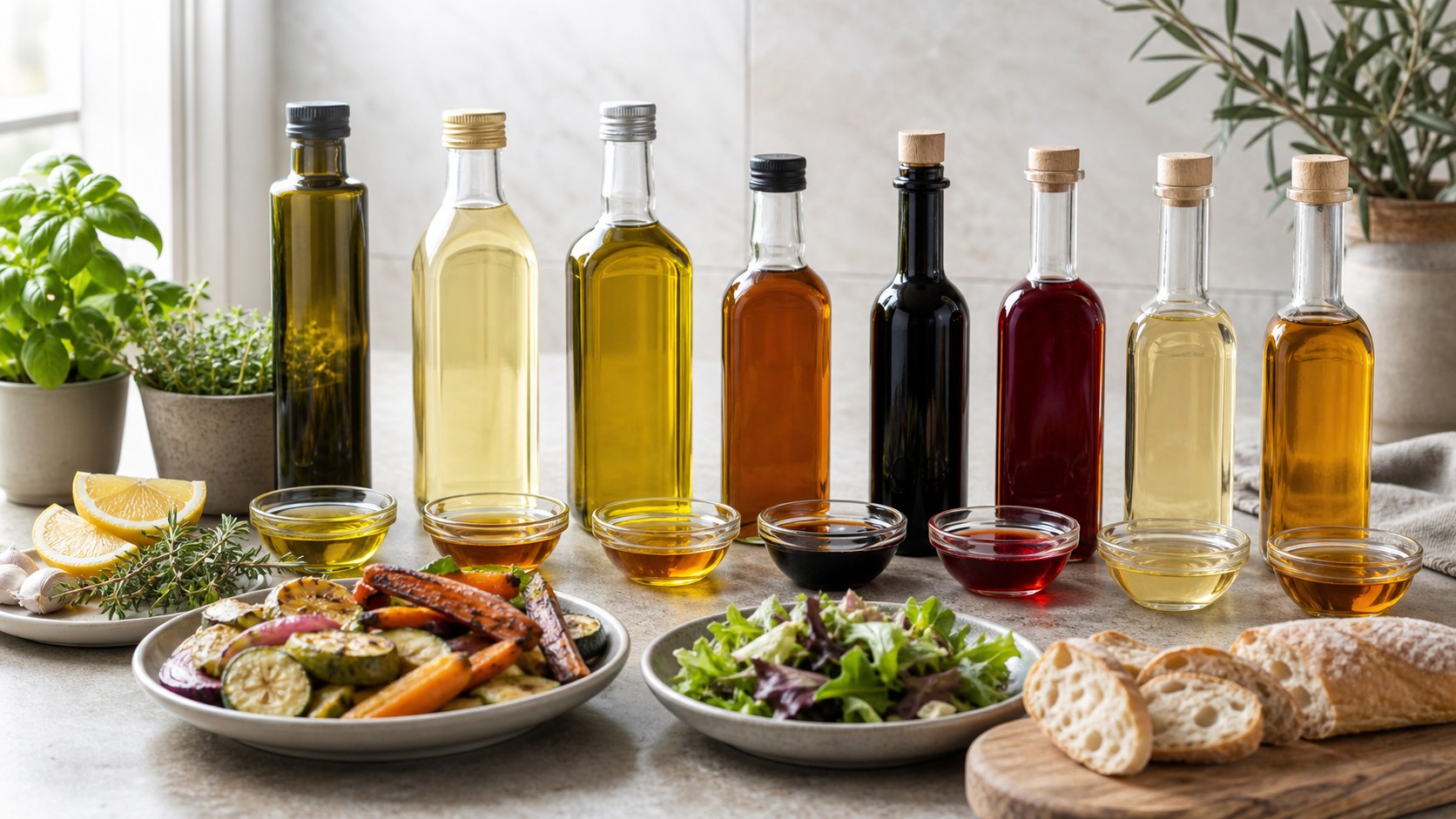
A practical pantry might include extra virgin olive oil, a neutral high-heat oil, toasted sesame oil, red wine vinegar, apple cider vinegar, rice vinegar, balsamic vinegar, and perhaps sherry vinegar. That set covers roasting, sauteing, frying, dressings, slaws, quick pickles, noodle sauces, marinades, and finishing. Add avocado oil, peanut oil, coconut oil, champagne vinegar, white wine vinegar, or specialty oils only if they match the food you cook.
Buy sizes you can use while the oil tastes fresh. A giant bottle of delicate oil is not a bargain if it turns stale. Store oils closed, away from heat and light. Store vinegars tightly capped. Keep the everyday bottles reachable and the special bottles protected. Pantry organization makes it more likely that you will use the right bottle instead of grabbing the same one for everything.
A practical pantry should also include a rotation plan. Put everyday olive oil and neutral oil where you can reach them. Keep specialty oils visible enough that you remember to use them before they fade. Open a new vinegar with a simple dressing so you understand its strength. Smell older oils before using them; rancid oil can taste waxy, stale, or bitter, and it will carry that flaw into the dish.
Let Oil and Vinegar Fix the Final Bite
When food tastes unfinished, oil and vinegar are often the answer. If soup tastes flat, add vinegar or lemon. If roasted vegetables taste dry, add oil or dressing. If beans taste heavy, add vinegar and herbs. If salad tastes harsh, add oil or sweetness. If noodles taste dull, add sesame oil, rice vinegar, or chili oil. If bread needs a starter, use olive oil and a good vinegar.
The ultimate guide is simple: choose oil for heat, flavor, and richness; choose vinegar for brightness, contrast, and balance. Use both with intention, taste as you go, and keep only the bottles that make your everyday cooking better.
Build the habit by tasting before and after. Try a spoonful of soup, then add a few drops of vinegar and taste again. Try roasted carrots plain, then add olive oil and a little salt. Taste beans before adding vinaigrette, then after they have absorbed it for ten minutes. These small comparisons make oil and vinegar easier to understand because you can feel exactly what changed.
That final tasting habit is what separates pantry ownership from pantry clutter. Bottles become useful only when you understand their effect on real food. Once you know which oil adds warmth, which vinegar adds clean lift, and which combination makes leftovers taste awake, the shelf starts working like a practical cooking tool instead of a collection of labels.