A Small Sauce Repertoire Makes Cooking Easier
The best sauces and condiments every home cook should know are the ones that solve common meal problems. They make dry food moist, rich food brighter, mild food more interesting, leftovers more useful, and simple ingredients feel complete. You do not need a refrigerator full of jars to cook well. You need a small, flexible repertoire: a vinaigrette, an herb sauce, a creamy sauce, a salsa or relish, a warm pan sauce, a spicy condiment, and one or two spreads or dips that make meals easier.
A: A flexible vinaigrette is the best first sauce to master.
A: Salsa, vinaigrette, pesto, yogurt sauce, pickled onions, or chili crisp can help.
A: Yogurt with lemon, salt, garlic, herbs, and water is quick and flexible.
A: Tahini sauce, vinaigrette, yogurt sauce, salsa, and pesto all work well.
A: Use herbs, citrus, vinegar, salsa, relish, or pickled condiments.
A: It is a warm sauce made by deglazing browned bits in a cooking pan.
A: No, combine useful store-bought staples with fresh homemade sauces.
A: Add acid, herbs, water, pickles, or fresh vegetables.
A: Hot sauce, chili crisp, harissa, sambal, or chili oil can all be useful.
A: A small set of five to eight flexible sauces can cover most meals.
Start With a Reliable Vinaigrette
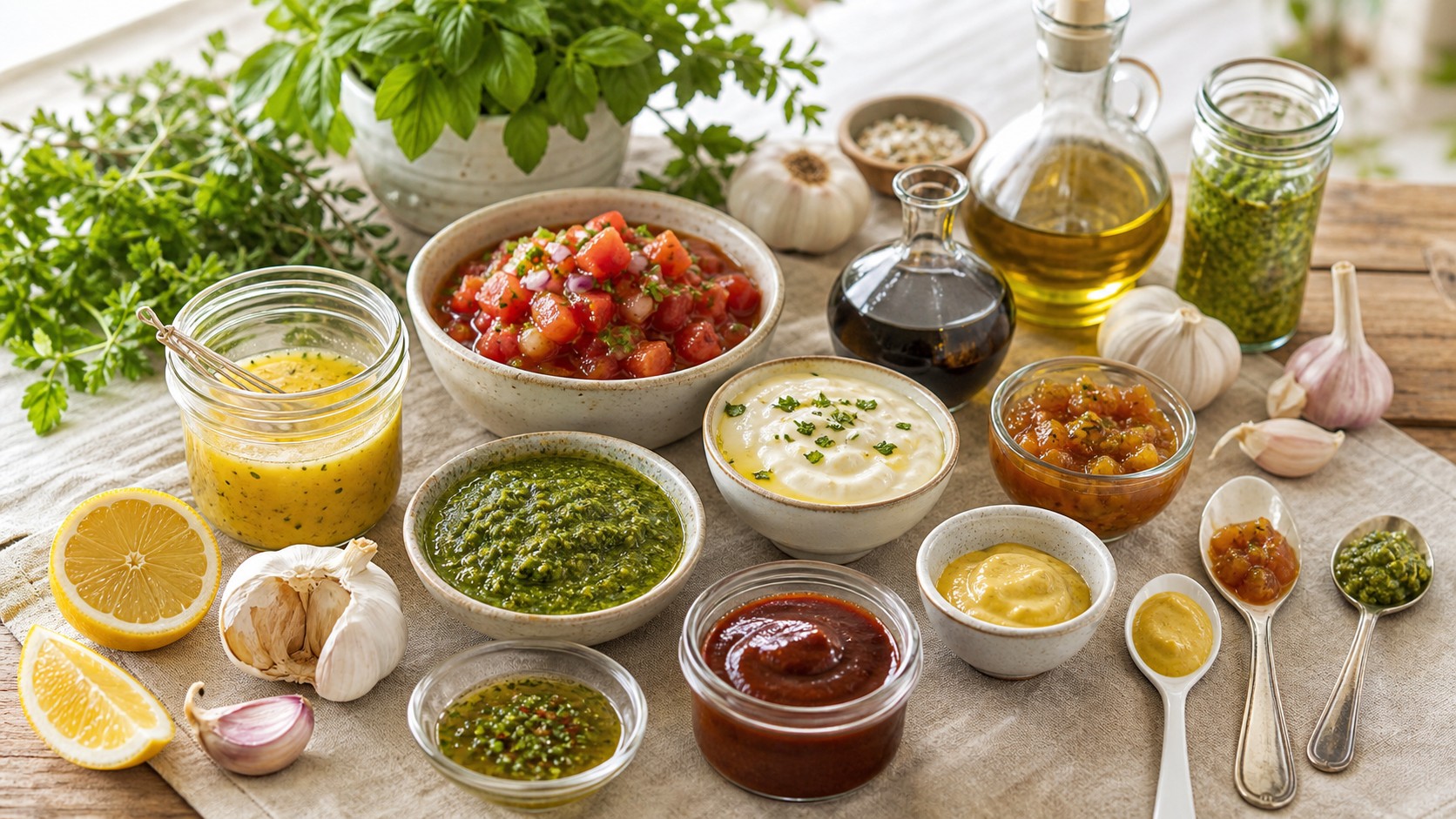
A vinaigrette is the first sauce every home cook should know because it teaches balance and works on far more than salad. Start with oil, vinegar or citrus, salt, pepper, and something that helps the mixture come together, such as mustard, honey, or a little mayonnaise. From there, add shallots, garlic, herbs, spices, anchovy, yogurt, tahini, or grated cheese depending on the meal. A sharp vinaigrette can wake up greens, grain bowls, lentils, beans, roasted vegetables, potatoes, chicken, fish, and sandwiches.
The classic ratio of three parts oil to one part acid is only a starting point. Sturdy kale, roasted carrots, and chickpeas may want more acid. Tender lettuce may want something gentler. A grain salad may need extra salt because grains absorb flavor. Taste the vinaigrette on the food, not only from the spoon. If it disappears, add acid or salt. If it bites too hard, add oil, honey, or a creamy ingredient. Once you understand that adjustment, you can make a dressing for almost anything.
Keep one house vinaigrette in rotation. It might be lemon mustard, red wine shallot, balsamic honey, cider vinegar herb, or tahini lemon. The specific version matters less than having a dependable sauce that makes vegetables and leftovers easier to eat.
A house vinaigrette also trains your palate because you make the same basic sauce in different seasons. In spring it may need herbs and lemon for delicate greens. In summer it may lean on tomatoes, basil, or grilled vegetables. In fall it may want cider vinegar, mustard, and maple for roasted squash. In winter it may need stronger vinegar and garlic to stand up to cabbage, beans, and hearty grains. Repeating the method while changing the accents teaches you more than chasing a new dressing every time.
Learn One Fresh Herb Sauce
Herb sauces make food taste alive. Pesto, chimichurri, salsa verde, gremolata, green chutney, and herb vinaigrettes all bring freshness, color, and intensity. They are especially useful with grilled meat, roasted vegetables, beans, eggs, fish, potatoes, sandwiches, and pasta. A good herb sauce usually includes fresh herbs, fat, acid, salt, and an aromatic such as garlic, shallot, chile, capers, or anchovy.
Pesto is the most familiar, but it does not have to be limited to basil and pine nuts. Parsley, cilantro, arugula, mint, walnuts, almonds, sunflower seeds, and different cheeses can all work. Chimichurri leans sharper and looser, which makes it excellent for grilled foods. Gremolata is drier and brighter, usually built from parsley, lemon zest, and garlic. Salsa verde can include capers, herbs, vinegar, and olive oil. Each herb sauce has its own personality, but they all solve the same problem: they add freshness fast.
The main risk with herb sauces is muddiness. Too much oil can make them heavy, too much garlic can make them aggressive, and too little acid can make the herbs taste grassy rather than lively. Chop or blend only as much as the sauce needs. A rough chimichurri should still have texture, while a pesto needs enough smoothness to coat pasta or beans. Add delicate herbs near the end, taste with the main food, and keep the sauce bright enough that it feels like a lift instead of another layer of richness.
Keep a Creamy Sauce for Richness
Creamy sauces are useful because they cling. Aioli, garlic mayo, ranch-style dressing, yogurt herb sauce, tahini sauce, spicy mayo, remoulade, and creamy mustard sauce can make sandwiches, bowls, roasted vegetables, fish, chicken, burgers, and snack plates more satisfying. The best creamy sauces still need brightness. Lemon, vinegar, pickles, herbs, mustard, hot sauce, or garlic keeps them from tasting heavy.
Yogurt sauce is especially practical. Stir yogurt with lemon, salt, garlic, herbs, and a little water until spoonable. It works with roasted vegetables, grains, kebabs, salmon, potatoes, and wraps. Tahini sauce is another essential because it feels rich without dairy. At first tahini may thicken strangely when liquid is added, but steady whisking and more water will make it smooth. Mayo-based sauces are useful for sandwiches and seafood. The trick is to season them like real sauces, not treat them as plain mayo with a name.
A creamy sauce can make a meal feel complete, but it should not flatten everything. Pair it with crunch, herbs, pickles, or acid so the plate still has contrast.
It helps to think of creamy sauces in terms of base and edge. The base might be mayonnaise, yogurt, sour cream, tahini, avocado, or blended beans. The edge might be lemon zest, vinegar, dill, chives, mustard, roasted garlic, chile, pickled jalapeno, capers, or black pepper. A sauce with only base tastes soft; a sauce with only edge tastes harsh. The best versions have enough body to comfort the food and enough sharpness to keep you taking another bite.
Use Salsa, Relish, and Pickles for Brightness
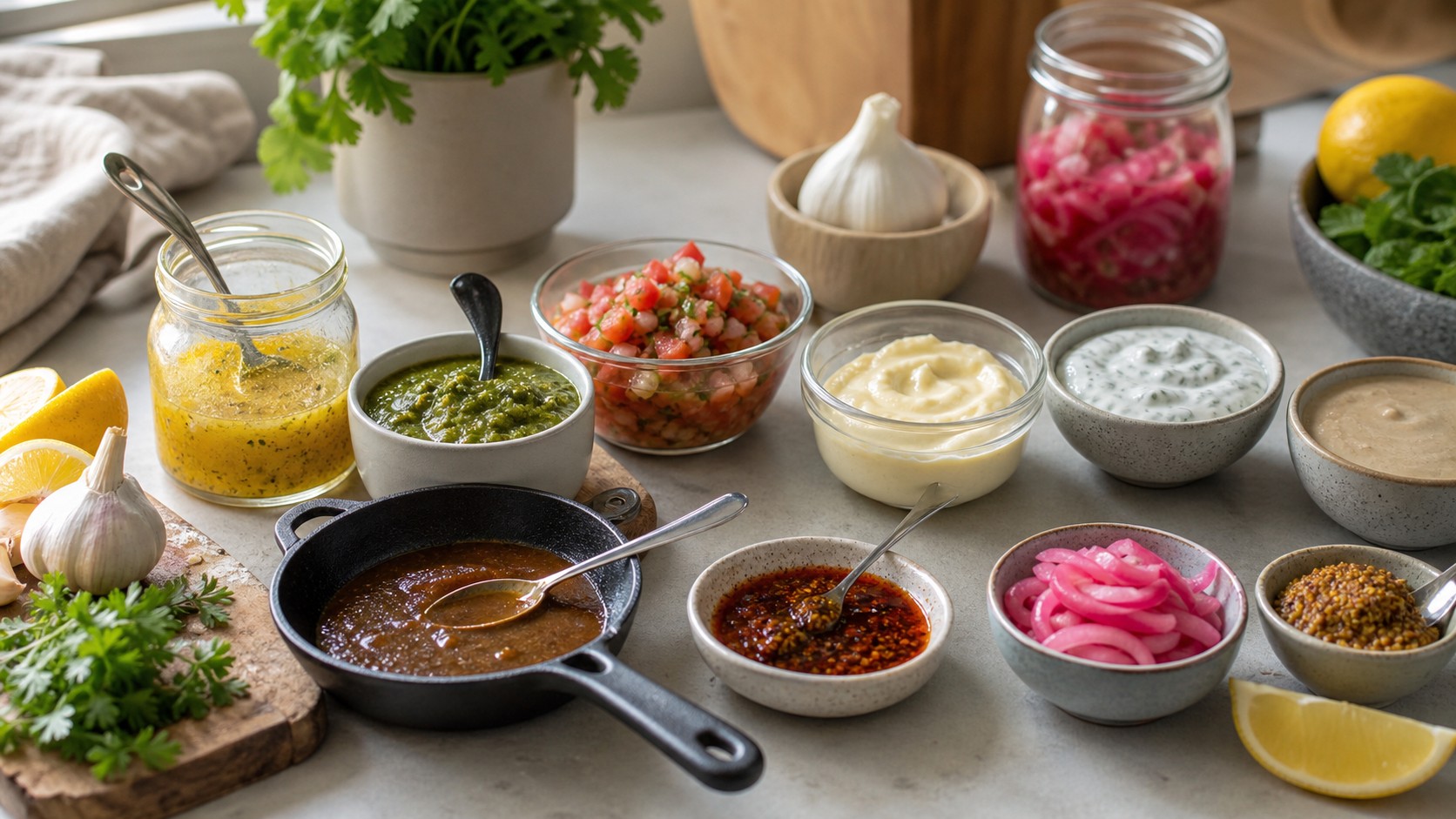
Salsas, relishes, and pickled condiments are essential because they bring acid, crunch, heat, and freshness. Tomato salsa, corn salsa, fruit salsa, cucumber relish, pickled onions, quick pickles, pepper relish, and chutney can change the whole mood of a meal. They are especially helpful with tacos, eggs, grilled meat, rice bowls, beans, sandwiches, burgers, cheese boards, and roasted vegetables.
These condiments are often the fastest way to fix food that tastes heavy or flat. A rich taco needs lime and salsa. A burger needs pickles or relish. Beans need onion, vinegar, or chile. Fried food needs something sharp. Even a simple bowl of rice and eggs becomes more interesting with pickled onions and hot sauce. Home cooks who keep something bright in the refrigerator always have a way to wake up dinner.
They are also forgiving entry points for cooks who do not want to simmer a sauce. Quick pickled onions need only sliced onions, vinegar, salt, and a little sugar. A relish can be chopped cucumber, herbs, vinegar, and chile. A fruit salsa can turn peaches, mango, pineapple, or apples into a sharp-sweet topping for fish, pork, tacos, or cheese. These condiments prove that a sauce does not always need to be creamy or cooked to change the meal.
Brightness also helps with make-ahead cooking. Foods stored overnight often taste muted because cold dulls aroma and starches absorb seasoning. A spoonful of relish, salsa, pickle brine, or chutney can restore energy without reheating everything aggressively. That is why bright condiments are so useful for lunches, leftovers, and quick dinners built from cooked grains or proteins.
Keep the cuts small enough for the way the condiment will be eaten. A chunky salsa may be perfect for chips but awkward inside a wrap. Thinly sliced pickles tuck into sandwiches better than thick wedges. Relish should spread and scatter, not fall off in heavy pieces. The size of the chop is part of the sauce’s usefulness.
Know How to Make a Pan Sauce
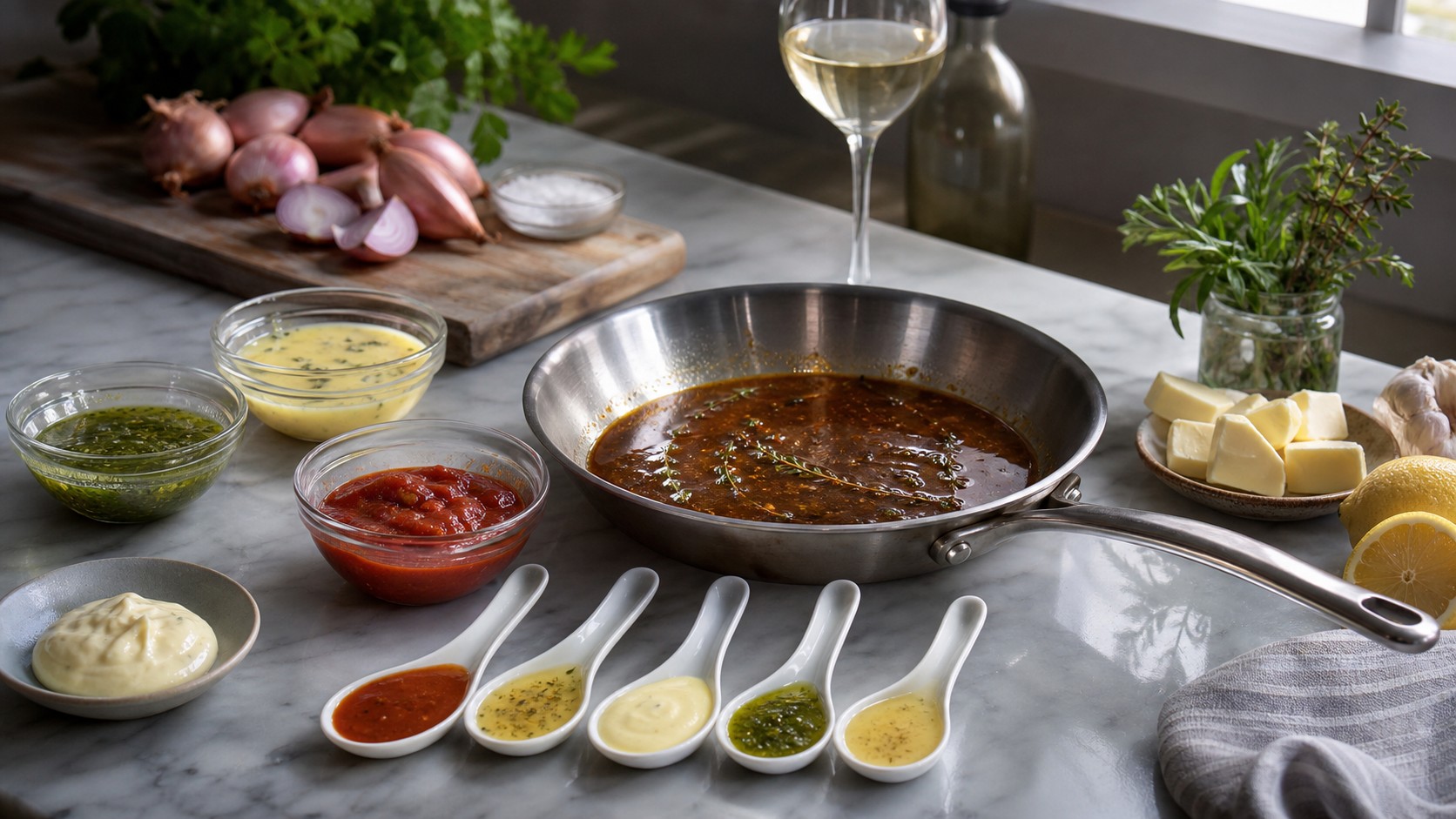
A pan sauce is the home cook’s bridge between everyday cooking and restaurant flavor. After searing meat, poultry, mushrooms, or even some vegetables, browned bits remain in the pan. Add aromatics if needed, deglaze with wine, broth, vinegar, citrus, or water, scrape up the browned bits, reduce, and finish with butter, herbs, mustard, cream, or lemon. The result is a warm sauce that tastes connected to the food because it was built from the cooking itself.
Pan sauces teach timing. The pan should not be scorched. The liquid needs to reduce enough to concentrate flavor. Butter should be whisked in gently at the end when appropriate. Acid can brighten the sauce, but too much can dominate. A simple chicken pan sauce with shallot, broth, mustard, lemon, and butter can make a basic dinner feel polished. Once you learn the method, it adapts endlessly.
The best way to practice is with modest expectations and good observation. Notice whether the browned bits smell savory or burnt before you add liquid. Use a wooden spoon or spatula to release them fully. Let watery liquids bubble until they taste concentrated, not merely hot. Turn down the heat before adding butter so the sauce stays glossy. A pan sauce is quick, but it is not careless; it rewards the cook who watches, smells, and tastes in real time.
Add One Spicy or Intense Condiment
Every home cook benefits from a condiment that adds instant intensity. Hot sauce, chili crisp, chili oil, harissa, gochujang sauce, sambal, spicy mayo, pepper relish, or a homemade chile vinegar can bring energy to eggs, noodles, beans, roasted vegetables, soups, sandwiches, and grilled food. The key is not only heat. The best spicy condiments bring aroma, salt, acidity, texture, or savoriness too.
Use intense condiments as accents. A spoonful can make leftovers feel new, but too much can flatten the rest of the meal. Keep cooling partners nearby: yogurt, mayo, avocado, cucumber, lime, or rice. Heat is more enjoyable when the plate has balance.
Choose the intense condiment based on what else it brings. Chili crisp gives crunch and toasted depth, while a vinegar-based hot sauce gives brightness. Harissa brings chile, garlic, and spice, while gochujang contributes sweetness and fermented savoriness. Chili oil can perfume noodles or eggs without adding much acidity. When you understand the condiment’s full personality, you can use it more accurately than simply reaching for heat.
Use a clean spoon and keep oily chile condiments covered. Strong sauces pick up stray crumbs and moisture easily, which shortens their usefulness and muddies the flavor. A condiment that lasts for weeks only helps if it still tastes clean when you reach for it.
Build Your Personal Sauce Shortlist
A strong home-cook shortlist might include lemon vinaigrette, basil or parsley pesto, yogurt herb sauce, tahini sauce, tomato salsa, pickled onions, garlic aioli, pan sauce, and chili crisp or hot sauce. That is enough to cover salads, bowls, sandwiches, roasted vegetables, proteins, snacks, and leftovers. You can make some and buy some. The point is having sauces that match the way you cook.
When a meal feels incomplete, ask what it lacks. Dry food needs moisture. Heavy food needs acid. Mild food needs herbs, spice, or salt. Soft food needs crunch. A good sauce or condiment should answer that need directly. Once you learn that habit, sauces become less like extras and more like the final step of cooking.
Your shortlist should also reflect your patience. If you will not blend herbs on a weeknight, keep a jar of pickled onions and a vinaigrette instead. If you love a creamy sandwich spread, make one every few days and use it broadly. If you cook from global pantry staples, keep sauces that respect those flavors rather than forcing every meal through the same condiment. The best list is the one you will actually use before it spoils.
Revisit the shortlist every season or so. Summer may ask for tomato salsa, basil sauce, and bright vinaigrettes. Colder months may ask for mustard cream, chili oil, pickles, and richer pan sauces. A home cook’s best condiments should move with the food on the counter, not stay frozen around one ideal pantry list.
Write the shortlist around meals, not around sauce names. If Tuesday dinner is usually eggs, rice, or leftovers, keep condiments that improve those foods quickly. If weekend cooking means grilled meat or vegetables, keep one sauce that loves char and smoke. A personal list works because it is attached to real use.