From Coney Island Carts to the City’s Most Iconic Street Food
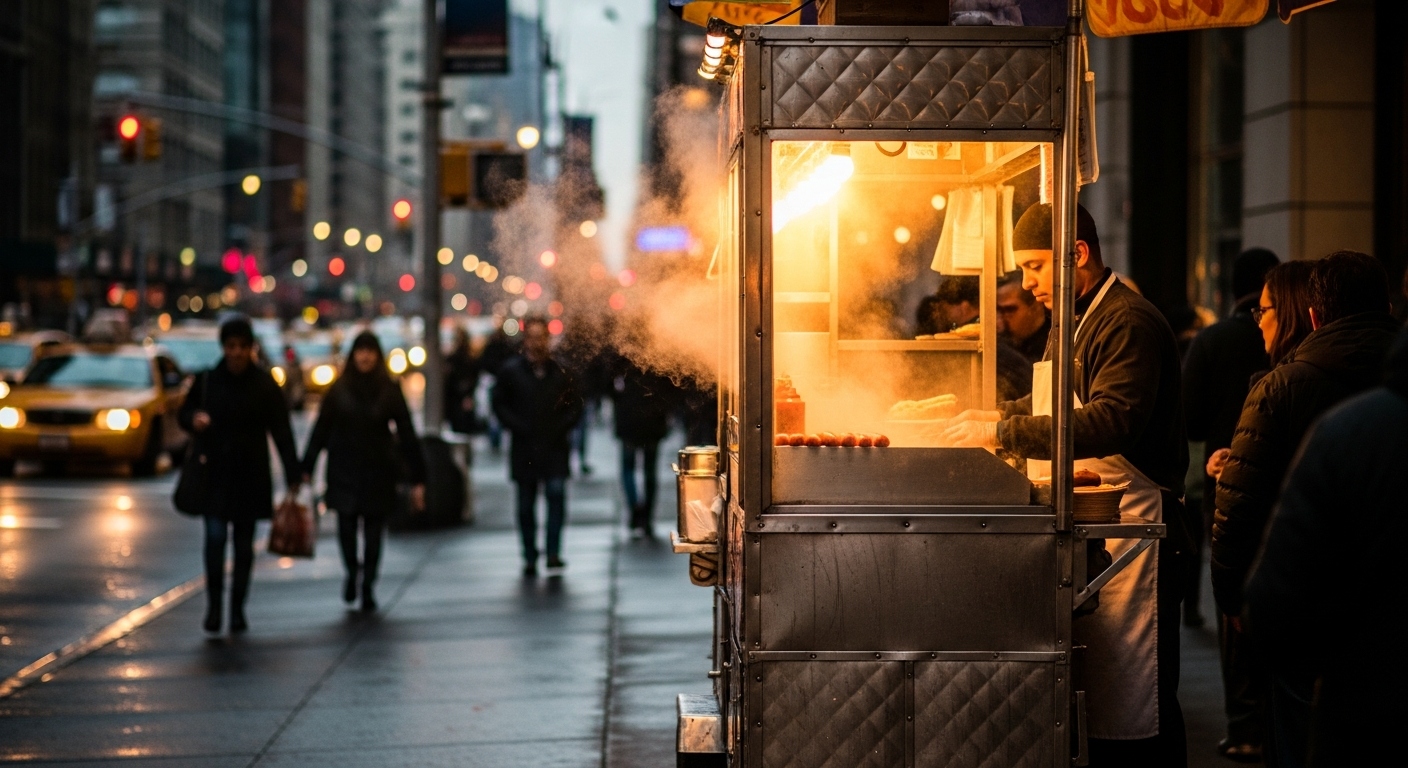
New York City has many famous sounds: subway brakes, taxi horns, street musicians, and the steady rush of millions of footsteps. But one of its most recognizable scenes is quieter and simpler: a hot dog cart sending steam into the air while a vendor reaches for a bun, a frank, a streak of mustard, and a scoop of sauerkraut. The New York City hot dog is not just a quick meal. It is a symbol of movement, immigration, working-class energy, seaside fun, street food culture, and the city’s ability to turn humble ingredients into legend. The story behind New York City hot dogs begins with German immigrants, 19th-century pushcarts, and the practical genius of serving sausage in bread. Frankfurters and wienerwursts were brought into American food culture by German-speaking communities, and early versions were sold from pushcarts in New York neighborhoods such as the Bowery. These sausages were warm, portable, flavorful, and perfectly suited to a city where people were always on the move.
A: A beef frank, soft bun, yellow mustard, sauerkraut, and onion sauce are the classic markers.
A: Steaming gives a cart-style taste, while griddling adds browned flavor.
A: It is a tangy-sweet cooked onion topping often made with tomato paste, vinegar, and spices.
A: Yes, sauerkraut is one of the most classic toppings for NYC hot dogs.
A: Yes, keep franks warm in a slow cooker or covered pan and set up toppings separately.
A: Yellow mustard is the classic choice for New York-style hot dogs.
A: Warm them lightly and add wet toppings just before serving.
A: Yes, it reheats well and often tastes better after the flavors blend.
A: Fries, chips, pickles, coleslaw, baked beans, and simple salads all work well.
A: They combine immigrant food history, street-cart culture, Coney Island nostalgia, and easy city flavor.
A Sausage Meets a City
Before the hot dog became a New York icon, sausage was already a beloved food in Europe. German immigrants brought their butchery traditions, seasonings, and street-vending instincts with them. New York City, crowded and fast-growing, gave the sausage a new stage. A worker could eat one quickly. A beachgoer could carry one without a plate. A vendor could sell many from a small cart.
The brilliance of the hot dog was its simplicity. It solved a practical problem: how do you serve a hot sausage to someone walking down the street? The answer was bread. The bun made the sausage portable, tidy, and instantly appealing. It turned a snack into a handheld meal.
Coney Island and the Birth of a Legend
Coney Island gave the New York hot dog its mythology. Many accounts credit Charles Feltman, a German immigrant and baker, with helping popularize the hot dog on a bun at Coney Island in the late 1800s. Feltman is often associated with selling sausages in rolls to beachgoers, creating a convenient meal that could be enjoyed without plates or utensils. The National Hot Dog and Sausage Council notes that Feltman opened a Coney Island hot dog stand in 1871 and sold thousands of sausages in milk rolls during his first year.
Coney Island was the perfect place for the hot dog to become famous. It was loud, colorful, crowded, and full of appetite. People came for rides, beaches, boardwalks, and spectacle. A hot dog fit right in. It was affordable, exciting, and casual. It tasted like summer, salt air, and city escape.
Nathan’s and the Rise of the Famous Frank
No story of New York City hot dogs is complete without Nathan’s Famous. Founded by Nathan Handwerker in 1916 on Coney Island, Nathan’s helped turn the hot dog from a popular street food into a national brand with deep New York roots. The company’s Coney Island location and Fourth of July hot dog eating contest became part of American food culture, tying the hot dog to celebration, spectacle, and competition.
Nathan’s succeeded because it understood both flavor and theater. A hot dog was never just meat in a bun; it was an experience. It was a line at the counter, the smell of griddled franks, the snap of the casing, the rush of mustard, and the feeling of eating something unmistakably tied to place.
The Hot Dog Cart Becomes a New York Landmark
As New York evolved, the hot dog cart became part of the city’s visual language. The cart was small enough to fit on a sidewalk but powerful enough to feed crowds. It served office workers, tourists, cab drivers, construction crews, students, and late-night wanderers. The New York Public Library has documented the importance of hot dog carts in city lunch culture, including the role of stainless-steel carts in shaping the modern street-food experience.
The cart also represents opportunity. Like many street foods, the hot dog became a way for immigrants and entrepreneurs to earn a living in a demanding city. A vendor did not need a grand dining room. A cart, a permit, a good location, and steady hands could become a business.
What Makes a New York Hot Dog Different?
A New York-style hot dog is usually simple, but that simplicity is intentional. The classic version often includes a steamed or griddled beef frank in a soft bun with yellow mustard and either sauerkraut or onion sauce. It is not overloaded. It does not need to be. The flavor comes from contrast: savory frank, soft bread, sharp mustard, tangy kraut, and sweet-spiced onions.
The New York hot dog is built for speed, but it still has balance. Too many toppings can bury the frank. Too little acidity can make it feel flat. The best versions taste bright, salty, warm, and satisfying in just a few bites.
Recipe: Classic New York-Style Hot Dogs with Onion Sauce
To bring the flavor home, start with good-quality beef hot dogs and soft buns. Warm the franks by simmering them gently or griddling them until heated through. For the onion sauce, cook thinly sliced onions in a little oil until soft, then add tomato paste, a splash of water, a small spoonful of vinegar, a pinch of sugar, and a dash of paprika. Simmer until the onions become glossy and tender.
Place each hot dog in a warm bun, add yellow mustard, spoon on the onion sauce, and finish with sauerkraut if desired. The result is a simple, street-cart-inspired hot dog that captures the spirit of New York without needing a sidewalk cart.
Why New York City Hot Dogs Still Matter
The New York City hot dog remains beloved because it belongs to everyone. It is affordable, familiar, and democratic. You can eat one outside a museum, near a park, at a ballgame, beside the beach, or on a lunch break between meetings. It crosses class lines and neighborhood lines. It is tourist food and local food at the same time.
It also tells a bigger story about New York. The city has always been shaped by people arriving with recipes, skills, ambition, and the need to adapt. The hot dog is a perfect example of that transformation. European sausage traditions met American street vending, seaside entertainment, immigrant entrepreneurship, and urban speed. Out of that mix came something iconic.
From Street Snack to Cultural Symbol
Few foods are as closely tied to a city’s identity as the hot dog is to New York. Pizza may get more debate, bagels may inspire more loyalty, and deli sandwiches may claim more grandeur, but the hot dog has a special kind of magic. It is fast, humble, and instantly recognizable. It feels nostalgic even when eaten for the first time.
Part of its power comes from the city around it. A New York hot dog tastes different because of where it is eaten: under skyscrapers, beside traffic, on a boardwalk, or in the shade of a park. The setting seasons the food.
The Lasting Bite
The story behind New York City hot dogs is really the story of New York itself: immigrant-born, practical, bold, crowded, flavorful, and always moving. From German sausages and Coney Island stands to stainless-steel carts and modern street corners, the hot dog has survived because it does exactly what great city food should do. It feeds people quickly, memorably, and with a sense of place.
A New York City hot dog does not try to be fancy. It does not need a white tablecloth or complicated presentation. Its greatness is in its confidence. A warm bun, a savory frank, mustard, onions, sauerkraut, and the city rushing around you—that is enough. Sometimes, it is more than enough.