How One Handheld Classic Traveled, Transformed, and Inspired Global Flavor
Few foods are as joyful, adaptable, and instantly recognizable as the taco. At its simplest, a taco is a tortilla wrapped around a filling. But in reality, it is much more than that. It is history folded into corn. It is culture served by hand. It is a meal that can be humble, luxurious, fiery, fresh, traditional, experimental, or wildly creative. The taco began in Mexico, where corn tortillas have been a foundation of daily food for thousands of years. Long before the taco became a global restaurant favorite, Indigenous communities were making nixtamalized corn dough, pressing it into thin rounds, and cooking tortillas on hot clay or stone surfaces. These tortillas were practical, nourishing, and perfect for scooping, wrapping, and carrying food. Today, tacos are everywhere. They appear at street carts, family kitchens, fine dining restaurants, food trucks, beach stands, fusion cafés, and late-night counters. Their popularity comes from their flexibility. A taco can hold grilled meat, roasted vegetables, seafood, beans, cheese, salsa, pickles, herbs, or almost anything else a cook imagines. Wherever tacos travel, they absorb local ingredients while keeping their essential spirit: bold flavor wrapped in something warm and comforting.
A: Tacos originated in Mexico, where corn tortillas have been central to food culture for centuries.
A: Authenticity depends on region, ingredients, technique, and respect for the taco’s cultural roots.
A: Yes, especially in northern Mexico and many Tex-Mex taco styles.
A: Corn tortillas are classic for many Mexican tacos, while flour tortillas suit larger or fusion fillings.
A: Warm them first and keep them covered so they stay soft and flexible.
A: Onion, cilantro, lime, salsa, cabbage, crema, pickled onions, and radishes are versatile choices.
A: Yes, a taco bar with several fillings, tortillas, sauces, and toppings is ideal for groups.
A: Beans, mushrooms, roasted cauliflower, sweet potatoes, lentils, tofu, and jackfruit all work well.
A: Pair rich fillings with acid, crunch, freshness, and a sauce that ties the flavors together.
A: Carnitas, grilled fish tacos, and taco-bar-style Tex-Mex tacos are beginner-friendly options.
The Mexican Roots of the Taco
To understand tacos around the world, you have to begin in Mexico. The tortilla is the heart of the taco, and corn is deeply woven into Mexican food culture. Corn was not just a crop; it was a central part of life, identity, and tradition. Through nixtamalization, corn is cooked with an alkaline substance, usually lime, which improves flavor, texture, and nutrition. This process makes masa, the dough used to form tortillas.
The word “taco” has several debated origin stories, but one popular explanation connects it to Mexican silver miners, who used the word for small paper-wrapped charges inserted into rock. Over time, the word became associated with small tortilla-wrapped foods. Whether or not that story is the full truth, tacos became a beloved everyday food because they were portable, affordable, and endlessly adaptable.
In Mexico, tacos are not one single dish. They are a category, a language, and a map. Each region has its own preferred fillings, tortillas, salsas, garnishes, and cooking methods. A taco in Mexico City may be completely different from one in Baja California, Oaxaca, Yucatán, or Sonora.
Tacos al Pastor: A Story of Migration and Flavor
One of Mexico’s most famous tacos, tacos al pastor, tells a story of cultural blending. Inspired by Lebanese shawarma brought by immigrants to Mexico, al pastor features marinated pork cooked on a vertical spit. The meat is typically seasoned with chiles, achiote, spices, and pineapple, then shaved into small pieces and served on corn tortillas with onion, cilantro, salsa, and sometimes more pineapple. This taco is a perfect example of how food evolves through movement. The cooking method reflects Middle Eastern influence, while the flavors are unmistakably Mexican. The result is smoky, sweet, tangy, spicy, and deeply satisfying.
A simple home-style version can be made by marinating thinly sliced pork in a mixture of guajillo chile paste, achiote, vinegar, garlic, oregano, cumin, and pineapple juice. Sear the meat in a hot skillet until caramelized, then serve it on warm corn tortillas with diced onion, cilantro, salsa verde, and a squeeze of lime.
Carnitas: Slow-Cooked Comfort from Michoacán
Carnitas are another iconic Mexican taco filling, especially associated with Michoacán. Pork is slowly cooked until tender, then lightly crisped so each bite has both softness and texture. Traditional carnitas are often prepared in large copper pots, creating a rich, celebratory dish ideal for gatherings.
Carnitas tacos are usually simple. The meat is the star, supported by warm corn tortillas, chopped onion, cilantro, salsa, lime, and sometimes pickled jalapeños. Their appeal comes from patience and balance. The meat is rich, but the garnishes add brightness.
For a crowd-friendly recipe, pork shoulder can be slow-cooked with orange juice, garlic, bay leaves, oregano, cumin, salt, and a little broth. Once tender, shred the meat and broil or pan-crisp it before serving. This creates a taco filling that feels festive, hearty, and deeply rooted in Mexican tradition.
Baja Fish Tacos: Coastal Freshness
Baja California gave the world one of the most beloved seafood tacos: the Baja fish taco. This regional favorite often features battered and fried fish tucked into a tortilla with cabbage, crema, salsa, and lime. The contrast is what makes it unforgettable. The fish is hot and crisp, the cabbage is cool and crunchy, and the sauce is creamy and tangy. Baja fish tacos reflect the coastal environment where fresh seafood is abundant. They are relaxed, sunny, and vibrant, making them popular far beyond Mexico.
A simple version can be made with white fish such as cod or mahi-mahi, lightly battered and fried until golden. Serve it in warm tortillas with shredded cabbage, lime crema, pico de gallo, and a squeeze of fresh lime. For a lighter approach, the fish can be grilled instead.
Tacos de Barbacoa: Deep Tradition and Slow Cooking
Barbacoa is one of the most traditional taco styles in Mexico, especially associated with central regions such as Hidalgo. Traditionally, meat such as lamb or goat is wrapped and slow-cooked in an underground pit until tender. The result is intensely flavorful, juicy, and perfect for tacos.
Barbacoa tacos are often served with consommé, a rich broth made from the cooking juices. This transforms the meal into something warming and deeply satisfying. The taco itself may include onion, cilantro, salsa, and lime, but the meat carries the story.
Modern home cooks can recreate barbacoa using a slow cooker or Dutch oven. Beef chuck, lamb shoulder, or goat can be cooked with dried chiles, garlic, cloves, cumin, oregano, vinegar, and broth until tender. The shredded meat becomes a powerful taco filling with smoky, earthy depth.
Tex-Mex Tacos and the Rise of the Crunchy Shell
As tacos crossed into the United States, they began to evolve in new ways. Tex-Mex cuisine developed through the blending of Mexican, Tejano, and American food traditions. One of the most famous results is the crunchy-shell taco filled with seasoned ground beef, shredded lettuce, cheese, tomatoes, and sour cream. While this style differs from many traditional Mexican tacos, it became a major part of taco culture in the United States. It is nostalgic, convenient, and widely recognized. For many people, crunchy tacos were their first introduction to taco night.
Tex-Mex tacos are especially popular for family meals because they are easy to customize. A taco bar with seasoned beef, beans, lettuce, cheese, salsa, guacamole, and warm tortillas allows guests to build their own plates.
Korean Tacos: Fusion with Fire and Fermentation
Korean tacos are one of the most successful modern fusion taco styles. They often combine Korean barbecue flavors with Mexican-style presentation. Fillings may include bulgogi beef, spicy pork, or gochujang-marinated chicken, topped with kimchi, slaw, sesame, scallions, and spicy mayo.
This variation gained popularity through food trucks and urban street food culture. It works because the flavors are naturally compatible. Korean marinades bring sweetness, heat, garlic, soy, and sesame, while tortillas provide a soft, neutral base. Kimchi adds tang and crunch, much like pickled onions or salsa.
A simple Korean taco can be made by marinating thin beef slices in soy sauce, brown sugar, garlic, ginger, sesame oil, and pear juice. Cook quickly over high heat, then serve with tortillas, kimchi slaw, cilantro, and a drizzle of gochujang crema.
Japanese-Inspired Tacos: Precision and Umami
Japanese-inspired tacos bring together clean flavors, delicate textures, and umami-rich ingredients. These tacos may feature tempura shrimp, teriyaki chicken, miso-glazed mushrooms, sushi-grade fish, pickled cucumber, wasabi mayo, or shredded nori. The Japanese approach often emphasizes balance. A taco might combine crisp tempura with creamy sauce, bright pickles, and a soft tortilla. Another version might use seared tuna, avocado, radish, and ponzu for a fresh, elegant style.
While not traditional in either cuisine, Japanese-inspired tacos show how the taco format can become a canvas for global creativity. They work especially well as appetizer-sized tacos for parties or tasting menus.
Indian-Inspired Tacos: Spice, Color, and Comfort
Indian-inspired tacos are bold, fragrant, and deeply satisfying. Instead of classic Mexican fillings, these tacos may feature chicken tikka, paneer, chickpea masala, spiced potatoes, or lamb keema. Toppings can include cilantro chutney, pickled onions, cucumber, yogurt sauce, and fresh herbs.
The connection makes sense because Indian food also uses flatbreads, layered spices, and vibrant condiments. A tortilla becomes a natural partner for richly seasoned fillings.
A delicious vegetarian version can be made with roasted cauliflower tossed in garam masala, turmeric, cumin, and chili powder. Add yogurt sauce, mint chutney, pickled red onion, and chopped cilantro. The result is colorful, aromatic, and perfect for guests who want something exciting but approachable.
Mediterranean Tacos: Fresh, Bright, and Herb-Driven
Mediterranean tacos often feature ingredients such as grilled lamb, chicken shawarma, falafel, hummus, tzatziki, cucumber, tomato, feta, olives, and herbs. These tacos feel fresh and hearty at the same time. The line between a taco and a pita-style wrap can blur here, but the idea is the same: a soft base holding flavorful fillings and bright toppings. Mediterranean tacos are especially good for warm-weather gatherings or lighter meals.
A crowd-friendly version might include grilled chicken seasoned with lemon, garlic, oregano, and olive oil. Serve it in small tortillas with tzatziki, chopped cucumber, tomato, red onion, parsley, and crumbled feta.
Caribbean Tacos: Sweet Heat and Island Flavor
Caribbean-inspired tacos bring tropical brightness and spice. Fillings might include jerk chicken, grilled shrimp, roasted pork, black beans, or plantains. Toppings often feature mango salsa, pineapple slaw, lime crema, avocado, or pickled vegetables.
These tacos are lively and colorful, combining smoky heat with juicy sweetness. A jerk chicken taco with mango salsa captures that balance beautifully. The chicken brings spice and char, while the fruit cools and brightens the dish.
For a simple recipe direction, season chicken thighs with allspice, thyme, garlic, ginger, scallions, lime juice, brown sugar, and chile. Grill or sear until caramelized, then serve with mango, red onion, cilantro, and lime.
Middle Eastern Tacos: Shawarma Meets Tortilla
Middle Eastern tacos feel like a natural extension of the taco’s global evolution. Shawarma-seasoned chicken, lamb, or beef pairs beautifully with tortillas. Add garlic sauce, tahini, pickles, tomatoes, parsley, and cucumber, and the result is rich, tangy, and satisfying. This style connects back to the history of tacos al pastor, which was influenced by Middle Eastern immigrants in Mexico. In a way, Middle Eastern tacos complete the circle by reimagining shawarma through the taco format.
A great version includes chicken marinated in yogurt, lemon juice, garlic, cumin, coriander, paprika, turmeric, and cinnamon. Cook until browned, slice thinly, and serve with tahini sauce and pickled vegetables.
Vegan and Plant-Based Tacos Around the World
Tacos are naturally friendly to plant-based cooking because tortillas pair well with beans, vegetables, grains, mushrooms, tofu, lentils, and sauces. Around the world, vegan tacos have become an exciting category of their own.
Mexican-inspired vegan tacos may include roasted sweet potatoes, black beans, mushrooms, nopales, or jackfruit. Korean-style vegan tacos can use tofu or mushrooms with gochujang glaze. Indian-inspired versions may feature chickpeas, cauliflower, or spiced potatoes. Mediterranean versions can use falafel, hummus, and cucumber salad.
Plant-based tacos prove that flavor does not depend on meat. With the right seasoning, texture, and toppings, vegan tacos can be just as satisfying as any classic version.
How to Build a Taco Bar Inspired by the World
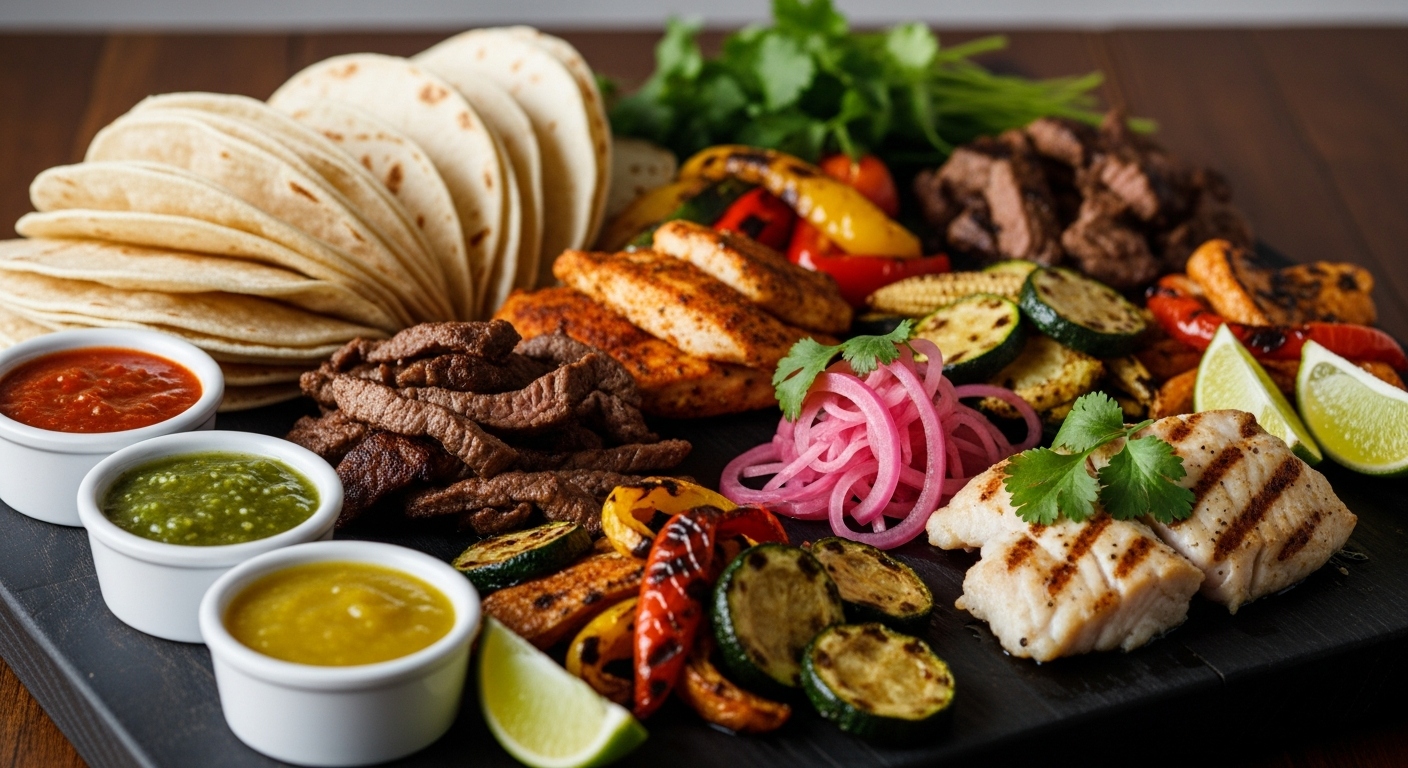
A global taco bar is a fun way to serve a crowd. Instead of offering just one filling, create several flavor stations. You might include carnitas, Korean beef, spiced cauliflower, grilled fish, and Mediterranean chicken. Then set out toppings that match each style. The secret is organization. Keep tortillas warm, separate sauces clearly, and offer toppings that add freshness, crunch, creaminess, and heat. Guests love the freedom to build their own combinations.
For an SEO-friendly recipe concept, a “Tacos Around the World Party Board” can include warm corn and flour tortillas, three proteins, one vegetarian filling, four sauces, fresh herbs, pickled onions, shredded cabbage, citrus wedges, and sliced avocado. It feels abundant, interactive, and perfect for celebrations.
Why Tacos Continue to Evolve
The taco continues to travel because it is both specific and flexible. Its roots are deeply Mexican, yet its structure invites creativity. It can honor tradition or explore fusion. It can be street food, comfort food, party food, or fine dining.
What makes tacos so beloved is their immediacy. You hold them in your hand. You taste everything at once. The tortilla, filling, salsa, garnish, and acid come together in a single bite. That simplicity is powerful.
As tacos move across cultures, they do not lose their identity. Instead, they show how food connects people. A taco can carry history, migration, innovation, and joy—all folded into one delicious package.
Final Thoughts
Tacos around the world tell a story of origin, adaptation, and celebration. From the corn tortillas of Mexico to Korean barbecue tacos, Baja fish tacos, Indian-spiced fillings, Mediterranean toppings, and Caribbean flavors, the taco has become a global canvas. The best tacos respect balance. They need a good base, a flavorful filling, a fresh topping, a bright finish, and a reason to take another bite. Whether traditional or inventive, tacos remind us that some of the world’s most exciting food is meant to be shared, customized, and enjoyed with both hands.