A Table That Changes With the Year
Seasonal table ideas are not about creating a formal tablescape every time you eat. They are about letting the meal notice the season. A spring table can feel fresh and tender, a summer table loose and colorful, a fall table warm and textured, and a winter table glowing and generous. The food, plates, napkins, flowers, fruit, serving pieces, and lighting all play a part. When those choices echo the time of year, even a simple dinner feels more grounded and memorable.
A: No. Produce, color, serving dishes, and lighting can create the seasonal feeling.
A: A bowl of fruit, herbs, tomatoes, citrus, apples, or bread is useful and beautiful.
A: Use two or three seasonal cues and let the food provide the rest.
A: Shade, drinks, low centerpieces, sturdy dishes, and food that can sit comfortably.
A: Add candlelight, citrus, bright salad, glassware, or white plates.
A: Yes. One ingredient, color, candle, or serving piece is enough.
A: It should support the menu through color, mood, and practical serving space.
A: Use neutral dishes and let produce, flowers, or lighting carry the season.
A: Enough for platters, glasses, elbows, and easy passing.
A: Comfort, visibility, accessible food, and details that feel useful rather than staged.
Start With the Season’s Natural Mood
Every season has a feeling before you choose a single plate. Spring is light, green, and expectant. Summer is abundant, casual, and sun-warmed. Fall is earthy, layered, and cozy. Winter is intimate, bright against darkness, and often more generous. Let that mood guide the table before you worry about details.
This approach keeps seasonal decorating from becoming forced. You do not need themed objects or complicated centerpieces. A bowl of citrus in winter, tomatoes in summer, pears in fall, or herbs in spring can do more than a box of decorations. Food itself is often the best seasonal signal.
Spring Tables: Fresh, Soft, and Light
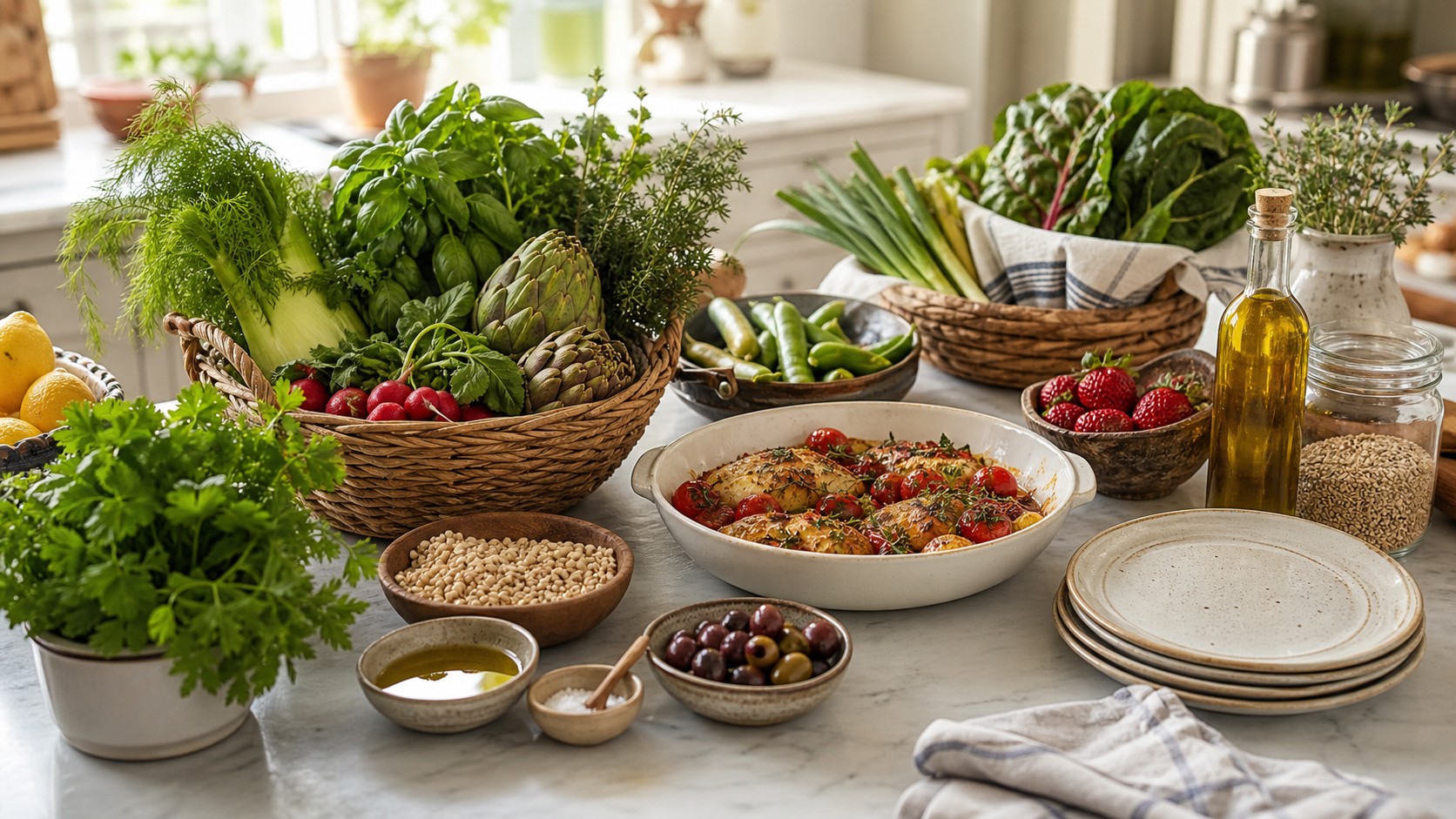
Spring tables work beautifully with pale greens, soft yellows, white dishes, glass pitchers, tender herbs, radishes, peas, asparagus, eggs, lemon, and small flowers. Keep the table open and breathable. A simple salad, quiche, roast chicken, or pasta primavera feels right because spring food often leans fresh rather than heavy. Use herbs as decoration when flowers feel fussy. Mint, parsley, dill, or chives in a small glass can make the table smell alive. Linen napkins, simple plates, and a bowl of lemons can carry the whole mood.
Summer Tables: Colorful, Casual, and Easy
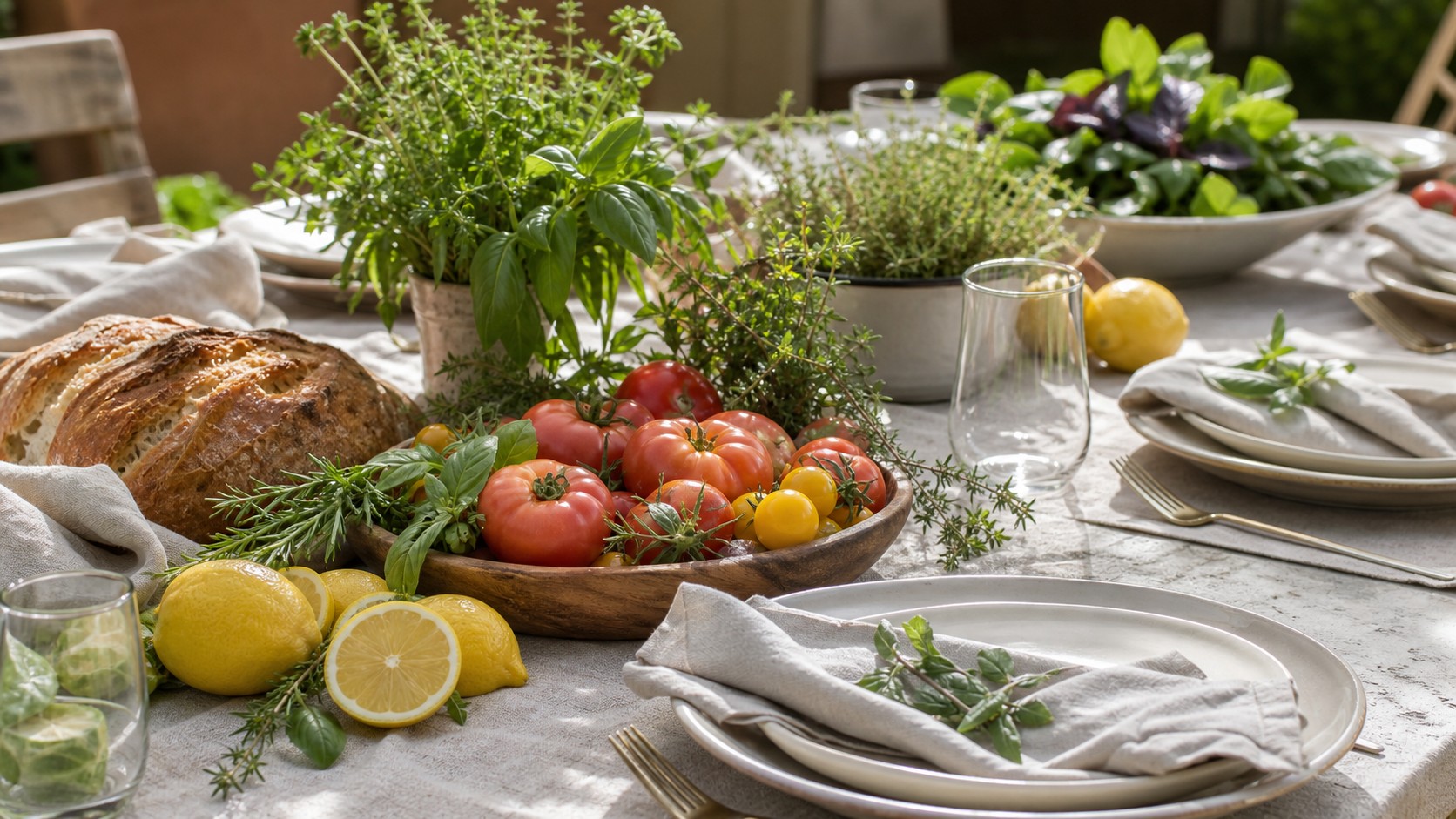
Summer tables should invite lingering without feeling precious. Use tomatoes, peaches, corn, berries, basil, grilled bread, big salads, pitchers of iced tea, and platters that can sit comfortably. Bright napkins, enamel plates, or mismatched serving bowls can feel right because summer meals are often more relaxed.
Shade, cold drinks, and easy reach matter more than perfection. If you are eating outside, keep the centerpiece low and useful. A platter of sliced melon, a bowl of cherries, or a basket of rolls can be both decoration and part of the meal.
Fall Tables: Warmth, Texture, and Harvest Color
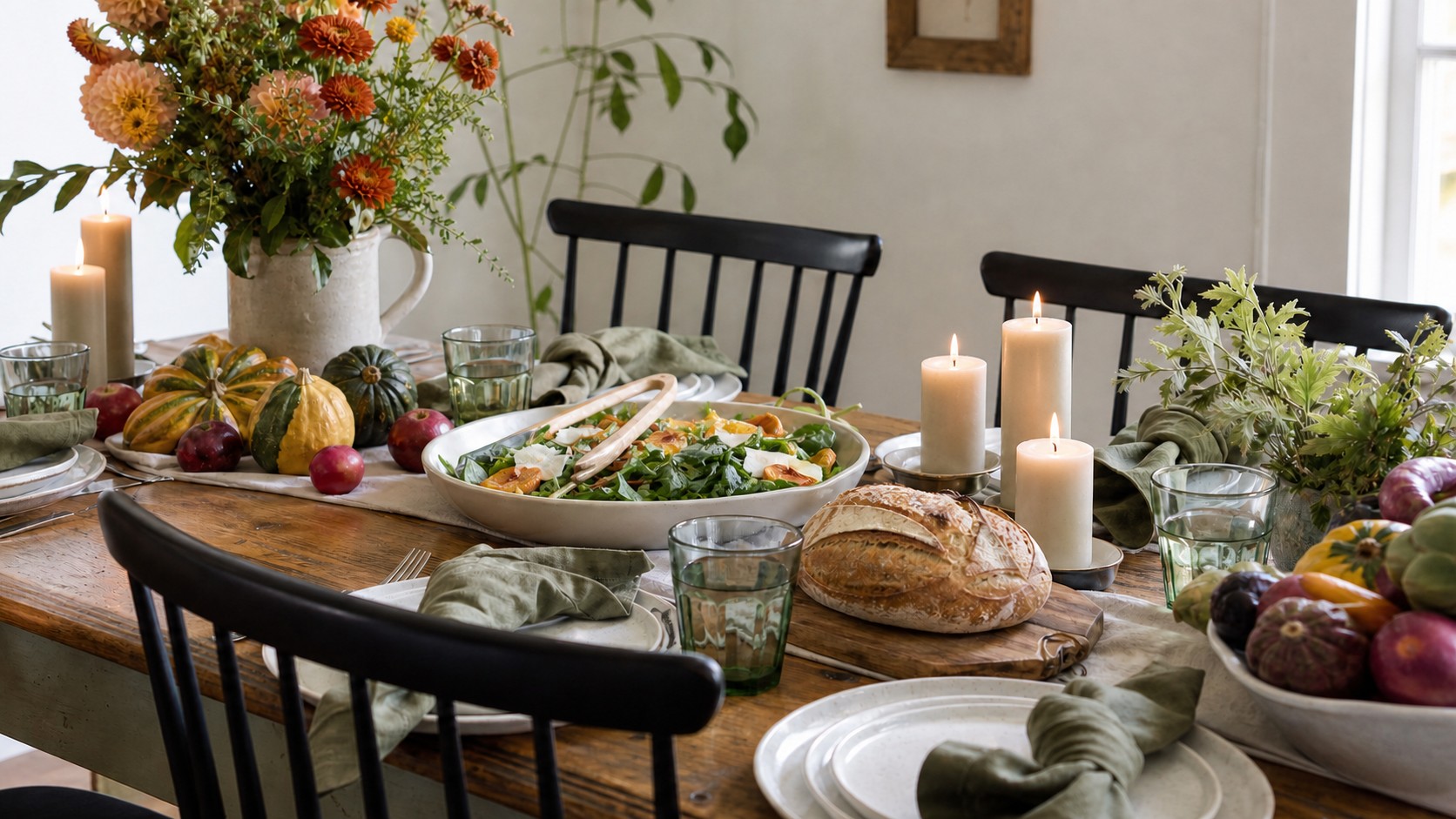
Fall tables can lean into deeper colors: rust, olive, cream, plum, brown, gold, and dark green. Roasted squash, apples, pears, mushrooms, walnuts, braised greens, bread, and cider naturally bring the season forward. Use wood boards, woven baskets, stoneware, or heavier napkins if you have them. The best fall table feels abundant without being crowded. A roast, soup, grain salad, pork dish, or vegetable tart can sit beside apples, candles, and a simple salad. Texture does the work: crusty bread, rough linen, glossy fruit, roasted edges, and warm light.
Winter Tables: Glow, Contrast, and Comfort
Winter tables benefit from light. Candles, warm lamps, white plates, glass, silverware, citrus, pomegranates, evergreens, and deep greens can make the table feel alive when the evening is dark. The food can be cozy: soups, braises, baked pasta, roast vegetables, stews, and warm desserts.
Keep winter tables generous but not cluttered. A single candle line, a bowl of oranges, or a few evergreen sprigs can be enough. Since winter food is often rich, add something bright to the table, such as citrus salad, pickled vegetables, herbs, or sparkling water.
Let Produce Be the Centerpiece
Seasonal produce is practical decoration because it can be eaten. Strawberries, cherries, tomatoes, figs, pears, apples, squash, citrus, herbs, and greens all tell a seasonal story. Place them in bowls, scatter a few around a serving platter, or use them as part of the first course. This works especially well for casual meals. A bowl of peaches beside grilled chicken, tomatoes beside pasta, apples near a pork roast, or oranges near a winter salad makes the table feel styled without adding anything artificial.
Choose Color Without Matching Everything
A seasonal table looks more natural when colors relate instead of matching perfectly. Spring might use green, white, and yellow. Summer might use tomato red, basil green, and corn yellow. Fall might use rust, cream, and olive. Winter might use white, evergreen, citrus orange, and candlelight.
Pick two or three cues, then let the food add the rest. Too much matching can make the table feel staged. A little variation feels more like real hospitality.
Use Texture to Signal the Time of Year
Texture changes the table as much as color. Spring likes glass, light linens, tender leaves, and delicate bowls. Summer likes wood boards, pitchers, baskets, and casual plates. Fall likes stoneware, woven mats, bread crust, and roasted surfaces. Winter likes candles, polished utensils, soft napkins, and deep bowls. You can change the mood without buying anything new. Fold napkins differently, serve on a board, use a soup pot at the table, bring out a pitcher, or place fruit in a favorite bowl. Seasonal texture is mostly about what you choose to emphasize.
Everyday Seasonal Tables
Seasonal tables are not only for holidays. A Tuesday dinner can feel seasonal with a tomato salad in July, soup bowls in January, asparagus in April, or roasted squash in October. Small signals are enough. A family table still counts when the centerpiece is a cutting board of bread and fruit.
For everyday meals, choose one seasonal cue: a color, an ingredient, a flower, a candle, or a serving dish. That keeps the idea sustainable instead of turning dinner into a project.
Seasonal Tables for Guests
When guests are coming, build the table around the menu. If dinner is grilled fish and corn salad, keep the table bright and casual. If it is mushroom pasta and pear salad, use warmer tones. If it is stew and bread, add candlelight and a crisp salad. The table should support the food, not compete with it. Guest tables also need space. Leave room for platters, glasses, elbows, and second helpings. A beautiful table that cannot hold dinner has missed the point.
Make the Table Feel Like the Meal Belongs
A seasonal table helps food feel placed in time. It says this meal belongs to this week, this weather, this light, this harvest, this gathering. That sense of belonging is why seasonal tables feel satisfying even when the setup is simple.
Use what is fresh, what is useful, and what feels good to sit beside. The season will do much of the decorating for you.
Use Lighting as a Seasonal Ingredient
Lighting changes the table before anything else does. Spring and summer meals can use natural light, open curtains, and bright glassware. Fall and winter meals often need lamps, candles, or warmer bulbs so the table feels intimate instead of dim. If dinner is served near sunset, notice where the light lands and place the most colorful food there. For outdoor meals, shade is part of hospitality. A beautiful summer table loses its charm if guests are squinting or the salad is wilting. For winter meals, even two candles can make soup and bread feel more deliberate. Lighting is one of the simplest seasonal tools because it changes mood without adding clutter.
Match Serving Style to the Season
Serving style should follow appetite and weather. Spring meals may feel right with lighter platters and passing bowls. Summer meals often work best as relaxed spreads where people help themselves. Fall meals welcome shared dishes, boards, and warm sides. Winter meals benefit from deep bowls, ladles, covered dishes, and food that holds heat.
This matters because the table is not only visual. It has to help people eat comfortably. A summer table with too many delicate plates can feel fussy, while a winter stew served in shallow dishes may cool too fast. Seasonal serving choices make the meal easier to enjoy.
Plan Tables for Small Households Too
Seasonal tables are not only for large gatherings. A dinner for two can use a bowl of cherries in summer, a candle and citrus in winter, or a small herb glass in spring. A family weeknight can use the same serving dish for roasted vegetables and table color. Small tables often look best with one strong seasonal cue rather than several competing pieces. When the household is small, make the seasonal element edible or reusable. Fruit can become breakfast, herbs can become sauce, bread can become toast, and flowers can move to the counter after dinner. The table feels cared for without creating waste.
Let Holidays Influence, Not Overpower
Holiday seasons can make table styling feel heavy-handed if every object announces the occasion. A better approach is to borrow the mood and let the meal stay central. For Thanksgiving, use pears, squash, bread, and warm light. For winter holidays, use citrus, greens, candles, and dishes that leave room for platters. For spring celebrations, use eggs, herbs, flowers, and pale linens.
The table can nod to a holiday without becoming a display. Guests usually remember whether the food was easy to pass, whether they could talk comfortably, and whether the table felt welcoming. Seasonal beauty should support those memories.
Repeat a Signature Seasonal Detail
One repeated detail can become part of your household’s rhythm. Maybe summer always means a tomato platter. Fall means apples in a wooden bowl. Winter means oranges and candles. Spring means herbs in small jars. Repetition gives meals continuity and makes seasonal tables easier to create because you are not starting from scratch every time. This is especially useful for busy cooks. A signature detail can make dinner feel seasonal even when the menu is simple. It turns ordinary meals into markers of time, which is one reason seasonal eating feels so satisfying.
Keep Storage and Reuse in Mind
Seasonal table habits become easier when the materials are simple to store and reuse. Neutral plates, plain napkins, a wooden board, a glass pitcher, low bowls, and a few candleholders can change mood all year depending on what food surrounds them. You do not need four separate sets of table decor. You need a few useful pieces that let seasonal ingredients stand out.
After the meal, think about where the seasonal pieces go next. Citrus can become breakfast, herbs can become dressing, apples can become snacks, and bread can become toast. A seasonal table feels better when it fits naturally into the kitchen instead of creating extra work.
Let Imperfection Make the Table Warmer
The most welcoming seasonal tables rarely look rigid. A napkin can be folded casually, tomatoes can vary in size, bread can be torn, and flowers can lean a little. Those small irregularities make the table feel lived-in. They also remind guests that the meal is meant to be enjoyed, not inspected. If the serving spoon is already in the bowl and the bread is easy to reach, the table is doing its real job beautifully. Seasonal warmth often comes from that relaxed usefulness, especially when the food is close enough for everyone to share easily without interrupting the conversation or the comfort of the meal in any season of the year together.