Fresh Ingredients Make the Most Natural Tables
Beautiful seasonal tables do not have to begin with decorations. They can begin with the ingredients you are already serving: tomatoes, herbs, lemons, bread, peaches, squash, pears, greens, berries, citrus, flowers, or a bowl of potatoes waiting to be roasted. Fresh ingredients bring color, shape, fragrance, and purpose to the table. They make the setting feel alive because they belong to the meal, not just the scene around it.
A: Citrus, tomatoes, herbs, apples, pears, bread, berries, or squash are simple and useful.
A: Choose two or three ingredients, repeat them, and leave open space for serving.
A: Yes. Herbs add fragrance, color, and a direct connection to the meal.
A: Avoid fragile greens, sliced avocado, soft berries in direct sun, and tall centerpieces.
A: Use edible centerpieces like bread, salad, tomatoes, or fruit that can be eaten first.
A: No. Fresh ingredients can visually connect mixed dishes and serving pieces.
A: Whole sturdy items can sit longer; cut, dressed, or delicate items should wait.
A: Use produce, herbs, colors, and serving pieces that naturally fit the weather and menu.
A: Choose ingredients you will eat in the meal or use later in sauce, salad, breakfast, or dessert.
A: Keep the table beautiful, low, useful, and easy to eat from.
Style the Table From the Menu Outward
The easiest way to create a seasonal table is to look at the menu first. If dinner includes tomato salad, let tomatoes and basil guide the color. If the meal is roast chicken with lemons, set extra lemons near the platter. If dessert is pear crisp, a few pears in a bowl can become the centerpiece. The table feels more coherent when the styling grows from the food.
This also prevents clutter. Instead of adding objects that need to be moved before serving, use ingredients that can stay, be passed, or be eaten. A useful table is more inviting than one that looks staged.
Choose Ingredients With Shape and Color
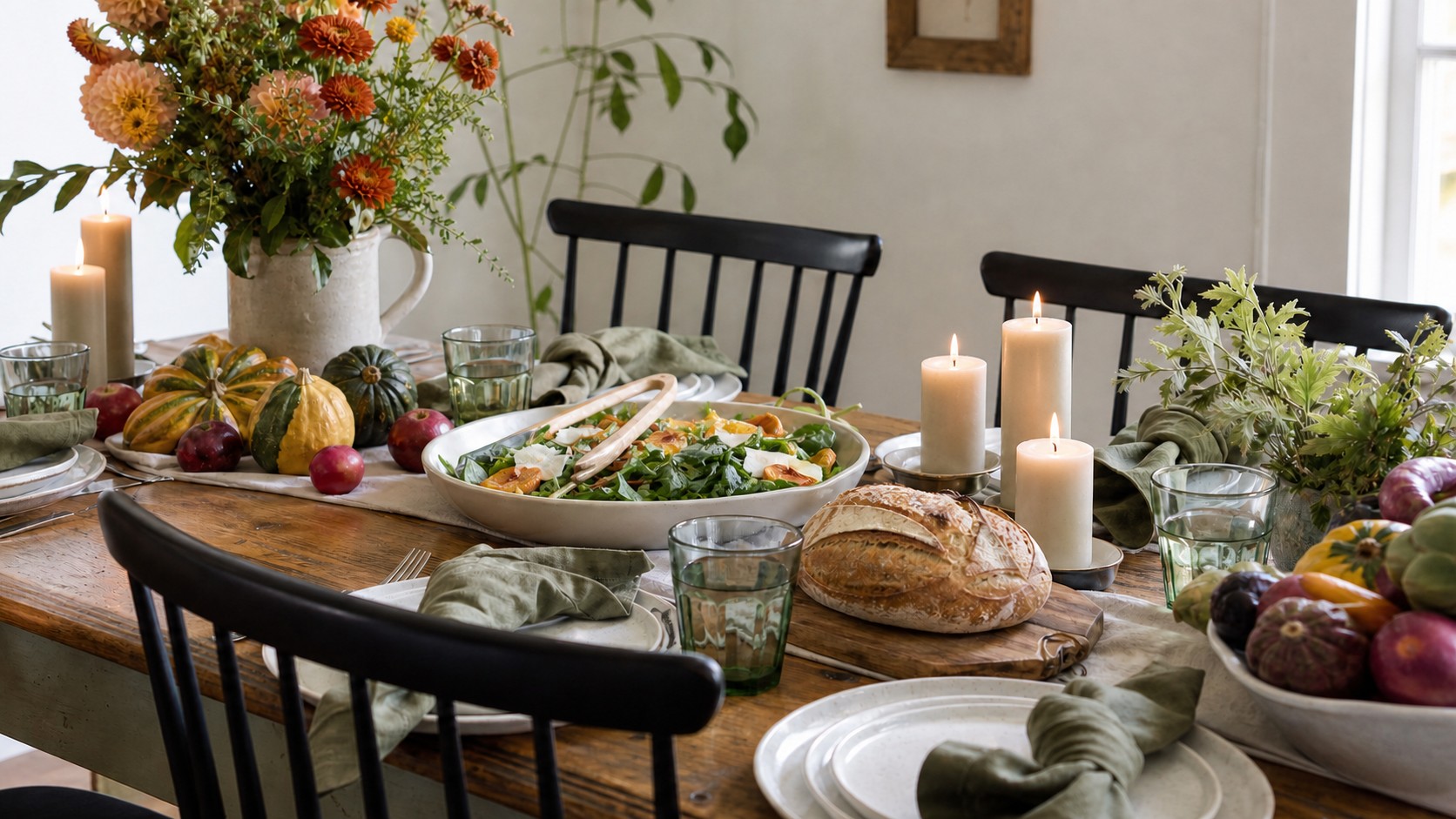
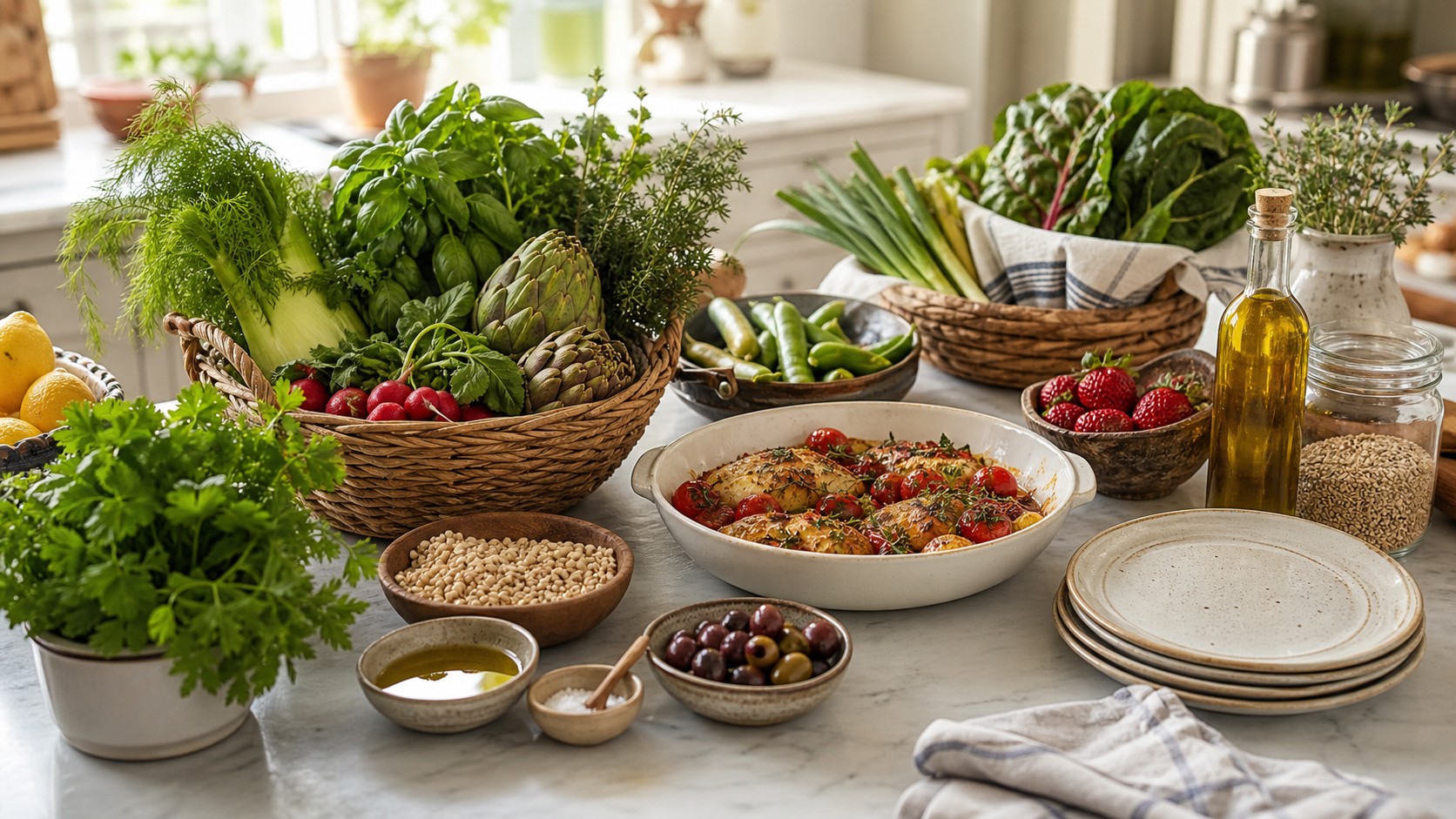
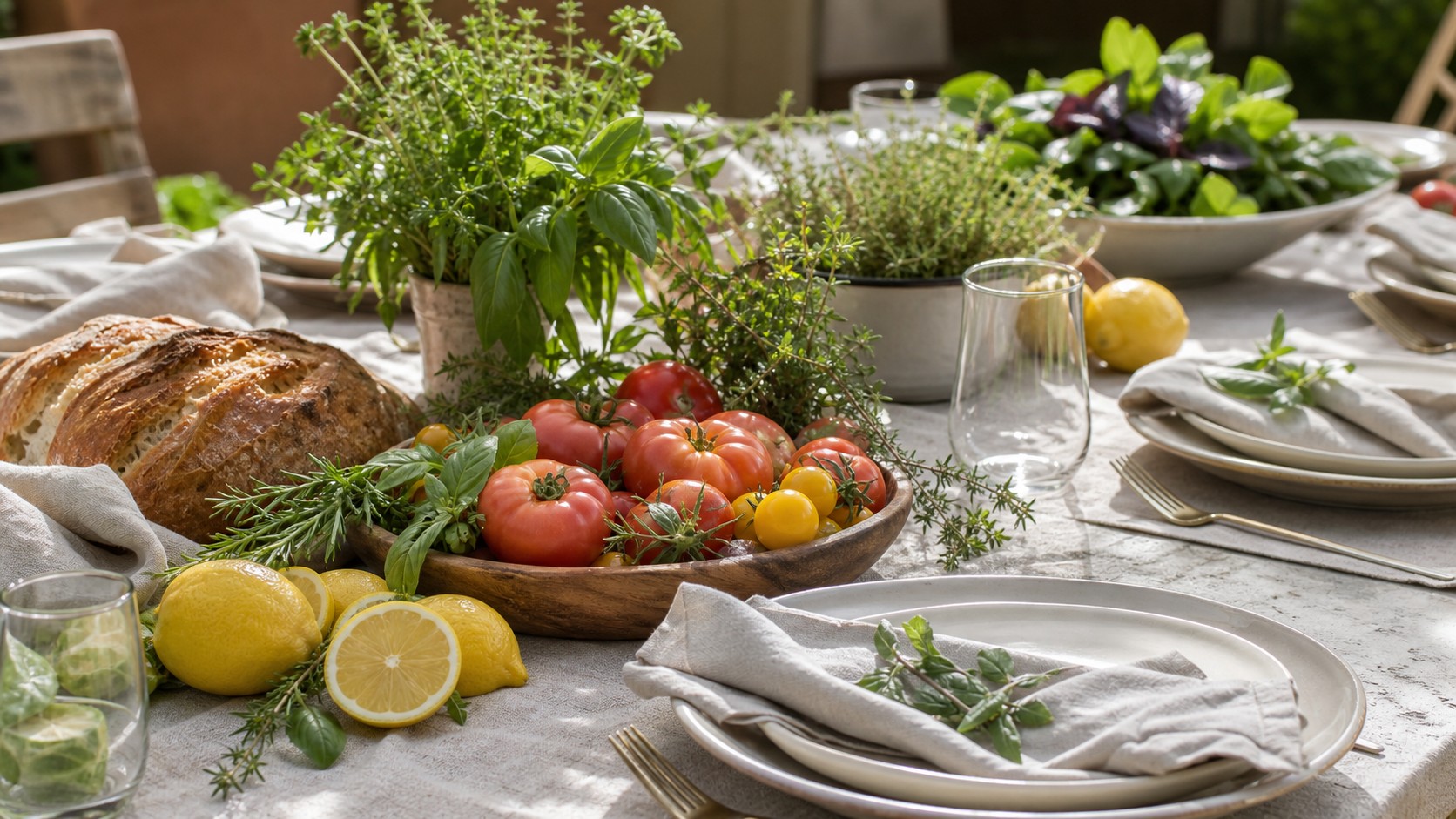
Some ingredients are naturally decorative. Radishes, carrots with tops, tomatoes, citrus, figs, grapes, herbs, squash, artichokes, apples, pears, berries, and leafy greens all have visual presence. Place them in bowls, on boards, beside platters, or in small clusters. Let their natural shapes create interest. Color works best when it is not too perfect. A mix of red and yellow tomatoes, green herbs, cream plates, and brown bread feels alive. A fall bowl with pears, walnuts, and dark greens feels warm without matching exactly. Let variation do the work.
Use Herbs for Fragrance and Freshness
Herbs are one of the simplest ways to make a table feel fresh. Small jars of basil, mint, dill, parsley, rosemary, or thyme can replace flowers. Sprigs can sit near serving plates or be tucked beside bread. Chopped herbs can be passed at the table so they become both garnish and decor.
Be mindful of strong herbs. Rosemary and sage can dominate a small table if used heavily. Softer herbs like parsley, mint, dill, and basil are easier for meals where fragrance should stay gentle.
Let Bread and Boards Create Warmth
Bread is both food and invitation. A loaf on a board, sliced focaccia, warm rolls in a towel, or flatbread stacked beside dips can make the table feel generous before the main dish appears. Bread also gives height and texture without needing an arrangement. Use boards for more than cheese. They can hold tomatoes, cucumbers, fruit, roasted vegetables, herbs, olives, sliced chicken, or dessert pieces. A board turns ingredients into a shared experience, which is often what makes a table feel beautiful.
Build Low Centerpieces People Can Eat Around
Fresh ingredient centerpieces should stay low enough for conversation. A shallow bowl of citrus, a board of tomatoes, a small cluster of herbs, a basket of apples, or a platter of salad ingredients works better than anything tall. People should be able to see, reach, and pass food easily.
If the table is small, make the centerpiece part of the first course. A tomato platter, radishes with butter, fruit with cheese, or bread with herb oil can sit in the center and then be eaten. Nothing has to be removed.
Seasonal Tables by Ingredient Family
In spring, use herbs, radishes, eggs, asparagus, lettuces, peas, strawberries, and lemons. In summer, use tomatoes, corn, peaches, berries, cucumbers, basil, and melon. In fall, use apples, pears, squash, mushrooms, walnuts, grapes, and hardy greens. In winter, use citrus, pomegranates, cabbage, rosemary, potatoes, onions, and evergreen if it suits the meal. These ingredient families can guide shopping and styling at the same time. Choose two or three, then repeat them in the food and on the table. Repetition makes the table feel intentional without adding fuss.
Use Fresh Ingredients With Simple Dishes
Plain plates and bowls often make fresh ingredients look better. White, cream, gray, soft blue, wood, glass, or simple stoneware lets produce color stand out. If your dishes are patterned, keep the ingredient styling simpler so the table does not become visually busy.
Do not worry about having matching pieces. Seasonal tables often look more natural with a mix of bowls, boards, plates, and glasses. Fresh ingredients tie the table together.
Think About Practical Freshness
Not every fresh ingredient should sit out for long. Tender greens wilt, sliced fruit browns, herbs droop, and cold foods lose their appeal. Style with whole ingredients when possible, then cut or dress them close to serving. Keep delicate items shaded if eating outside. Choose sturdy ingredients for longer meals: citrus, apples, pears, tomatoes, squash, bread, herbs in water, nuts, and whole vegetables. Save fragile berries, dressed salads, and sliced avocado for the moment they are needed.
Make the Table Smell Good
Fragrance is part of beauty. Warm bread, basil, citrus zest, rosemary, ripe peaches, apples, cinnamon, mint, or roasted vegetables can make the table feel welcoming before anyone tastes anything. Use scent gently; it should support appetite, not compete with the food.
Avoid strongly perfumed flowers beside delicate dishes. Fresh ingredients usually smell more compatible with dinner because they share the same world as the meal.
Fresh Ingredient Tables for Guests
For guests, use fresh ingredients to signal abundance. A salad platter, bread board, fruit bowl, herb sauce, or tomato dish in the center makes people feel welcomed. It also gives early arrivals something to admire or nibble while the main dish finishes. Keep serving practical. Leave spoons, tongs, napkins, and small plates where they are needed. Beauty disappears quickly if guests are unsure how to eat.
Use What You Have Before Buying More
Look in the refrigerator and pantry before planning a table. A half bunch of herbs, a few lemons, apples, carrots, a loaf of bread, or a bowl of tomatoes can become the visual theme. Seasonal beauty often comes from noticing ordinary ingredients more carefully.
This approach is also less wasteful. Ingredients used for styling can become salad, sauce, breakfast, soup, or dessert later. A beautiful table should not end with a pile of unused decor.
Fresh, Useful, and Welcoming
The best seasonal tables with fresh ingredients feel generous because everything has a reason to be there. The colors come from food, the fragrance comes from herbs or fruit, the centerpiece can be eaten, and the serving pieces help the meal flow. That kind of beauty is relaxed and hospitable. Start with what is fresh, keep the table low and useful, and let the ingredients show the season honestly.
Create Height Without Blocking Conversation
Fresh ingredients can add dimension without becoming a wall between guests. Use a low bowl on a folded napkin, a small pedestal plate for fruit, a bread board layered over a towel, or herbs in short jars. The table gains depth, but people can still see one another. That is the balance seasonal tables need.
If you want a taller element, move it to a sideboard, kitchen island, or buffet area. The dining table should prioritize connection and serving. Beauty that interrupts conversation is working against hospitality.
Repeat Ingredients in More Than One Place
A table feels cohesive when an ingredient appears in several gentle ways. Lemons can sit in a bowl, flavor the dressing, and appear as wedges beside fish. Basil can be in a jar, scattered over tomatoes, and blended into sauce. Apples can decorate the table, appear in salad, and return in dessert. Repetition makes the setup feel intentional. Use restraint so the ingredient does not become gimmicky. Two or three appearances are usually enough. The table should feel connected, not themed like a display.
Fresh Ingredients for Buffet Tables
Buffet-style meals need fresh ingredients that can handle time. Whole fruit, sturdy salads, herb sauces, bread, nuts, roasted vegetables, citrus wedges, and room-temperature platters work well. Fragile greens, sliced avocado, whipped dairy, and delicate berries need shade, chilling, or later placement.
Arrange the buffet in the order people will use it: plates, main dish, sides, sauces, bread, utensils, napkins, drinks. Fresh ingredients can guide the eye, but the flow matters most. A beautiful buffet should be easy to navigate with a plate in hand.
Use Fresh Ingredients to Set Expectations
The table can quietly tell guests what kind of meal is coming. Tomatoes, basil, and bread suggest relaxed summer eating. Citrus and candles suggest a bright winter dinner. Herbs, eggs, and greens suggest brunch or spring lunch. Squash, apples, and nuts suggest fall comfort. These signals help the meal feel coherent before the first bite. This is why fresh ingredients are more powerful than generic decoration. They create appetite. They point toward flavor. They make people curious about the food instead of distracting from it.
Make Cleanup Part of the Design
Fresh ingredient tables should be easy to clear. Use bowls and boards that can go back to the kitchen with leftovers still on them. Keep compostable scraps like citrus peels, herb stems, and fruit cores contained. Avoid scattering tiny ingredients directly on the table unless you truly want to clean them later.
When beauty and cleanup are considered together, hosting feels lighter. The table can be abundant without leaving the cook with a fussy aftermath.
Let the First Course Do the Styling
One practical way to style with fresh ingredients is to make the centerpiece the first thing people eat. A tomato platter, citrus salad, radishes with butter, bread with herb oil, sliced peaches with cheese, or cucumbers with yogurt dip can sit in the center as guests arrive. It looks beautiful because it is food at its freshest. This approach also solves space problems. Once everyone has eaten the first course, the platter can leave and make room for the main dish. The table changes naturally instead of feeling crowded.
Choose Ingredients Guests Recognize
Fresh ingredient styling works best when it makes people hungry, not puzzled. Use unusual produce if it belongs to the meal, but do not rely on mystery ingredients just for looks. A beautiful bowl of ripe tomatoes will usually feel more inviting than an arrangement nobody knows how to eat.
Recognizable ingredients create comfort. They tell guests that the table is beautiful and generous, but still practical. If you do use something less familiar, place it beside a clear partner such as bread, cheese, citrus, or herbs so guests understand how it fits into the meal.
Let Freshness Guide the Final Edit
Before guests sit down, look at the table once and remove anything that does not help. A seasonal table can lose its freshness when too many bowls, stems, candles, or props compete with the food. Keep the strongest colors, the most useful serving pieces, and the ingredients that smell or taste best.
This final edit makes the table feel confident. Fresh ingredients need room to shine, and guests need room to eat, reach, pour, pass, and settle in comfortably.
When in doubt, remove one object and add one edible detail. The table will usually feel fresher, calmer, and more generous for guests.