Brunch Recipes That Make Weekend Gatherings Feel Easy
The best brunch recipes for weekend gatherings understand the strange magic of the meal. Brunch needs to feel relaxed, but it also needs enough structure that guests are fed well. It can be sweet or savory, casual or polished, light or cozy, but it should never trap the host in the kitchen while everyone else is pouring coffee. Great brunch food is shareable, flexible, colorful, and forgiving. It welcomes late arrivals, second cups, mixed appetites, and the slow pace that makes weekends feel different.
A: A strata, egg bake, baked French toast, or brunch board usually serves well with low stress.
A: One anchor, one fresh side, one sweet or bread item, and drinks are enough for many gatherings.
A: Yes. Strata, coffee cake, fruit prep, dressings, boards, and drink stations can all be prepared early.
A: Pair pancakes or pastries with eggs, yogurt, smoked salmon, salad, potatoes, or fruit.
A: Choose frittata, salad, fruit, yogurt, smoked salmon, toast, and sparkling water or tea.
A: Use baked dishes, boards, make-ahead sides, and self-serve drinks.
A: Boards, tacos, frittatas, salads, fruit, and sides with meat separate are flexible choices.
A: Let the season guide produce: asparagus in spring, tomatoes in summer, apples in fall, citrus in winter.
A: No. A relaxed wave of fruit, drinks, hot dishes, and sweets can feel natural.
A: A generous anchor, fresh color, easy drinks, and enough time for people to linger.
Build Brunch Around One Anchor Dish
A good brunch starts with one anchor: an egg bake, frittata, strata, quiche, breakfast casserole, baked French toast, pancake tray, waffle board, smoked salmon platter, or breakfast tacos. The anchor gives the meal identity and keeps the host from trying to make six main dishes at once. Once that dish is chosen, the rest of the menu can be simpler.
If the anchor is rich, add fruit and salad. If the anchor is light, add potatoes, sausage, bacon, beans, or bread. If the anchor is sweet, include eggs, yogurt, or smoked fish so the meal does not become dessert before noon.
Egg Dishes That Serve a Crowd
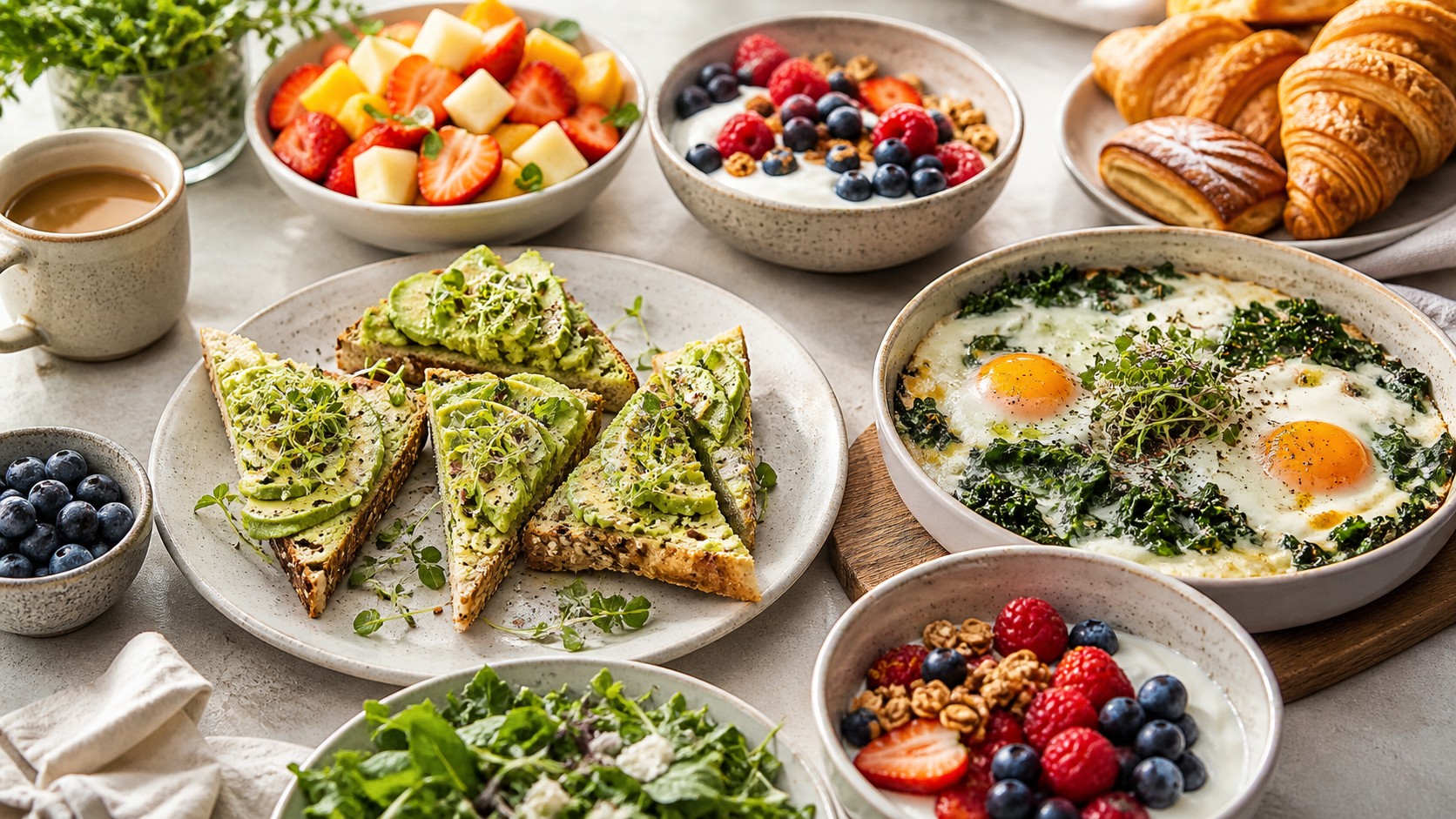
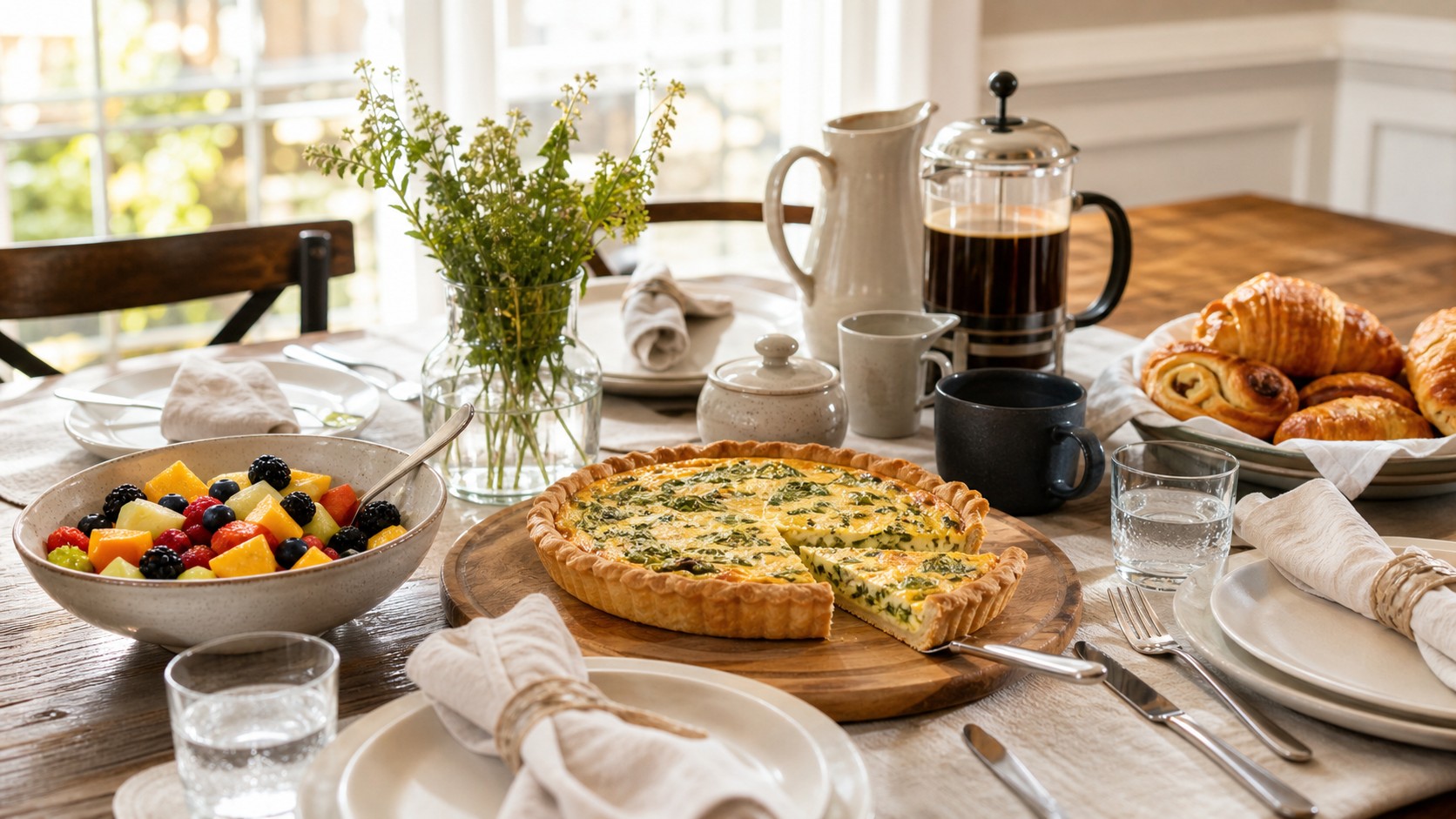
Egg bakes are brunch heroes because they can be made ahead, sliced neatly, and served warm or room temperature. Strata with bread, cheese, and vegetables feels cozy. Frittatas are lighter and can be packed with herbs, potatoes, greens, or smoked salmon. Quiche feels classic and pairs well with salad. Breakfast casseroles satisfy guests who want something hearty. The key is not overcooking. Eggs continue to set after leaving the oven, so pull the dish when the center is just firm. Let it rest before slicing, and serve with something fresh to balance the richness.
Sweet Recipes Without a Sticky Morning
Pancakes, waffles, French toast, muffins, coffee cake, cinnamon rolls, and fruit crisps all belong at brunch, but they need a plan. For gatherings, choose recipes that can be baked or held instead of cooked one by one. Sheet-pan pancakes, baked French toast, muffin baskets, and make-ahead coffee cake are friendlier than standing at the stove while guests wait.
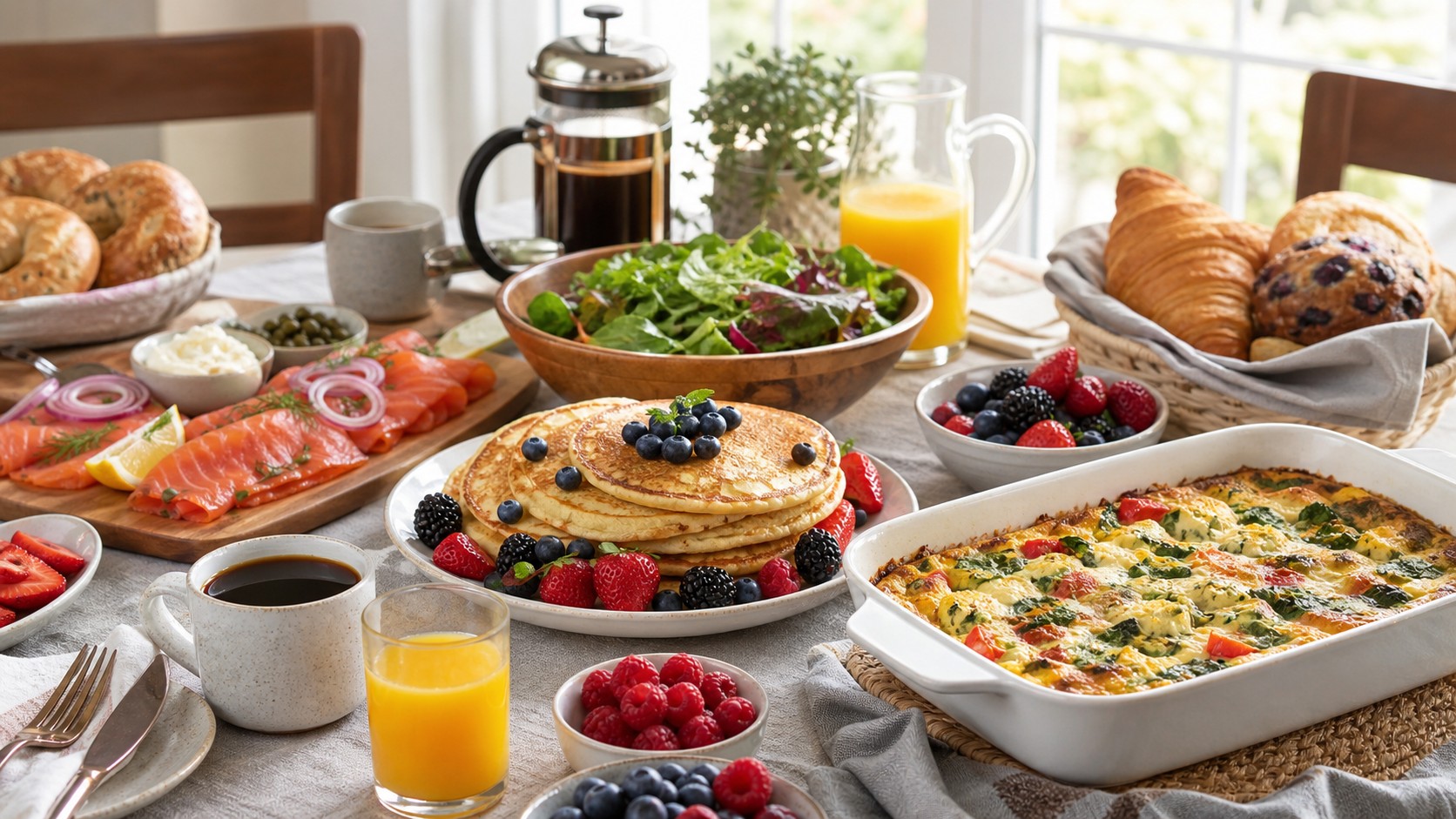
Serve sweet dishes with fruit, yogurt, eggs, or nuts so the table feels balanced. A bowl of berries can make pancakes brighter. Greek yogurt beside muffins turns them into part of a meal. Toasted nuts add texture to baked fruit or French toast.
Fresh Sides That Keep Brunch Bright
Brunch can get heavy quickly, so fresh sides matter. Citrus salad, berries, melon, cucumber salad, arugula with lemon, tomato salad, roasted asparagus, herb salad, or a simple fruit platter can wake up the table. These sides do not need much cooking, and they bring color that makes the whole spread feel generous. Choose one fresh side that matches the season. Strawberries and mint in spring, tomatoes and peaches in summer, apples and greens in fall, citrus and pomegranate in winter. Seasonal freshness makes brunch feel thoughtful without extra effort.
Brunch Boards and Platters
Boards work beautifully for weekend gatherings because they let guests graze. A smoked salmon board with bagels, cream cheese, cucumbers, capers, onions, eggs, and herbs feels special. A yogurt board with fruit, granola, honey, and nuts feels lighter. A pastry and fruit board suits coffee-focused gatherings. A savory toast board lets everyone build their own plate.
Boards are also forgiving for timing. They can be assembled before guests arrive and refreshed as needed. Keep anything delicate chilled until close to serving, and use small bowls for wet or salty ingredients.
Potatoes, Bacon, and Savory Comforts
Many brunch guests want something savory and substantial. Roasted breakfast potatoes, hash brown casserole, bacon, sausage, turkey sausage, beans, grits, biscuits, breakfast sandwiches, and breakfast tacos can fill that role. Choose one or two, not all of them. Too many heavy sides make the table harder to enjoy. Potatoes are especially useful because they are inexpensive, satisfying, and easy to season. Roast them on sheet pans with paprika, garlic, and herbs, then keep them warm until serving. Add a sauce if you want them to feel more polished.
Make-Ahead Brunch Saves the Host
Make-ahead recipes are the difference between hosting brunch and surviving brunch. Mix muffin batter, prep fruit, assemble strata, cook bacon, wash greens, make dressing, chill coffee, and set plates the night before. In the morning, the host should be reheating, baking, garnishing, and pouring, not starting everything from scratch.
Choose at least one dish that improves as it rests. Strata, baked French toast, coffee cake, fruit salad without delicate berries, and many dips handle advance prep well. Fresh herbs, salad dressing, and final garnishes can wait until morning.
Drinks That Match the Meal
Coffee is essential for many brunches, but drinks can also carry the mood. Offer water, juice, tea, iced coffee, sparkling water, or a simple fruit spritzer. If serving cocktails, keep them optional and easy: mimosas, bloody marys, or a pitcher drink. Nonalcoholic choices should feel just as considered. Set drinks where guests can help themselves. This keeps the host from managing every refill and gives people something to do while the hot dish finishes.
Brunch for Mixed Appetites
Weekend gatherings often include people who want very different things. Some arrive hungry for breakfast; others want lunch. Some want sweet; others want savory. Build the menu with bridges: eggs, bread, fruit, salad, and one hearty side. These categories let guests create the brunch they want without separate menus.
Dietary needs are easier with components. Keep meat on the side when possible, offer a vegetarian anchor, include fruit and salad, and label anything with nuts if guests need to know. A flexible table feels more generous than a complicated one.
Seasonal Brunch Ideas
Spring brunch might include asparagus frittata, herb salad, strawberries, lemon muffins, and iced tea. Summer brunch might be tomato toast, peach salad, yogurt bowls, breakfast tacos, and cold brew. Fall brunch can lean into apple pancakes, sausage, roasted potatoes, squash quiche, and cider. Winter brunch might include strata, citrus salad, coffee cake, smoked salmon, and hot coffee. Seasonal brunch feels natural because morning appetites shift too. Use the weather and produce to decide whether the table should feel light, sunny, cozy, or celebratory.
Serving Brunch Without Stress
Put food out in waves if needed. Start with fruit, coffee, and a board. Add the hot egg dish when it is ready. Bring out sweet items after people have had something savory. Brunch does not need to land all at once, and a staggered table can feel relaxed.
Keep serving utensils obvious, plates stacked, napkins reachable, and trash or compost accessible if the gathering is casual. Little logistics make the table feel hospitable.
The Best Brunch Recipes Invite Lingering
A successful brunch does not depend on a dozen dishes. It depends on food that tastes good at a forgiving pace. Choose an anchor, add freshness, include one treat, and make drinks easy. Then let the morning stretch. Weekend gatherings are about more than recipes, but the right recipes make connection easier. When the food can wait, the host can sit down, and guests can build plates they enjoy, brunch becomes exactly what it should be: generous, unhurried, and worth repeating.
Choose Recipes That Hold Their Quality
Brunch timing is unpredictable. Someone arrives early, someone is late, coffee takes longer than expected, and conversations start before the hot dish is sliced. Recipes that hold well are worth favoring. Strata, quiche, muffins, coffee cake, fruit, smoked salmon boards, roasted potatoes, and salads with sturdy greens all give the host flexibility.
Be careful with foods that demand immediate attention. Omelets, individual pancakes, delicate fried eggs, and waffles can be wonderful for a small household but stressful for a crowd. If you love them, turn them into a station or make them the only active cooking task.
Make Brunch Feel Generous Without Overcooking
Generosity does not require endless dishes. It comes from variety of experience: warm and cool, sweet and savory, soft and crisp, rich and fresh. A single egg bake, fruit salad, roasted potatoes, muffins, and coffee can feel abundant because the table offers contrast. Guests can build plates around appetite instead of facing one heavy item. Use garnishes to make simple recipes feel finished. Herbs over eggs, powdered sugar over baked French toast, citrus over fruit, flaky salt on potatoes, and a small bowl of jam beside biscuits all make the spread feel cared for.
Brunch Recipes for Casual Drop-Ins
Some weekend gatherings are informal: neighbors stop by, family arrives after a game, friends come over without a strict start time. For those meals, choose recipes that can expand. Keep muffins, fruit, yogurt, eggs, bread, cheese, and a simple salad ready. A toast board, scramble, or quick frittata can stretch if more people arrive.
Casual brunch works best when not everything is precious. A big pot of coffee, a board of toast toppings, and one warm dish can carry the gathering. The ease is part of the invitation.
Brunch Recipes for Celebrations
Celebration brunch can be more polished without becoming difficult. Choose a centerpiece like smoked salmon, quiche, baked French toast, shakshuka, or a beautiful fruit platter. Add something sparkling, something fresh, and something sweet. Use real plates if you can, set the table before cooking, and keep the hot dish manageable. The best celebration brunch recipes photograph well because they are naturally colorful: berries, herbs, eggs, citrus, greens, salmon, pastries, and bright drinks. Let the food provide the decoration.
Send Guests Home Fed, Not Stuffed
Because brunch sits between meals, it should satisfy without flattening the rest of the day. Balance rich dishes with fruit, salad, yogurt, or vegetables. Offer water alongside coffee and juice. Keep portions easy to choose rather than oversized. Guests appreciate leaving comfortable, especially if the gathering is early.
A good brunch table invites seconds without requiring them. That is another reason shared platters work so well: everyone can decide what kind of morning they need.
Use Leftovers as Part of the Brunch Plan
Brunch leftovers can be excellent if the menu is chosen with tomorrow in mind. Quiche becomes lunch with salad. Roasted potatoes can fold into breakfast tacos. Muffins can be frozen. Fruit can become smoothies. Smoked salmon can top toast. A little planning keeps generosity from turning into waste. Store components separately when you can. Keep salad undressed, toppings in bowls, and bread wrapped well. The more flexible the leftovers, the more useful the brunch becomes after guests leave.
Make One Recipe Feel Personal
A gathering feels memorable when one recipe has a point of view. It might be your favorite herb frittata, a family coffee cake, a seasonal fruit salad, or a biscuit board with local jam. The rest of the menu can be simple. One personal dish gives the brunch identity and gives guests something to remember.
That personal touch does not need to be complicated. It only needs to feel chosen, served generously, and easy enough that you can enjoy it too while the coffee is still warm and guests are settling into the morning together.