A Perfect Brunch Feels Calm Before Guests Arrive
The perfect brunch is not the one with the most dishes. It is the one where the food tastes generous, the drinks are easy to reach, the timing has room to breathe, and the host is not trapped at the stove while everyone else talks. Brunch should feel like a slow morning with a little polish: warm coffee, something savory, something fresh, something sweet, and a table that invites people to linger. When the plan is thoughtful, the whole gathering feels effortless even when plenty of care went into it.
A: Choose food that lets the host sit down and enjoy the gathering.
A: Most brunches need one anchor, one fresh side, one bread or sweet item, and drinks.
A: Strata, quiche, muffins, coffee cake, roasted potatoes, boards, and sturdy salads are forgiving.
A: Set out coffee, water, fruit, pastries, or a simple board.
A: Use buffet style for flexible timing and seated service for smaller, more structured gatherings.
A: Prep the table, drinks, fruit, and make-ahead dishes before the morning begins.
A: Serve food that holds and start with items that early arrivals can enjoy right away.
A: Use one memorable main dish, fresh color, good drinks, and a relaxed table.
A: Yes, but make them optional and give nonalcoholic drinks equal care.
A: Avoid too many last-minute dishes that require the host to cook while guests wait.
Choose the Brunch Style First
Before choosing recipes, decide what kind of brunch you are hosting. A birthday brunch needs a different rhythm than a casual neighbor gathering. A family brunch after a holiday may need comfort food and easy refills. A small brunch with close friends can handle one special dish and a long pot of coffee. The style tells you how much structure the meal needs.
Think about whether guests will sit at a table, graze from a buffet, eat outside, or arrive over a wide window of time. A seated brunch can include plated elements, while a drop-in brunch needs food that holds. Once the shape is clear, the menu becomes easier to build.
Build the Menu Around One Main Dish
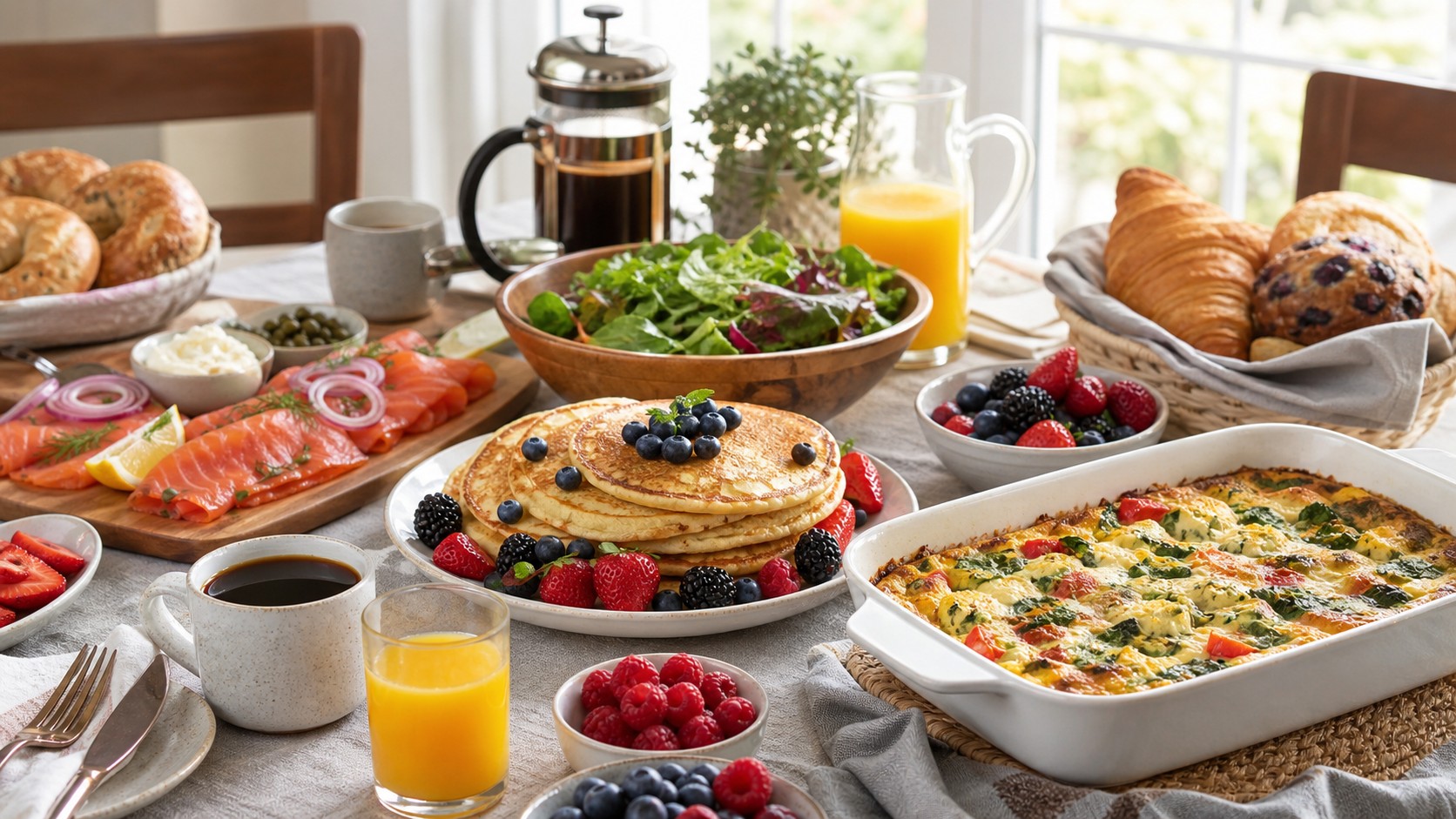
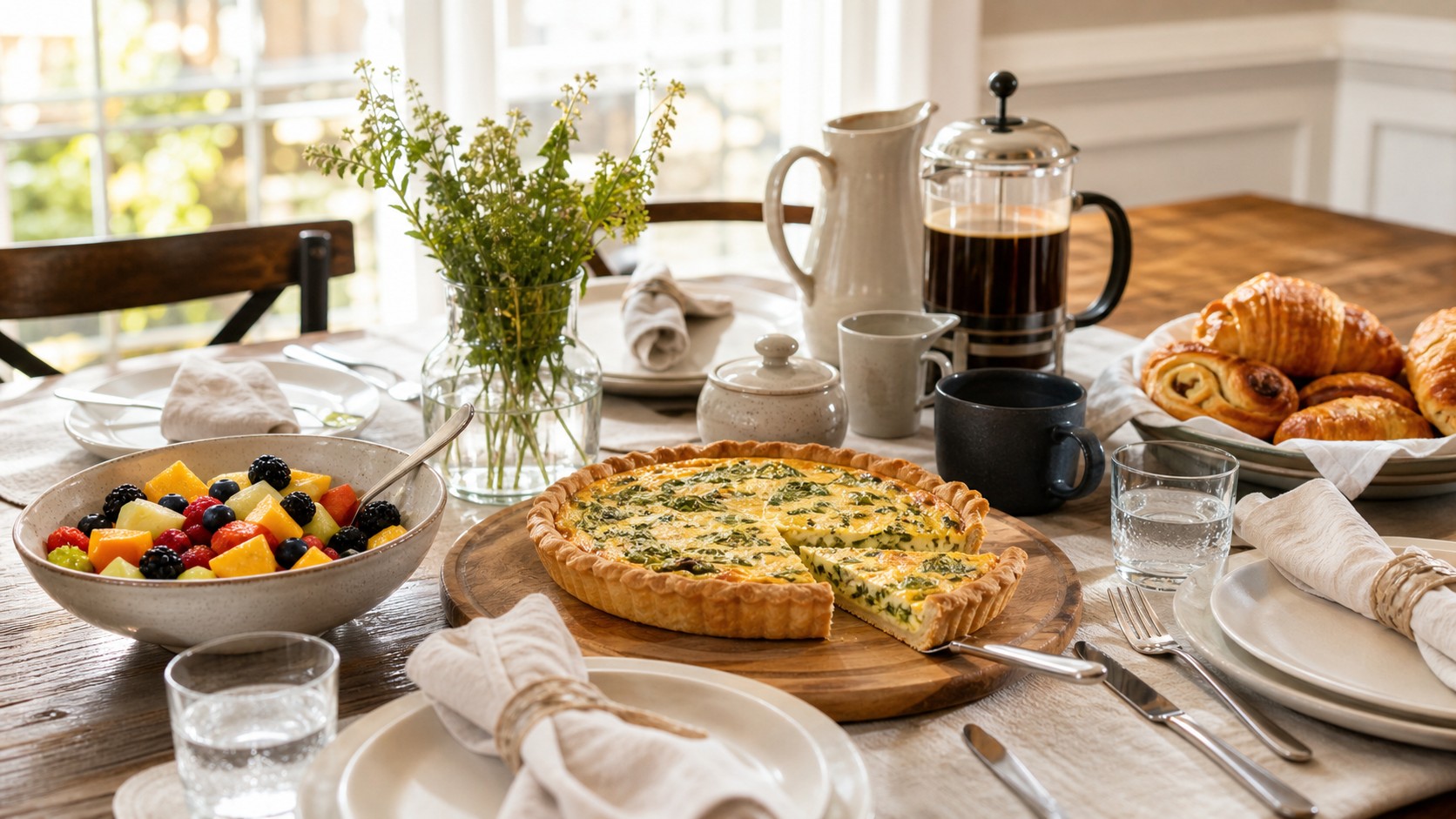
A brunch menu works best when one dish anchors the table. Choose a quiche, strata, egg casserole, baked French toast, shakshuka, smoked salmon board, breakfast taco spread, or savory tart. The anchor gives guests something satisfying and keeps the host from preparing too many competing mains. After that, add support: one fresh dish, one bread or sweet item, one drink station, and one optional extra if the gathering is larger. This keeps the table balanced without becoming crowded. A single excellent egg bake with citrus salad, muffins, and coffee can feel more polished than six dishes that all need attention at once.
Use Make-Ahead Recipes as Your Safety Net
The strongest brunch plan includes at least two things prepared before the morning starts. Strata, baked French toast, coffee cake, muffins, fruit prep, salad dressing, herbed cream cheese, roasted potatoes, and drink garnishes can all be handled early. Make-ahead food gives the host margin for real life: a late shower, a messy counter, or a guest who arrives early.
Do not make everything ahead, though. Brunch still benefits from one fresh moment, such as herbs scattered over eggs, warm bread from the oven, dressed greens, or fruit arranged just before serving. The goal is not stale convenience. It is calm freshness.
Time the Morning Backward
Start with the serving time and work backward. If guests arrive at ten-thirty and food should be ready at eleven, know when the main dish goes into the oven, when coffee starts, when fruit is cut, and when the table needs to be set. Write the order down if the menu has more than three moving parts. Most brunch stress comes from pretending timing will be obvious in the moment. It rarely is. Eggs need resting time, pastries need warming, potatoes need more oven space than expected, and coffee disappears quickly. A simple timeline keeps the morning from becoming a series of surprises.
Create a Drink Station Guests Can Use
Drinks are where a host can lose half the morning if every refill requires attention. Set coffee, tea, water, juice, sparkling water, cups, glasses, sweeteners, milk, and spoons in one place. If serving cocktails, keep them separate and optional. A pitcher of citrus water or iced tea makes nonalcoholic choices feel intentional.
Self-serve drinks help guests settle in. They also give early arrivals something to do while the hot food finishes. Place the drink station away from the oven or main serving area if possible, so traffic does not bottleneck.
Set the Table for Real Eating
A brunch table should look inviting, but it also has to function. Leave space for serving dishes, coffee cups, water glasses, elbows, and second helpings. Use low flowers, herbs, fruit, or a small candle if you want a centerpiece. Avoid anything that must be moved the second food arrives. Napkins, forks, serving spoons, butter knives, and small plates should be obvious. Brunch often includes sticky, buttery, or saucy foods, so extra napkins are never a mistake. A beautiful table that helps guests serve themselves will always feel more hospitable than one that only photographs well.
Balance Sweet, Savory, Fresh, and Cozy
The perfect brunch table offers contrast. Sweet dishes like pancakes, muffins, or French toast need something savory nearby. Rich egg dishes need fruit, greens, or citrus. Salty bacon or smoked salmon benefits from bread, potatoes, cucumber, or salad. Cozy casseroles feel lighter when herbs and fresh produce appear on the table.
Contrast also helps guests with different appetites. Some people arrive wanting breakfast; others are ready for lunch. A balanced spread lets everyone build a plate that fits their morning without requiring the host to create separate menus.
Plan for Dietary Flexibility Without Overcomplicating
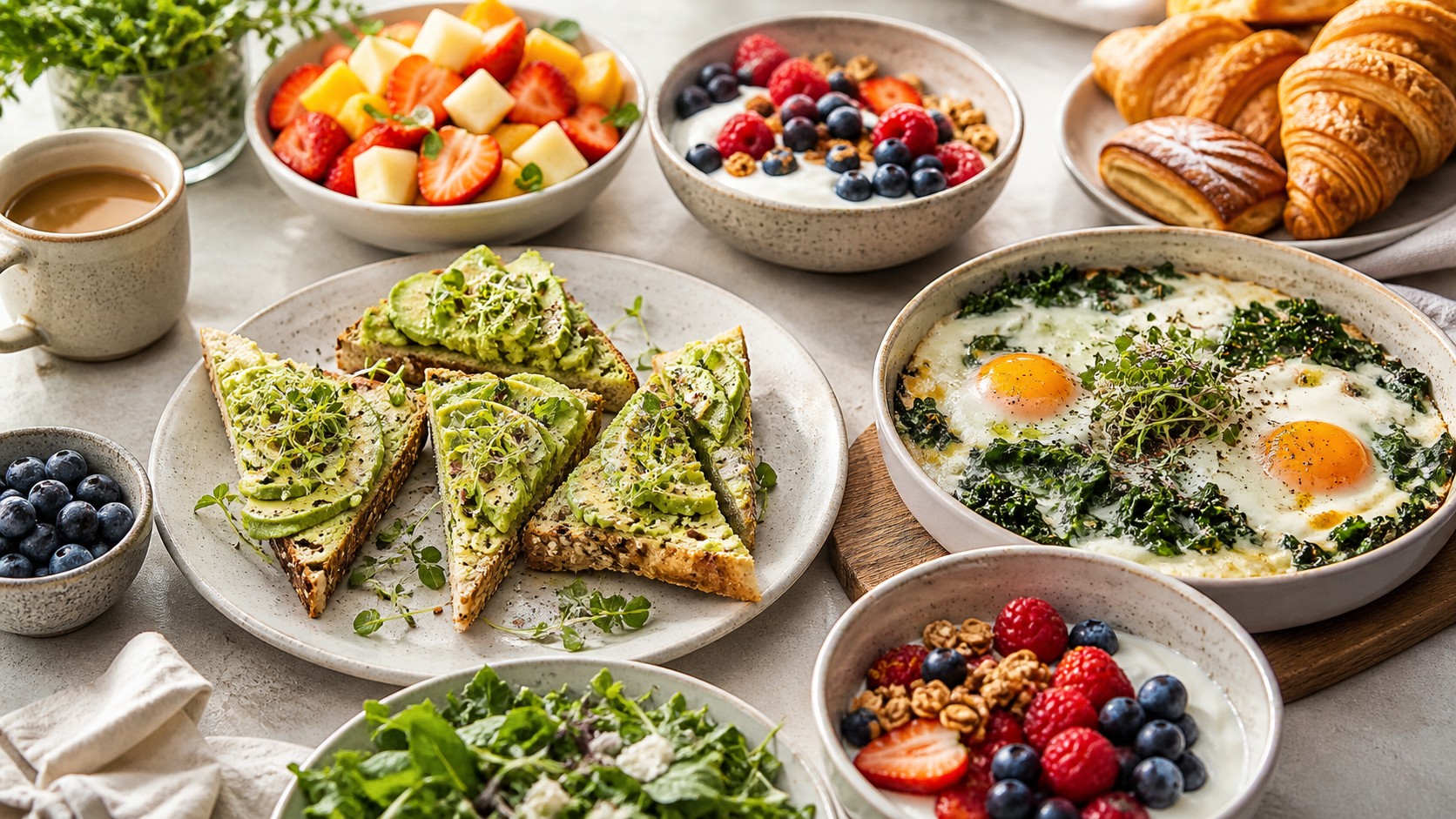
You do not need to make a separate dish for every possible preference, but a little flexibility goes a long way. Keep meat on the side if possible. Offer fruit, salad, eggs, bread, and at least one vegetarian-friendly dish. Label nuts if they appear. Serve sauces separately when they are spicy or rich. Component-style brunches are easiest for mixed groups: bagel boards, taco spreads, yogurt bars, toast boards, and salad platters. Guests can build around what works for them, and the host avoids announcing restrictions at the table.
Keep Hot Food Hot and Cold Food Fresh
Temperature makes brunch feel cared for. Keep egg dishes covered lightly while resting, warm pastries close to serving, and potatoes in a low oven if needed. Keep yogurt, smoked salmon, whipped cream, and delicate fruit chilled until the table is ready. Do not leave dressed greens sitting too long.
If the gathering will stretch, put out smaller portions and refresh them. This is especially useful for fruit, dairy, and boards. A smaller platter replenished once looks fresher than an overloaded platter that fades over two hours.
Make Hosting Feel Human
Guests do not need the host to be flawless. They need to feel welcomed. Put on music, clear a landing space for coats or bags, decide where people can sit, and let someone help if they ask. A guest can pour water, carry plates, or put pastries on a platter. Brunch is naturally communal, and small bits of help can make the morning warmer. Give yourself permission to sit down. The meal is not perfect if you never get to enjoy it. Once the main food is out, let the table do some of the work.
Handle Late Arrivals Gracefully
Brunch guests are often casual about time. Choose at least one dish that holds well and one item that can be served immediately to early arrivals. Fruit, coffee, pastries, and a board can start the gathering before the hot dish appears. Late guests can still eat without derailing the schedule.
If timing matters, say so kindly in the invitation. If it does not, build the menu for flexibility. A brunch that can absorb real guest behavior will feel much more relaxed.
End With an Easy Sweet Finish
Brunch does not need a formal dessert, but a small sweet finish can be lovely. Coffee cake, lemon bars, fruit crisp, cookies, chocolate-dipped strawberries, or a final round of pastries can close the meal. Keep it simple and make-ahead if possible. The sweet finish should not require the host to restart the kitchen. It is a gentle signal that the meal can keep lingering, not a second event.
The Perfect Brunch Is the One You Can Enjoy
The best hosting plan is generous but realistic. Choose one anchor, prepare what you can ahead, make drinks self-serve, balance the table, and leave space for guests to settle in. Brunch should feel abundant without demanding constant performance.
When the host is relaxed, guests relax too. That is what makes a brunch feel perfect: not flawless details, but a morning where the food, timing, and welcome all make room for connection.
Plan Oven and Counter Space Like Part of the Menu
Brunch often fails in the logistics rather than the recipes. The egg bake, potatoes, pastries, and bacon may all want the oven at different temperatures. The coffee station, cutting board, fruit platter, and dirty dishes may all compete for the same counter. Before the morning begins, decide what goes where. If a dish can be served at room temperature, let it free up oven space for something that truly needs heat. Counter space matters because brunch is usually served in waves. Clear a landing spot for hot dishes, a place for finished platters, and a spot for guests to set cups. A little physical space can make the whole event feel calmer.
Use a Brunch Buffer
A brunch buffer is the food or drink that buys the host time. It might be coffee, fruit, pastries, a yogurt bowl, or a small board. Put it out before the main dish is ready so guests can begin relaxing immediately. This prevents the awkward feeling of everyone standing around while the oven timer becomes the center of attention.
The buffer should not be so filling that it replaces the meal. It should simply welcome people into the morning. A bowl of berries, warm muffins, and coffee can change the entire pace of arrival.
Keep the Cleanup Path Open
A perfect brunch also considers what happens after the plates are full. Keep trash, compost, and the sink accessible. Use serving pieces that can go straight to the counter with leftovers. Put extra containers nearby if guests may take food home. These small choices keep the kitchen from becoming a wall of dishes before anyone has had a second cup of coffee. Cleanup does not need to be invisible, but it should not dominate the gathering. If the host can stack a few plates and return to the table easily, the brunch stays social.
Make the Invitation Do Some Work
A clear invitation helps guests arrive in the right mood. Mention whether brunch is casual, whether kids are welcome, whether guests should come hungry, and whether the timing is flexible. If you want people there close to a certain hour because a dish is best hot, say so warmly. If arrival is loose, choose food that supports that.
Guests relax when they understand the shape of the gathering. A little clarity before brunch prevents confusion during brunch.
Leave One Thing Undone on Purpose
A brunch can feel more welcoming when guests see one small finishing moment. Toss the salad after people arrive, spoon berries over yogurt, slice the quiche at the table, or pour coffee while everyone gathers. This gives the meal life and lets the host participate naturally instead of presenting everything as a finished display. Choose only one finishing task, not five. The point is warmth, not pressure, and the task should make the food better.
Trust the Simple Plan
A calm brunch plan is enough when every part has a purpose. Let the food be generous, the coffee hot, and the morning unhurried.
That is often what guests remember most: not how many dishes appeared, but how easy it felt to stay.