Lunch That Fits Inside a Busy Day
Easy lunch ideas for busy weekdays need to respect the clock, the fridge, and the fact that lunch often happens between other responsibilities. A good weekday lunch should be quick to assemble, sturdy enough to wait if the day shifts, and satisfying enough to keep you from hunting for snacks an hour later. It does not need to be elaborate. It needs a dependable rhythm: something filling, something fresh, one useful flavor boost, and a plan that still works when the morning gets crowded.
A: A wrap, grain bowl, snack box, or leftover soup usually packs quickly with little morning effort.
A: Repeat the format but change sauces, toppings, grains, or produce.
A: Wraps, pasta salads, grain salads, snack boxes, sandwiches, and room-temperature bowls work well.
A: Add a fresh element, a sauce, herbs, citrus, or crunch before eating.
A: Include protein, carbohydrates, produce, and a satisfying fat or sauce.
A: Yes, especially when shortcuts are paired with fresh produce or a better sauce.
A: One grain, one protein, one vegetable, and one sauce can support several meals.
A: Choose tidy one-utensil meals with sauces packed separately.
A: Keep two defaults and a backup shelf ready before the week starts.
A: Pack food that holds well and can be eaten hot, cold, or room temperature.
Build Lunch From Formats, Not Recipes
Busy weekdays are easier when lunch starts with a format you already understand. Bowls, wraps, salads, soups, toast plates, snack boxes, leftovers, and pasta salads all give you a structure before you choose ingredients. The format narrows the decision, which matters when you are packing lunch before work, between school drop-offs, or during a short break at home.
Once the format is chosen, the ingredients can change all week. A bowl can use rice one day and farro the next. A wrap can hold chicken, hummus, eggs, beans, or tuna. A snack box can become more filling with cheese, nuts, boiled eggs, or a small container of dip. This is how easy lunches stay flexible without asking you to invent something new every morning.
Use the Five-Minute Assembly Rule
The best weekday lunches are often assembled, not cooked. If the main work takes more than five minutes on a busy morning, it may need to move to the night before or the weekend. Keep washed greens, cooked grains, sliced vegetables, boiled eggs, cooked chicken, beans, sauces, and fruit ready in visible containers. Then lunch becomes a quick combination instead of a full cooking session. Five-minute assembly does not mean boring food; it means the harder steps already happened at a calmer time.
Make Leftovers Feel Intentional
Leftovers become better lunches when they are given a small refresh. Roasted vegetables can go into a grain bowl with yogurt sauce. Chili can become a baked potato topping. Chicken can become a wrap with greens and pickles. Rice can become a quick lunch bowl with beans, avocado, and salsa. The goal is to avoid eating last night’s dinner in the exact same mood unless that is what you want.
Pack leftovers in lunch-sized portions before putting dinner away. This one habit saves time in the morning and keeps the best pieces from disappearing. Add a fresh element separately, such as citrus, herbs, crunchy vegetables, or a handful of greens, so the lunch tastes awake.
No-Cook Lunches for the Most Crowded Days
No-cook lunches are essential when the day leaves no room for a stove. Try hummus with pita, cucumbers, tomatoes, olives, and boiled eggs; tuna with crackers, greens, and fruit; turkey and cheese rollups with carrots and dip; cottage cheese with tomatoes and toast; or a peanut butter banana wrap with yogurt. These lunches can still feel complete when they include protein, fiber, and texture.
Wraps That Hold Together
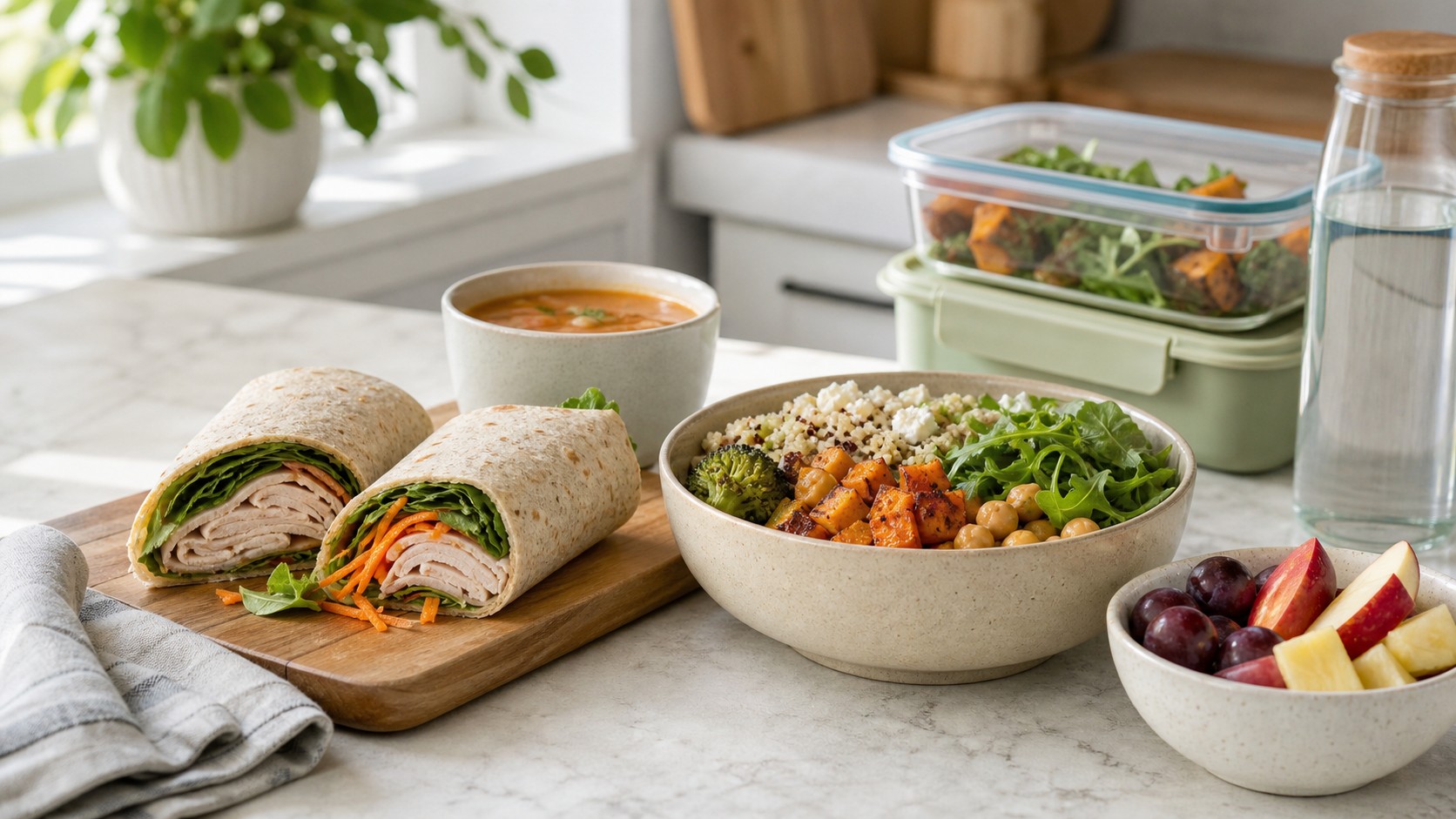
Wraps are popular for busy lunches because they travel well, but they need structure. Spread the sauce or hummus thinly, keep wet ingredients away from the tortilla edge, use greens as a moisture barrier, and fold the sides firmly before rolling. Slice dense vegetables thin so the wrap does not burst. If the filling is saucy, pack it as a dip instead.
A good wrap has contrast. Turkey with avocado and pickles, chicken with slaw and yogurt sauce, beans with rice and salsa, hummus with cucumber and feta, or egg salad with greens can all work. The wrapper is only the beginning; the texture inside is what makes lunch feel satisfying.
Bowls Are the Weekday Workhorse
Lunch bowls are forgiving because every ingredient can be prepped separately. Start with a base such as rice, quinoa, greens, noodles, roasted potatoes, or lentils. Add protein, vegetables, a sauce, and something crisp or bright. A bowl can lean Mediterranean, taco-inspired, picnic-style, or cozy depending on the sauce and toppings. Keep sauces separate until lunch if the bowl needs to travel. A thick dressing, salsa, tahini sauce, vinaigrette, pesto, or yogurt sauce can make simple ingredients feel like a real meal. Without a sauce, a bowl can taste like leftovers arranged in a container.
Desk Lunches That Do Not Feel Sad
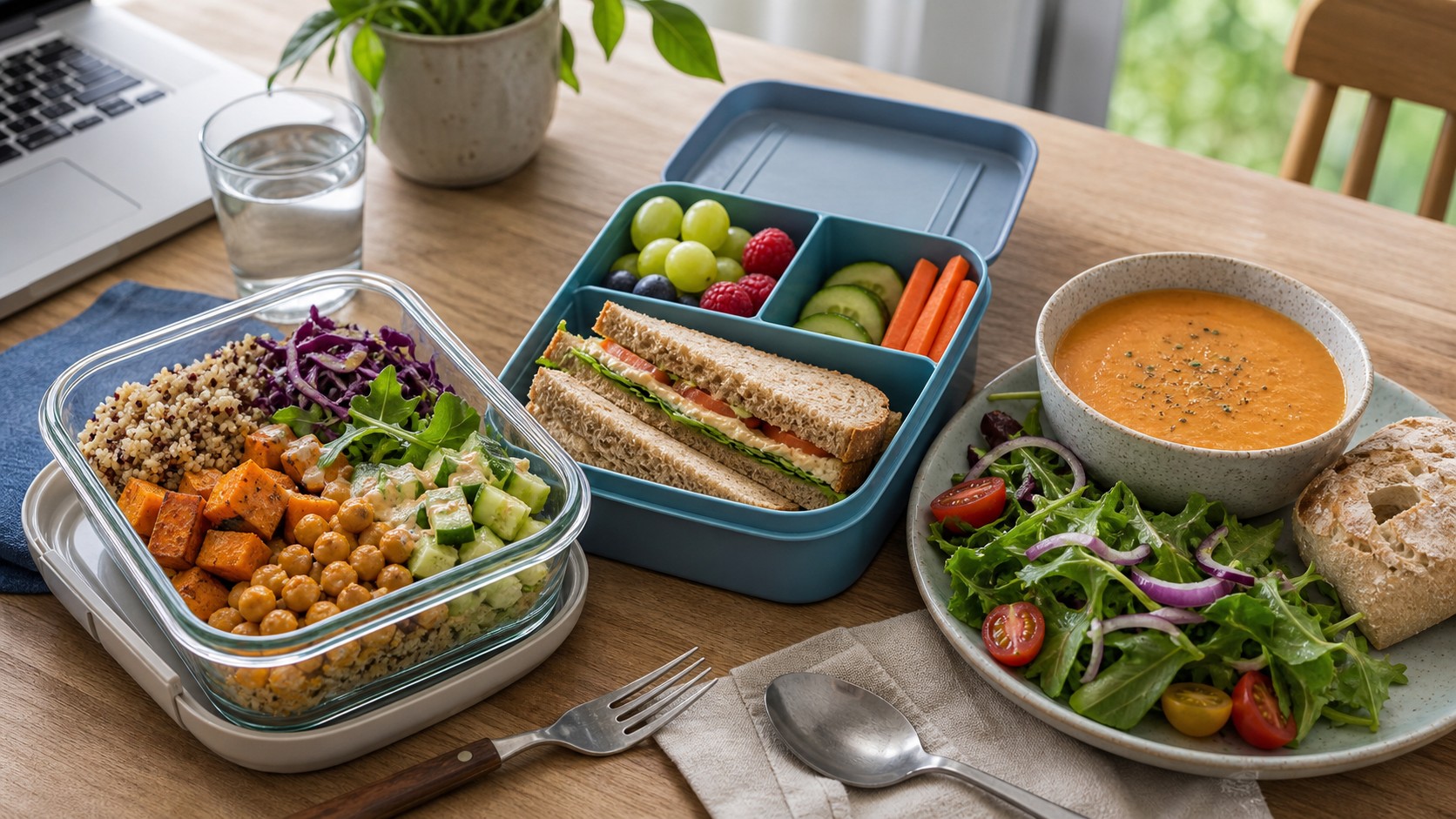
Desk lunches need to be tidy, appealing, and not too fussy. Choose foods that can be eaten with one utensil, do not drip onto paperwork, and still taste good if a meeting runs late. Grain salads, pasta salads, soup in a thermos, chopped salads, bento-style boxes, wraps, and sturdy sandwiches are reliable.
Small details help. Pack a real napkin, a fork that does not bend, a lemon wedge, a little salt, or a crunchy topping. Lunch at a desk can still feel cared for when it has one thoughtful finish.
Use Store-Bought Helpers Wisely
Busy lunches are a good place for smart shortcuts. Rotisserie chicken, canned beans, frozen grains, bagged slaw, prewashed greens, jarred pesto, salsa, hummus, cooked lentils, frozen dumplings, and prepared soups can all become better lunches with fresh additions. Shortcuts are not a failure when they help you eat well during a crowded week.
Pack Lunch by Temperature
Some lunches are best hot, some cold, and some room temperature. Knowing the temperature before packing prevents disappointment. Soups, rice bowls, and leftovers may need a microwave or thermos. Salads, wraps, and snack boxes need a cold pack. Grain salads, roasted vegetables, sandwiches, and pasta salads can often handle room temperature for a reasonable window.
If your day does not guarantee a refrigerator or microwave, choose accordingly. Lunch should fit the conditions where it will actually be eaten.
Keep a Backup Lunch Shelf
A backup lunch shelf can save a busy week. Keep tuna, salmon packets, crackers, nut butter, canned beans, shelf-stable soup, microwave rice, roasted nuts, dried fruit, and sturdy tortillas available. Add fresh produce or dairy when you have it. Backup lunches prevent the expensive, rushed, or unsatisfying choice from becoming the default.
Lunch Prep Without a Full Meal-Prep Day
You do not need to spend Sunday filling identical containers. Prep one grain, one protein, one washed vegetable, and one sauce. That is enough to create several lunches with different personalities. Rice, chicken, cucumber, and yogurt sauce can become a bowl, wrap, salad, or snack plate depending on what else you add.
Keep prep small enough that you will actually do it. A fifteen-minute reset can support the week better than an ambitious plan that never starts.
Make Lunch Satisfying Enough
A lunch that is too small can make the afternoon harder. Include a clear source of protein, a carbohydrate that gives energy, produce for freshness, and some fat or sauce for satisfaction. This does not have to be complicated. A chicken wrap with fruit, a bean bowl with avocado, a tuna snack box with crackers, or soup with toast can cover the basics.
Easy Lunch Should Reduce Friction
The real test of an easy weekday lunch is whether it makes the day feel steadier. If it requires too much chopping, too many containers, or too much reheating, it may not be the right lunch for that day. Save more involved lunches for quieter moments and keep busy-day options honest.
When lunch is simple, filling, and ready before hunger turns urgent, the whole afternoon feels less scattered. That is the quiet value of a good weekday lunch system.
Use Repetition Without Getting Stuck
Repeating a lunch format is helpful, especially during demanding weeks. The trick is to change one or two parts so the meal still feels alive. Keep the wrap but change the sauce. Keep the bowl but change the grain. Keep the snack box but change the fruit, cheese, or dip.
Know Your Real Lunch Window
Some people have twenty peaceful minutes. Others eat in pieces across the afternoon. Some need lunch to survive a commute or school pickup. Plan for the real window, not the ideal one. A soup that needs careful reheating is wrong for a rushed desk day, while a sturdy wrap may be perfect.
Matching lunch to the day is what makes the habit last. Food can be delicious and still be impractical if it ignores your schedule.
Make the First Step Obvious
Easy lunch often depends on what your hand reaches for first. If the grains are buried, the containers are missing lids, or the good sauce is behind three jars, lunch will feel harder than it is. Put the most useful ingredients at eye level and keep the first step visible. A bowl, wrap, or salad becomes much more likely when the building blocks are already waiting in front of you.
Use One Fresh Thing
One fresh thing can rescue an otherwise practical lunch. It might be sliced cucumber, a handful of herbs, a squeeze of lemon, cherry tomatoes, crisp apple, shredded cabbage, or a spoonful of salsa. Freshness makes packed food feel less like storage and more like lunch. This is especially helpful with leftovers, canned beans, cooked grains, and reheated soups.
The fresh item does not need to be elaborate. It just needs to add life at the moment you eat.
Keep Sauces in Rotation
A small sauce rotation can change the entire week. Make or buy two very different options: maybe pesto and salsa, yogurt herb sauce and peanut dressing, vinaigrette and hummus, or tahini sauce and hot honey mustard. The same chicken, rice, greens, and vegetables can become completely different lunches depending on the sauce.
Plan for Low-Appetite Days
Busy weekdays sometimes make a full lunch feel unappealing.
On those days, use smaller pieces that still add up: yogurt, fruit, cheese, crackers, boiled eggs, nuts, toast, or soup in a mug. A modular lunch can be eaten gradually without feeling like a heavy assignment. It is still better to have a steady collection of small foods than to skip lunch and crash later.
Let Friday Be a Cleanout Lunch
By the end of the week, lunch can use up the odds and ends. Half a cucumber, the last scoop of rice, a few roasted vegetables, a boiled egg, leftover beans, and a spoonful of sauce can become a useful bowl. Friday lunch is a good place to be flexible because it prevents waste and resets the refrigerator. The trick is to add one fresh or bright item so the meal feels intentional instead of tired.
Use a Lunch Map Instead of a Menu
A lunch map is a loose plan for what role each food can play.
Grains are bases, proteins are anchors, vegetables are freshness, sauces are direction, and fruit or snacks are support. When you think this way, you can improvise without starting from nothing. The map also keeps grocery shopping calmer because each item has more than one possible job during the week.
Protect Lunch From Morning Chaos
If mornings are unpredictable, make lunch decisions at night. Even choosing the container and moving ingredients together can help. You do not have to fully pack the meal; you only need to make the morning version easier. A half-packed lunch is often the difference between eating well and buying whatever is closest. Busy weekdays reward small decisions made early. Lunch does not need ambition as much as it needs a head start.