Breakfasts That Fit the Morning You Actually Have
Easy breakfast ideas for busy mornings need to be faster than your excuses and better than skipping food entirely. The right breakfast might be a jar of overnight oats, toast with a smart topping, a smoothie that is already half-prepped, a boiled egg with fruit, a breakfast burrito from the freezer, or yogurt with granola poured in before you leave. Busy-morning breakfast is not about elaborate cooking. It is about having a few reliable options that give you enough energy, enough satisfaction, and very little decision-making when the day starts moving.
A: Yogurt bowls, toast, overnight oats, smoothies, and boiled eggs are reliable fast choices.
A: Keep two or three defaults ready so the decision is already made.
A: Burritos, muffins with yogurt, smoothies, egg sandwiches, oat jars, and fruit boxes travel well.
A: Use toast stations, yogurt bars, freezer waffles, egg muffins, or smoothie packs.
A: Yes, if it includes protein, fiber, and texture from yogurt, oats, nut butter, fruit, or seeds.
A: Set out tools, wash fruit, portion oats, fill coffee supplies, or pack a breakfast container.
A: Yes, when they are portioned, labeled, and easy to reheat.
A: Use sturdy formats, pack sauces separately, and keep napkins nearby.
A: Choose a small option now, such as fruit with yogurt or toast, and plan a later snack.
A: It fits your time, appetite, kitchen, commute, and energy on normal mornings.
Create Breakfast Defaults
The easiest busy-morning breakfast is the one you do not have to debate. Choose two or three defaults for normal weekdays: yogurt bowls, toast, overnight oats, smoothies, eggs, or breakfast wraps. Keep the ingredients in predictable places. Repetition is helpful when time is short.
You can still vary the flavor. Change fruit, toppings, sauces, bread, or spices while keeping the format the same. A default breakfast lowers the mental load without making every morning identical.
No-Cook Breakfasts for the Fastest Days
No-cook breakfasts are essential when the morning is already crowded. Greek yogurt with fruit and granola, cottage cheese with berries, peanut butter toast, chia pudding, overnight oats, fruit with cheese, or a smoothie can be ready in minutes. These choices are especially useful when the stove feels like too much. Keep texture in mind. Add nuts, seeds, granola, toast, or crisp fruit so breakfast feels like a meal. No-cook should not mean joyless.
Toast That Does More Work
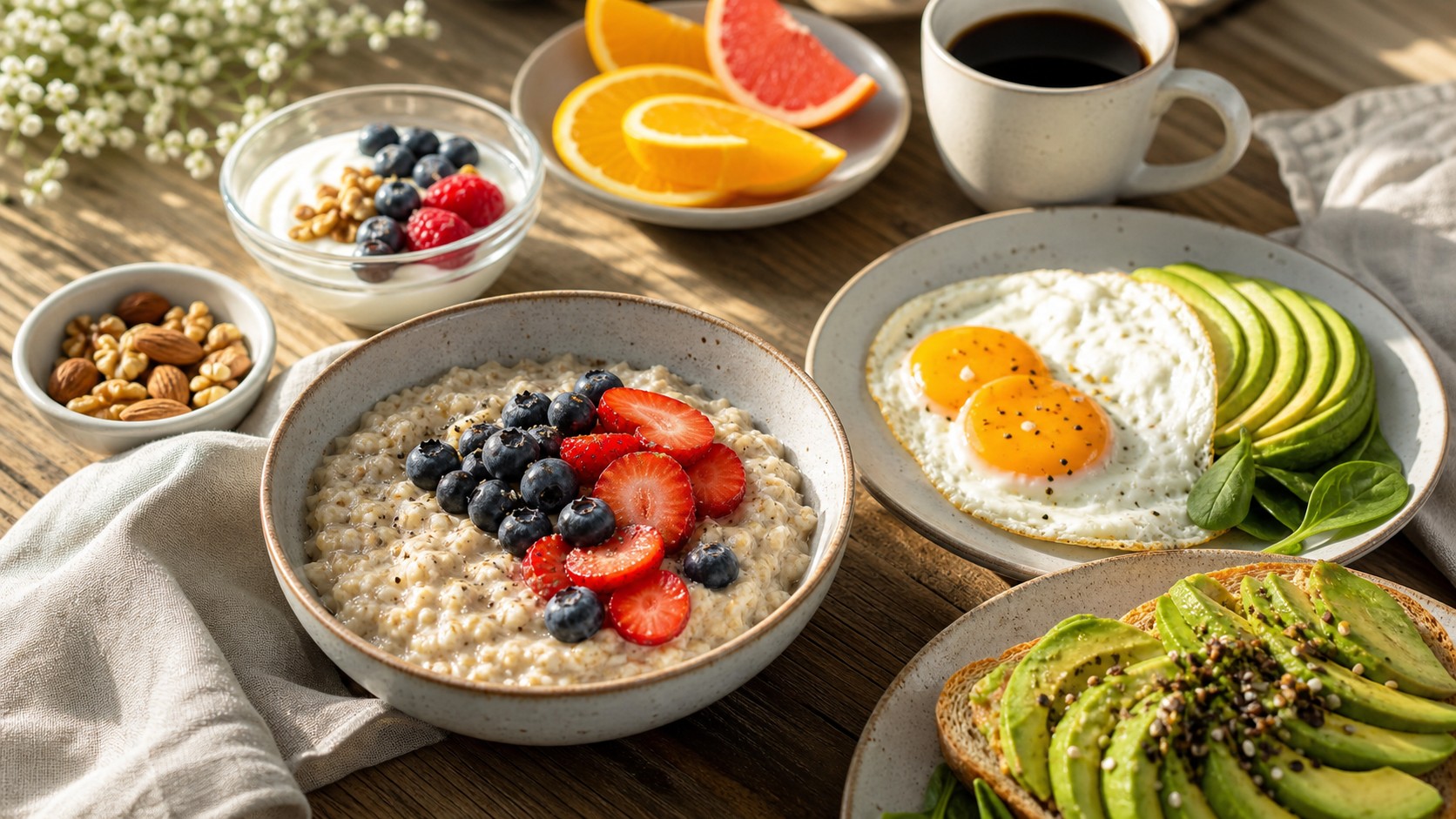
Toast is one of the best busy-morning platforms. Top it with avocado and egg, peanut butter and banana, cottage cheese and tomato, hummus and cucumber, ricotta and berries, or almond butter and apple. A loaded toast can be fast, balanced, and easy to hold if needed.
Freeze sliced bread so it is always available. Toast straight from frozen and add toppings while coffee brews. This small habit prevents the “there is nothing for breakfast” problem.
Make-Ahead Jars and Bowls
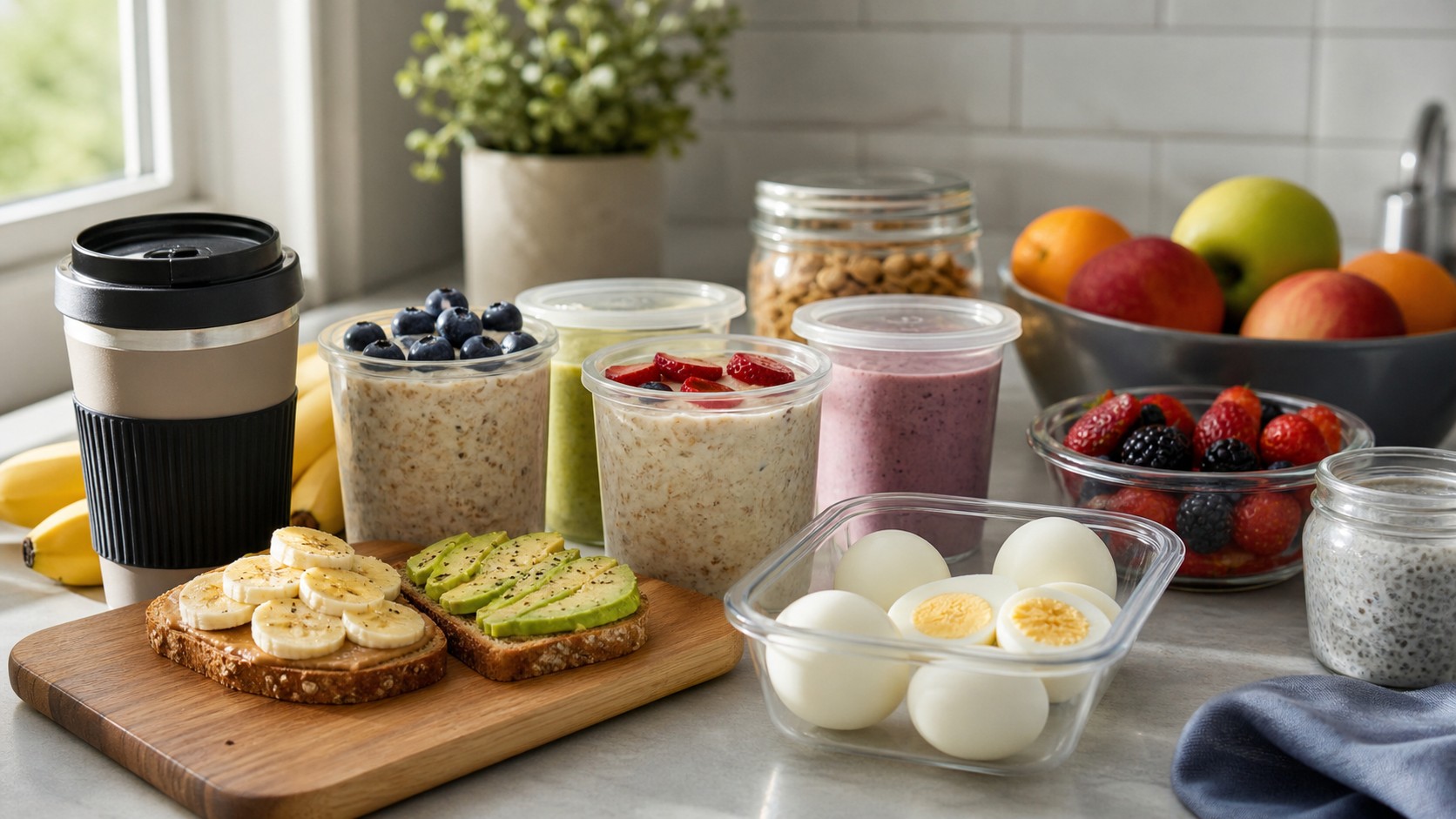
Overnight oats, chia pudding, yogurt parfaits, and smoothie jars are useful because they move the work to a calmer time. Prep two or three at once, but keep crunchy toppings separate until morning. Add fruit that holds well, such as berries, apples, bananas added last, or citrus segments. Jars are also portable. If breakfast often happens at a desk, in a car after drop-off, or between errands, a sealed container can save the morning. Pack a spoon where you will remember it.
Quick Eggs Without a Production
Eggs do not have to mean a full cooked breakfast. Boil eggs ahead, scramble one egg quickly, make egg muffins, microwave an egg in a mug, or reheat a frittata square. Pair with fruit, toast, or a tortilla and breakfast is done.
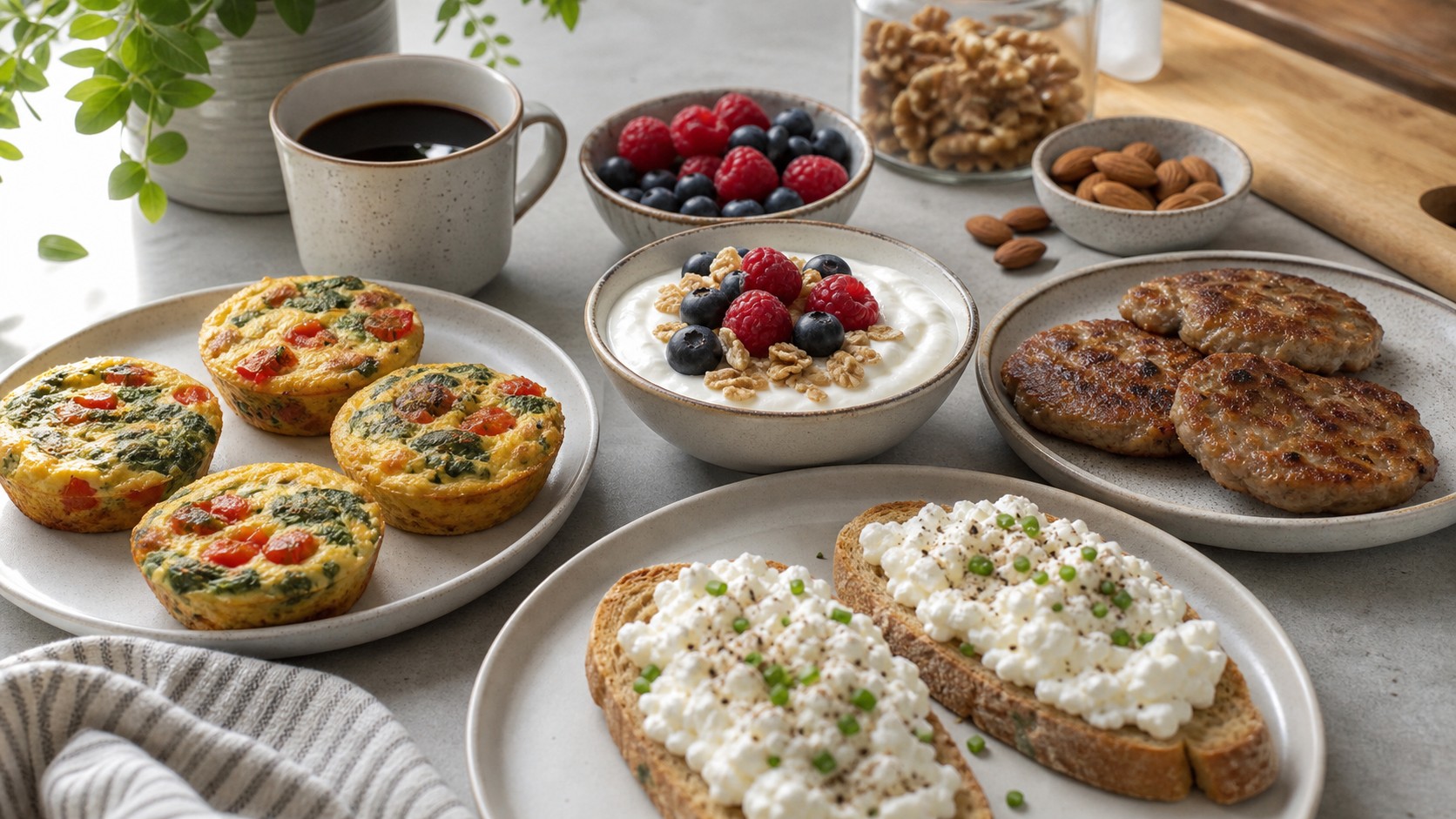
For families, egg muffins are especially useful because they can be customized. Cheese, spinach, peppers, ham, mushrooms, or potatoes can all fit. Reheat gently so they stay tender.
Smoothies That Are Ready Faster
Smoothies become easier when the ingredients are pre-portioned. Freeze fruit, greens, oats, or seeds in bags or containers, then blend with yogurt, milk, or nut butter. A good smoothie should have enough protein or fat to last longer than a glass of juice. If mornings are noisy, blend the night before and shake well in the morning, or choose quieter no-cook options. Convenience should fit the household, not just the recipe.
Portable Breakfasts for Commute Days
Some breakfasts need to travel. Breakfast burritos, muffins with yogurt, egg sandwiches, oat bars, fruit and cheese boxes, smoothies, toast wraps, and boiled eggs can work when eating at home is unrealistic. Choose foods that are not too messy and pack sauces separately.
Keep napkins, spoons, and containers in one place. A portable breakfast fails quickly if the food is ready but the logistics are scattered.
Family Breakfasts Without a Morning Battle
Families need breakfast options that children can accept and adults can tolerate. Yogurt bars, toast stations, freezer waffles with fruit, egg muffins, smoothies, oatmeal toppings, and breakfast tacos can give everyone some choice without a long menu. Set out two or three toppings and let people build quickly. For picky eaters, keep one safe item available: toast, fruit, yogurt, cereal, or eggs. A calm breakfast is more useful than a perfect breakfast that creates conflict before school.
Use the Freezer Like a Breakfast Pantry
The freezer can hold sliced bread, waffles, muffins, breakfast burritos, smoothie packs, cooked pancakes, turkey sausage, fruit, and frittata portions. Label items clearly and freeze in usable portions. A freezer breakfast should be easy to grab, not buried under mystery containers.
Reheat with texture in mind. Toast waffles and bread, warm burritos wrapped loosely, and add fresh fruit or sauce after reheating. Freezer food tastes better when it gets one fresh companion.
Five-Minute Breakfast Pairings
When time is extremely tight, use pairings: yogurt and fruit, toast and egg, banana and peanut butter, smoothie and muffin, cottage cheese and berries, boiled eggs and orange slices, waffle and yogurt, or cheese and apple. Pairings are easier to remember than recipes. Keep a short list on the refrigerator if mornings are chaotic. Decision support is part of breakfast prep.
Prep the Night Before Without Overdoing It
Night-before prep can be small. Set out a bowl and spoon, move frozen fruit to the front, fill the coffee maker, wash berries, portion granola, or pack a breakfast container. You do not need to become a full meal-prep person to make breakfast easier.
The best prep removes friction. If the first step is obvious, breakfast is more likely to happen.
Keep Breakfast Flexible
Some mornings need a full meal. Some need a small snack now and more food later. Some need portable food. Some need something children can assemble themselves. Easy breakfast ideas should give you options instead of one ideal routine. Busy mornings are not the place for perfection. They are the place for reliable food that helps everyone leave the house with a little more steadiness.
Start With What You Can Repeat
The best easy breakfast is the one you can repeat without resentment. Choose formats you like, keep the ingredients ready, and make the first bite as simple as possible. A small set of dependable breakfasts can change the whole tone of the morning.
When breakfast is easy enough to do on the hardest days, it becomes more than a meal. It becomes a quiet support system for the day ahead.
Use a Breakfast Basket or Shelf
Busy mornings get easier when breakfast foods are grouped together. Put oats, granola, nut butter, dried fruit, seeds, and travel containers on one shelf. Keep yogurt, boiled eggs, washed fruit, and smoothie ingredients easy to see in the refrigerator. The less you search, the more likely breakfast happens. This is especially helpful for families. Kids can learn where breakfast choices live, and adults do not have to narrate every step. A visible system turns breakfast into a routine instead of a scavenger hunt.
Make Breakfast Work With Coffee
Many mornings are organized around coffee, so let breakfast fit that rhythm. While coffee brews, toast bread, grab yogurt, blend a smoothie, or pack an oat jar. Put breakfast ingredients near the coffee supplies if that helps. Pairing habits is one of the easiest ways to make a new routine stick.
If coffee often replaces breakfast, choose a tiny default: a boiled egg, banana, yogurt cup, or toast. Something small can keep the morning from running on caffeine alone.
Keep Emergency Breakfasts for Bad Mornings
Bad mornings need backup food. Keep shelf-stable or freezer-friendly choices like oatmeal packets, nut butter, whole-grain waffles, frozen muffins, breakfast bars, dried fruit, shelf-stable milk, or crackers and cheese. These are not your ideal breakfast; they are the breakfast that saves the day when the plan falls apart. Emergency breakfasts reduce the chance of leaving hungry or buying something you did not really want. They are a practical kindness to future you.
Reset the System Once a Week
Spend a few minutes once a week checking breakfast supplies. Are there eggs? Is the fruit washed? Is the yogurt gone? Are the freezer burritos labeled? Did the granola run out? This small reset prevents busy mornings from revealing empty containers at the worst possible time.
Breakfast does not need a grand plan, but it does need a little maintenance. A five-minute reset can protect five rushed mornings.
Make Breakfast Visible for Everyone
Busy mornings are easier when breakfast choices can be seen. Put fruit in a bowl, keep yogurt near the front, label freezer burritos, and store granola where it is not hidden behind baking supplies. Visibility reduces decision fatigue and helps kids or partners help themselves. If a food needs to be used soon, place it where breakfast happens. The best easy breakfast is often the one your eyes find first.
Use Small Portions as a Starting Point
Some mornings feel too rushed for a full meal, but a small portion can still help. Half a toast, a boiled egg, a yogurt cup, a banana, or a small smoothie is better than leaving hungry if your body needs something. You can plan a later snack when the morning settles.
Small breakfasts are also useful for children who wake slowly. A manageable portion can prevent the table from turning into a standoff.
Give Each Morning Type a Plan
Make a plan for three common morning types: regular, rushed, and impossible. Regular might be toast and eggs. Rushed might be yogurt and fruit. Impossible might be a freezer muffin and a banana. Naming the categories prevents one chaotic morning from ruining the whole breakfast habit. When each kind of morning has a food answer, breakfast becomes more resilient.
Make Kids Part of the System
If mornings include children, make the breakfast system visible and limited. Offer two choices instead of ten: yogurt or toast, smoothie or waffle, eggs or oats. Too many choices slow everyone down. A small choice still gives children some control.
Use bins or shelves for kid-safe breakfast items when possible. Granola bars, fruit, cups, spoons, napkins, and approved toppings can live together. The more children can do independently, the less the morning depends on one adult moving perfectly.
Use Breakfast to Reduce the Lunch Rush
Some breakfast prep can support lunch too. Washed fruit, boiled eggs, muffins, yogurt cups, cut vegetables, and portioned granola can move between meals. If you are already touching the ingredients, prepare a little extra. This makes the whole morning smoother, not just the first meal. Busy households benefit when breakfast and lunch systems overlap. One small prep habit can solve two stressful moments.
Keep the Standard Humane
There will be mornings when breakfast is not balanced, beautiful, or even seated. That is fine. The goal is to have enough reliable options that most mornings go better. A banana in the car is not failure if it keeps someone from leaving hungry.
Easy breakfast is about support, not perfection. When the system is kind to real life, it lasts through busy seasons ahead.