Healthy Lunch Should Carry the Afternoon
Healthy lunch recipes work best when they are built for real energy, not just for looking light. A lunch that keeps you full needs protein, fiber, carbohydrates, produce, flavor, and enough fat to feel satisfying. The goal is not a tiny meal that sounds virtuous at noon and sends you searching for snacks by two. The goal is a lunch that helps your body and attention stay steady while still tasting like something you would choose again tomorrow.
A: Protein, fiber, carbohydrates, produce, and a satisfying sauce or fat make lunch last longer.
A: Yes, especially when paired with protein, vegetables, and fat for steadier energy.
A: The salad may need more protein, grains, beans, fat, or total volume.
A: Use cooked grains, beans or chicken, vegetables, sauce, and one crunchy topping.
A: Yes, when it includes beans, lentils, meat, grains, or a hearty side.
A: Prep flexible components and change sauces, toppings, and bases.
A: Use dressing, salsa, yogurt sauce, avocado, broth, or citrus.
A: They can be when filled with protein, vegetables, and a balanced sauce.
A: Fruit with nuts, yogurt, hummus, cheese, or a boiled egg can help.
A: Notice your hunger, energy, focus, and comfort a few hours later.
Start With the Fullness Formula
A filling healthy lunch usually has four parts: protein, fiber-rich plants, a steady carbohydrate, and a flavorful fat or sauce. Chicken, fish, tofu, eggs, lentils, beans, yogurt, cottage cheese, and tempeh can anchor the meal. Vegetables, fruit, whole grains, beans, and seeds add fiber. Rice, potatoes, bread, pasta, quinoa, farro, or tortillas give usable energy. Olive oil, avocado, tahini, nuts, cheese, pesto, or yogurt sauce help the meal feel satisfying.
When one part is missing, lunch often feels unfinished. A salad without protein may not last. Protein without vegetables can feel heavy. Vegetables without enough carbohydrate can leave you tired. Balance is practical, not fussy.
Build Bowls That Do More Than Look Pretty
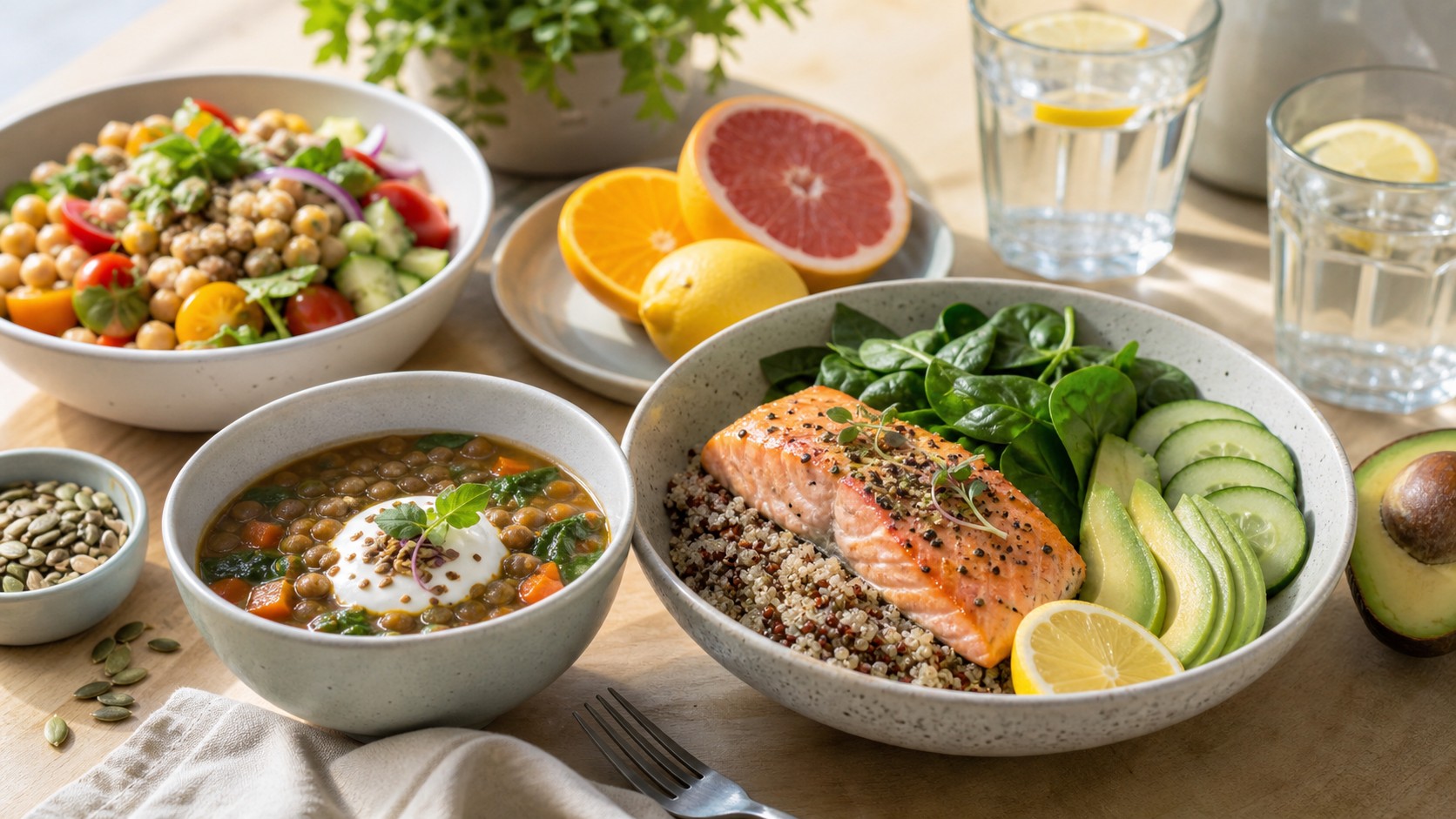
Healthy lunch bowls are useful because they can hold everything the body needs in one container. Start with a base of greens, grains, lentils, roasted vegetables, or a mix. Add protein, sauce, and texture. A salmon quinoa bowl with cucumber and lemon yogurt feels different from a tofu rice bowl with peanut sauce, even though the structure is similar. The variety comes from flavor families, not from reinventing lunch every day.
Make Salads More Substantial
A healthy salad should not be a pile of leaves pretending to be lunch. Add beans, chicken, tuna, eggs, lentils, roasted chickpeas, cheese, grains, nuts, seeds, or avocado. Use vegetables with different textures: crisp cucumber, roasted sweet potato, shredded cabbage, tomatoes, peppers, or carrots. A substantial salad can be fresh and filling at the same time.
Dress salads well. A good vinaigrette, tahini dressing, yogurt herb sauce, or citrusy olive oil blend helps the vegetables taste intentional. Pack dressing separately if the salad needs to wait several hours.
Use Soup as a Real Meal
Soup can be deeply satisfying when it includes more than broth. Lentil soup, bean chili, chicken vegetable soup, minestrone, turkey barley soup, and coconut curry vegetable soup all bring warmth and fullness. Add a side of whole-grain toast, fruit, salad, or yogurt if the soup alone is not enough.
Protein Is the Anchor, Not the Whole Story
Protein helps fullness, but lunch should not become a dry protein project. Grilled chicken needs sauce. Tuna needs crunch and acidity. Tofu needs seasoning and texture. Eggs need vegetables or toast. Beans need herbs, citrus, spice, or olive oil. The most successful healthy lunches make protein taste integrated instead of dropped onto the plate for duty.
Plant proteins can be especially useful at lunch because they often bring fiber along with protein. Lentils, chickpeas, black beans, edamame, tofu, tempeh, and hummus can all help a meal last without feeling overly heavy.
Choose Carbohydrates That Match the Day
Carbohydrates are not the enemy of an energizing lunch. They are often what helps the meal carry an active afternoon. Whole grains, potatoes, beans, fruit, sourdough, pasta, rice, and tortillas can all fit. The question is portion and pairing. Carbohydrates feel steadier when they sit beside protein, fiber, and fat.
Healthy Wraps That Do Not Collapse
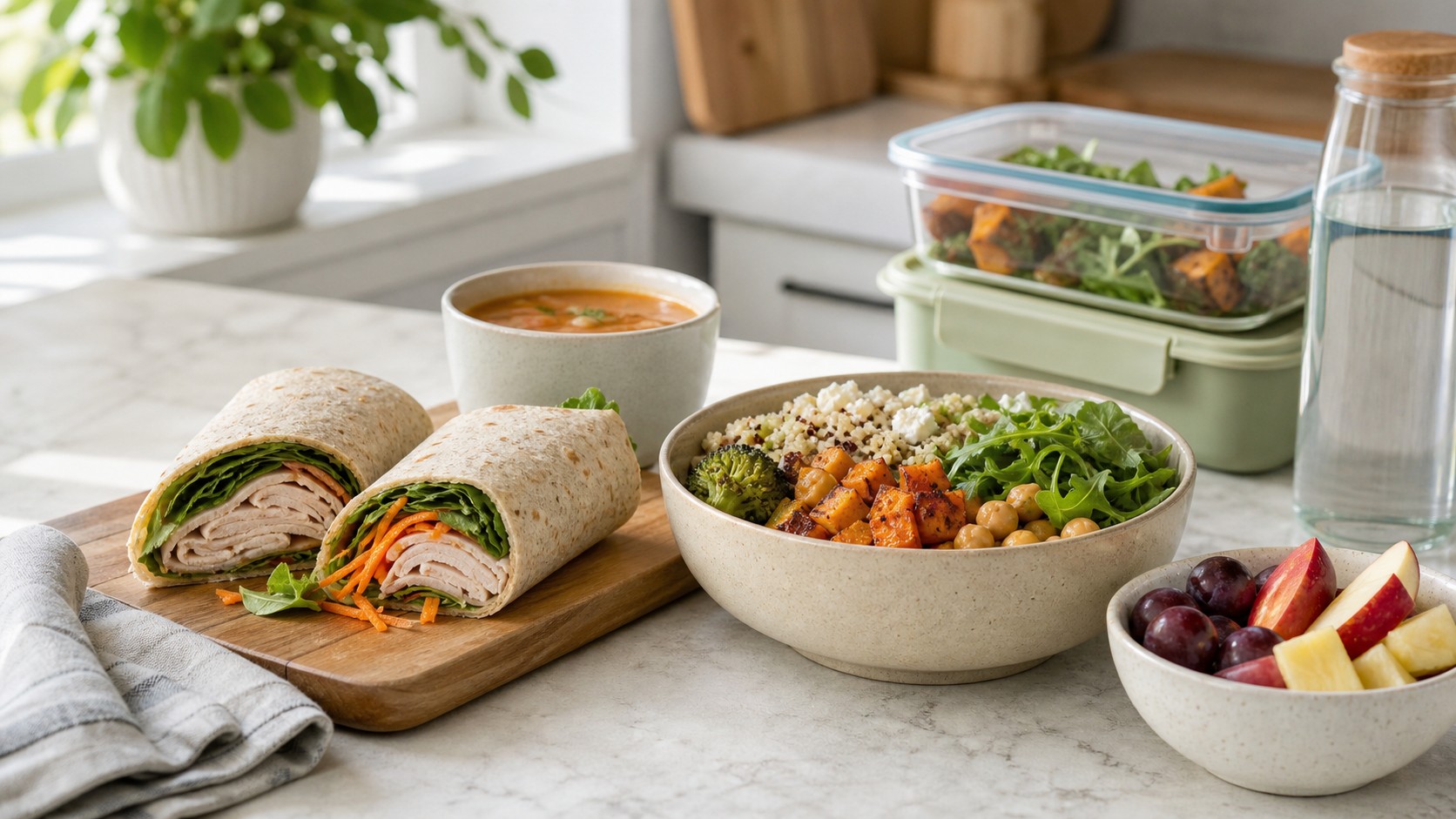
Wraps can be healthy and filling when they include enough structure. Try chicken with greens and hummus, turkey with avocado and cabbage, tofu with rice and peanut sauce, tuna with cucumber and white beans, or eggs with spinach and salsa. Use a sturdy tortilla and avoid watery fillings near the edge.
For extra freshness, pack crunchy vegetables or fruit on the side. A wrap alone may be convenient, but a colorful side makes lunch feel fuller and more complete.
Meal Prep for Energy, Not Monotony
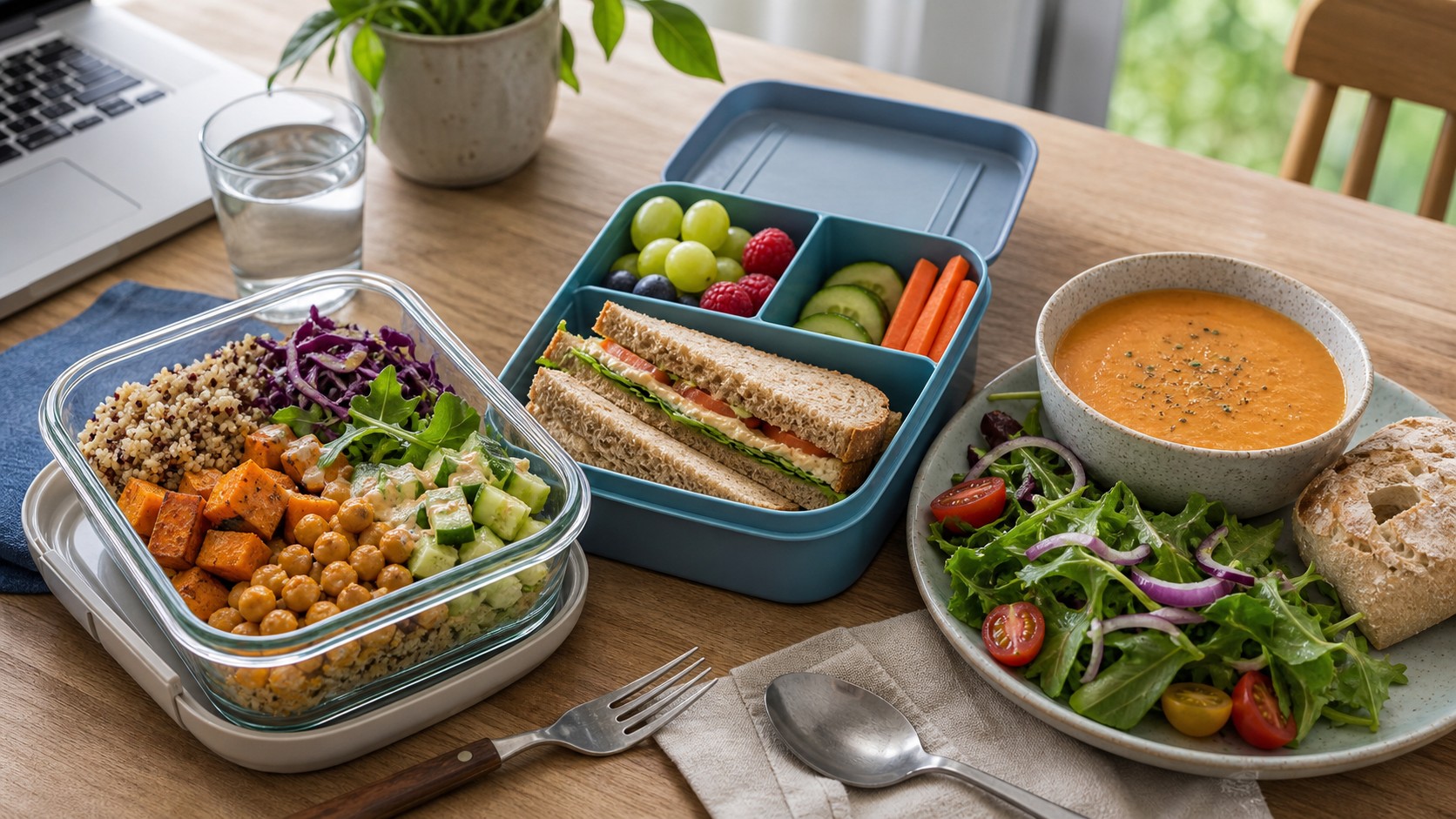
Meal prep does not have to mean five identical containers. Prep components instead: roasted vegetables, cooked grains, beans, chicken, boiled eggs, chopped greens, and two sauces. Then assemble different lunches throughout the week. One tray of roasted vegetables can support a salad, bowl, wrap, soup topping, or toast plate.
Flavor Keeps Healthy Lunch Repeatable
Healthy food becomes sustainable when it tastes specific. Use flavor families: Mediterranean with lemon, herbs, cucumber, chickpeas, and yogurt; Mexican-inspired with beans, rice, salsa, avocado, and lime; Japanese-inspired with rice, edamame, cucumber, sesame, and salmon; or picnic-style with eggs, tuna, greens, fruit, and sharp mustard. Flavor gives the meal direction.
Do not underestimate small finishes. Pickled onions, toasted seeds, herbs, hot sauce, citrus, olives, feta, roasted nuts, pesto, or a spoonful of kimchi can make ordinary ingredients feel fresh.
Plan for the Afternoon You Have
A lunch before a workout, long meeting, school pickup, or physical shift may need more food than a lunch before a quiet afternoon. Pay attention to what happens two or three hours after eating. If you feel foggy, hungry, or sluggish, adjust the balance. More protein, more carbohydrate, more fiber, or more total food may be needed.
Do Not Let Healthy Mean Too Dry
Dry healthy lunches are hard to repeat.
Add moisture through sauce, dressing, avocado, salsa, yogurt, broth, citrus, or juicy vegetables. This is especially important with lean proteins and grains. A chicken rice bowl without sauce can feel punishing; the same bowl with herby yogurt, cucumber, and lemon can feel bright and complete.
Use Snacks as Part of the Lunch Plan
Sometimes lunch alone cannot carry the day, especially if the lunch break is early. Plan a supportive snack instead of waiting for urgent hunger. Fruit with nuts, yogurt, hummus with vegetables, cheese and crackers, roasted chickpeas, or a boiled egg can extend lunch’s energy without turning the afternoon into grazing. This is not a failure of lunch. It is a realistic way to match food to schedule.
Healthy Lunch Can Still Feel Comforting
Energizing food does not have to be cold or austere.
A warm lentil bowl, turkey chili, chicken soup, baked sweet potato with beans, miso rice bowl, or vegetable pasta can be healthy and comforting. Warmth can make lunch feel more satisfying, especially in colder seasons or stressful workdays.
Make Fullness Personal
People stay full from different combinations. Some need more protein. Some need more grains. Some need warm food, more fat, or a larger volume of vegetables. Use recipes as starting points, then adjust based on your own afternoon. A healthy lunch is successful when it supports the person eating it, not when it follows a perfect formula on paper. When lunch leaves you steady, focused, and content, it is doing its job. That is the kind of healthy eating that can last beyond a single week.
Keep Convenience in the Plan
Healthy lunches fall apart when every ingredient requires effort.
Use canned fish, frozen grains, bagged greens, cooked lentils, microwave vegetables, rotisserie chicken, and prepared hummus when they help. Convenience can be part of a nutritious routine.
Review the Meal Afterward
The best feedback comes later in the day. Notice whether you were hungry quickly, sleepy, satisfied, or comfortable. Then change one piece next time. Add beans, reduce heaviness, change the sauce, include fruit, or make the portion larger. This kind of small adjustment turns healthy lunch into a practice instead of a rulebook.
Use Texture to Signal Satisfaction
Texture matters more than many healthy recipes admit.
A bowl of soft grains, soft beans, and soft roasted vegetables can taste nutritious but still feel unfinished. Add crunch with cabbage, cucumbers, toasted seeds, nuts, pita chips, radishes, apples, or roasted chickpeas. Add creaminess with avocado, yogurt, tahini, hummus, or a soft egg. Texture helps the brain register the meal as complete.
Think About Hydration Too
Afternoon fatigue is not always a lunch problem, but lunch can support hydration. Water, sparkling water, herbal tea, broth-based soup, fruit, cucumber, citrus, and juicy vegetables all help. If your lunch is salty, spicy, or high in fiber, a drink matters even more. Keep the drink simple. The point is to help the meal do its work, not add another complicated habit.
Healthy Lunches for Active Days
On active days, a lighter salad may not be enough.
Add rice, potatoes, pasta, bread, beans, or fruit so the meal has usable energy. Pair that carbohydrate with protein and fat so fullness lasts. A chicken sweet potato bowl, turkey avocado sandwich, lentil rice soup, or tofu noodle salad may support the body better than a minimal plate.
Healthy Lunches for Focus Days
When the afternoon is full of meetings, writing, studying, or detailed work, choose lunches that feel steady rather than sleepy. Many people do well with moderate portions, protein, vegetables, and a carbohydrate that is satisfying without being enormous. A salmon bowl, chickpea salad, turkey wrap, bean soup, or yogurt side with fruit can work well. The right amount is personal. The goal is to finish lunch ready to continue, not ready to nap.
Use Color as a Practical Check
Color is not just for photos.
A lunch with greens, orange vegetables, red peppers, purple cabbage, beans, grains, and herbs usually has more variety than a beige lunch assembled in a rush. You do not need every color every day, but a quick color check can reveal whether the meal needs fruit, vegetables, or a brighter topping.
Let Healthy Taste Generous
Healthy lunches are easier to repeat when they feel abundant. Use a large bowl for vegetables, a good sauce, enough protein, and toppings that make the meal pleasurable. Diet culture often makes healthy food feel smaller and more anxious than it needs to be. A lunch that truly satisfies can support goals better than a lunch that only looks restrained.
Make the Sauce Match the Nutrition Goal
Sauce can support the meal instead of simply decorating it.
Yogurt sauce adds protein and coolness. Tahini adds richness and helps vegetables feel more satisfying. Salsa adds brightness with very little effort. Pesto brings herbs and fat that make grains and chicken more appealing. A strong sauce can turn a healthy lunch from correct to craveable.
Use Legumes More Often
Beans, lentils, chickpeas, and edamame are especially useful in healthy lunches because they bring fiber and plant protein at the same time. They also hold well in containers and accept many flavor directions. Chickpeas can lean lemony and Mediterranean, black beans can become a taco bowl, lentils can become soup or salad, and edamame can support noodle bowls. Legumes also make lunch affordable. A healthy routine is easier to keep when it does not depend on expensive specialty ingredients every day.
Give Lean Lunches a Comfort Element
If a lunch is mostly lean protein and vegetables, add one comfort element so it feels complete.
That might be warm rice, roasted potatoes, whole-grain bread, avocado, cheese, olives, or a creamy sauce. Comfort does not cancel health; it often makes the healthy lunch repeatable.
Use Warm and Cold Contrast
A lunch can feel more satisfying when warm and cold elements meet. Warm rice with cool cucumber, soup with crisp toast, roasted sweet potato over fresh greens, or hot beans beside crunchy slaw can make healthy food feel layered. Contrast keeps the meal interesting and helps simple ingredients feel finished.