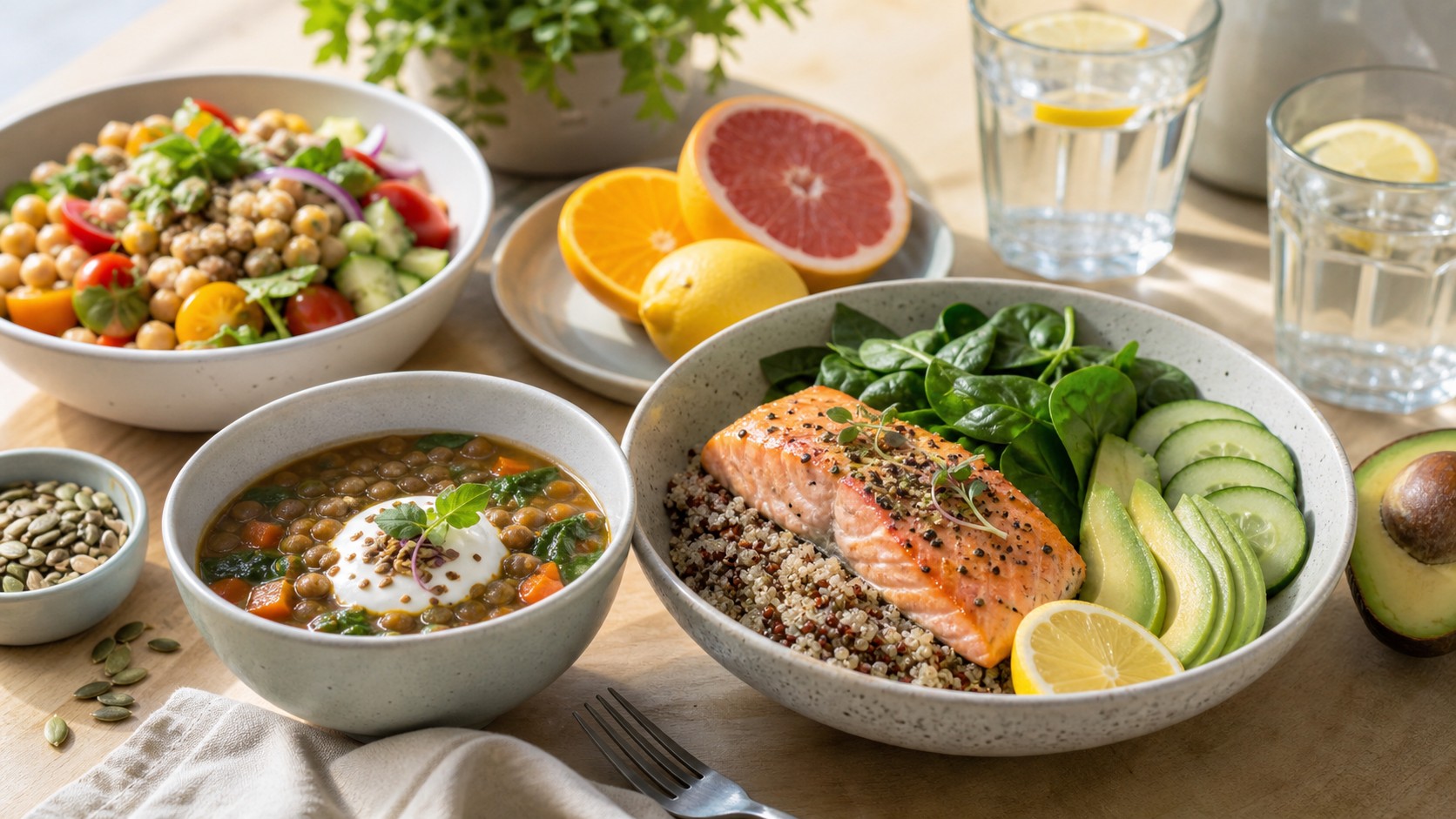
Lunch Changes With Where You Eat It
The best lunch ideas for work, school, and home are not always the same meals in different containers. A work lunch has to survive schedules, shared refrigerators, desks, and reheating limits. A school lunch has to be safe, appealing, and easy to eat quickly. A home lunch can use the kitchen, but it still needs boundaries so lunch does not take over the day. When you match lunch to the setting, the food becomes easier to pack, easier to eat, and much more likely to satisfy.
A: A tidy, filling meal such as a grain bowl, wrap, soup, salad, or leftover container works well.
A: Small familiar pieces, simple wraps, pasta salad, quesadillas, fruit, yogurt, and snack boxes are practical.
A: Use quick meals like egg bowls, soup with toast, tuna melts, chopped salads, or leftovers refreshed with greens.
A: Use leakproof containers and keep sauces separate until eating.
A: Wraps, pasta salads, sandwiches, snack boxes, grain salads, and room-temperature bowls work well.
A: Pack familiar foods, manageable portions, and containers the child can open quickly.
A: Yes, if you change the format for work, school, and home.
A: Proteins, grains, washed produce, sauces, and easy sides make all settings easier.
A: Add a fresh finish such as herbs, citrus, crunch, or a better dressing.
A: Match the food to the setting, timing, storage, and eater.
Start With the Lunch Setting
Before choosing food, ask where lunch will happen. Will there be a refrigerator, microwave, sink, table, quiet break, or only a few rushed minutes? A meal that works beautifully at home may be wrong for a classroom or shared office. A hot soup may be comforting at work if a microwave is easy, but frustrating if the break room is crowded. A crisp salad may feel wonderful at home but wilt in a warm backpack.
The setting should guide the format. Work lunches often need reliable containers. School lunches need simple pieces. Home lunches can use leftovers and quick cooking. This practical first step prevents many lunch disappointments.
Work Lunches Need Predictability
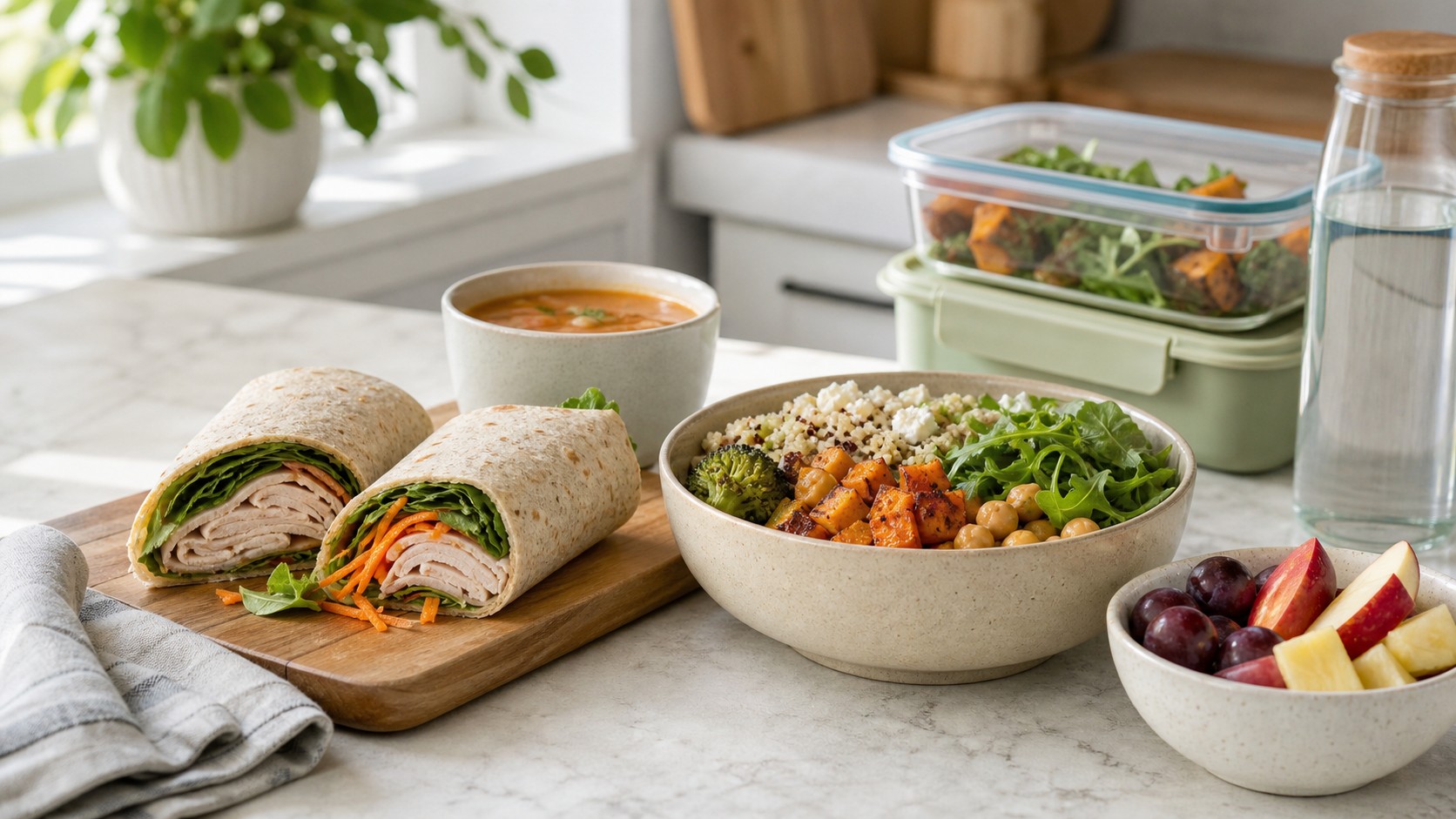
Good work lunches are tidy, filling, and resilient. Grain bowls, pasta salads, sturdy salads, wraps, soup in a thermos, bento-style boxes, and leftovers in microwave-safe containers all work well. If your workday includes meetings, choose food that can wait. If the office has strong food-smell norms, choose milder options or cold lunches.
Desk Lunches Should Be Easy to Eat
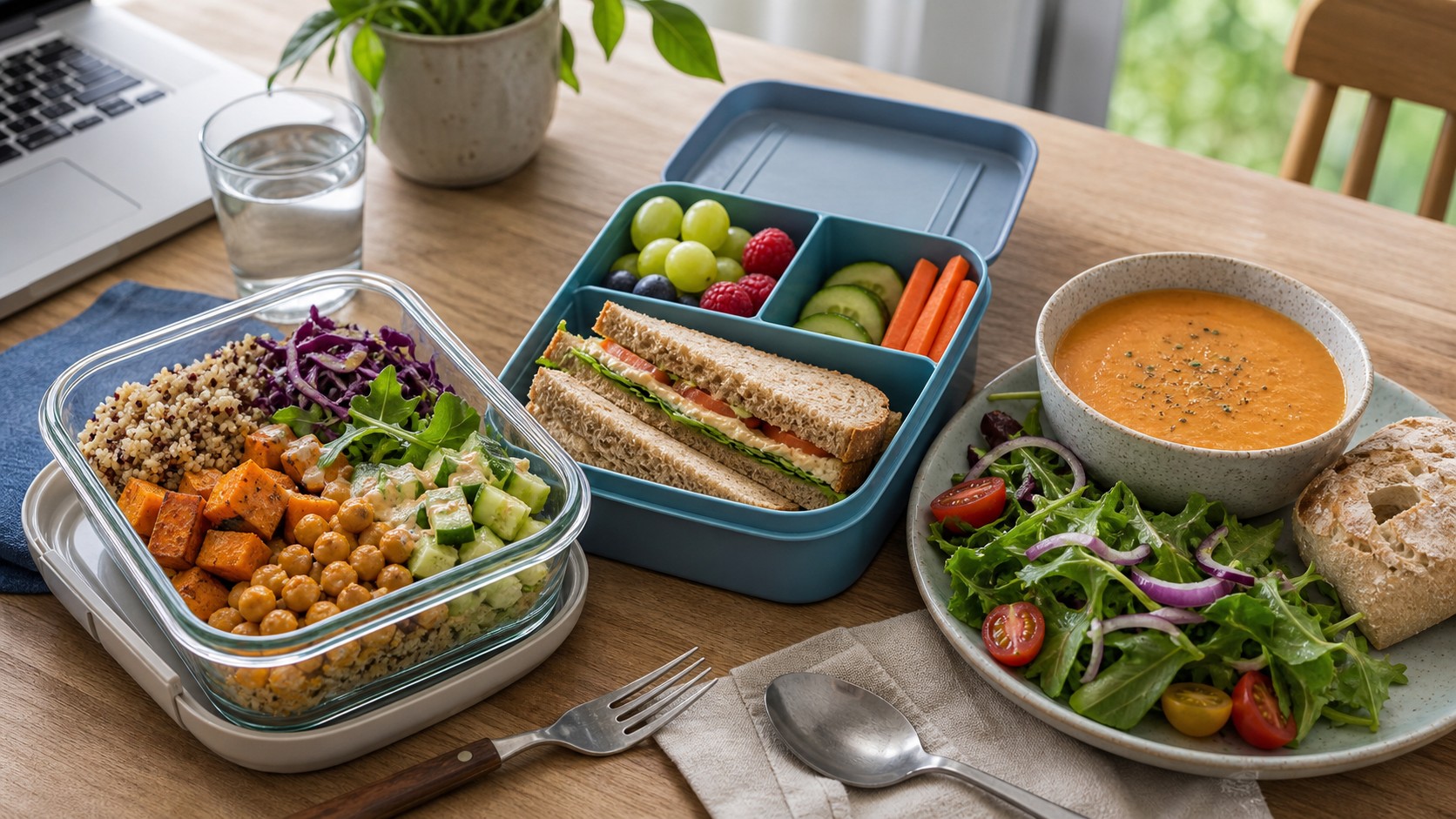
Desk lunches need less drama. One-utensil meals help. So do wraps that do not drip, salads already chopped into bite-size pieces, containers that open cleanly, and sauces packed separately. A desk lunch can be delicious, but it should not require assembly that takes over the workspace.
Pack one small upgrade: lemon, herbs, crunchy seeds, a better dressing, or fruit. That small detail keeps a desk lunch from feeling like a compromise.
School Lunches Need Familiarity and Speed
School lunch is not the place to test a complicated new meal. Children have limited time, distractions, and varying comfort with foods served cold. Familiar formats usually work best: sandwich wedges, wraps, pasta salad, cheese and crackers, fruit, vegetables with dip, yogurt, muffins, boiled eggs, rice balls, quesadilla triangles, or small leftovers that are already accepted at home.
Make School Lunch Easier to Open
Packaging matters. If a child cannot open the container quickly, the food may come home uneaten. Use lunchboxes, lids, thermoses, and snack bags that match the child’s age and patience. Cut food into manageable pieces and avoid sauces that spill across the whole lunchbox.
For younger kids, small portions can be more successful than one large item. A few bites of several familiar foods may get eaten more reliably than an oversized sandwich.
Home Lunch Should Have Boundaries
Lunch at home can be wonderful because the kitchen is available, but it can also sprawl into a full cooking project. Set a realistic boundary. Maybe weekday home lunch must take ten minutes, use leftovers, or require only one pan. Toast plates, egg bowls, quick soups, loaded salads, rice bowls, and simple pasta can all work. Home lunch is a good place to refresh leftovers. Add greens to soup, fry an egg over rice, turn roasted vegetables into toast, or make a salad beside last night’s pasta. The kitchen gives you options, but the meal should still fit the day.
Use Containers as Part of the Plan
The best lunch idea can fail in the wrong container.
Use leakproof containers for sauces and soups, divided containers for snack-style lunches, wide shallow containers for salads, and insulated jars for hot food. Keep the lids matched and easy to find. A lunch system depends on containers more than people admit.
Plan Hot and Cold Separately
Hot lunches need either a microwave or a thermos. Cold lunches need texture and enough satisfaction to feel like a meal. Room-temperature lunches need ingredients that hold safely and pleasantly. Decide the temperature first, then choose the meal. Work might support reheating; school might not; home can do either. When in doubt, choose foods that taste good at more than one temperature. Pasta salad, grain bowls, frittata slices, roasted vegetables, sandwiches, and wraps are forgiving.
Lunch Ideas for Work
For work, try chicken quinoa bowls, turkey avocado wraps, lentil soup with bread, tuna white bean salad, pasta with vegetables and pesto, rice bowls with tofu, chili with toppings, egg salad over greens, or Mediterranean snack boxes.
The strongest work lunches have enough food to last and enough convenience to survive the workday.
Lunch Ideas for School
For school, try mini bagel sandwiches, quesadilla triangles, pasta salad, hummus boxes, yogurt with granola separate, turkey rollups, fruit and cheese, muffin with egg, rice balls, or leftover chicken cut into small pieces. Include one reliable item even when introducing something new. A safe item helps the lunchbox feel familiar.
Lunch Ideas for Home
For home, try a fried egg grain bowl, soup with toast, cottage cheese toast with tomato, leftover taco salad, quick tuna melt, vegetable omelet, beans over rice, avocado toast with chickpeas, warm noodles with vegetables, or a chopped salad with last night’s protein.
Home lunch can be fresher because you can finish it right before eating.
Make Lunch Friendly to Different Appetites
Some lunches need to satisfy an adult through a long workday. Some need to tempt a child during a short school break. Some need to be light enough before errands or filling enough before sports. Adjust portions and sides rather than forcing the same meal to do every job. Add fruit, yogurt, soup, crackers, nuts, or vegetables with dip depending on the appetite.
Use Leftovers Differently by Setting
At work, leftovers need clean reheating and a container that will not leak. At school, leftovers may need to become finger food or be served cold in a familiar format. At home, leftovers can be transformed with a pan, toaster, egg, or fresh greens. The same roasted chicken can become a work bowl, a school wrap, and a home soup topping.
This is the advantage of thinking by setting. You do not need three separate grocery lists; you need three ways to present the same useful ingredients.
Keep Food Safety Practical
Use cold packs for lunches that wait outside a refrigerator. Heat thermoses with hot water before filling them. Keep perishable foods chilled when possible, and avoid packing delicate items for long warm waits. Food safety does not need to be frightening, but it does need to be part of lunch planning.
Let Lunch Be Repeatable
The best lunch systems repeat.
A work bowl every Monday, a school pasta salad every Wednesday, or a home soup-and-toast routine can make the week calmer. Repetition gives lunch structure. Variation can come from sauces, fruit, vegetables, or proteins.
A Better Lunch Is a More Usable Lunch
The best lunch is not the most impressive one. It is the meal that fits the place, the timing, the eater, and the available tools. Work lunch should be steady. School lunch should be approachable. Home lunch should be nourishing without swallowing the day. When lunch matches real life, it stops feeling like a daily problem. It becomes one of the small systems that makes the day easier to move through.
Pack the Extras That Make Eating Possible
Forks, spoons, napkins, cold packs, sauce cups, and wipes can decide whether lunch works.
Keep them near the lunch containers instead of searching every morning. This is especially helpful for school lunches and shared office spaces where the missing utensil can ruin an otherwise good meal.
Use the Weekend to Solve One Friction Point
Do not overhaul every lunch at once. Fix one problem. Maybe containers need matching lids, school snacks need a bin, work lunches need more protein, or home lunches need a list of ten-minute meals. One solved friction point can improve the whole week.
Make Lunch Visible the Night Before
Visibility makes lunch more likely.
Put the work container in front of the refrigerator, set the school lunchbox on the counter, or move home-lunch leftovers into a clear container. The night-before cue reduces morning decision-making. It also reminds everyone in the household that lunch is part of tomorrow, not a surprise discovered at 7:20.
Use Shared Ingredients Three Ways
Shared ingredients keep grocery planning simple while still allowing variety. Cooked chicken can become a work Caesar wrap, a school quesadilla, and a home rice bowl. Beans can become a desk salad, a lunchbox dip, and a quick soup. Fruit can serve as a side for every setting. This approach prevents the week from feeling like three separate lunch operations. One good ingredient can travel through several lives.
Respect the Eater’s Mood
Work lunch may need comfort after a stressful morning.
School lunch may need familiarity more than novelty. Home lunch may need speed because the day is already behind. The best lunch plan leaves room for mood, not just nutrition. A person who actually wants the lunch is more likely to eat it.
Choose Backup Lunches for Each Place
Work needs a shelf-stable backup like tuna packets, soup, crackers, nuts, or microwave rice. School needs acceptable backups such as fruit cups, snack bars, shelf-stable milk, or crackers. Home needs freezer soup, bread, eggs, or canned beans. Backup lunches are not the main plan; they are the safety net for days when the main plan disappears. Keeping backups in the right place matters. A pantry lunch at home does not help much if the forgotten lunch is sitting in an office refrigerator across town.
Let Containers Teach the Menu
If a lunchbox has small compartments, choose small foods.
If a thermos is reliable, use soup or warm rice. If the work container is wide and shallow, make salads or bowls. Instead of fighting the gear you own, let it guide the lunch. Practical lunch planning often begins with the container in your hand.
Review What Comes Back
Uneaten food is information. If school vegetables always return, try a different cut, dip, or portion. If work salads come home soggy, change the dressing method. If home lunch keeps turning into takeout, stock faster defaults. A lunch plan improves when you read the evidence without guilt.
Use Timing to Choose the Side
The side dish should match the time between lunch and the next real meal.
A short afternoon may only need fruit or vegetables. A long school day may need yogurt, cheese, crackers, or a muffin. A workday with errands after five may need nuts, soup, or an extra grain portion. Sides are not afterthoughts; they are how lunch stretches to fit the day.
Keep Home Lunch From Becoming Constant Snacking
Home lunch can blur when the kitchen is always nearby. Give it a real plate and a real stopping point. Sit down for ten minutes if possible. This helps lunch feel like a meal rather than a series of bites grabbed between tasks. A clear home lunch can reduce afternoon grazing because the body recognizes that it was fed.