What Is Middle Eastern Cuisine? A Complete Guide to Flavors and Traditions
Middle Eastern cuisine is one of the oldest, most diverse, and most influential culinary traditions in the world. Rooted in thousands of years of history, shaped by ancient trade routes, and enriched through countless cultural exchanges, it offers a remarkable blend of flavors, ingredients, and cooking techniques that continue to inspire chefs and food lovers across the globe. From the aromatic spice markets of Morocco and the bustling food stalls of Lebanon to the family kitchens of Jordan, Turkey, Iran, and the Gulf states, Middle Eastern food is far more than a collection of recipes. It is a reflection of hospitality, community, tradition, and cultural identity. Meals are often shared among family and friends, transforming dining into an experience that celebrates connection and generosity. Today, Middle Eastern cuisine enjoys growing popularity worldwide. Dishes such as hummus, falafel, shawarma, and kebabs have become household names, while countless other traditional specialties continue to gain international recognition. Yet to truly appreciate Middle Eastern cuisine, it is important to understand the rich history, regional diversity, and culinary traditions that define it. This complete guide explores what Middle Eastern cuisine is, the ingredients that shape its distinctive flavors, and the traditions that have made it one of the world’s most celebrated food cultures.
A: It is a diverse group of food traditions from the Levant, Arabian Peninsula, Persia, Anatolia, Egypt, and nearby regions, shaped by history, trade, religion, and hospitality.
A: Common flavors include lemon, garlic, olive oil, tahini, yogurt, fresh herbs, warm spices, smoky grilled meats, nuts, dates, and sweet-tart pomegranate.
A: Chickpeas, lentils, rice, bulgur, flatbread, olive oil, tahini, yogurt, lamb, chicken, eggplant, herbs, spices, dates, and nuts are key staples.
A: Mezze reflects hospitality and sharing, offering small plates like hummus, baba ghanoush, tabbouleh, labneh, olives, pickles, and bread.
A: Hummus, tabbouleh, fattoush, lentil soup, shawarma-style chicken, rice pilaf, roasted eggplant dip, and yogurt sauces are approachable.
A: Falafel, hummus, baba ghanoush, mujadara, tabbouleh, fattoush, labneh, stuffed vegetables, and lentil soup are excellent choices.
A: Baklava, knafeh, basbousa, ma’amoul, halva, qatayef, rice pudding, date cookies, and syrup-soaked pastries are classics.
A: Hummus is chickpea-based, baba ghanoush is roasted eggplant-based, and muhammara is a red pepper and walnut dip.
A: Use fresh herbs, good olive oil, real tahini, lemon, garlic, toasted spices, yogurt sauces, traditional spice blends, and warm bread.
A: Start with mezze, learn key staples like chickpeas and flatbread, then try regional rice dishes, grilled meats, stews, and desserts.
Defining Middle Eastern Cuisine
Middle Eastern cuisine encompasses the culinary traditions of a vast geographic region that includes countries such as Lebanon, Syria, Jordan, Israel, Palestine, Turkey, Iran, Iraq, Saudi Arabia, the United Arab Emirates, Qatar, Oman, Bahrain, Kuwait, Yemen, and Egypt. Although each nation has developed its own distinctive food culture, many ingredients, techniques, and traditions are shared across the region.
The cuisine is known for its balance of flavors. Rather than relying heavily on heat, Middle Eastern cooking often emphasizes aromatic spices, fresh herbs, citrus, nuts, grains, and carefully prepared meats. Meals frequently combine savory, sweet, tangy, and earthy elements to create dishes that are layered and complex without being overwhelming.
What unites these diverse culinary traditions is a deep respect for ingredients, hospitality, and communal dining.
The Ancient Origins of Middle Eastern Food
The Middle East is often referred to as the cradle of civilization, and its culinary history stretches back thousands of years. Ancient Mesopotamia, located between the Tigris and Euphrates rivers, was one of the earliest centers of agriculture. Wheat, barley, lentils, chickpeas, dates, and numerous herbs were cultivated there long before similar agricultural systems developed elsewhere.
Ancient Egyptians, Persians, Phoenicians, and other civilizations contributed significantly to the region’s food culture. Trade routes connecting Asia, Europe, and Africa brought spices, fruits, nuts, and cooking techniques from distant lands, enriching local cuisines over centuries.
Because the Middle East occupied such a strategic geographic position, it became a culinary crossroads where ingredients and ideas from different cultures blended together. This constant exchange helped create the rich and varied food traditions that continue to thrive today.
The Importance of Hospitality in Middle Eastern Culture
One of the defining characteristics of Middle Eastern cuisine is its close connection to hospitality. Throughout the region, welcoming guests with food is considered both a social responsibility and a cultural honor.
Meals are often generous in size and designed for sharing. Hosts frequently prepare more food than necessary to ensure guests feel comfortable and valued. Refusing food can even be interpreted as impolite in certain cultural contexts because meals symbolize friendship, generosity, and mutual respect.
This tradition has shaped the cuisine itself. Many dishes are intended to be enjoyed communally, encouraging conversation and strengthening social bonds around the table.
The emphasis on hospitality remains one of the most cherished aspects of Middle Eastern food culture.
Essential Ingredients in Middle Eastern Cuisine
Several ingredients form the foundation of Middle Eastern cooking and appear repeatedly throughout the region.
Olive oil serves as one of the most important cooking fats and flavoring agents. Its rich, fruity character enhances everything from salads and dips to roasted vegetables and grilled meats.
Chickpeas and lentils are staple legumes that provide protein and texture in countless dishes. They play central roles in foods such as hummus, falafel, soups, and stews.
Fresh herbs are used generously. Parsley, mint, cilantro, dill, and other herbs contribute brightness and freshness to many recipes.
Rice, bulgur wheat, and flatbreads provide the foundation for numerous meals. These grains are often paired with meats, vegetables, and legumes to create balanced dishes.
Nuts such as pistachios, almonds, and walnuts add texture and richness, particularly in desserts and rice dishes.
Together, these ingredients create the distinctive flavor profiles associated with Middle Eastern cuisine.
The Role of Spices and Aromatics
Middle Eastern cuisine is famous for its aromatic spice blends. While many people associate the region with spicy food, the emphasis is generally on fragrance and complexity rather than intense heat.
Cumin, coriander, cinnamon, cardamom, allspice, turmeric, saffron, and sumac are among the most commonly used spices. These ingredients add depth and character to both savory and sweet dishes.
Za’atar, one of the region’s most beloved spice blends, typically combines thyme, sesame seeds, and sumac. It is often sprinkled over bread, vegetables, or dips.
Baharat, another popular seasoning blend, varies by region but commonly includes black pepper, cinnamon, cloves, cumin, and paprika.
These spices help create the layered flavors that make Middle Eastern cuisine so distinctive and memorable.
Bread: The Foundation of Many Meals
Bread occupies a central place in Middle Eastern dining. Freshly baked flatbreads accompany nearly every meal and often serve as both food and utensil.
Pita bread is perhaps the most internationally recognized variety. Its characteristic pocket makes it ideal for sandwiches, dipping, and scooping up spreads.
Other popular breads include lavash, markook, khubz, and numerous regional variations. These breads are often baked in traditional ovens and enjoyed fresh from the heat.
The importance of bread extends beyond nutrition. Sharing bread symbolizes hospitality, friendship, and community throughout much of the Middle East.
Mezze: The Art of Shared Dining
One of the most distinctive features of Middle Eastern cuisine is the tradition of mezze. Similar to tapas or antipasti, mezze consists of a collection of small dishes served together before the main meal.
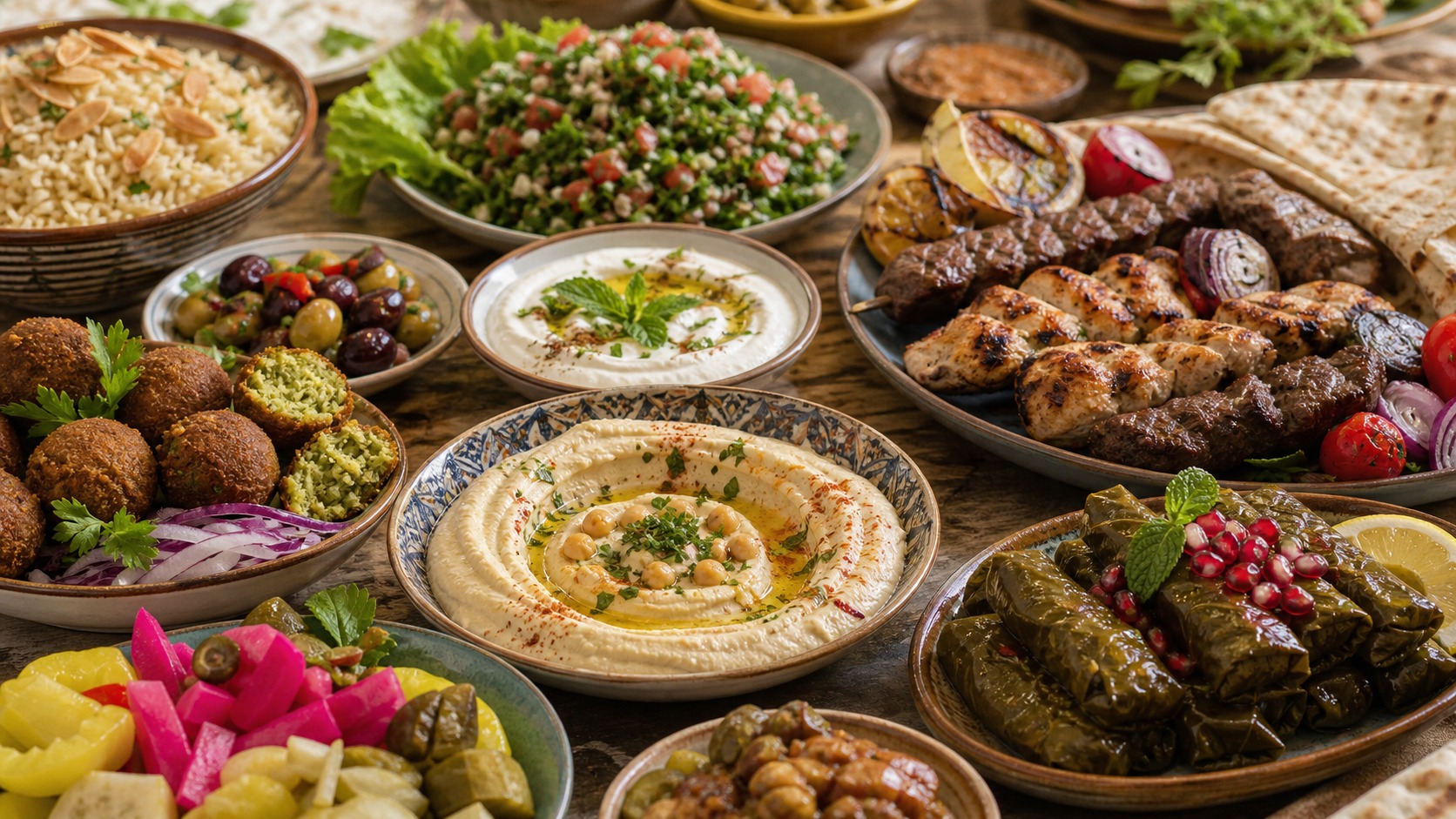
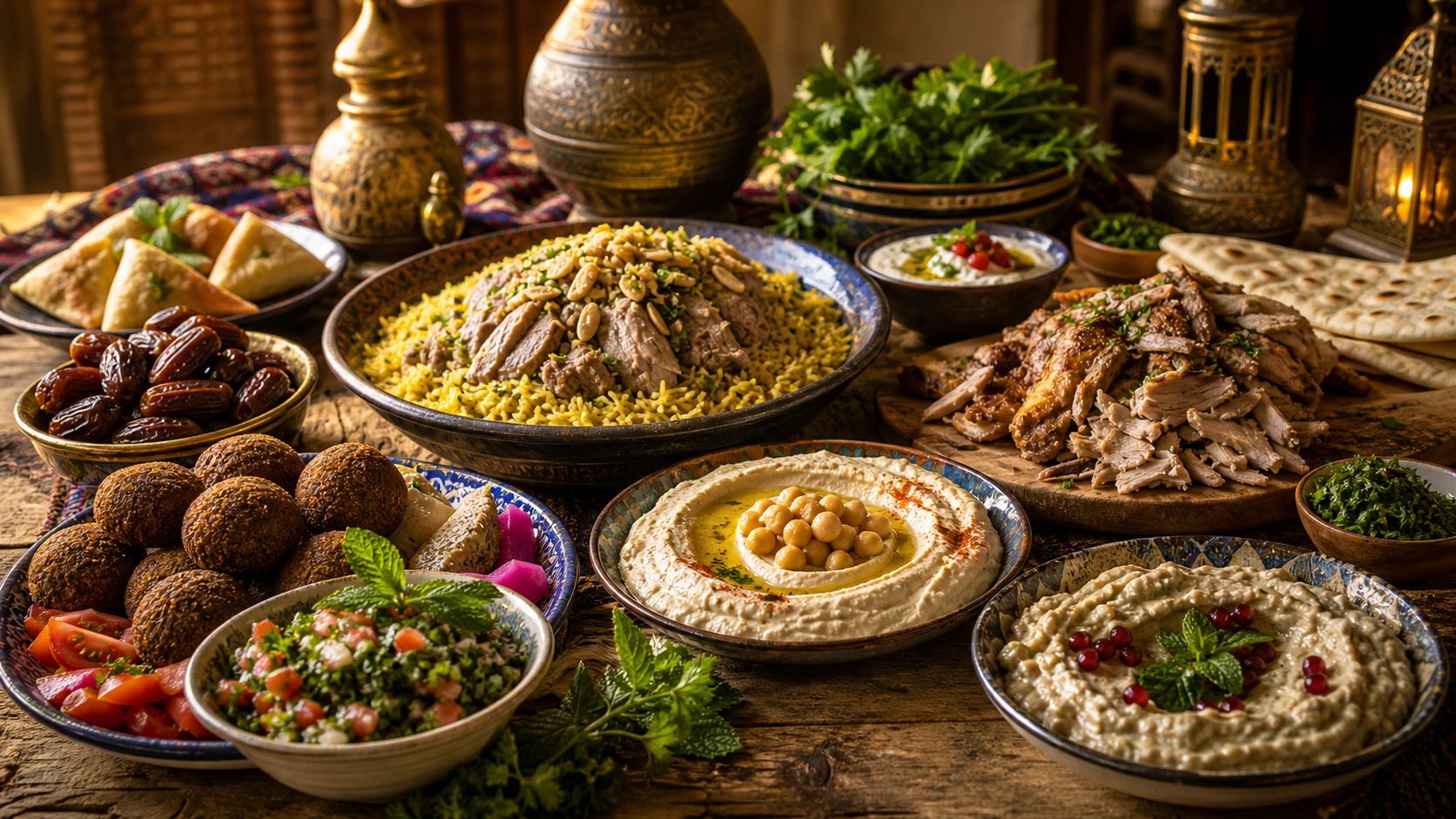
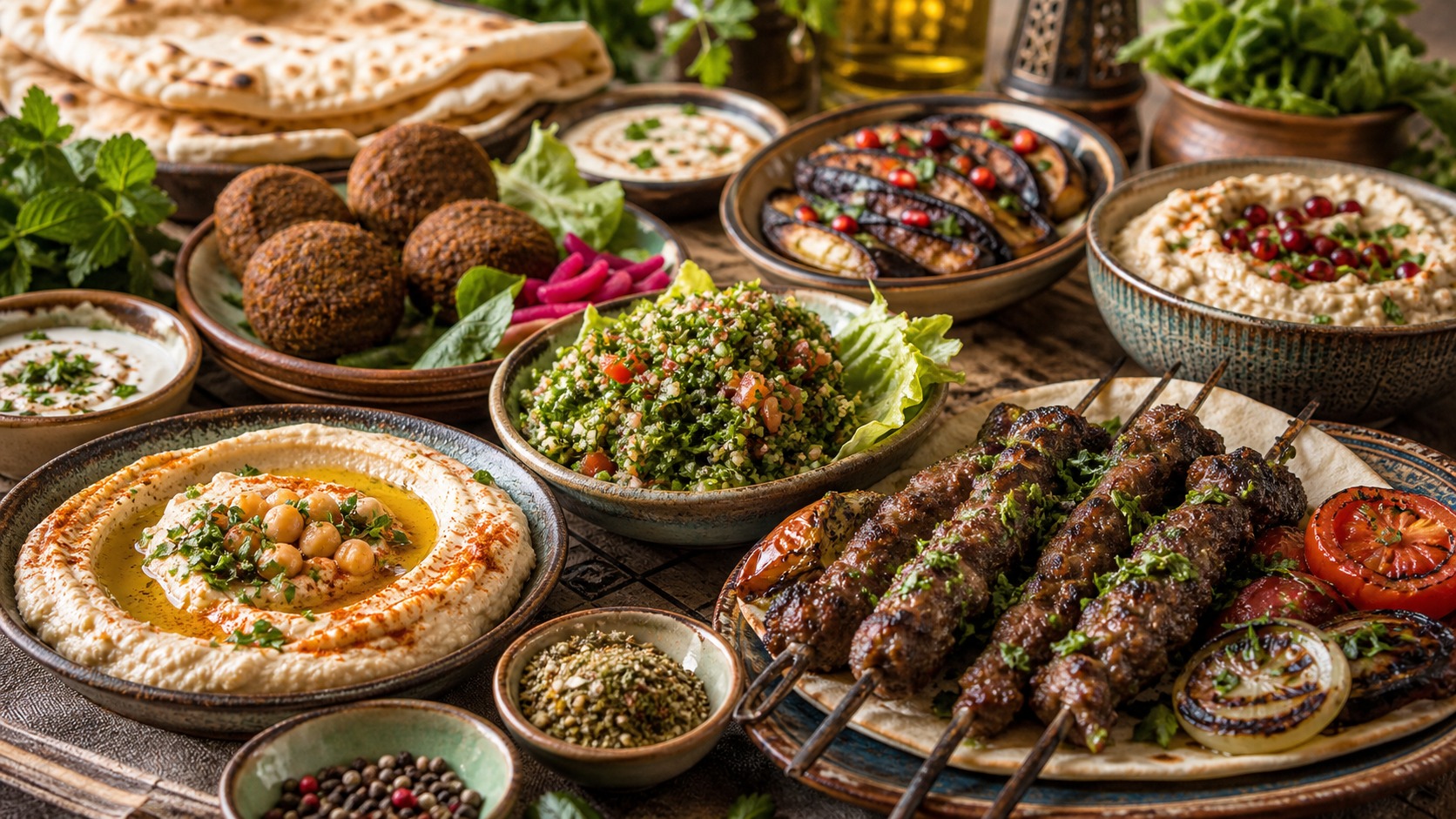
A typical mezze spread may include hummus, baba ganoush, tabbouleh, stuffed grape leaves, olives, cheeses, pickles, and fresh bread. The variety encourages sharing and conversation while allowing diners to experience multiple flavors and textures.
Mezze reflects the communal spirit of Middle Eastern dining. Meals are often leisurely affairs designed to be enjoyed with family and friends rather than rushed through.
This approach to eating emphasizes connection and hospitality as much as the food itself.
Iconic Middle Eastern Dishes
Several dishes have become global ambassadors for Middle Eastern cuisine.
Hummus remains one of the most recognizable examples. Made from chickpeas, tahini, lemon juice, garlic, and olive oil, it demonstrates the region’s ability to transform simple ingredients into something extraordinary.
Falafel provides a crispy and flavorful vegetarian option made from chickpeas or fava beans blended with herbs and spices.
Shawarma showcases expertly seasoned meat cooked on a vertical rotisserie and served in bread with vegetables and sauces.
Kebabs highlight the region’s mastery of grilling techniques, while tabbouleh offers a refreshing contrast through its emphasis on fresh herbs and vegetables.
Each of these dishes represents a different aspect of Middle Eastern culinary tradition while sharing common values of flavor, quality, and hospitality.
Regional Diversity Across the Middle East
Although Middle Eastern cuisines share many similarities, significant regional differences exist.
Levantine cuisine, found in countries such as Lebanon, Syria, Jordan, and Palestine, emphasizes fresh vegetables, olive oil, herbs, and mezze-style dining.
Turkish cuisine reflects influences from the Ottoman Empire and is known for kebabs, pastries, rice dishes, and elaborate desserts.
Persian cuisine places a strong emphasis on rice, herbs, fruits, nuts, and slow-cooked stews. Saffron plays a particularly important role in Iranian cooking.
Gulf cuisines incorporate seafood, dates, rice, and aromatic spices, reflecting both coastal geography and historic trade connections.
Egyptian food often highlights legumes, bread, and hearty comfort dishes such as ful medames and koshari.
This diversity ensures that Middle Eastern cuisine remains endlessly fascinating and varied.
Meat, Seafood, and Protein Traditions
While plant-based foods play a significant role in Middle Eastern cooking, meat also occupies an important place in many traditional meals.
Lamb is perhaps the most iconic meat, appearing in kebabs, stews, rice dishes, and celebratory feasts. Chicken is widely consumed due to its versatility and accessibility.
Beef is also popular in many regions, particularly in grilled preparations and hearty stews. Coastal areas incorporate seafood extensively, showcasing fresh fish, shrimp, and other marine ingredients.
Legumes provide additional sources of protein and remain central to everyday cooking throughout the region.
This balance between animal and plant-based proteins contributes to the cuisine’s broad appeal.
Traditional Middle Eastern Desserts
Middle Eastern desserts are renowned for their richness, elegance, and use of nuts, honey, and fragrant flavorings.
Baklava remains one of the region’s most famous sweets. Layers of delicate pastry filled with nuts and sweet syrup create a dessert that is both indulgent and sophisticated.
Kunafa combines shredded pastry with cheese and syrup, offering a unique contrast of textures and flavors.
Dates play an important role in many desserts, reflecting their significance throughout the region’s history. Rose water and orange blossom water add floral notes that distinguish many Middle Eastern sweets from their Western counterparts.
These desserts demonstrate the region’s mastery of pastry-making and flavor balance.
Food and Religious Traditions
Religion has played a significant role in shaping Middle Eastern cuisine. Islamic dietary guidelines influence food preparation and ingredient choices across much of the region.
Ramadan, the Islamic month of fasting, is particularly important from a culinary perspective. Families gather each evening to break their fast with carefully prepared meals that often feature traditional dishes passed down through generations.
Christian and Jewish communities throughout the Middle East have also developed unique culinary traditions tied to religious holidays and celebrations.
These connections between food and faith continue to shape culinary practices today.
Why Middle Eastern Cuisine Is Growing in Popularity
The global rise of Middle Eastern cuisine can be attributed to several factors. Modern diners increasingly appreciate fresh ingredients, plant-based options, and bold yet balanced flavors.
Many traditional Middle Eastern foods align naturally with contemporary wellness trends. Dishes rich in vegetables, legumes, olive oil, and whole grains appeal to health-conscious consumers without sacrificing flavor.
At the same time, the cuisine offers remarkable cultural depth and authenticity. Diners are drawn not only to the food itself but also to the stories, traditions, and history behind it.
This combination of flavor, nutrition, and cultural richness continues to drive growing interest worldwide.
The Future of Middle Eastern Cuisine
As Middle Eastern cuisine gains international recognition, chefs are finding innovative ways to honor traditional recipes while introducing modern techniques and presentations.
Contemporary restaurants blend heritage ingredients with creative approaches, attracting new audiences while preserving cultural traditions. Meanwhile, home cooks continue passing down cherished family recipes, ensuring that culinary knowledge survives for future generations.
This balance between tradition and innovation positions Middle Eastern cuisine for continued growth and influence on the global culinary stage.
Final Thoughts
Middle Eastern cuisine is far more than a collection of recipes. It is a living reflection of thousands of years of history, culture, trade, hospitality, and community. From the creamy simplicity of hummus and the vibrant freshness of tabbouleh to the rich flavors of kebabs and the sweetness of baklava, every dish tells a story that connects past and present.
Understanding what Middle Eastern cuisine is means appreciating the values that define it: generosity, family, tradition, and a deep respect for quality ingredients. These principles have allowed the cuisine to endure for centuries while continuing to evolve and inspire.
Whether you are sampling Middle Eastern food for the first time or deepening your appreciation for familiar favorites, exploring this remarkable culinary tradition offers a journey through one of the world’s richest food cultures. Every meal provides an opportunity to experience the flavors, stories, and traditions that have made Middle Eastern cuisine a treasured part of global gastronomy.