Nuts and Seeds Support Health by Improving Everyday Meals
The health benefits of nuts and seeds are best understood through the meals they improve. They bring unsaturated fats, fiber, plant protein, minerals, and satisfying texture to foods people already eat: oatmeal, yogurt, salads, soups, vegetables, grain bowls, snacks, sauces, and baked goods. They can support heart-friendly eating patterns, help meals feel more filling, add useful nutrients, and make whole foods more enjoyable. Their value comes from consistent, sensible use rather than oversized portions or superfood claims.
A: They provide unsaturated fats, fiber, plant protein, minerals, and satisfying texture.
A: They can, especially when added intentionally to meals or snacks.
A: Chia, flax, pumpkin, sunflower, and several other seeds can contribute fiber.
A: Walnuts are often valued because they contain plant-based omega-3 fats.
A: They can be a better option when portions are sensible and coatings are limited.
A: They can still fit, but sodium matters for some people and meals.
A: Ground flax is easier to use and may be more accessible nutritionally than whole flax.
A: Yes, their oils can turn rancid if stored too long or too warmly.
A: Sometimes, but seed allergies exist too, so individual safety comes first.
A: Use fresh nuts and seeds consistently in balanced meals you enjoy.
They Bring Heart-Friendly Fats
Many nuts and seeds contain mostly unsaturated fats, which are often associated with heart-supportive eating patterns when they replace less helpful fats in the overall diet. Walnuts, almonds, pistachios, peanuts, sunflower seeds, pumpkin seeds, sesame seeds, flax, chia, and hemp all bring different fat profiles. Walnuts, chia, and flax are especially known for plant-based omega-3 fats. Olive oil often gets the spotlight, but nuts and seeds can bring similar richness to solid foods.
The benefit depends on how they are used. Adding walnuts to oatmeal is different from adding candy-coated nuts to dessert and calling it health food. Replacing a less satisfying snack with nuts and fruit is different from eating nuts mindlessly on top of the usual snack. Nuts and seeds are nutrient-dense, so the goal is not unlimited portions. The goal is to use their fats to make better meals more satisfying.
Fat also carries flavor. A salad with toasted seeds, a bowl of beans with tahini dressing, or oatmeal with walnuts can feel complete without relying on heavy amounts of cheese, cream, or fried toppings. That is where health benefits and cooking benefits meet. Food that tastes satisfying is easier to repeat.
Heart-friendly eating patterns are often built through swaps rather than additions piled on top of everything else. Nuts and seeds can take the place of some refined snack foods, add richness where a meal might otherwise need a heavier topping, or make plant-forward dishes feel more satisfying. The benefit is not that every meal needs them. The benefit is that they give cooks another way to make nourishing food taste generous.
They can also make gradual changes feel less abrupt. Someone trying to eat more vegetables may enjoy them more with tahini dressing or toasted almonds. Someone moving toward more whole grains may find oatmeal or farro more satisfying with walnuts. Someone reducing ultra-processed snacks may appreciate nuts with fruit because the snack still feels substantial. These small shifts are where benefits become part of a real routine.
That is why the benefits are easiest to see at the meal level. Nuts and seeds rarely work alone; they work with fruit, grains, vegetables, yogurt, legumes, soups, and sauces. They make the healthy choice feel more complete, which is often what keeps a person coming back to it.
They Add Fiber, Texture, and Fullness
Fiber is one reason nuts and seeds can make meals feel more filling. Fiber adds structure to the meal, slows down eating, and works with fat and protein to create staying power. Chia, flax, almonds, pistachios, pumpkin seeds, sunflower seeds, and many other options can help a meal feel less thin. Texture matters too. Crunchy or chewy foods make eating more engaging than soft foods alone.
That texture can change eating speed in a useful way. Crunchy toppings encourage chewing, and chewing gives the meal more presence. A soft breakfast with no contrast can disappear quickly, while the same bowl with almonds, seeds, or walnuts feels more deliberate. This is not a trick; it is one reason satisfying meals often include more than one texture.
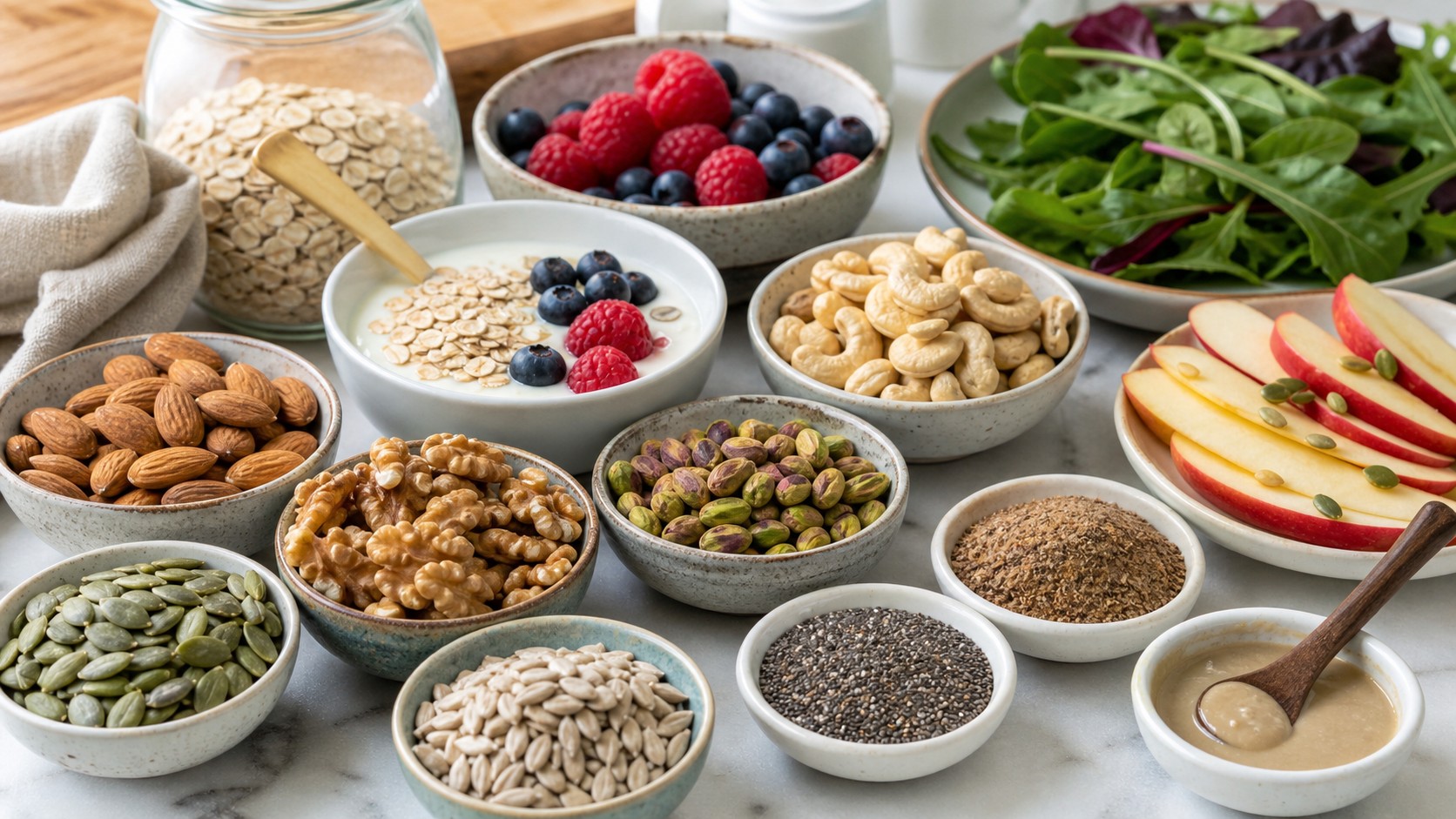
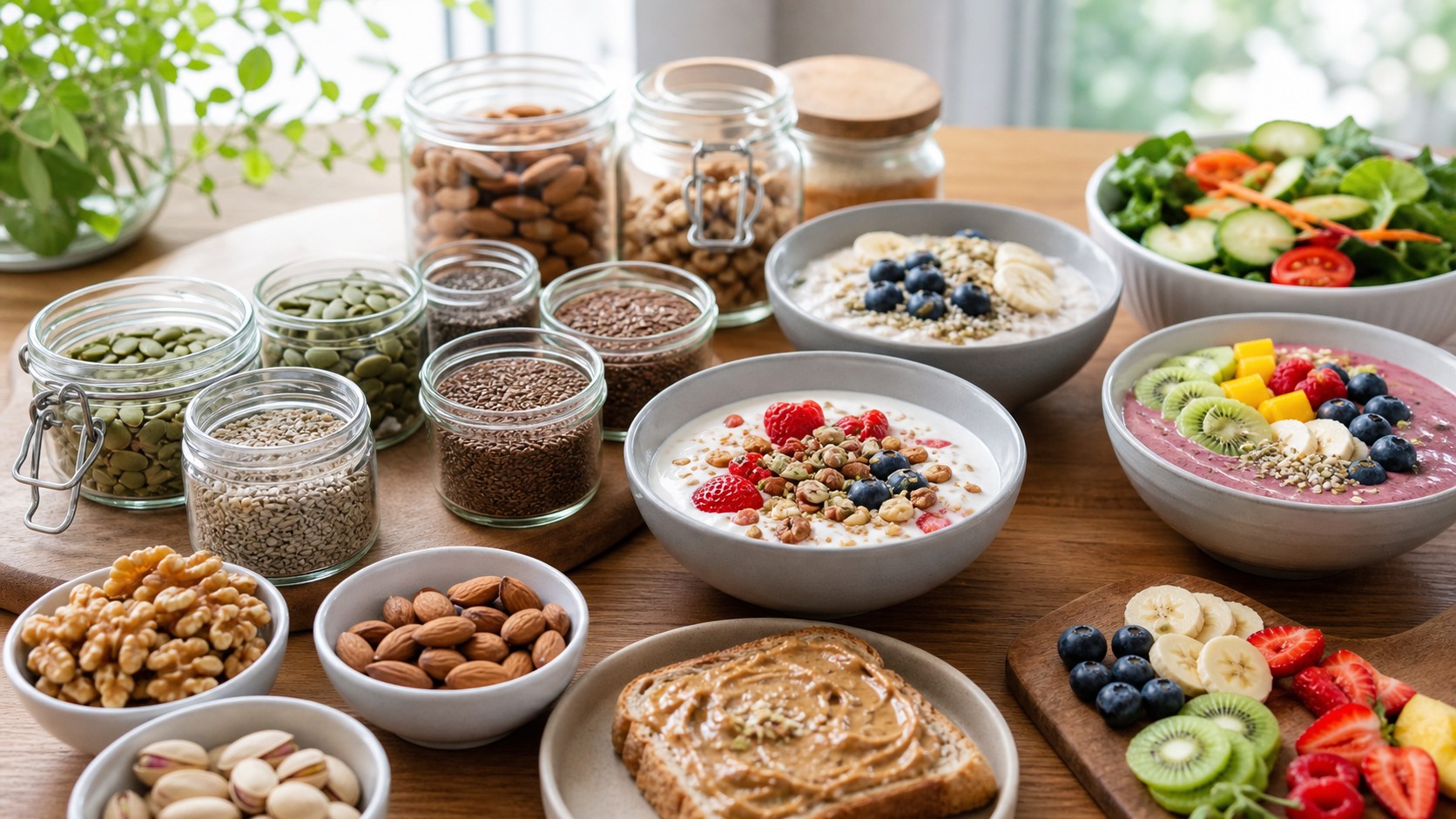
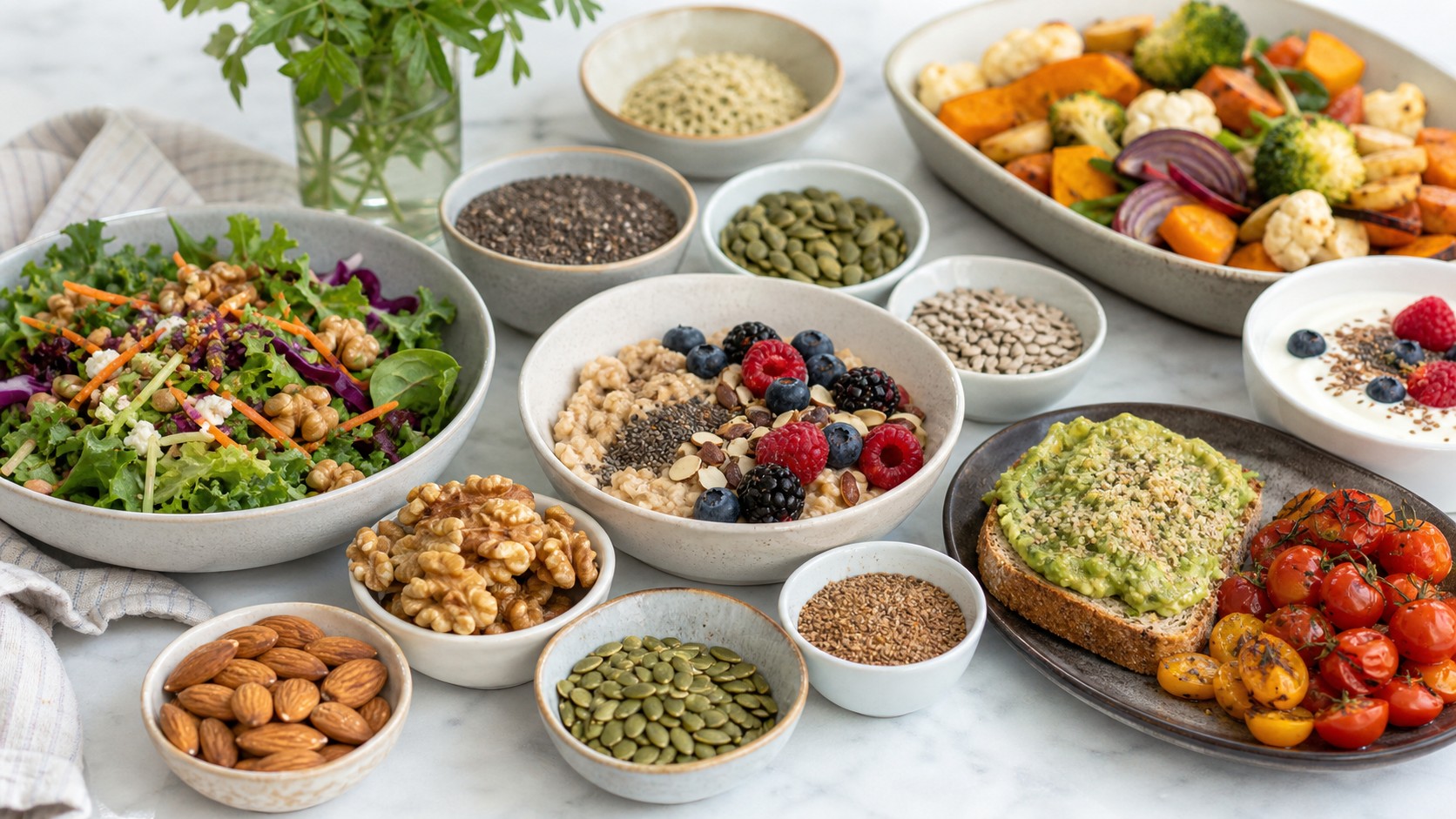
Think about a bowl of yogurt. Plain yogurt with fruit may be refreshing, but yogurt with chia, hemp seeds, or almonds has more body. Oatmeal with walnuts feels more substantial than oatmeal without toppings. A salad with pumpkin seeds has a better chance of feeling like lunch. Nuts and seeds help healthy meals compete with more processed textures that people often crave.
Fullness is personal, so pay attention to your own meals. Some people do well with nuts as snacks. Others prefer them as toppings because the meal gives the portion more structure. Seeds may be easier for people who want smaller amounts spread through the day. The health benefit is strongest when the serving helps you feel satisfied without pushing the meal beyond what you need.
They Provide Minerals and Plant Compounds
Nuts and seeds can contribute minerals such as magnesium, zinc, selenium, copper, manganese, phosphorus, and iron, though amounts vary by type. Pumpkin seeds are often valued for minerals. Almonds bring vitamin E. Brazil nuts are known for selenium, though they are so concentrated that portions should stay modest. Sesame seeds and tahini can contribute minerals and rich flavor. Sunflower seeds can be a practical everyday option.
They also contain plant compounds that contribute to color, flavor, and antioxidant activity. This does not mean every nut or seed needs a health halo. It means variety is useful. Walnuts, almonds, pumpkin seeds, sesame, flax, chia, hemp, pistachios, and sunflower seeds each bring something different. A varied pattern is more resilient than relying on one ingredient to do all the work.
Preparation affects usefulness. Grinding flax can make it easier to use. Toasting sesame seeds can increase aroma and make them more appealing. Soaking cashews can help them blend into sauces. Chia needs liquid and time when used for puddings or thickened breakfasts. Health benefits are easier to access when the ingredient is prepared in a way you actually enjoy eating.
Minerals also come with flavor context. Pumpkin seeds can taste earthy and savory, so they fit soups and salads. Almonds can feel clean and sweet, which makes them easy at breakfast. Sesame becomes more expressive when toasted or turned into tahini. Hemp seeds are mild enough for people who do not want a hard crunch. Nutrients matter, but the ingredient has to make sense in the meal before it becomes a habit.
Variety keeps the nutrient picture broader. Eating the same nut every day is not automatically wrong, but rotating walnuts, almonds, pumpkin seeds, sesame, chia, flax, hemp, or sunflower seeds gives meals different textures and nutrient profiles. It also protects against boredom. A varied pattern is easier to maintain because it feels like cooking, not repetition.
Preparation can be simple. Keep ground flax for stirring, chia for soaking, sesame for finishing, pumpkin seeds for crunch, and walnuts or almonds for chewing. Each form has a different job, so variety does not require complicated recipes. It only requires a few ingredients that know where they belong.
They Can Improve Meal Quality
One of the most practical benefits of nuts and seeds is that they make better meals easier. If toasted almonds make green beans more appealing, you may eat more vegetables. If tahini dressing makes grain bowls satisfying, you may rely less on takeout. If chia pudding helps breakfast happen, the habit matters. If peanuts and sesame make noodles taste complete, a simple meal becomes more enjoyable.
Nuts and seeds can also replace less useful add-ons. Toasted pumpkin seeds can stand in for croutons. Walnuts can add richness to a salad without needing a large amount of creamy dressing. Nut butter can make a smoothie more filling. Cashews can thicken sauces without heavy cream where that flavor fits. These substitutions are not strict rules; they are options that can improve the overall meal.
Meal quality includes pleasure. Healthy food that feels dry, bland, or joyless is harder to maintain. Nuts and seeds bring crunch, aroma, and richness to foods that might otherwise feel plain. That sensory benefit is part of why they are useful. A healthy pattern must be edible enough to repeat on ordinary days.
They also make simple meals feel assembled. A bowl of soup, a salad, or oatmeal can look and taste more complete with one thoughtful topping. That feeling matters because people are more likely to repeat meals that seem finished.
Portion Size Still Matters
Because nuts and seeds are dense, portions deserve attention. A small handful of nuts, a spoonful of nut butter, or a tablespoon or two of seeds can make a real difference in a meal. More is not always better. If nuts are eaten from a large bag while distracted, the portion can grow quickly. If seeds are sprinkled intentionally on yogurt or salad, they are easier to keep in balance.
Salt, sugar, and coatings matter too. Salted nuts can be helpful when they make a salad or snack more enjoyable, but heavy salt can be an issue for some diets. Candied nuts, chocolate-covered nuts, and sweet clusters can be delicious, but they belong in a different category from plain daily staples. Read ingredient lists on nut butters if added sugar, oils, or salt matter to you.
Allergies and individual needs must come first. Tree nuts, peanuts, and seeds can be serious allergens. Some people may need to avoid certain forms, choose seed alternatives, or use ground options for texture reasons. Health advice is only useful when it respects the person eating the food.
Portions can also change with context. A small handful may be right as a snack, while a tablespoon may be enough on soup or yogurt. Nut butter on toast may need less added fat elsewhere in the meal. Seeds in a salad may replace croutons or cheese rather than simply joining them. Thinking about the whole plate keeps nuts and seeds helpful instead of accidentally excessive.
Calories are not the only reason to care about portions. Too many nuts can make a salad heavy, too much chia can make breakfast gummy, and too much tahini can flatten a bright dressing. Sensory balance matters as much as nutrition math. The right amount should make the meal better, not make the ingredient dominate every bite.
Freshness Protects the Benefits and Flavor
Nuts and seeds are only as useful as their freshness. Their natural oils can turn rancid, especially when exposed to heat, light, air, or long storage. Rancid nuts may smell bitter, stale, paint-like, or oily. Ground flax, nut flours, sesame, and delicate seeds can fade faster than whole nuts. If the flavor is off, the health argument will not save the dish.
Store them carefully. Keep opened bags sealed. Refrigerate or freeze larger amounts, ground seeds, nut flours, and delicate varieties when needed. Toast small amounts close to serving time when you want the best aroma. Label bulk purchases so they do not become mystery bags. Fresh storage turns nuts and seeds from pantry clutter into ingredients you actually want to use.
The clearest health benefit is consistency. A few fresh, well-used options can support better breakfasts, snacks, salads, sauces, and dinners. Choose nuts and seeds that fit your meals, store them well, and use portions that make food satisfying. That steady pattern matters more than chasing every trendy seed or rare nut.
When the habit is simple, enjoyable, and fresh, the benefits have a better chance to show up in real life, meal after meal, without demanding a dramatic kitchen overhaul or strict rules.