One Pot, Many Nations: The West African Dish That Started a Delicious Rivalry
Jollof rice is not just a dish—it’s a declaration. A pot of tomato-red rice bubbling on the stove can spark instant nostalgia, hungry anticipation, and, depending on who’s in the room, a spirited debate about which country makes it best. It’s the kind of food that shows up at weddings and graduations, at Sunday dinners and street-side lunch spots, at backyard cookouts and holiday feasts. It’s the aroma that announces a celebration before you even step through the gate. At its most basic, jollof rice is rice cooked in a rich tomato-pepper sauce with onions, spices, and stock, often finished with a smoky depth that feels like a signature. But reducing it to a definition misses the point. Jollof is a living tradition—one that has traveled, adapted, and evolved across West Africa and the diaspora. It carries history in its color, trade routes in its ingredients, and identity in its method. It is both comfort food and cultural symbol, everyday staple and festival centerpiece. To understand jollof rice is to understand how food can become language—how a recipe can hold memory, pride, migration, and joy in a single pot.
A: Parboiled long-grain for firmness; jasmine for fragrance and softer texture.
A: Reduce the sauce longer and fry tomato paste briefly to mellow sharpness.
A: Use a heavy pot, cook low and slow, and allow slight bottom-toasting near the end—carefully.
A: Use less hot pepper and rely on bell pepper + aromatics for flavor.
A: Too much liquid or too much stirring—measure liquid and fold gently.
A: Not enough steam—add a splash of hot stock, cover tightly, and cook on low.
A: Yes—rinsing removes surface starch for cleaner, separated grains.
A: Yes—oven-baked jollof is great for even heat and reduces scorching risk.
A: Fried plantains, grilled chicken/fish, salad, and pepper sauce are classic pairings.
A: Chill quickly, store airtight, and reheat with a splash of water/stock to loosen.
What Is Jollof Rice, Really?
Ask ten people what makes jollof “real,” and you’ll hear ten confident answers. Some insist it must be smoky. Others say the sauce has to be deeply reduced first. Some argue for long-grain parboiled rice, while others champion fragrant jasmine or basmati. Yet the essence remains consistent: jollof rice is rice cooked in a seasoned tomato base until each grain absorbs color, flavor, and a certain richness that makes it impossible to eat politely. The tomato base usually starts with a blend of tomatoes, red bell peppers, hot peppers, and aromatics, cooked down into a concentrated sauce. Onions form the backbone. Oil—often vegetable oil, sometimes palm oil in certain contexts—carries flavor and helps coat the grains. Stock or water brings everything together, and seasonings vary widely: thyme, bay leaf, curry powder, ginger, garlic, bouillon, smoked fish, dried shrimp, and more. Jollof is not one recipe. It is a concept, a method, and a family of dishes connected by a shared “tomato rice” identity. That flexibility is part of its genius: jollof is built to feed crowds, stretch ingredients, and still taste like the main character.
The Roots: From the Wolof Empire to a Regional Icon
Jollof’s story is often traced back to the Wolof Empire, which flourished in what is now Senegal, Gambia, and Mauritania. In that region, a dish called thieboudienne—rice cooked with fish and vegetables—has long been considered a culinary ancestor. The Wolof people, known for their sophisticated food culture, used locally available grains and later incorporated rice as it became more common.
Rice itself arrived in West Africa through complex routes. African rice (Oryza glaberrima) was domesticated in the region centuries ago, and later Asian rice (Oryza sativa) spread through trade and colonial agricultural systems. Tomatoes, meanwhile, came from the Americas after the Columbian Exchange, eventually becoming a staple ingredient across African cuisines. When tomatoes met rice, and that combination met local pepper blends and cooking techniques, jollof began to take shape as something distinct. Over time, as borders shifted and communities moved, the dish traveled east and south, picking up new ingredients and new identities. The result was not a single origin story but a culinary evolution—one that turned a regional rice dish into a pan–West African icon.
The “Jollof Wars” and Why They Matter
If you’ve ever heard someone say “Ghanaian jollof is best” or “Nigerian jollof is undefeated,” you’ve witnessed the famous jollof rivalry. Often playful and occasionally intense, the “Jollof Wars” are a modern cultural phenomenon—especially online—where national pride is expressed through cooking preferences. At first glance, it might seem like food banter. But it’s also a reminder of how deeply people connect to the dishes that shaped them. Jollof becomes shorthand for home. It becomes proof of culinary excellence. It becomes a way to claim space, heritage, and influence in a world that often flattens African cultures into a single monolith. The rivalry also invites curiosity. If two versions are different, why? What shaped each one? The answer reveals local tastes, available ingredients, colonial histories, and regional cooking philosophies. Jollof becomes an entry point into a bigger story: West Africa’s diversity, creativity, and cultural power.
Nigerian Jollof: Bold, Smoky, and Party-Ready
Nigerian jollof is famous for its assertive flavor and its celebratory energy. People often talk about “party jollof,” the version cooked for weddings, birthdays, and big gatherings. This is the jollof that carries a signature smokiness, sometimes called “bottom pot” flavor—the slightly toasted, caramelized rice at the base of the pot that adds depth and texture.
The base commonly includes blended tomatoes and red peppers, cooked down with onions until the sauce becomes thick and intense. Seasonings often include thyme, curry powder, bay leaf, ginger, garlic, and bouillon. Parboiled long-grain rice is a common choice because it holds its shape and cooks evenly in large quantities.
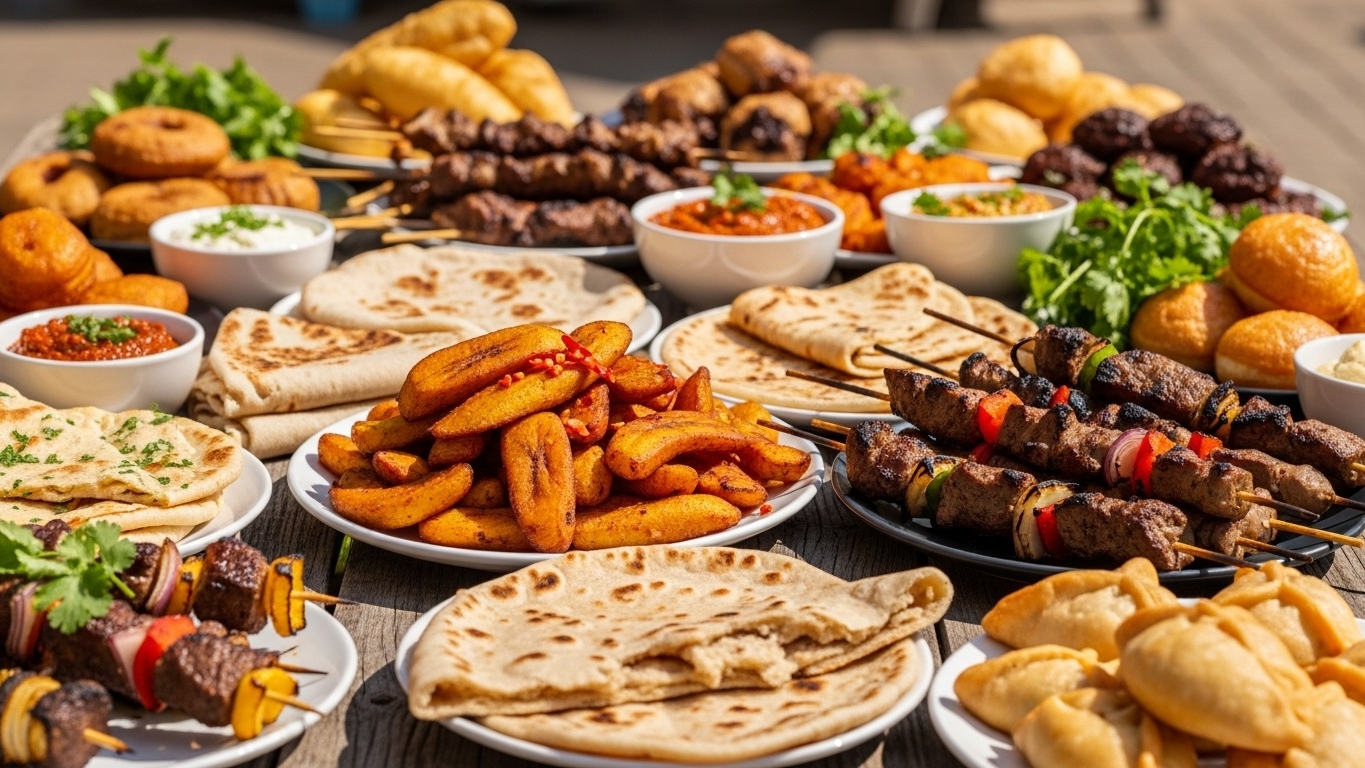
Nigerian jollof is often served with fried plantains, grilled or fried chicken, beef, or fish, and a crisp side salad. In many homes, the meal is complete only when all the textures show up: soft rice, sweet plantain, crunchy salad, and smoky protein.
Ghanaian Jollof: Aromatic, Structured, and Comforting
Ghanaian jollof is often described as more aromatic and “cleanly” structured, with each grain defined and lightly coated in sauce. Many cooks favor fragrant jasmine rice, which naturally produces a softer, more perfumed final dish. The seasoning approach can lean toward warmth and balance, with less emphasis on smokiness and more on layered spice. In Ghana, jollof often appears alongside shito (a spicy black pepper sauce) or paired with grilled meats and fresh salads. Some versions include vegetables, and the spice mix may vary depending on family tradition. Ghanaian jollof tends to prioritize fragrance and harmony, delivering a satisfying richness without feeling heavy. The Ghanaian approach highlights jollof’s ability to be both celebratory and everyday. It can be a party dish, yes—but it can also be lunch, dinner, leftovers, and comfort in a bowl.
Senegalese and Gambian Roots: Where the Story Begins
In Senegal, rice dishes occupy a central place in cuisine, and the legacy of thieboudienne—often considered Senegal’s national dish—continues to shape regional rice traditions. While modern “jollof” as popularly discussed may be associated with Ghana and Nigeria, Senegal’s rice culture provides historical context for how rice-based, tomato-influenced dishes developed and spread.
Senegalese rice preparations often feature fish, vegetables, and a complex base of aromatics. The focus is on harmony between broth, protein, and rice, with technique playing a major role. In Gambia, variations reflect similar roots, influenced by shared history and neighboring culinary patterns.
These origin points matter because they remind us that jollof is not a single-country invention. It is a West African conversation—one that began long before social media gave it a catchy name.
Sierra Leone, Liberia, and Beyond: A Family of Tomato Rice Dishes
Across West Africa, there are many dishes closely related to jollof: tomato rice, pepper rice, and party rice variations that reflect local preferences. In Sierra Leone and Liberia, rice is foundational, and tomato-based rice dishes appear in different forms, sometimes with smoked fish, dried shrimp, or local spice blends that give them a distinct identity.
In Cameroon, you’ll find “jollof-style” rice influenced by Central African flavors. In Mali and Guinea, rice dishes show up in everyday meals with local twists. Each version reinforces the same truth: jollof is a flexible template, and its variations are evidence of culinary creativity, not confusion.
Cultural Significance: Jollof as Celebration, Community, and Identity
Jollof rice is deeply tied to gatherings. It is one of those dishes that scales up beautifully, which means it naturally becomes the food of big moments. The pot itself can feel symbolic: a single dish meant to feed many, requiring patience and attention, often cooked by someone who knows how to manage heat, timing, and seasoning without panic. At parties, jollof does more than fill plates. It marks the event as meaningful. It signals generosity and hospitality. It says, “We planned for you. We cooked for you. You belong here.” In the diaspora, it becomes even more powerful: a taste of home recreated in new kitchens, with substituted ingredients and adapted techniques that still aim for the same emotional destination. Jollof also functions as cultural education. Younger generations learn family history through cooking—who taught whom, what spice blend “our house” uses, what counts as proper doneness. These lessons are not always spoken aloud, but they are felt in the repetition of rituals: rinsing rice, reducing sauce, tasting for salt, waiting for steam to work its magic.
The Technique Behind Great Jollof
Jollof rewards patience. It’s not difficult, but it is sensitive. The difference between “good” and “legendary” often comes down to technique.
The first key is reduction. The tomato-pepper base must cook down until it loses raw acidity and becomes rich, slightly sweet, and concentrated. This step builds depth and prevents the rice from tasting watery or sharp.
The second key is oil control. Jollof needs enough oil to carry flavor and coat the grains, but not so much that it becomes greasy. Many cooks judge this by sight: the sauce should look glossy and cohesive, not separated and slick.
The third key is steam management. Once the rice goes in, jollof is less about stirring and more about letting the pot do its work. Too much stirring can break grains and release starch, creating mushiness. Too little attention can lead to scorching. The cook’s job becomes heat control and timing—watching for the right steam and adjusting the flame accordingly.
Finally, there’s balance. Salt matters, but so does sweetness from tomatoes and onions. Heat matters, but so does fragrance from thyme or bay leaf. Jollof is a layering dish, and great jollof tastes like a full story, not a single loud note.
Recipe: A Simple, Crowd-Pleasing West African Jollof Rice
Pepper-tomato base:
- 4 medium ripe tomatoes (or 1 large can crushed tomatoes, ~28 oz)
- 2 large red bell peppers
- 1 Scotch bonnet or habanero (optional, for heat)
- 1 large onion, roughly chopped (for blending)
- 1/4 cup water (only if needed to blend)
For cooking:
- 1/2 cup neutral oil (vegetable/canola)
- 1 large onion, thinly sliced
- 3 tbsp tomato paste
- 3–4 cloves garlic, minced
- 1 tbsp grated ginger (optional but great)
- 2 tsp thyme
- 2 bay leaves
- 1–2 tsp curry powder (optional but common)
- 1–2 tsp smoked paprika (optional, helps “party” flavor)
- 1 tbsp salt (start here; adjust later)
- 2 tsp bouillon powder (or 2 cubes), optional
- 3 cups parboiled long-grain rice (Nigerian-style) or jasmine rice (Ghana-style)
- 4 cups chicken stock (or water; stock is better)
- 1 cup mixed veggies (optional: peas/carrots/green beans)
- Optional protein to serve: grilled chicken, fried fish, beef, etc.
Blend tomatoes + bell peppers + scotch bonnet + chopped onion until smooth. Set aside. In a large heavy pot, heat oil over medium heat. Add sliced onions and cook 6–8 minutes until softened and lightly golden. Add tomato paste and fry 2–3 minutes, stirring often, until it darkens slightly.
Pour in the blended pepper-tomato mixture. Stir well. Cook uncovered 15–25 minutes, stirring occasionally, until the sauce thickens and the raw tomato smell fades. You want it reduced—this is what prevents watery jollof.
Add garlic, ginger, thyme, bay leaves, curry powder, smoked paprika, salt, bouillon.
Cook 2 minutes. Taste—your sauce should be slightly strong/salty because the rice will absorb it. Pour in chicken stock and bring to a gentle simmer.
Rinse rice until water runs mostly clear, then drain well. Stir rice into the pot. Once it returns to a simmer, reduce heat to low. Cover tightly (foil under lid helps trap steam). Cook 20–25 minutes (parboiled) or 15–20 minutes (jasmine), checking once halfway. Do not stir constantly. If needed, gently fold once midway. When rice is tender, turn off heat and let it sit 10 minutes covered.
Fluff with a fork. Fold in mixed veggies if using (they’ll warm through).
Serve with fried plantains, grilled chicken, spicy pepper sauce, or a crisp salad. It’s even better the next day, when the flavors have had time to settle and deepen.
Jollof in the Diaspora: Adaptation as a Form of Love
In London, New York, Toronto, and beyond, jollof has become a symbol of West African presence and pride. Restaurants, food trucks, and home cooks keep the tradition alive, often adjusting recipes based on what’s available. Some use canned tomatoes instead of fresh. Some swap local peppers for Scotch bonnets or habaneros. Some use oven methods to mimic party jollof’s smoky flavor when cooking indoors.
These adaptations do not dilute the dish—they extend it. Diaspora jollof is proof that culture travels, that memory can be cooked, and that identity can be both rooted and evolving.
Why Jollof Rice Endures
Jollof endures because it’s not just delicious—it’s meaningful. It is a dish that holds history without becoming a museum piece. It remains flexible without losing its soul. It brings people together, whether in celebration or argument, whether around a dinner table or across a comment thread online. To cook jollof is to participate in a tradition that stretches across borders and generations. To eat it is to taste a region’s creativity and resilience. And to debate it—joyfully—is to admit what everyone already knows: jollof rice isn’t just food. It’s culture, served by the spoonful.