
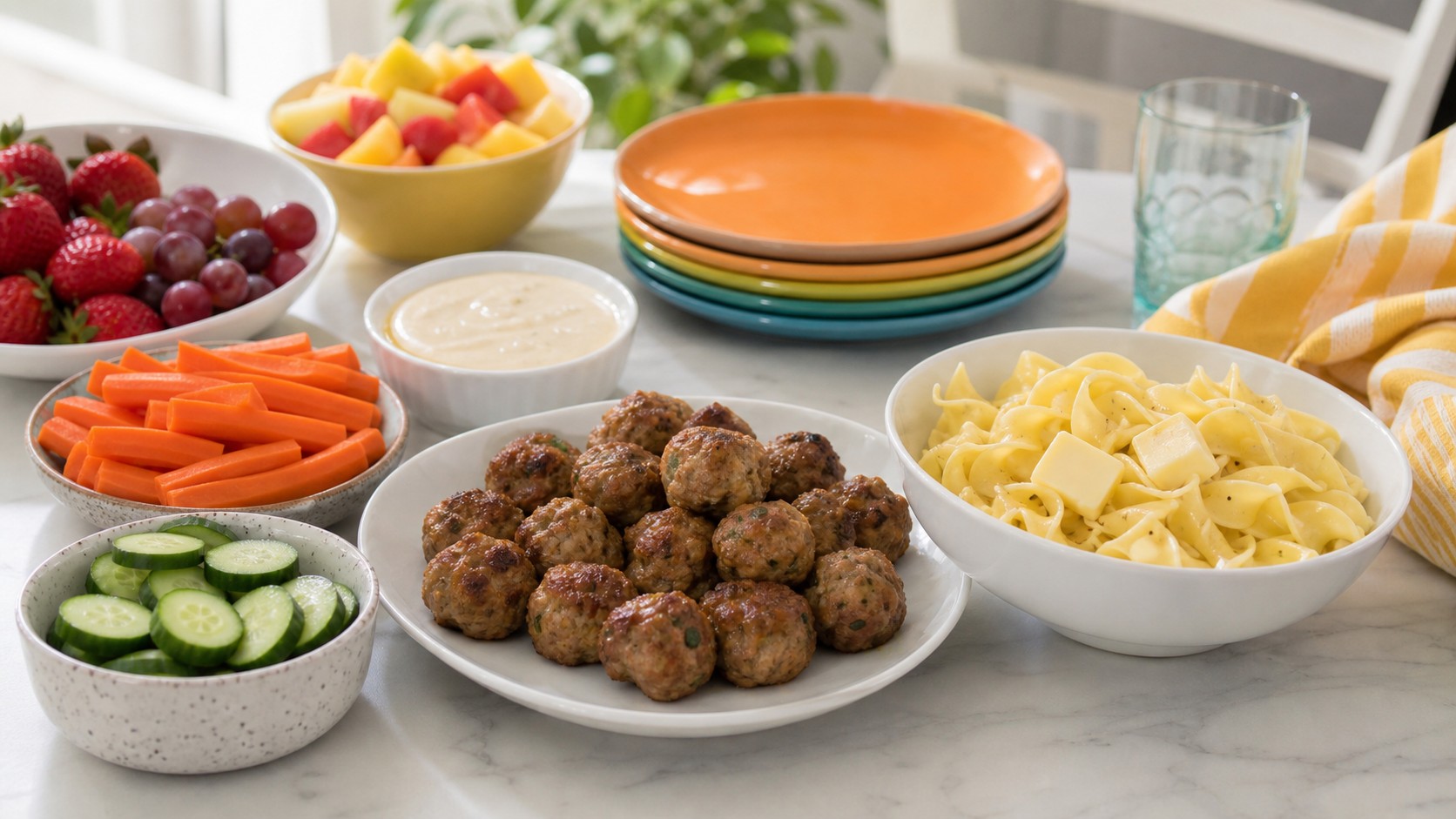
Kid-Friendly Meals That Respect Picky Eaters and Feed Everyone Else
Meals for picky eaters work best when they begin with empathy instead of a fight. Children may resist food because of texture, smell, color, temperature, unfamiliarity, hunger timing, or plain independence. A useful kid-friendly meal gives them something safe to start with while still offering enough flavor and variety for the rest of the family. The goal is not to trick anyone or turn dinner into a negotiation. It is to create meals that feel approachable, repeatable, and calm enough that trying a new bite becomes possible.
A: Serve the same ingredients separated, then let adults combine them with sauces or toppings.
A: One tiny new item beside familiar foods is usually more effective than several unfamiliar choices.
A: Yes. Dips give children control and can make new textures feel safer.
A: Sometimes, but visible low-pressure vegetables help children learn what they are eating over time.
A: That can still be a peaceful dinner. Keep offering variety without making that meal a showdown.
A: Tacos, pasta bowls, rice bowls, breakfast dinners, snack plates, and potato bars are easy to customize.
A: Use small shapes, mild seasoning, crisp edges, and sauces on the side.
A: Many can, especially with repeated calm exposure and no pressure to perform at the table.
A: Pause the food talk, keep the safe option available, and return to the new food another night.
A: Yes. Repetition builds trust, and small variations can slowly expand the routine.
Start With a Safe Base
Most picky eaters have a few foods that feel reliable: noodles, rice, tortillas, bread, potatoes, chicken, eggs, cheese, fruit, or a familiar vegetable. A safe base is not a failure. It is the bridge that lets dinner happen. Buttered noodles can sit beside meatballs and peas. Rice can hold teriyaki chicken on one side and cucumbers on the other. A tortilla can become a quesadilla, taco, wrap, or pizza pocket depending on the child’s comfort level.
When the base feels safe, the meal has room for small growth. Add a sauce on the side instead of on top. Offer one new topping without requiring it. Serve vegetables cut in a familiar shape. Keep the first portion modest so the plate does not look overwhelming. Picky eaters often respond better to low-pressure exposure than to big declarations about what they must eat.
Build-Your-Own Meals Reduce Dinner Battles
Customizable meals are helpful because they turn control into structure. Taco bars, pasta bowls, baked potato bars, mini pizzas, breakfast burritos, rice bowls, and sandwich boards let children choose while parents still shape the options. A child who refuses a mixed casserole may happily eat the same ingredients separated: rice, chicken, cheese, corn, and cucumber in small piles. This format also keeps adults from eating bland food every night. Put herbs, salsa, hot sauce, pickled onions, roasted vegetables, or spicy mayo on the table for anyone who wants more flavor. The meal stays unified, but each plate can be different. Family dinner becomes less about forcing sameness and more about everyone building a version that works.
Texture Matters More Than Adults Realize
Many picky eaters are really texture-sensitive eaters. A child may like carrots raw but not cooked, chicken crisp but not stewed, potatoes mashed but not roasted, or apples sliced but not diced. Paying attention to texture can unlock more meals than arguing about taste. If soft foods are hard, add crunch. If mixed textures are hard, separate components. If slimy textures cause rejection, choose roasting, toasting, or air-frying instead of steaming.
Crisp edges are especially useful. Baked chicken tenders, quesadillas, roasted potato wedges, toast strips, pan-seared dumplings, and mini waffles often feel safer than saucy or mushy foods. You can still serve vegetables, proteins, and whole grains, but the texture gives the child a reason to engage. A crunchy entry point can make a nutritious meal feel less intimidating.
Thirty Meal Ideas Without Thirty Separate Dinners
The most sustainable kid-friendly cooking comes from flexible meal families. Pasta can become buttered noodles with chicken, pesto on the side, mac and cheese with peas, spaghetti with meatballs, or ravioli with fruit and salad. Tortillas can become quesadillas, bean burritos, taco triangles, breakfast wraps, or pizza-dillas. Rice can become fried rice, salmon bowls, chicken teriyaki plates, bean bowls, or simple rice with eggs. Think in formats rather than isolated recipes. A picky eater who likes one format may slowly accept variation inside that format. If mini meatballs work, try turkey meatballs, chicken meatballs, or lentil meatballs with the same dip. If pancakes work, try savory corn pancakes or banana oat pancakes. Repetition is not boring to many children; it is reassurance. Variation can happen gently around the edges.
Protein Ideas Kids Often Accept
Chicken tenders are popular for a reason, but they are not the only option. Mini meatballs, turkey sliders, scrambled eggs, baked tofu cubes, cheese quesadillas with beans, yogurt parfaits, tuna melts, salmon cakes, mild chili, and peanut noodles can all provide protein in approachable forms. The key is to keep seasoning friendly and offer dips or sauces separately.
Small shapes help. A slider feels less intimidating than a large burger. Meatballs feel easier than a slice of meatloaf. Egg muffins feel more playful than a big omelet. Salmon cakes can be dipped, which changes the experience. When children can pick up, dip, or assemble food, they often feel more willing to participate.
Vegetables Without the Dinner Drama
Vegetables do not always need to be hidden, though there is nothing wrong with blending spinach into sauce or adding pumpkin to muffins when it fits. Many picky eaters do better when vegetables are visible, predictable, and served without pressure. Offer cucumber rounds, carrot sticks, roasted sweet potato wedges, corn, peas, snap peas, bell pepper strips, or broccoli with a dip. Let the child decide whether to taste. Pair vegetables with something familiar. Broccoli beside mac and cheese, carrots with hummus, peas in buttered rice, cucumber with quesadillas, or roasted sweet potatoes with chicken tenders makes the vegetable less lonely on the plate. Over time, repeated calm exposure matters more than one dramatic dinner victory.
Sauces and Dips Can Open the Door
Dips give picky eaters control over intensity. Ranch, yogurt sauce, ketchup, mild salsa, honey mustard, hummus, marinara, cheese sauce, peanut sauce, or guacamole can make a new food feel safer. Put a teaspoon on the side and let the child experiment. Even touching a food to sauce can be a first step.
Adults can use the same meal with bolder condiments. Add chili crisp, hot sauce, pesto, chimichurri, spicy pickles, or a sharper dressing to grown-up plates. A shared base with separate sauces keeps dinner from splitting into kid food and adult food. Everyone eats from the same plan, just at different flavor levels.
Breakfast-for-Dinner Is a Picky-Eater Gift
Breakfast foods are often familiar, soft, and customizable, which makes them excellent family dinners. Scrambled eggs, pancakes, waffles, breakfast tacos, yogurt bowls, fruit, toast, potatoes, and smoothies can create a balanced meal without feeling like a battle. Add bacon, turkey sausage, beans, avocado, or cottage cheese if you need more protein. This format is also useful on tired nights because expectations are lower. A child who refuses casserole may eat eggs, toast, and berries happily. Parents can add greens, salsa, hot sauce, or a side salad. Breakfast-for-dinner can feel playful while still being practical, which is exactly what many family evenings need.
Keep Portions Small and Language Neutral
Large portions can make picky eaters shut down before tasting anything. Start tiny: one meatball, two cucumber slices, a spoonful of rice, a small piece of chicken, a single pea. They can always ask for more. Small portions reduce waste and make new foods feel less threatening.
Language matters too. Instead of calling a food healthy, scary, grown-up, or something they will love, describe it simply: crunchy, warm, cheesy, sweet, soft, salty, lemony. Avoid turning every bite into a performance. A calm table gives children more room to listen to their own curiosity.
Meals the Whole Family Can Repeat
The best picky-eater meals are not one-time tricks. They are repeatable systems families can return to: pasta night, taco night, rice bowl night, breakfast night, soup and sandwich night, mini pizza night, or snack-plate dinner. Within each system, you can adjust ingredients based on the season, budget, and everyone’s energy. Over time, these meals build trust. Children learn that dinner will include something they can eat. Parents learn that variety can still happen without conflict. A picky eater may not suddenly become adventurous, but the family table can become more peaceful, and peaceful meals create the best conditions for change.
Progress Can Be Quiet
Sometimes success is not a clean plate. It is a child tolerating a new food nearby, smelling a sauce, touching a vegetable, licking a spoon, taking one bite, or saying maybe next time without tears. Those moments count. Kid-friendly cooking is not only about finding meals children love immediately. It is about building a dinner rhythm where food feels safe enough to explore.
When you collect meals that are flexible, familiar, and flavorful, picky eating becomes easier to manage. The child gets a path into dinner. Adults get food with enough personality. The table gets calmer. That is a win worth repeating, even if the broccoli still needs a few more appearances.
Use Lunchbox Favorites as Dinner Clues
Parents often know more than they think because lunchboxes reveal patterns. If a child reliably eats crackers, cheese, fruit, and turkey, dinner might become a snack plate with warm pita and cucumber. If peanut butter sandwiches always disappear, peanut noodles or apple slices with yogurt dip may be an easier step than a brand-new entree. If a child likes cold pizza, mini flatbreads may work better than a saucy casserole. Look at what comes home uneaten too. Mushy fruit, mixed salads, soggy bread, or strong-smelling leftovers can point to texture and temperature issues. Dinner gets easier when you stop treating pickiness as random and start reading it like information. The child may not be rejecting your cooking; they may be telling you that cold, crisp, separate, mild, or dippable foods feel safer.
Season in Layers for Different Comfort Levels
Family meals work better when seasoning can be layered. Cook the base with enough salt and gentle flavor to taste good, then add stronger elements at the table. For example, make mild turkey meatballs, then offer marinara, pesto, parmesan, and chili flakes separately. Cook plain rice, then let adults add scallions, sesame oil, sriracha, or pickles. Roast chicken with simple herbs, then serve lemon, hot sauce, or salsa beside it.
This approach prevents the entire meal from becoming bland while protecting the cautious eater’s plate. It also teaches children that flavor can be adjusted. Over time, they may smell a sauce, touch it with a noodle, or ask for a tiny dot. Those little experiments happen more easily when the sauce is optional rather than already covering everything.
Make New Foods Familiar by Association
A new food often feels safer when it arrives beside something the child already trusts. If broccoli is difficult, serve one small floret beside mac and cheese. If fish is new, shape it into small cakes and pair it with potato wedges. If beans are unfamiliar, tuck a spoonful into a cheese quesadilla before serving a full bean burrito. Familiar surroundings reduce the shock of the new ingredient. Association also works through flavor. A child who likes ranch may try cucumbers, carrots, chicken, or roasted potatoes with ranch nearby. A child who likes marinara may accept meatballs, ravioli, zucchini, or breaded eggplant more easily. Use favorite flavors as bridges, not disguises. The child should still have a chance to understand what is on the plate.
When Dinner Needs to Be Extremely Easy
Some nights need a plan that can survive homework, late practices, toddler moods, and tired adults. Keep a few emergency kid-friendly meals ready: scrambled eggs with toast and fruit, quesadillas with avocado, pasta with peas, rice with rotisserie chicken, bean and cheese burritos, yogurt parfaits with nut-free granola if needed, or soup with crackers and sliced vegetables. These meals may not feel exciting, but they protect the dinner rhythm.
Emergency meals are not giving up. They are how families keep eating together when the day has stretched too thin. You can still add one small growth opportunity: a new fruit, a different cheese, a vegetable dip, or a sauce offered on the side. The meal stays realistic, and the child continues seeing variety without the pressure of a major cooking effort.
Let Kids Help in Very Specific Ways
Children are often more willing to taste food they helped prepare, but open-ended help can slow dinner to a crawl. Give small, concrete jobs: sprinkle cheese, tear lettuce, stir yogurt sauce, choose between carrots and cucumbers, place toppings on mini pizzas, shake dressing in a jar, or count meatballs onto a tray. These jobs create ownership without handing over the whole meal. For picky eaters, participation can happen away from tasting. A child might wash tomatoes without eating them, smell basil without liking it, or arrange cucumber slices for others. That still builds familiarity. Food becomes less strange when it is touched, named, and seen often in calm moments.


