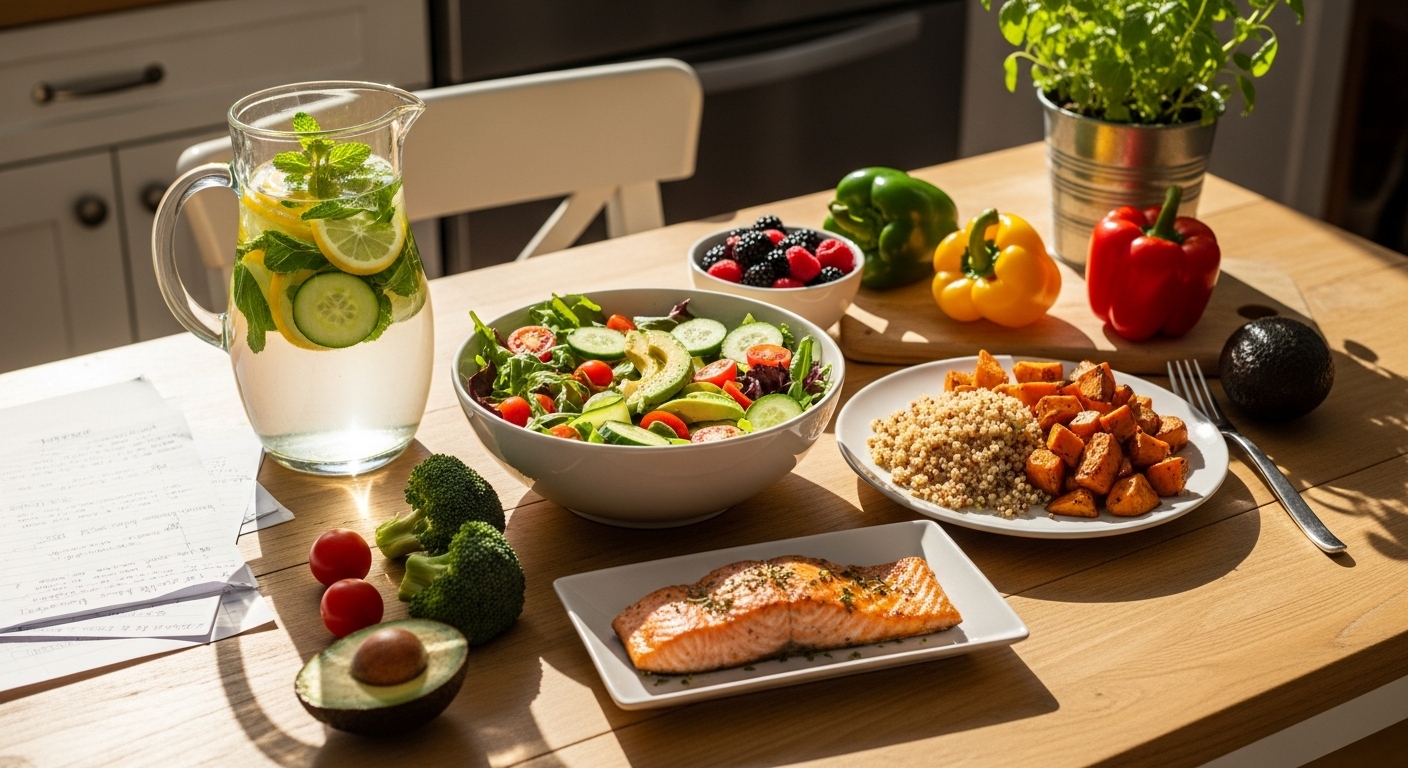
A Month of Balanced, Blood-Sugar-Smart Meals Designed for Energy, Stability, and Real-Life Eating
Managing diabetes isn’t about deprivation—it’s about consistency. What you eat each day influences blood sugar stability, energy levels, mood, sleep, and long-term health. A 30-day diabetic-friendly meal plan offers something powerful: structure without rigidity. Instead of guessing what to eat or reacting to blood sugar swings, you follow a rhythm that supports your body predictably and sustainably. This kind of plan doesn’t rely on “diet foods” or extreme carb restriction. Instead, it focuses on balanced plates, steady carbohydrate intake, fiber-rich foods, lean proteins, healthy fats, and smart timing. Over the course of a month, these habits can help smooth glucose curves, reduce cravings, and restore confidence around meals. This guide explains how a diabetic-friendly meal plan works, what changes you may notice week by week, and how to build meals that are both satisfying and blood-sugar conscious—without feeling like you’re on a medical prescription.
A: No—focus on quality carbs and consistent portions paired with protein and fiber.
A: A protein-forward meal like eggs + veggies, Greek yogurt + nuts, or tofu scramble with a small fruit portion.
A: Not always—snack only if needed, and choose protein + fiber (nuts, yogurt, hummus + veggies).
A: Yes—choose whole fruit, mind portions, and pair with protein/fat (berries + yogurt, apple + nut butter).
A: Use smaller portions, choose whole-grain or legume pasta, add protein, and load up on vegetables.
A: Grilled proteins, vegetables, salads, and whole grains; ask for sauces on the side.
A: Treat it as feedback—adjust portions, pairings, and consider a short walk after meals.
A: Often, yes—balanced meals reduce cravings and help portions feel satisfying.
A: Use beans, eggs, frozen vegetables, seasonal produce, and batch-cooked grains.
A: Yes—rotate proteins, veggies, and seasonings to keep it fresh while maintaining structure.
What Makes a Meal Diabetic-Friendly?
A diabetic-friendly meal prioritizes balance over elimination. Carbohydrates are not removed; they are chosen wisely and paired strategically. Whole grains, legumes, vegetables, and fruits provide slower-digesting carbs that prevent sharp glucose spikes. Protein and healthy fats slow digestion further, supporting steadier energy.
Fiber plays a starring role. It slows glucose absorption, supports gut health, and increases satiety. Non-starchy vegetables, beans, seeds, and whole grains help create meals that feel generous while remaining metabolically supportive.
Equally important is predictability. Eating consistent portions at regular intervals helps your body anticipate glucose needs, which can improve insulin response and overall control.
The Structure of a 30-Day Diabetic-Friendly Meal Plan
Rather than prescribing rigid menus, an effective 30-day plan uses repeatable patterns. Breakfasts emphasize protein and fiber to prevent morning spikes. Lunches balance carbs with vegetables and lean protein. Dinners focus on whole foods with controlled carbohydrate portions. Snacks, when needed, are intentional rather than reactive.
Rotating familiar meals reduces decision fatigue while still allowing flexibility. Over time, this structure becomes intuitive, making long-term adherence easier.
Week 1: Stabilization and Awareness
The first week is about observation. Many people notice how certain foods affect their energy and glucose more clearly once meals are structured. Reducing refined carbs and sugary drinks often leads to fewer spikes within days.
Hunger patterns may change as protein and fiber increase. Drinking enough water is crucial, especially as fiber intake rises. This week sets the foundation for smoother days ahead.
Week 2: Fewer Spikes, Better Energy
By the second week, blood sugar patterns often begin to stabilize. Meals feel more satisfying, reducing the urge to snack impulsively. Energy becomes more consistent throughout the day, and post-meal fatigue may decrease.
Cravings for sweets often soften as glucose swings narrow. Many people report improved focus and fewer mid-afternoon crashes.
Week 3: Confidence and Routine
Week three is where habits feel natural. Grocery shopping becomes easier. Portion awareness improves. You may notice better sleep, improved digestion, and fewer reactive highs and lows.
This is also when confidence builds. Meals no longer feel restrictive—they feel intentional.
Week 4: Sustainability and Momentum
By the final week, the plan feels less like a “meal plan” and more like a lifestyle rhythm. Blood sugar awareness improves without obsession. You know how to build a plate anywhere—from home kitchens to restaurants.
Many people finish the month feeling calmer around food, with improved metrics and renewed trust in their body’s signals.
Diabetic-Friendly Cooking Without Losing Flavor
Flavor is essential for sustainability. Herbs, spices, acids, and cooking techniques like roasting and grilling add satisfaction without added sugar. Creaminess can come from yogurt, avocado, nuts, or olive oil instead of refined sauces.
When meals taste good, adherence follows naturally.
Eating Out and Social Situations
A diabetic-friendly plan doesn’t mean isolation. Choosing grilled proteins, vegetables, whole grains, and sauces on the side allows flexibility. Learning to scan menus for balance—not perfection—keeps life enjoyable and stress low.
A Plan That Supports Real Life
The best diabetic-friendly meal plan is one you can live with. Over 30 days, this approach builds habits that last far beyond the calendar—supporting not just glucose control, but confidence, energy, and enjoyment of food.