Healthy Midnight Snacks Without the All-or-Nothing Drama
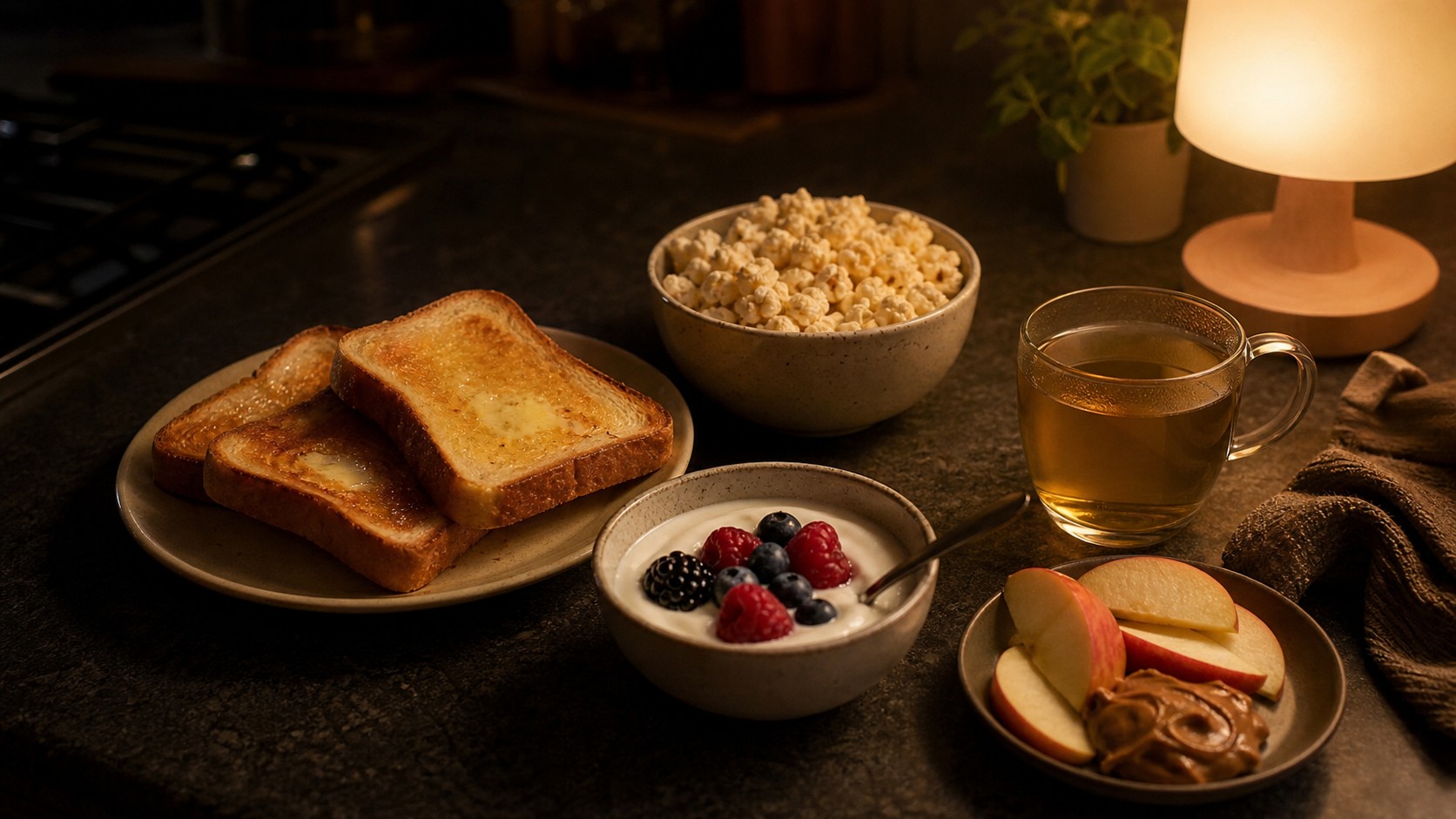
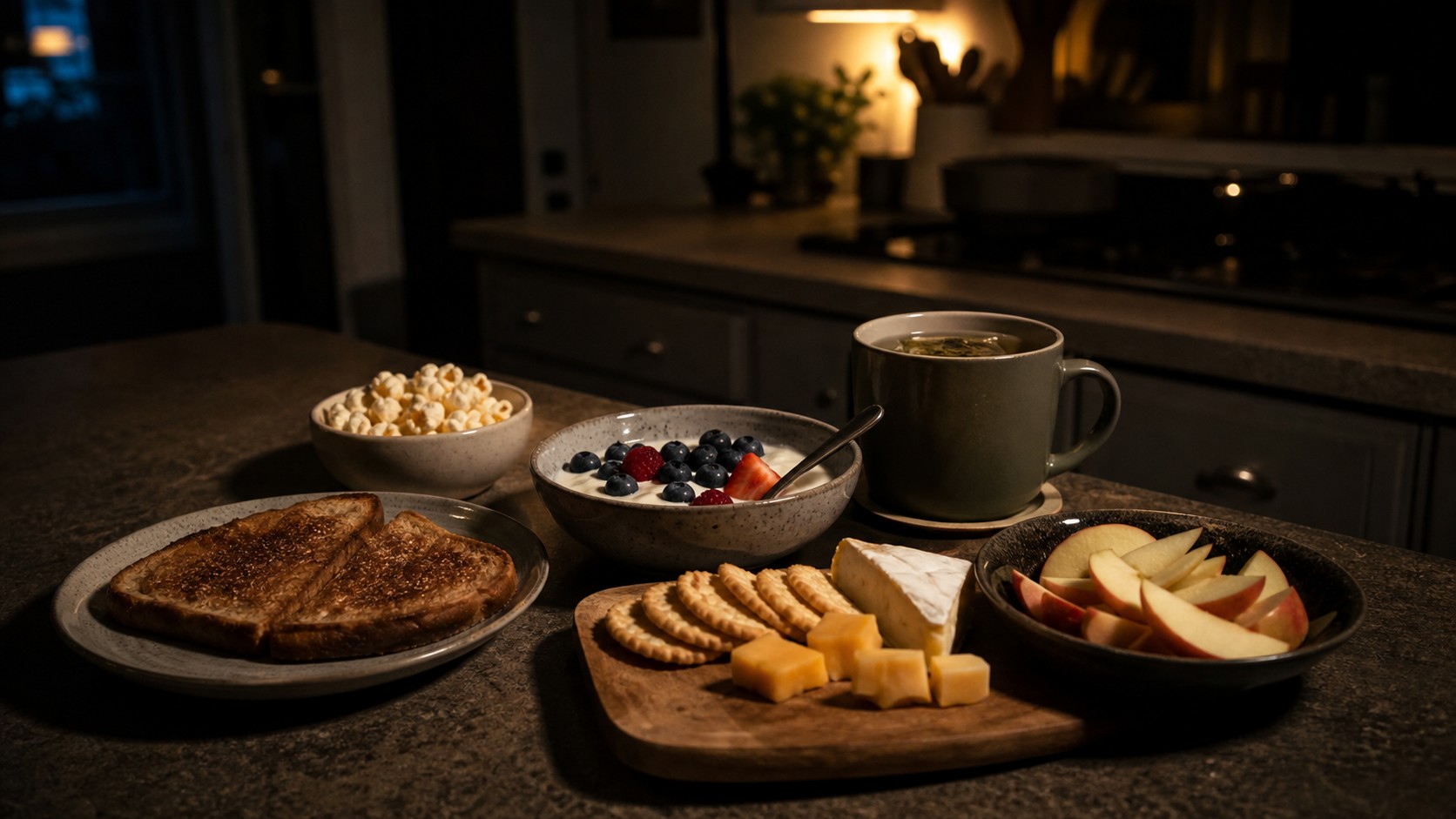
Healthy midnight snacks that won’t ruin your diet are not about pretending hunger disappears after a certain hour. They are about choosing food that fits the moment: enough to satisfy, balanced enough to avoid a snack spiral, and calm enough to let sleep stay within reach. A late snack can be part of a healthy routine when it is portioned, intentional, and built from foods that make you feel better after eating them.
A: Yes, when it is intentional, portioned, and satisfying enough to stop the craving.
A: Greek yogurt with fruit, hummus with vegetables, toast with protein, or popcorn can all work.
A: One planned snack does not ruin progress; overall patterns matter more.
A: Choose protein and fiber, such as egg on toast, yogurt with berries, or hummus with vegetables.
A: Fruit with yogurt, banana with nut butter, chia pudding, or a small smoothie can satisfy sweetness.
A: Yes, especially when portioned in a bowl and topped lightly.
A: Use one plate, put packages away, and choose a snack that includes protein or fiber.
A: Avoid foods that personally disrupt sleep, including caffeine, very spicy foods, or large portions.
A: Yes, oatmeal, miso soup, toast, or a small egg wrap can feel comforting and balanced.
A: Stock easy healthy options so the best choice is visible when you are tired.
Start With Permission and Portion
The healthiest late-night snack begins with a reasonable mindset. If you are hungry, eating something thoughtful is often better than arguing with the pantry for thirty minutes. Portion matters because midnight food can easily become distracted food. Put the snack on a plate or in a bowl, sit down if possible, and let that be the amount.
This is not about restriction. It is about giving the snack a shape. A shaped snack is easier to enjoy and easier to end.
Choose Protein When Hunger Is Real
Protein helps a midnight snack feel more satisfying. Greek yogurt, cottage cheese, boiled eggs, turkey slices, tofu bites, hummus, edamame, milk, or a small protein smoothie can work. Pair protein with fruit, vegetables, toast, or crackers so the snack feels balanced instead of clinical.
Use Fiber for Gentle Fullness
Fiber can help a late snack last without feeling heavy. Fruit, vegetables, oats, whole-grain toast, popcorn, beans, chia pudding, or whole-grain crackers bring texture and fullness. A snack like apple slices with almond butter, yogurt with berries, hummus with cucumber, or oatmeal with cinnamon can satisfy both hunger and craving.
Go gently if your stomach is sensitive late at night. Healthy food should still feel comfortable.
Keep Sweet Snacks Balanced
Sweet cravings can fit a healthy midnight snack. Try Greek yogurt with berries, cottage cheese with pineapple, banana with peanut butter, chia pudding, apple with cinnamon, a small smoothie, or a date with almond butter. Sweetness paired with protein or fat tends to feel calmer than eating straight sugar when tired.
Choose Savory Snacks That Stay Light
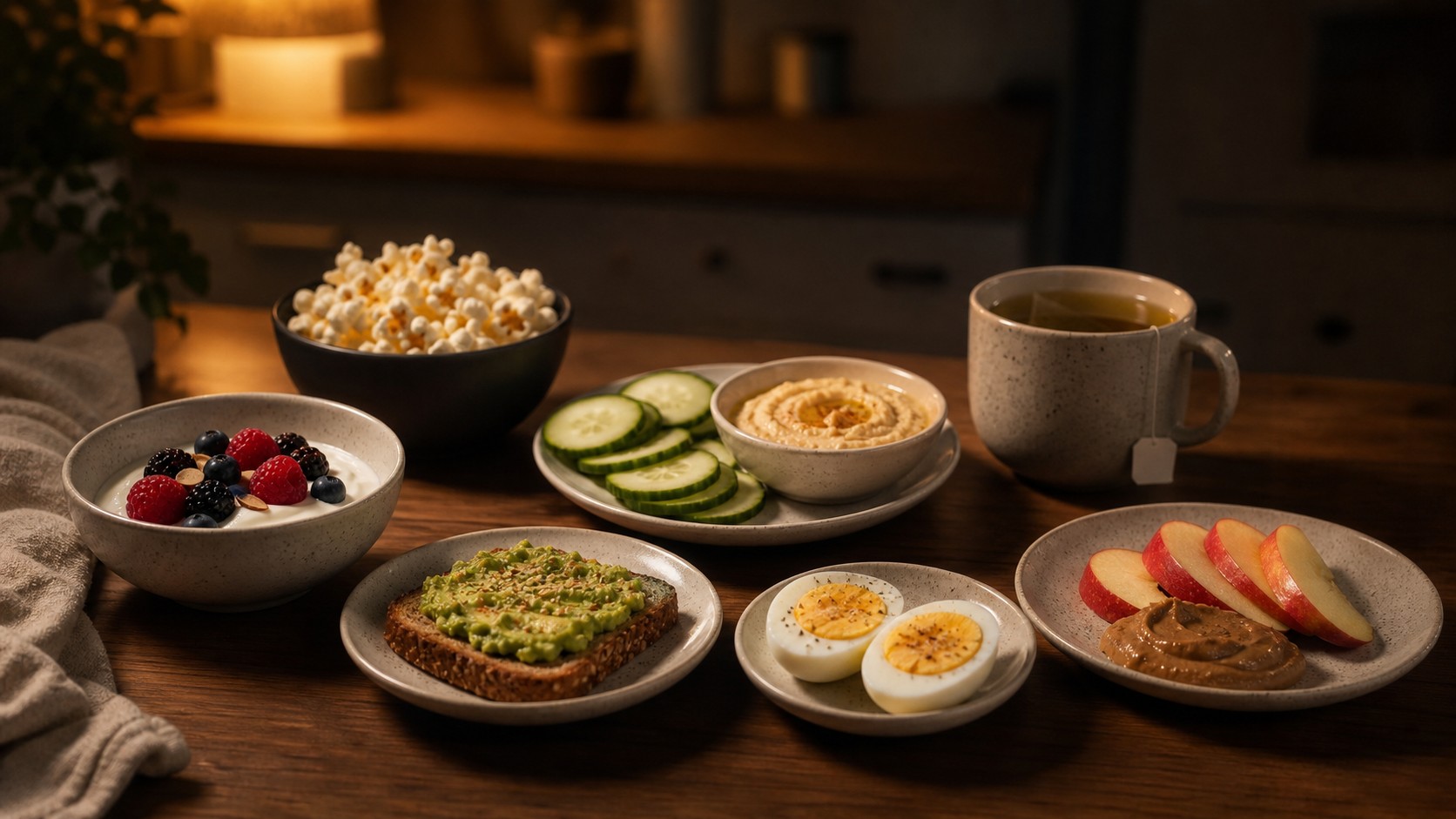
Savory snacks can be healthy without becoming heavy. Hummus with cucumbers, whole-grain toast with avocado, a boiled egg with fruit, turkey rollups, cottage cheese with tomatoes, popcorn with a little olive oil, or miso soup can answer salty cravings. These options give flavor and satisfaction without demanding a full meal.
If salt makes you thirsty or uncomfortable at night, keep portions modest and drink water.
Popcorn Can Be a Smart Crunch Snack
Popcorn is useful because it offers volume and crunch without feeling too heavy. Keep toppings simple: a little olive oil, herbs, nutritional yeast, cinnamon, or a modest sprinkle of cheese. Put it in a bowl before starting a show or late task. Popcorn becomes less helpful when it is eaten endlessly from a large bag.
Toast Is a Flexible Healthy Base
Whole-grain toast can become a balanced midnight snack with the right topping.
Try peanut butter and banana, avocado and egg, cottage cheese and tomato, ricotta and berries, or hummus and cucumber. Toast feels comforting because it is warm and familiar, but it can still carry protein, fiber, and healthy fat.
Use Drinks to Slow the Moment
Herbal tea, warm milk, decaf tea, water, or broth can make a small snack feel more complete. A warm drink also slows down the pace, which is helpful when snacking comes from stress or habit. If you are hungry, pair the drink with food instead of using it as a substitute. A drink can be the signal that the kitchen is closing for the night.
Avoid the Foods That Disrupt You
Healthy is personal at midnight.
Some people sleep poorly after spicy food, chocolate, heavy fat, large portions, caffeine, or acidic foods. Others are fine. Pay attention to your own patterns. A snack that is nutritious on paper is not the right choice if it reliably makes sleep worse.
Plan for Late Nights Before They Happen
If you often stay up late, stock foods that support better choices. Keep yogurt, berries, eggs, hummus, cucumbers, popcorn kernels, whole-grain bread, nut butter, cottage cheese, apples, and herbal tea available. When tired, people choose what is easiest. Make the helpful option easy.
Do Not Save Too Much Hunger for Night
Late-night overeating sometimes starts earlier in the day. If breakfast, lunch, or dinner was too light, the body may catch up at night. A healthy midnight snack can help, but the larger fix may be more satisfying meals during the day. Notice patterns without blame.
If late hunger is common, add more protein, fiber, or total food earlier and see whether midnight cravings become easier.
Keep Diet Goals Humane
A snack does not ruin a diet by existing. What matters is the broader pattern. A planned yogurt bowl, egg on toast, popcorn, fruit with nut butter, or hummus plate can fit many eating goals. The all-or-nothing mindset often does more harm than the snack itself.
Use the One-Plate Rule
The one-plate rule is simple: decide what you are having, put it on one plate or in one bowl, and put the rest away. This creates a clear end point. It also makes the snack feel more satisfying because you can see it as a complete choice.
For small snacks, use a small plate. The goal is not to trick yourself, but to match the dish to the amount.
Healthy Snacks Can Still Feel Cozy
Healthy midnight food does not need to feel cold or punitive. Warm oatmeal, cinnamon toast, miso soup, herbal tea with yogurt, or a small egg wrap can feel comforting. Comfort is part of satisfaction. A snack you resent is unlikely to help long term.
End the Snack Clearly
After eating, rinse the bowl, close the pantry, and move away from the kitchen. A clear ending matters because tired snacking can drift. The snack should solve the moment, not open a new activity.
When a late-night snack is balanced, portioned, and calm, it can support your goals instead of fighting them. The best choice is the one that leaves you satisfied now and comfortable tomorrow morning.
Make Convenience Work for You
Single-serve yogurt, prewashed fruit, boiled eggs, sliced cucumbers, portioned hummus, and ready popcorn kernels make healthier choices easier. Convenience does not have to mean less nutritious. It can mean the better option is available when willpower is tired.
Track Satisfaction, Not Just Calories
Notice which snacks actually end the craving.
A low-calorie snack that leaves you searching for more may not be useful. A slightly more balanced snack might satisfy faster and feel better. Healthy midnight eating is about the whole result.
Choose Snacks That Match Your Diet Pattern
Different goals call for different late snacks. Someone trying to eat more protein may choose yogurt, cottage cheese, eggs, or turkey. Someone watching added sugar may choose fruit with nut butter instead of candy. Someone wanting more fiber may choose popcorn, oats, berries, or vegetables with hummus. The snack should support the pattern you are building rather than imitate someone else’s rule.
Make Room for Real Pleasure
A healthy midnight snack can still taste like a treat. Cinnamon on toast, berries in yogurt, a little honey, smoked paprika on popcorn, lemony hummus, or a few chocolate chips stirred into cottage cheese can make the snack feel chosen. Pleasure helps the snack end because satisfaction is part of fullness.
When food tastes like punishment, the craving often keeps looking for something better.
Use Smaller Portions of Rich Foods
Some cravings want rich food, and a healthier response may be a smaller, plated portion rather than a substitute you do not want. A few bites of dessert with yogurt, a small piece of cheese with fruit, or a little nut butter on toast can be enough. Diet-friendly does not always mean avoiding the original craving; sometimes it means giving it a clear boundary.
Watch the Skipped-Dinner Pattern
If late-night hunger keeps showing up strongly, look at dinner. A dinner without enough protein, fiber, carbohydrate, or total food may leave you vulnerable later. Adding beans, fish, chicken, tofu, grains, potatoes, vegetables, or healthy fats at dinner can reduce the midnight pull.
The midnight snack can help tonight, but the earlier meal may solve the pattern.
Keep Sleep as Part of Health
A snack that fits your diet but harms your sleep is not truly helpful. Choose foods and portions that let you rest comfortably. For some people, that means avoiding chocolate or spicy food. For others, it means avoiding a large bowl of anything. Health includes the morning you wake up to.
Let the Snack Stay Ordinary
Late-night eating can become dramatic when every bite is treated as a test.
It does not need to be. Choose a reasonable snack, eat it without distraction if you can, and move on. A calm relationship with food is often more supportive than a perfect list of approved options.
Build a Snack With Two Parts
Two-part snacks are simple and balanced. Choose fruit plus protein, toast plus fat, vegetables plus dip, popcorn plus a warm drink, or yogurt plus crunch. Two parts are usually enough to feel complete without becoming a meal. This structure also helps when you are tired because it gives the snack a clear beginning and end.
Choose Volume When You Want to Nibble
If the craving is for repeated bites, choose foods with volume and gentler density. Popcorn, berries, cucumber slices, apple wedges, grapes, air-fried chickpeas, or a vegetable plate with hummus can give the hands and mouth something to do. Add protein or fat when hunger is real so the snack does not become endless.
Volume is useful when it is intentional. It is less useful when it becomes unconscious grazing from a large container.
Use Prepared Portions for Tired Nights
Prepared portions can help when decision-making is low. Single yogurt cups, small hummus containers, boiled eggs, sliced fruit, portioned popcorn kernels, or small bags of nuts make the healthy choice faster. The point is not rigidity. It is reducing friction at the exact hour when friction usually wins.
Do Not Turn a Snack Into a Moral Score
One late snack is not a verdict.
If it was larger than planned, return to normal eating at the next meal. If it worked well, repeat it. If it disturbed sleep, adjust it. A healthy diet is built through patterns, not one midnight decision under kitchen light.
Make the Kitchen Easier to Leave
Put tempting packages away before eating, keep the snack dish small, and decide on the drink at the same time. After eating, move away from the pantry. These environmental cues help the snack stay contained. They are especially useful when the craving arrives with stress, boredom, or fatigue rather than clear hunger.
Use Breakfast as a Reality Check
A healthy midnight snack should not make breakfast feel impossible.
If you wake up uncomfortable, thirsty, or still chasing cravings, adjust the next late snack. If you wake up steady, the portion and balance probably worked well. The morning often tells the truth gently.